

Every Isaac Asimov Movie And TV Show Ranked
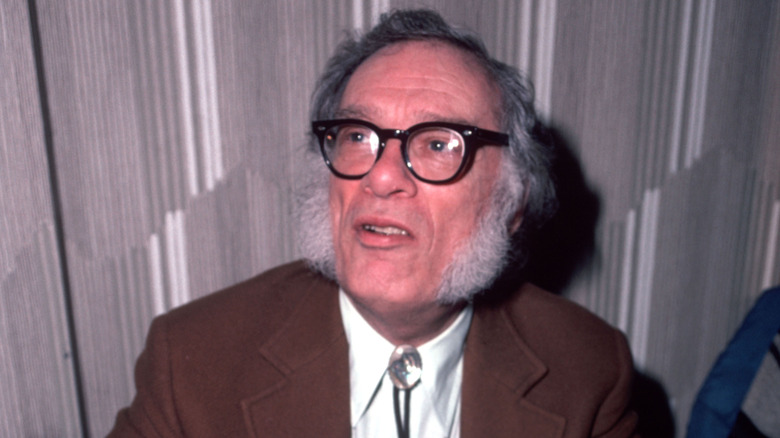
Fans of sci-fi cinema might not realize how much they owe authors. If you're enthralled by "Blade Runner," you have Philip K. Dick to thank. And if you think Denis Villeneuve's "Dune" movies are spectacular, then you might be Frank Herbert's next biggest fan. Among these writers, Isaac Asimov is one of the most influential within the genre, with his novels and short stories centering on themes of artificial intelligence, sustainability, and the impact advanced technology has on society. However, moviegoers might not recognize his importance because frankly, most of the adaptations of his work are pretty bad.
Some writers create the source material for near-perfect sci-fi movies that stand the test of time. Others create stories that are too strange, dense, or otherworldly to make for an easy adaptation. Asimov created the galaxy-spanning empire of the "Foundation" series and the Three Laws of Robotics that ruled over much of his output. For whatever reason, though, his ideas have been challenging to translate for filmmakers.
Asimov adaptations tend to bounce off critics, even when the ideas they explore are fascinating. Some Asimov adaptations have bad Rotten Tomatoes scores and are still worth watching, while others really do warrant skipping past. To get the best feel for his work, you should really read Asimov's fiction. That said, if you simply must explore the world of Asimov adaptations, here are the ones worth your time.
7. Nightfall (1988)
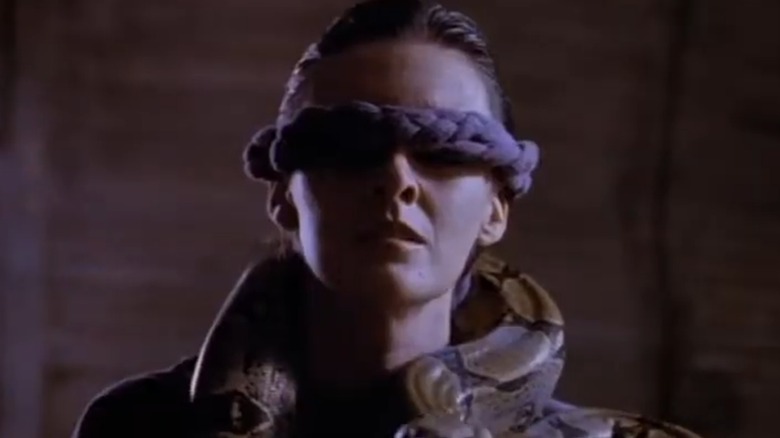
Isaac Asimov started writing science fiction in the 1940s, but it took more than 40 years later for one of his stories to make it to the screen. 1988's "Nightfall" was the first feature-length adaptation of Asimov's short story of the same name, and decades later it's known as one of the worst ever made.
Paul Mayersberg, the screenwriter for "The Man Who Fell to Earth" starring David Bowie, wrote and directed "Nightfall." The adaptation is somewhat loose and cuts out many of the characters and wilder concepts from the source material. The film takes place on a planet that is almost always bathed in perpetual sunlight thanks to its three suns. Night is a massive event for the people of that world, and the movie dramatizes how a scientist named Aton (David Birney) and a religious leader named Sor (Alexis Kanner) interpret the dark.
Despite having some compelling ideas to play with, the movie is held back by a wonky script, lackluster performances, and weak production values. It holds a 12% on Rotten Tomatoes' Popcornmeter and a 2.6 out of 10 stars on IMDB. If you're looking to get into the world of Isaac Asimov, 1988's "Nightfall" is not the place to start.
6. Nightfall (2000)
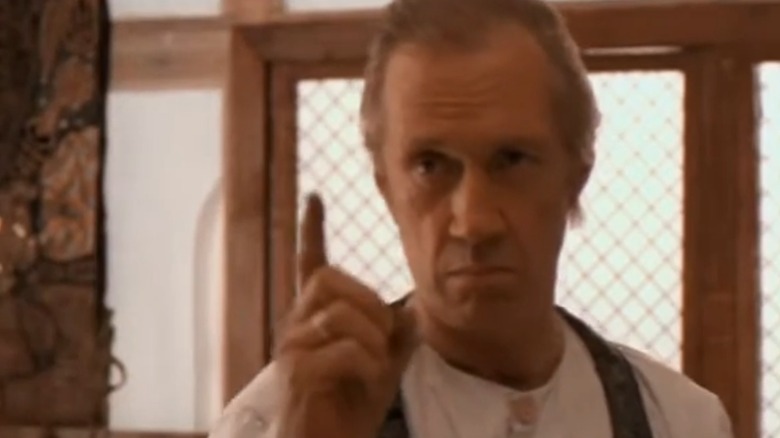
If at first you don't succeed, try, try again. Maybe that's what was going through the minds of the producers who greenlit a second adaptation of Isaac Asimov's "Nightfall" in 2000. But they might have been better off learning from Paul Mayersberg's mistakes.
This straight-to-video version was directed by Gwenyth Gibby, who also co-wrote the screenplay with John William Corrington and Michael B. Druxman. With a 40% Popcornmeter score and a 3.3 out of 10 star rating from IMDB users, 2000's "Nightfall" is slightly more well-regarded than the 1988 film, which isn't saying all that much.
This iteration arguably proves that Asimov's short story just doesn't make for a good movie. Sticking closer to the source material this time around, it highlights the six suns that have kept the planet Aeon bathed in eternal light, and invests more time into exploring the "science versus superstition" debate. Unfortunately for the movie, the ideas at the heart of "Nightfall" simply work better on the page than the screen.
5. Isaac Asimov's Robots (1988)
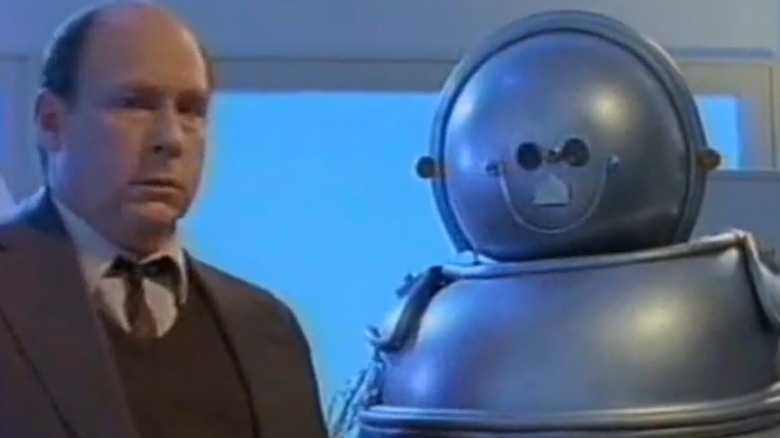
Isaac Asimov explored a wide array of sci-fi subjects, but he's arguably most well-known for writing about robots. Asimov's "Robot" series spans several short stories and novels. His Three Laws of Robotics have become iconic and continue to be referenced, and there have been several attempts to adapt parts of the series for the screen.
1988's "Isaac Asimov's Robots" is one of those efforts, and it's completely unlike any other Asimov adaptation that's ever been created. Sadly for science fiction fans, it's also pretty difficult to fully experience nowadays. The 45-minute movie is designed to be an interactive experience. Similar to modern day visual novels, the movie puts viewers in the shoes of a futuristic detective working with an android partner to solve the murder of an important scientist.
Viewers had to solve the mystery with the help of clues hidden in the movie and a set of cards that came with the VHS tape. IMDB users gave the movie a 7.6 star rating, but it would take some real dedication for a fan to track down a physical copy and play through the interactive experience for themselves.
4. The End of Eternity (1987)
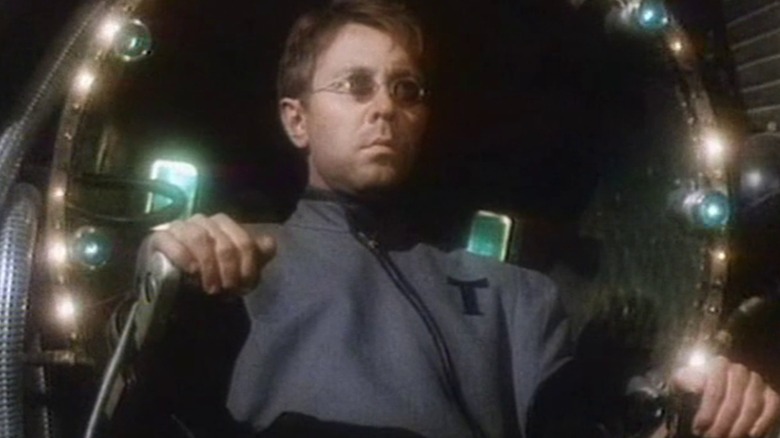
When Isaac Asimov published "The End of Eternity" in 1955, it was a completely unique and original science fiction story. The book focuses on a far-future city called Eternity that exists outside the established order of time. People called Eternals work for the city and travel through time, gathering information that they use to "correct" time and create a more prosperous future for all of humanity. The story explores thorny questions about the morals of engineering a society through all of time, and in the late 1980s, those questions appealed to Russian writer-director Andrei Yermash.
In 1987, Yermash directed an adaptation of "The End of Eternity" that he co-wrote with Budimir Metalnikov. The movie stars Oleg Vavilov as Andrew Harlan, an Eternal who falls in love with a woman from outside Eternity and begins to question his city's entire reason for existing. "The End of Eternity" only has a 6 star rating from IMDB users. Despite that, the fact that it's a traditional movie that isn't almost impossible to track down means it outranks "Isaac Asimov's Robots" by default here.
3. Bicentennial Man (1999)
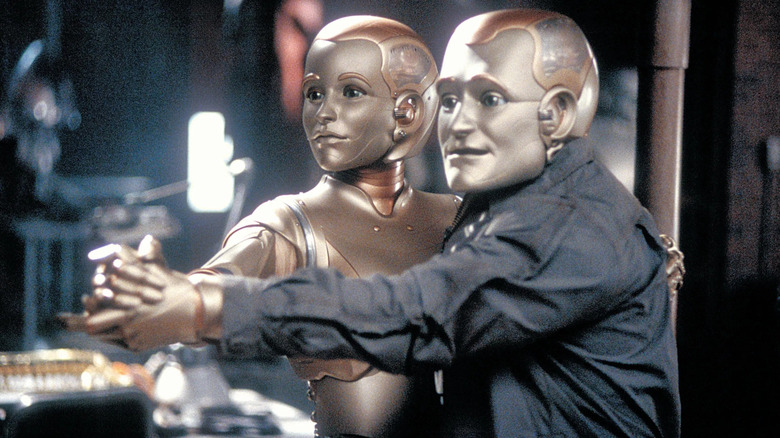
"The Positronic Man" is a robot-centered novel written by Isaac Asimov and Robert Silverberg published in 1992. The book follows Andrew, a sentient robot, and the Martin family that purchase and come to see him as a family member. "The Positronic Man" asks questions about sentience and what it means to really be alive, and inspired a big screen adaptation soon after.
Screenwriter Nicholas Kazan adapted the novel into a movie, and director Chris Columbus stepped in to bring "Bicentennial Man" to life in 1999. In the movie Robin Williams voices Andrew the robot, and he gives a fairly moving performance of a computerized being discovering what it means to be human. Unfortunately, that performance is hampered by the expressionless metal-and-plastic model robot that physically plays Andrew, a standout terrible special effect.
The eerie Andrew model, slow-moving plot, and not especially compelling script are the biggest reasons that "Bicentennial Man" is a '90s movie viewers don't care to rewatch. With just a 38% critic approval rating on Rotten Tomatoes,"Bicentennial Man" just barely manages to climb up to third place on our Asimov adaptation rankings, mostly because it doesn't have much competition.
2. I, Robot (2004)
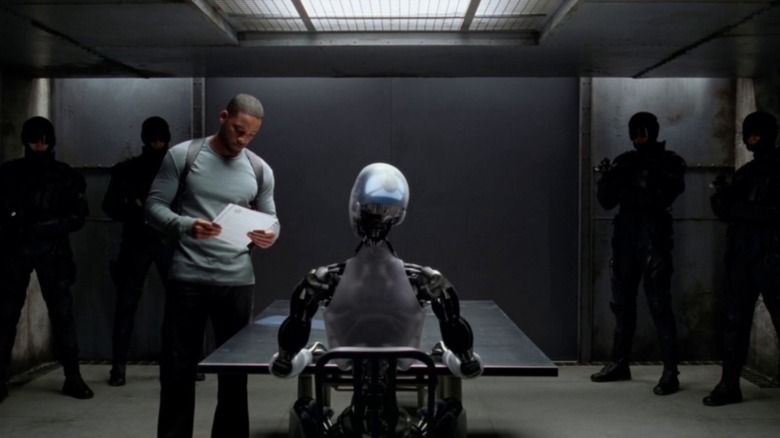
2004's "I, Robot" is tantalizingly close to being a great Isaac Asimov adaptation. But while there's plenty of entertainment to be had, it's ultimately grown increasingly unwatchable with age. Set in the year 2035, "I, Robot" stars Will Smith as Del Spooner, a detective called in when the creator of modern robotics Alfred Lanning (James Cromwell) is found dead. Spooner's investigation puts him in touch with young scientist Susan Calvin (Bridget Moynahan) and a robot named Sonny (Alan Tudyk) who had a unique relationship with Lanning.
"I, Robot" differs wildly from the book it's based on, with only a few characters and concepts from the original 1950 short story finding their way to the big screen version. Like the book, the movie explores what it would take for robots to break their programming and asks what really makes something alive. Unfortunately, the movie isn't nearly as well-written as Asimov's fiction.
Failing to ask its big questions with any grace, the script clumsily turns "I, Robot" into an action blockbuster in its final act. Critics on Rotten Tomatoes gave the movie just a 57% approval rating, but audiences gave it a more generous 70%.
1. Foundation (2021-present)
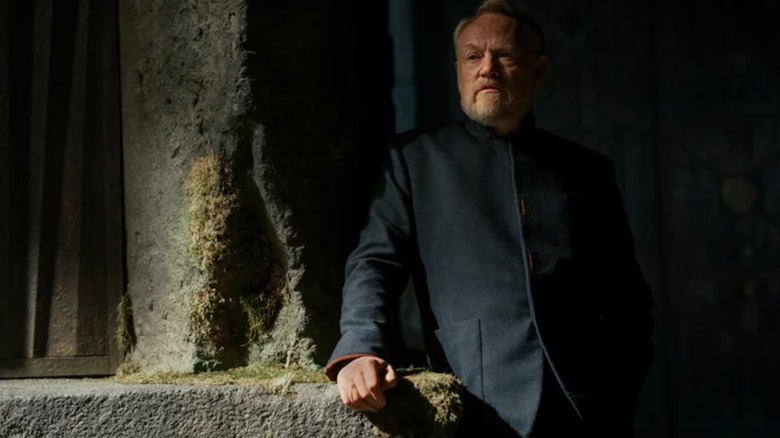
Apart from his writings on robots, Isaac Asimov is most well known for his long-running "Foundation" series. Set in a far-off future where humanity has colonized the galaxy, "Foundation" follows multiple characters and plotlines as it explores the intricacies of humanity's Galactic Empire and the endless conflicts it encounters.
While creators such as Roland Emmerich were close to making their own versions, the books' legions of dedicated fans probably never suspected they'd experience their favorite series as an acclaimed TV show. Apple TV's "Foundation" is without a doubt the best Isaac Asimov adaptation that there's ever been, with a 7.6 star rating on IMDB and an impressive 87% approval rating on Rotten Tomatoes. It features a top-notch cast who really give it their all and production values that make the futuristic worlds of "Foundation" feel believable.
What really helps set "Foundation" apart from all the other Asimov adaptations is how much of it there is. Between 2021 and 2025 Apple released three seasons and 30 episodes of "Foundation," with a fourth season on the way. If you really want to sink your teeth into Asimov's worldbuilding, then the Emmy-nominated "Foundation" is the absolute best place to start.