

Matt Damon's Bourne Follow-Up Was A Box Office Flop That's Still Worth Watching
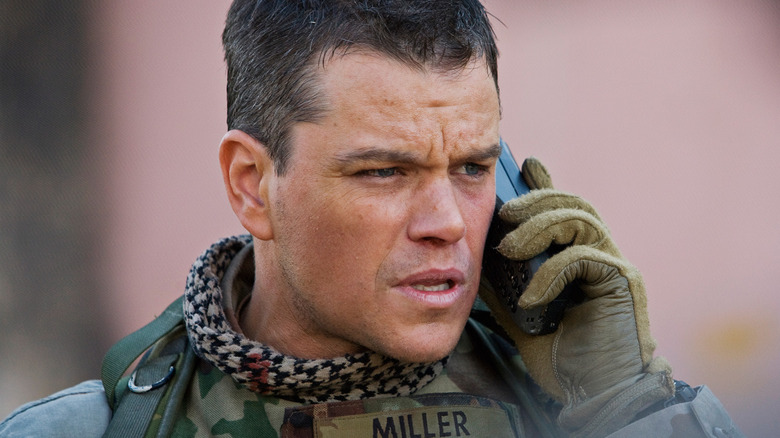
With Matt Damon back in the news thanks to his starring roles in the new Netflix thriller "The Rip" and Christopher Nolan's upcoming "The Odyssey," fans of the actor who are poring through both his best and worst movies would be remiss if they didn't take the time to watch one of his lesser-known films: 2010's "Green Zone."
Damon established himself as a leading man in the mid-2000s thanks to the "Bourne" trilogy, with the latter two entries, "The Bourne Supremacy" and "The Bourne Ultimatum," directed by Paul Greengrass. With "Green Zone," the star and director reunited for a film that promised to take the gritty, realistic filmmaking of those Robert Ludlum adaptations and apply it to the true story of what happened during America's 2003 invasion of Iraq.
Unfortunately, "Green Zone" joined other Iraq War films like "Rendition" and "Lions For Lambs" to falter at the box office, topping out at $94 million worldwide on a $100 million budget. Criticisms at the time were focused primarily on the film's resemblance visually to the "Bourne" films, with a focus on hand-held photography that was now so chaotic it had become difficult to even understand what was even happening on screen. Combined with a script that had the unwieldy task of condensing the entirety of a war into a single two-hour film, Rotten Tomatoes blamed "a cliched script and stock characters" for the movie's middling 53% score.
Green Zone was perhaps too timely for its own good
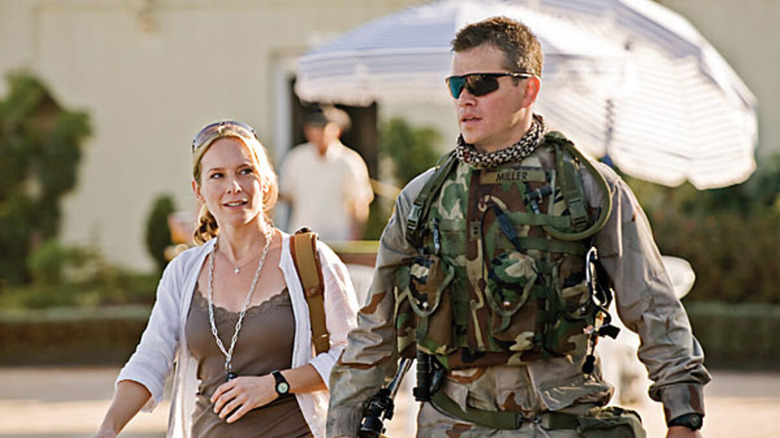
The film takes place in the immediate aftermath of the U.S. invasion, in which the Army has established the eponymous "green zone" from which they have taken control of the country, and follows Matt Damon's Chief Warrant Officer Roy Miller as he searches for the supposed weapons of mass destruction that were the rationale for the invasion in the first place. What follows is a gripping, tense thriller that unravels the true intentions of the war, and lays out the mechanics with which the U.S. government manufactured an excuse to invade Iraq.
With this "ripped from the headlines" story adapted from the nonfiction book "Imperial Life in the Emerald City" by The Washington Post's Rajiv Chandresekaran, Paul Greengrass hoped that he and Damon could bring that same evocative paranoia of the "Bourne" films to a true story, illuminating the murky truth of what happened in the weeks following the U.S. invasion at a time when the war was still winding down.
This is a level of topicality that most Hollywood films shy away from, but Greengrass dove head first into the project, with the goal of visualizing how our intelligence agencies fabricated evidence about Iraq's supposed weapons of mass destruction, plunging the country into a quagmire it couldn't pull itself out of.
It's easier to admire Green Zone's ambitions now
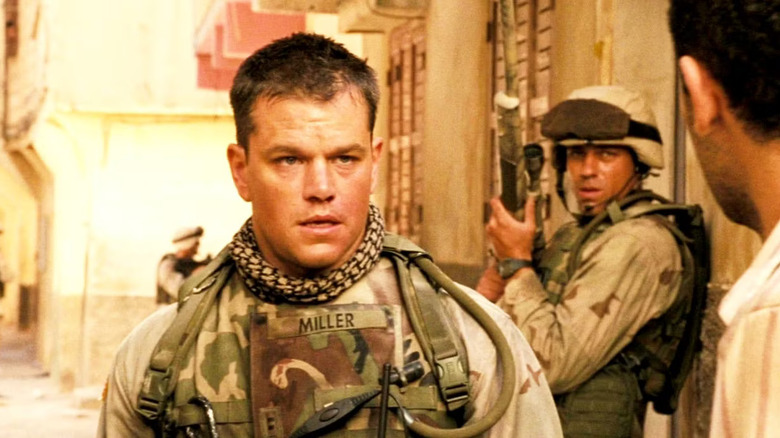
In 2010, with the war in Iraq not even officially over, it's somewhat understandable that audiences weren't champing at the bit to watch a film that was striving so hard to look like a documentary. But revisiting a film like "Green Zone" with fresh eyes is a powerful reminder of how we can use the language of film to shed light on important issues in our society.
This mindset was not popular in the early 2000s, when opposing the wars in Iraq and Afghanistan was not the political mainstream view, and that kind of thinking arguably lingered throughout the rest of the decade. But that has changed: even now, many of the best films of the past year, like "Warfare," "Sinners," "Eddington," and "One Battle After Another" are very much following in the footsteps of "Green Zone" in terms of pertinence.
As Hollywood frets about how to keep the art of film relevant to audiences — with AI slop clogging social media feeds and threatening to spill over into movie theaters — these films prove that holding up a mirror to society and asking difficult questions isn't just necessary, but is a positive path forward for telling engaging stories. "Green Zone" strove for such relevancy at a time where that wasn't the popular, or profitable, choice to make.