

5 Worst Sci-Fi Movies That Tried To Copy Star Trek
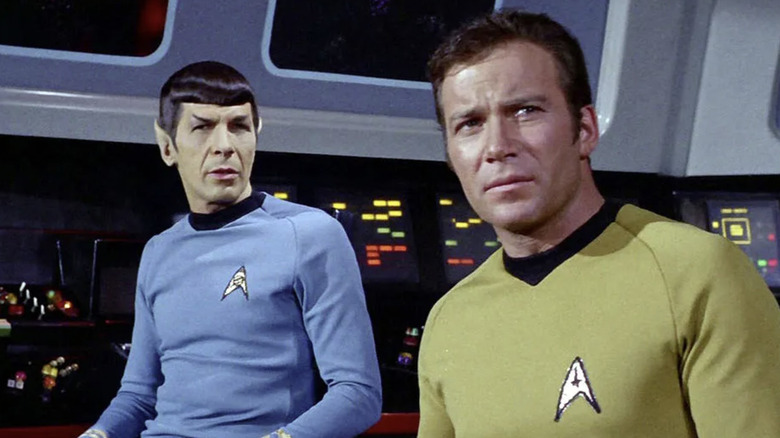
It should come as no surprise that "Star Trek," one of the most popular sci-fi franchises of all time, has been a continuing inspiration for other movies and series in the genre. It's an IP that has pushed the limits, explored all aspects of life on a spaceship, and often includes everything audiences love about sci-fi, from first contact stories to discussions about cutting edge technology. These themes aren't unique to "Star Trek," but the franchise handles them better than most, setting a global standard. It makes sense that other projects want to mimic that.
However, not every flick inspired by this landmark series is successful, and some feel like frankly obvious attempts to capitalize on what makes "Star Trek" great. There are loving parodies like "Galaxy Quest," that meant to cause chuckles among "Trek" fans, but other films are trying to be a bit more serious with their efforts — for better or worse. Mostly worse. From alien races that remind audiences of the Borg to calculated efforts to be the next great sci-fi franchise, these movies are some of the worst that tried to copy "Star Trek."
Battle Beyond the Stars
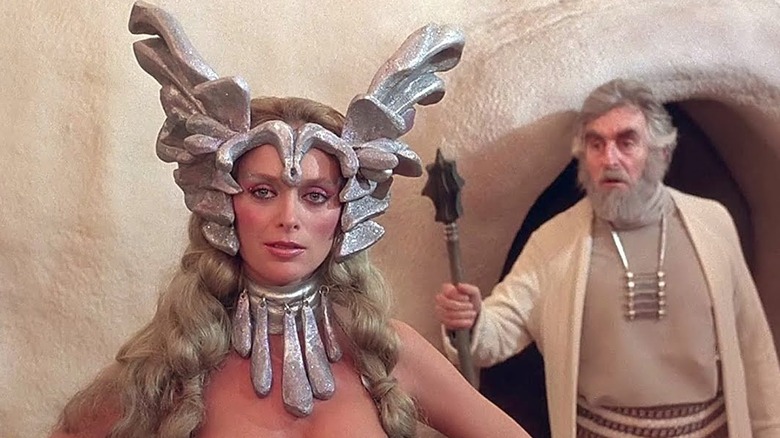
Roger Corman's 1980 space opera "Battle Beyond the Stars" follows a ruler who is stealing body parts from others because his own are failing him. From there, the plot devolves into alien clones, the gentle Zyme, that are hunted similarly to the Tulkuns in James Cameron's "Avatar" (Cameron got his big break working on this film), and a battle between the mercenaries working for the ruler and a heroic farm boy. The movie earned a 50% from critics and a 41% from audiences on Rotten Tomatoes.
That all may sound more like "Star Wars" than "Star Trek," which was Corman's intent. However, audiences quickly noticed similarities between the music of "Battle Beyond the Stars" and "Star Trek II: The Wrath of Khan." Both movies share a composer: James Horner. Michael W. Harris, a film music scholar, showed the similarities between these film scores in a talk given at the 2016 Society of Cinema and Media Studies conference, highlighting the parallels in how Horner builds musical tension and the use of "loud brass fanfare" in the main themes, among other issues.
Horner has spoken before about his creative process before, and how difficult it can be to develop entirely new music with each new job. "[This is] the sort of thing that [film] music suffers from — that you can't continue a style or explore ideas you've explored before, because they don't belong to you," Horner said in an interview with Film Score Monthly in 2004 (via The Temp Track). "I would say, more recently, it's harder and harder to be completely fresh each time." As Horner would "borrow" from himself again for Cameron's "Aliens," it must be quite a challenge for the composer.
Cosmic Sin
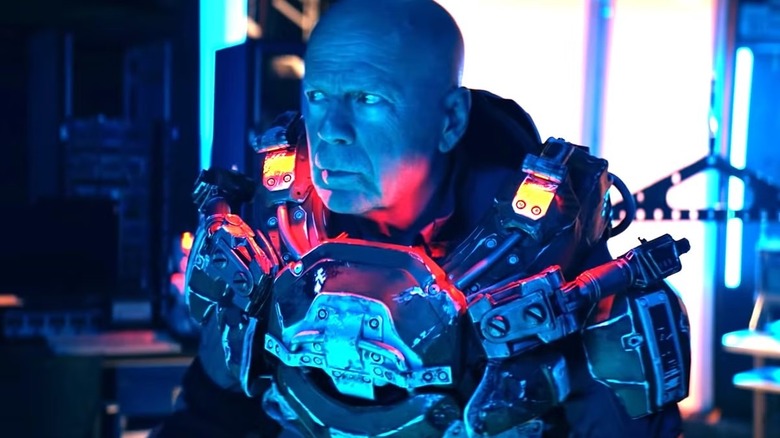
Bruce Willis stars in 2021's "Cosmic Sin," a sci-fi action flick about a human colonies in space facing a horrific form of first contact. Splintered societies fall under the dominion of the Alliance, a cohesive full-world government on Earth. Strange alien sightings have been reported, eventually igniting a battle between the Alliance and the aliens.
The aliens are passably similar to the Borg in "Star Trek," in that these intelligent extraterrestrial lifeforms thrive thanks to a hive mind that's capable of taking over organic bodies. Sure, it's not a unique concept, but it's one done well in "Star Trek: The Next Generation," with those infamous cybernetic enemies, so seeing it done (via parasites) in "Cosmic Sin" feels like an attempt to capitalize on that. Additionally, Dr. Lea Goss (Perrey Reeves), has a moment that's reminiscent of Dr. Leonard McCoy. Goss, who is the spouse of the soldier James Ford (Bruce Willis), says, "I'm a doctor, not a god." That's the kind of phrase often attributed to the Enterprise's doctor.
"Cosmic Sin" did poorly with critics and audiences alike, with a 6% and 54% on Rotten Tomatoes, respectively, and is far from one the best films on Willis's resume. At the time, Willis's performance was nominated as part of a special Golden Razzie to decide his worst performances of 2021, but the category was removed after his family publicly shared his aphasia diagnosis.
Hellraiser: Bloodline
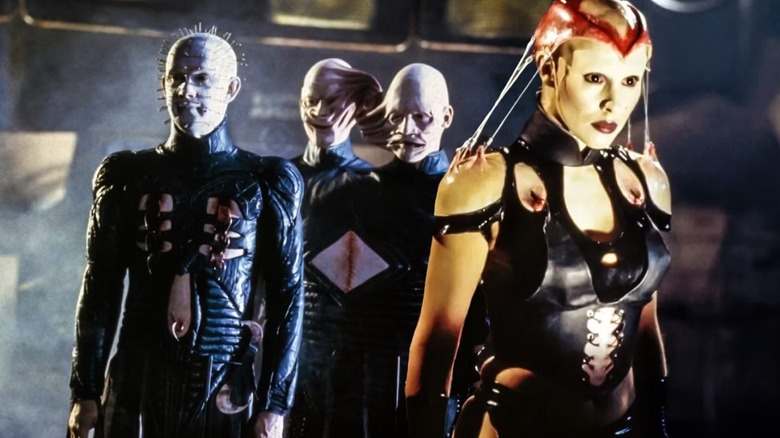
1996's "Hellraiser: Bloodline" expands on the time-twisting "Hellraiser" franchise by trying to trap the Cenobites in a space station. The film functions as both a prequel and a sequel, showing how the Cenobites were originally summoned, and how a descendant of LeMarchand (Bruce Ramsey), the original creator of that infamous puzzle box, the Lament Configuration, is attempting to fix the situation in the distant future. Everything comes down to an unceasing generational curse for opening a portal to Hell — and ends in closing it.
It might seem odd to compare "Hellraiser" and "Star Trek," but there are similarities between the two. The Cenobites are visually similar to the Borg, but more importantly, Angelique (Valentina Vargas), a character introduced in the fourth "Hellraiser" installment, seems like a stand-in for the Borg Queen. Both characters will try to use their powers of seduction to get people on their side or to do their bidding. These attempts not only fail, they lead to the ability to defeat them.
"Hellraiser: Bloodline" did the worst, critically, of the original theatrically released films. Critics gave it a 24%, though audiences were a bit kinder with a 36%, on Rotten Tomatoes. Reviews cited issues with the plot, with Variety calling it "a pointless mess" and Entertainment Weekly describing the movie as full of "incoherent moments."
Lost in Space (1998)
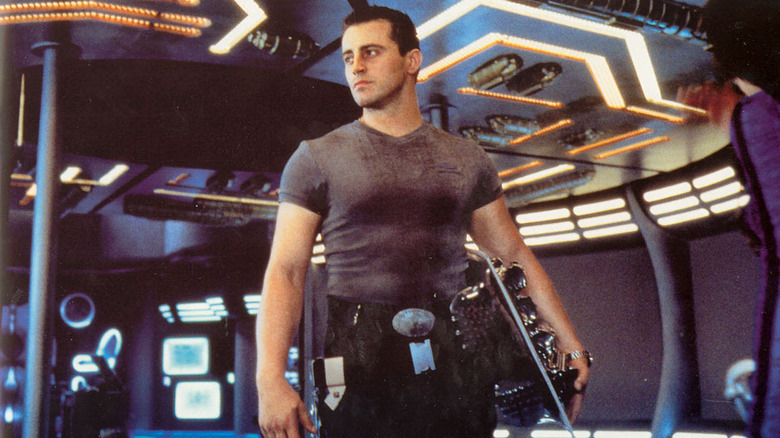
Director Stephen Hopkins tried to reboot the popular series "Lost in Space" — another genre relic from the 1960s — with his 1998 film of the same name. Humans on Earth are trying to find a new planet, since pollution has destroyed their ability to survive there. However, when someone sabotages the ship meant to secure humanity's way to their new home, the story takes a turn, complete with weird creatures, robots, and a possibly deadly gravitational pull in the middle of space.
"Lost in Space" was meant to be the next "Star Trek"-level sci-fi franchise, intended to fill out its revival with more movies and series. Those plans went out the window when the film didn't succeed with the critics. With a 27% from the reviewer pool and a 24% from audiences on Rotten Tomatoes, it's clear that, despite stopping "Titanic" in its long-running stint at No. 1 at the box office, "Lost in Space" was not worth the watch.
Desson Howe wrote for the Washington Post that the film is "a galactic slump of a movie that stuffs its travel bag with special effects but forgets to pack the charm," encouraging those who have seen the original TV series to skip the 1998 project and "keep those memories preserved." Kenneth Turan of the Los Angeles Times agreed, commenting that the film "largely jettison[s] the elements that made the TV series popular," making "Lost in Space" both a poor reboot and "Star Trek" imitation.
The Day The Earth Stood Still (2008)
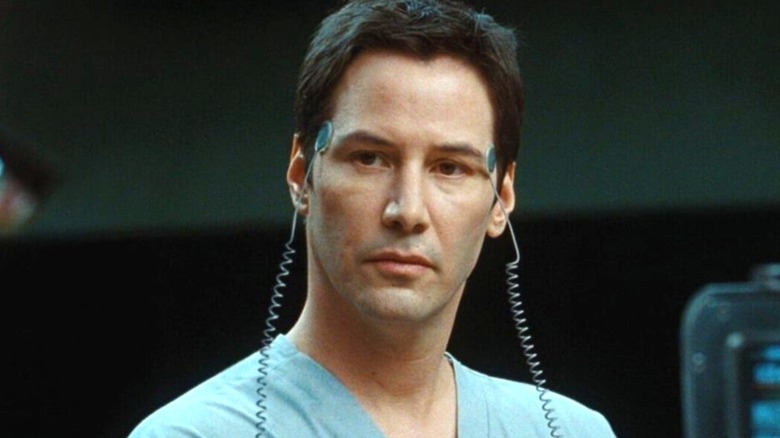
2008's "The Day the Earth Stood Still" remakes a classic 1951 sci-fi movie of the same name, with both versions following an alien trying to save Earth. The alien and its species don't want to take over our planet — it just wants to put humans on a path toward environmental recovery. The original film (with a stronger anti-war message than an environmental one, though the intent is the same) is thought to have been part of the inspiration for "Star Trek." Robert Wise directed both the 1951 version and the 1979 movie "Star Trek: The Motion Picture," creating a firm connection between the two.
Ironically, an attempt to copy "Star Trek" came along with the remake of Wise's landmark film. Starting in 2009, the rebooted "Star Trek" films, starring Chris Pine, exposed young audiences to the long-running sci-fi franchise via the revitalized "Kelvinverse" timeline. Remaking the movie believed to have partially inspired "Star Trek" right before their reboot feels like an obvious attempt to capitalize on the attention "Star Trek" (and other sci-fi classics) would receive.
Unfortunately, "The Day the Earth Stood Still" didn't do as well with the critics. While 2009's "Star Trek" boasts a 94% on Rotten Tomatoes, effectively starting the reboot trilogy on a good note, the Keanu Reeves-led "The Day the Earth Stood Still" received a 21%. Critics agreed that, despite the cool special effects, the plot just wasn't there — even if the ending is still in humanity's best interest.