

10 Box Office Bombs Turning 25 In 2026

2026 is bound to be dominated by discussions of certain modern classics turning 25 years old. "The Lord of the Rings: The Fellowship of the Ring," "Shrek," "Ocean's Eleven," "The Fast and the Furious," "Monsters, Inc.," the list goes on and on. However, while celebrations for titles like "Legally Blonde" are inevitable, it's also worth noting the box office duds that are also turning 25, and garnered disdain when they were initially released for their financial shortcomings. Many have even been solely defined by those box office numbers. However, as several action movie box office bombs that are actually worth watching prove, there's often more going on with major box office flops than meets the eye.
In this case, it's well worth diving into these 2001 box office flops and exploring what larger cultural factors led to their respective financial demises, as well as how their theatrical runs played into larger narratives surrounding certain stars, genres, or studios. We can also explore which of these films have garnered cult followings in the years since their release.
A lot can happen in 25 years, as the massive pop culture impact of 2001 hits like "The Fellowship of the Ring" and "Shrek" can attest. That timespan, though, has also lent new layers of intrigue to these box office flops celebrating a momentous anniversary in 2026.
Final Fantasy: The Spirits Within
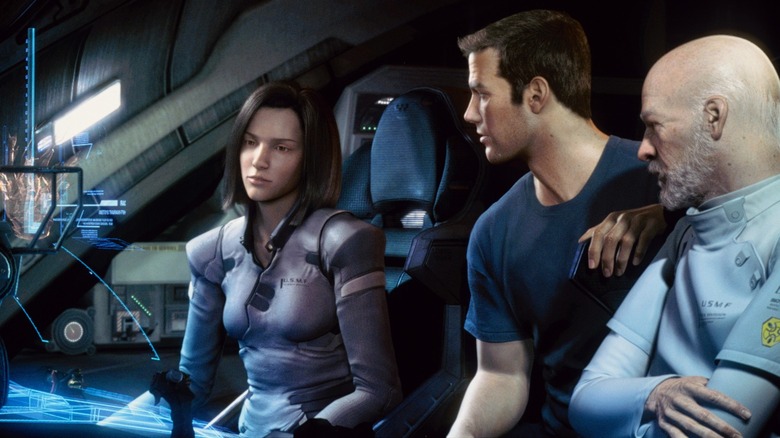
Back in 2001, CG animated movies were still relatively new. "Toy Story" had just come out six years earlier, and most studios remained largely devoted to hand-drawn animation. Before 2001, DreamWorks Animation only had one CG feature ("Antz") under its belt, the ultimate sign of how this art form was still in its nascent stages at the dawn of the 21st century. Despite that reality, director Hironobu Sakaguchi and his team set out to make a CG-animated feature drawn from the "Final Fantasy" games, firmly aimed at adults. The project was entitled "Final Fantasy: The Spirits Within" and starred the likes of Ming-Na Wen, Alec Baldwin, Ving Rhames, and Steve Buscemi.
Launched in July 2001, the hope was that this costly enterprise would translate the enormous "Final Fantasy" game fanbase into an incredibly lucrative summer blockbuster. Perhaps "The Spirits Within" would even change American perceptions of what ages animated films could target. Despite costing $137 million to produce, "The Spirits Within" crashed and burned with just $32.13 million domestically, clobbered by the significantly cheaper yet far more entertaining "Legally Blonde."
Both the uncanny valley animation style of "The Spirits Within" and its snooze-inducing dry tone turned off moviegoers looking for more propulsive summertime action cinema. All the potential in the world couldn't prevent "The Spirits Within" from becoming one of the first CG-animated movie bombs.
Osmosis Jones
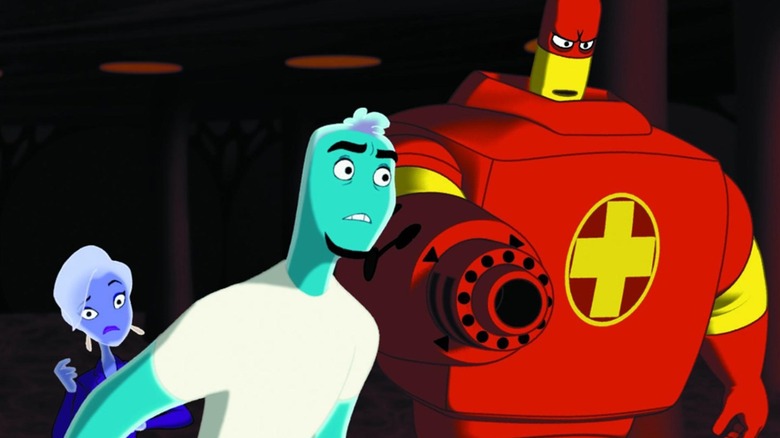
Despite the Warner Bros. name being attached to iconic cartoon characters like Bugs Bunny, this studio has had a shockingly troubled box office track record with animated movies. While "Happy Feet," "The Polar Express," and "The LEGO Movie" were hits, animated bombs like "Quest for Camelot," "The LEGO Ninjago Movie," "The Ant Bully," and many more came out of this studio. Another one of those animated flops was "Osmosis Jones," which attempted to explore the hidden world inside the human body. Chris Rock starred as a white blood cell cop who has to team up with a pill to save the human being known as Frank (a live-action Bill Murray), whose body he and countless other organisms call home.
Trying to do for molecules what "Toy Story" did for toys by way of a buddy cop movie didn't result in a box office smash. Neither the premise nor the barrage of gross-out gags struck a chord with audiences. Dropping in August 2001, "Osmosis Jones" was greatly overshadowed by competing family films like "The Princess Diaries." Grossing only $13.59 million on a $70 million budget, "Osmosis Jones" was nothing short of a financial cataclysm. Not only was it one of Summer 2001's bigger misfires, but it also added another box office blunder to Warner Bros.' track record in feature-length animation. The house that Daffy Duck built just can't catch a break, thanks to duds like "Osmosis Jones."
Freddy Got Fingered
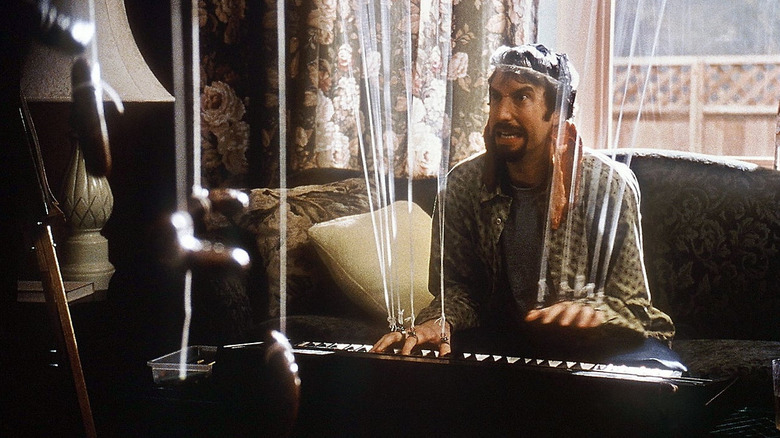
After his supporting roles in "Road Trip" and "Charlie's Angels," comedian Tom Green set off to do his own comedy movie star vehicle. This would be no typical American cinema yukfest, though. It's "Freddy Got Fingered," one of the most infamous comedies of all-time. This often surreal and inexplicable exercise was chock full of gags and unpleasantly grotesque plot points meant to try the patience of moviegoers. Initially reviled by critics, it's now amassed a strong cult following, with many finding its unique comedic rhythms side-splitting rather than pervasively abrasive.
Before those positive assessments began brewing, though, "Freddy Got Fingered" was well-known as a universally lambasted box office failure. Even on a modest $15 million budget, "Freddy Got Fingered" failed to turn a profit theatrically, with a box office haul of just $14.24 million. For comparison's sake, fellow 2001 comedy "Corky Romano" got to $23.97 million while "Joe Dirt" scrounged up $27.05 million. Coming in below those projects did not speak well to "Freddy Got Fingered's" financial success.
No wonder "Freddy Got Fingered" became a major comedy flop that ruined Tom Green's career, with the actor failing to secure further leading man roles in motion pictures. Time would eventually ensure that this oddball motion picture found its fanbase. However, that certainly didn't prevent its initial theatrical run in 2001 from being a wipe-out.
Monkeybone
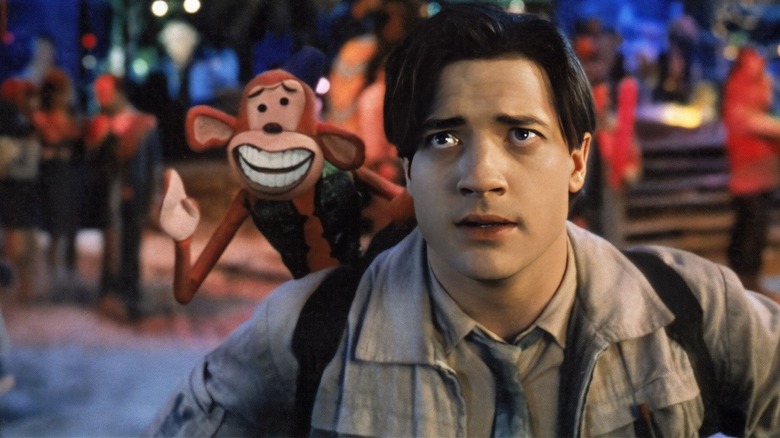
In 2001, Brendan Fraser's "The Mummy Returns" scored the second-biggest three-day opening weekend ever in North America. It was a tremendous accomplishment, signifying how much appeal Fraser had when he anchored old-school adventure films. A few months earlier, though, Fraser had a much rougher box office experience with "Monkeybone," a film that fused live-action and stop-motion animation together under the direction of "Nightmare Before Christmas" filmmaker Henry Selick. Fraser was the human lead of this wackadoodle rollercoaster, who ends up getting his mortal body hijacked by the cartoon monkey he created.
The high-concept comedy cost $75 million to make, thanks to the presence of Fraser and elaborate visual effects work. It was a bold move investing so much moolah into something this offbeat. Unfortunately, "Moneybone" didn't come close to justifying its budget for 20th Century Fox and its other financiers. After opening to just $2.65 million domestically, it only grossed $5.4 million worldwide. To this day, it remains one of Fraser's lowest-grossing wide-release movies ever.
After such a dismal performance, inevitably, speculation began running rampant on what went wrong. Many blamed the film's nearly non-existent advertising campaign as well as alleged lack of confidence in the project from 20th Century Fox brass. Whatever informed "Monkeybone's" financial capsizing, it ended up losing an alleged $69 million during its theatrical run. 2001 was truly the best of times and the worst of times for Brendan Fraser's star vehicles.
Crocodile Dundee in Los Angeles
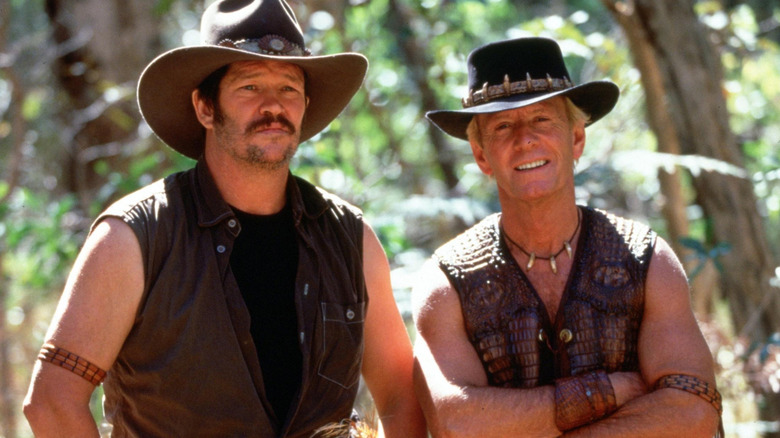
Younger audiences may not realize this, but the first two "Crocodile Dundee" films were pop culture sensations that utterly dominated the box office. The first "Crocodile Dundee" was an especially massive box office juggernaut with a $174.8 million domestic take. That made it the biggest non-"Top Gun" movie of 1986 in North America that year, beating out sequels like "The Karate Kid, Part II," "Aliens," and "Star Trek IV: The Voyage Home." Two years later, a sequel came out, "Crocodile Dundee 2," that wasn't as big as the first movie, but still ended up as the sixth-biggest feature of that year with $109.3 million domestically.
With those kinds of numbers floating around, Paramount inevitably went back for thirds in 2001 with "Crocodile Dundee in Los Angeles." In the mid-'80s, there was some novelty in juxtaposing a rough-and-tumble Australian with American culture. But by the dawn of the 21st century, the concept had become pat and familiar rather than hysterical. In its domestic run, "Crocodile Dundee in Los Angeles" only grossed $25.59 million domestically on a $25 million budget. Overseas audiences couldn't save this debacle, as it only grossed $13.8 million internationally. All these figures were a fraction of what the first two installments secured, even before taking inflation into account.
With that, the "Crocodile Dundee" saga was closed up. What once was a powerhouse brand name in the '80s became just a disastrous box office flop in April 2001.
3000 Miles to Graceland
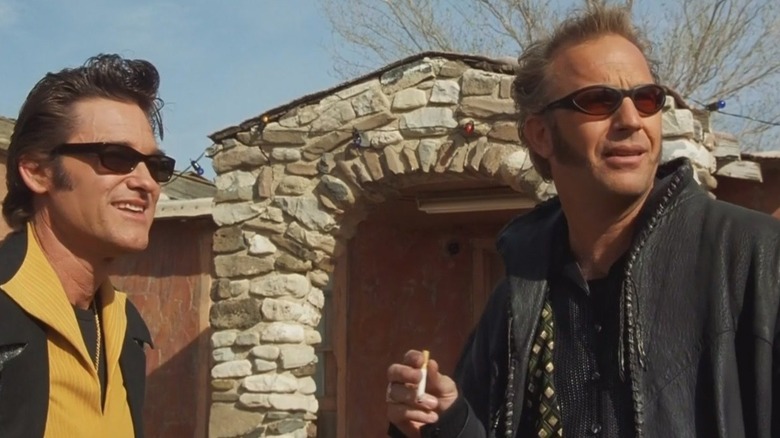
If any feature on this list sounds like it's fake, it has to be "3000 Miles to Graceland." After all, it's supposedly a film starring Kurt Russell and Kevin Costner as crooks who decided to pass as Elvis Presley impersonators so that they can pull off a Vegas robbery during a global gathering of Elvis mimics. Writer/director Demian Lichtenstein's bonkers concept for a crime feature also featured Courteney Cox, Christian Slater, Ice-T, Bokeem Woodbine, and Howie Long in supporting turns. All of this may sound like the set-up to a belabored joke, but "3000 Miles to Graceland" was a very real feature that played in over 2,500 theaters in late February 2001. Sometimes, cinema is a beautiful thing.
Frequently, committing to a perplexing concept for a motion picture ends up producing a sleeper hit, like with "Everything Everywhere All at Once." "3000 Miles to Graceland," though, flopped. This $62 million budgeted movie only grossed $15.7 million domestically and $18.7 million globally. Adult audiences wanting some big screen entertainment in February 2001 had so many other options beyond "Graceland," like "Hannibal" or "Traffic." Plus, its leading men weren't bulletproof financially. This was yet another in a string of box office duds for Costner, following "The Postman" and "Thirteen Days."
It's true that "3000 Miles to Graceland" was no box office hit. However, it's equally true that it's incredibly fun to remember, 25 years later, that such an oddball crime film got a major theatrical release.
Josie and the Pussycats
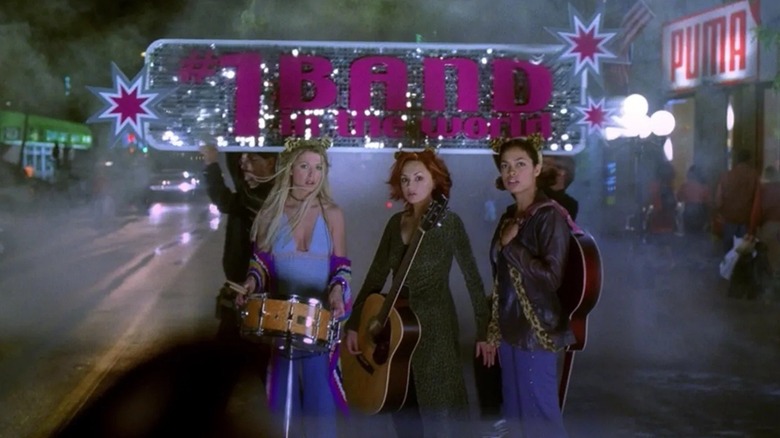
To promote her movie "The Moment," Charli XCX selected an assortment of films she considered sublime to screen at various Alamo Drafthouse locations. One of those features, situated alongside "Opening Night" and "This is Spinal Tap," was "Josie and the Pussycats." Like so many box office bombs that became cult classics, "Josie and the Pussycats" is held in high regard today. Its satirical look at the music industry, not to mention its meta-jokes, various absurdist gags, and an iconic villain turn from Parker Posey, have made it a must-watch for many. It's hard to ever imagine negativity ever being associated with this project.
Back when it first came out in April 2001, though, "Josie and the Pussycats" failed to hit any high notes at the box office. Costing $22 million to make, it grossed only $14.3 million worldwide, almost all of which came from its domestic run. These muted numbers suggested that taking a more incisive and meta-approach to this source material wasn't what moviegoers in the early 2000s wanted. Plus, as far as nostalgic cartoons from the '60s and '70s go, "Josie and the Pussycats" didn't have the brand-name recognition of "Scooby-Doo" or "Casper the Friendly Ghost."
Luckily for all involved in this feature, the "Josie and the Pussycats" saga didn't end there. While many 2001 box office bombs languished in obscurity after their respective releases, "Pussycats" has gone platinum in its general reputation. Look no further for proof of that outcome than Charli XCX's cinematic taste.
Rock Star
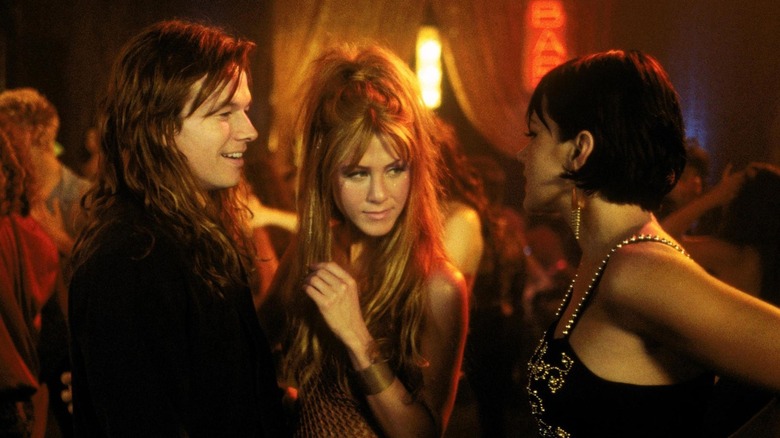
Mark Wahlberg's best and worst movies epitomize what an erratic career this guy's had. For every "The Departed" or box office hit like "Ted," there's been a "Father Stu" or "Flight Risk" to sully his reputation. However, Wahlberg was on a high note financially in the early 2000s thanks to summertime hits "The Perfect Storm" and "Planet of the Apes," both of which cracked $180+ million domestically. Arriving just a few weeks after "Apes," though, was a tremendous flop in the form of "Rock Star." A feature rooted in the saga of real-life rock band Judas Priest, "Rock Star" follows a cover song crooner who finds his dreams coming true when he gets the chance to headline his favorite musical group.
This inspirational drama, which co-starred Jennifer Aniston and Timothy Olyphant, garnered meh reviews from critics. There just wasn't much here to inspire either passionate derision or immediate fondness. "Rock Star" really hit a sour note with its box office performance, though — it grossed $16.99 million domestically and a meager $2.3 million overseas for a $19.3 million worldwide total. Costing $38 million to make, "Rock Star" was a major step backwards for Wahlberg's box office reputation.
The problem here was that heavy metal fans (the music genre the film hoped to please) didn't care about "Rock Star," while the general public was similarly disinterested in the property. This was one rock n' roll movie that didn't hit any high notes.
Evolution
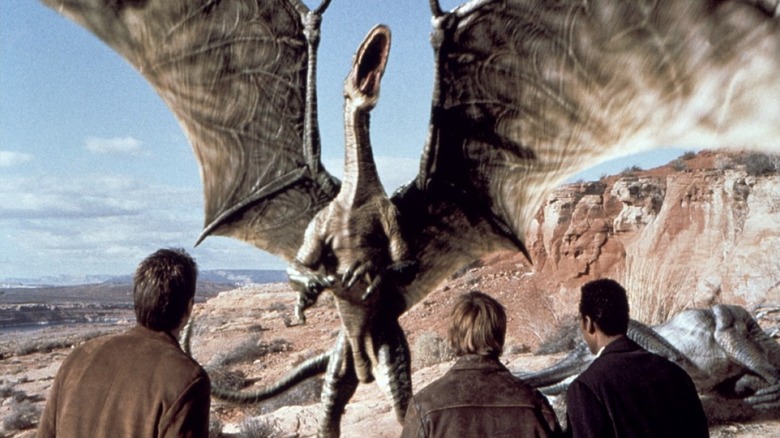
Sometimes, Hollywood makes it glaringly obvious what older films inspired new motion pictures. With its mixture of comedic actors and fantastical creatures under the direction of filmmaker Ivan Reitman, "Evolution" was clearly meant to be 2001's answer to "Ghostbusters," a 1984 comedy whose original script was (literally) out of this world. "Ghostbusters" actor Dan Aykroyd even showed up in a small "Evolution" role, while its U.S. distributor, Columbia Pictures, handled "Evolution's" release overseas. If this David Duchovny/Julianne Moore project had even an ounce of the financial success "Ghostbusters" secured, all of "Evolution's" financiers would have a mammoth new franchise on their hands.
Unfortunately, the concept of "Evolution" was much harder to sell than the notion of "ghost exterminators" in "Ghostbusters." The threat of evolving aliens intruding on ordinary Arizona life just didn't have the same kick. Plus, Duchovny, Seann William Scott, and Orlando Jones in 2001 were not as powerful as box office draws as Bill Murray and Sigourney Weaver had been in 1984. All these problems ensured that "Evolution," even without comparing it to the original "Ghostbusters," was not a moneymaker in summer 2001. Instead, it only grossed $38.31 million in North America, an anemic gross for an $80 million project.
With only $98.34 million worldwide, "Evolution" failed to kickstart sequels and oodles of lucrative merchandise. Here was yet another case of a box office flop emerging from a studio trying so hard to recreate a once-in-a-lifetime hit from years past.
Atlantis: The Lost Empire
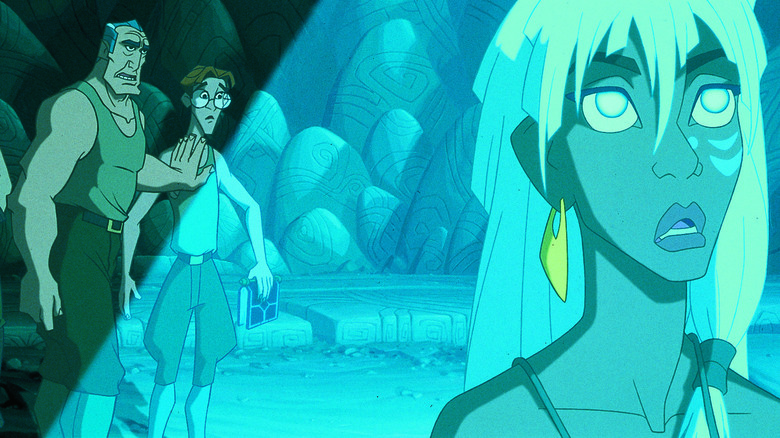
Despite the House of Mouse being synonymous with profitable and popular animated features, there are countless reasons certain animated Disney movies bombed. Some were plagued by bad reviews. Others were victims of terrible release dates. And then there's the ones like "Atlantis: The Lost Empire" that were clearly out of step with the general public's tastes. This particular project was an action-oriented ode to vintage adventure stories, particularly the works of Jules Verne. It was full of explosions, gunfire, cool-looking ships, and so many other hallmarks of action-packed cinema. It was certainly a drastic departure from the typical musical comedies Disney specialized in during the '90s.
Released in June 2001, "Atlantis" turned out to be far from what audiences wanted from their animated family films. One month before "Atlantis," "Shrek" hit theaters and became the biggest movie of summer 2001 by a massive margin. This sassy CG-animated title was all about lewd character interactions rather than grand action spectacle. Post-modern snark was in, straightforward classical adventure romps were not. Only taking in $84.05 million in North America and $186 million worldwide on a $90 million budget, "Atlantis: The Lost Empire" was a tremendous disappointment for Disney.
Not only that, but losing to "Shrek" that summer suggested the American animated cinema crown had been passed. DreamWorks and its scampish ogres were now ruling multiplexes. "Atlantis: The Lost Empire," meanwhile, signaled that Disney Animation's 2000s creative and financial slump had only just begun.