

10 Actors Who Told Studios To Kill Off Their Characters
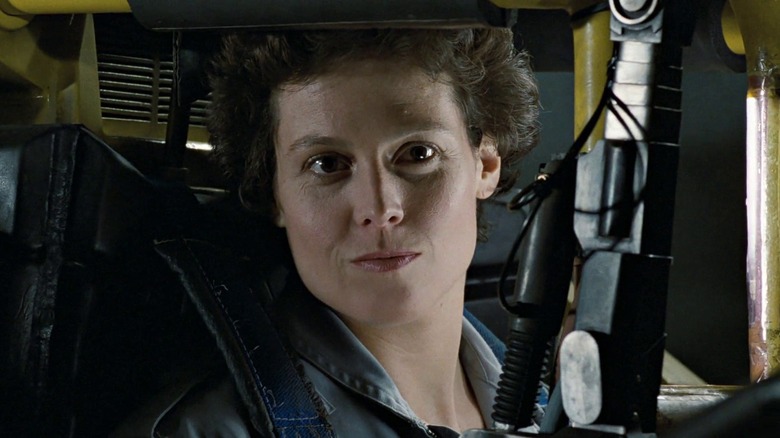
For many actors, the juiciest type of performance they can give is a death scene. Whether a character has been around for a single movie or has been integral to a franchise for decades, an actor can really chew the scenery going out in a blaze of glory. Perhaps they deliver an emotional monologue telling their friends or family how much they mean to them, or maybe a death scene is just really cool and definitive when you know that person isn't coming back. Plenty of character deaths have felt cheap, but when done right, it forever imprints itself into the zeitgeist.
Sometimes, a character death is what's best for the story — but other times, it's what the actor themselves requested. You might think an actor wouldn't want to give up a lucrative gig, especially for a part that spans multiple movies or seasons of television. But after playing the same role for years, it's understandable if a performer wants to move onto greener pastures where they can feel challenged once more.
For one reason or another, these 10 actors told the studio, director, or writer of a project to kill them off. You may not have enjoyed watching these deaths, but in some cases, it opened the doors for even greater narrative possibilities.
Harrison Ford wanted Han Solo to die a lot sooner
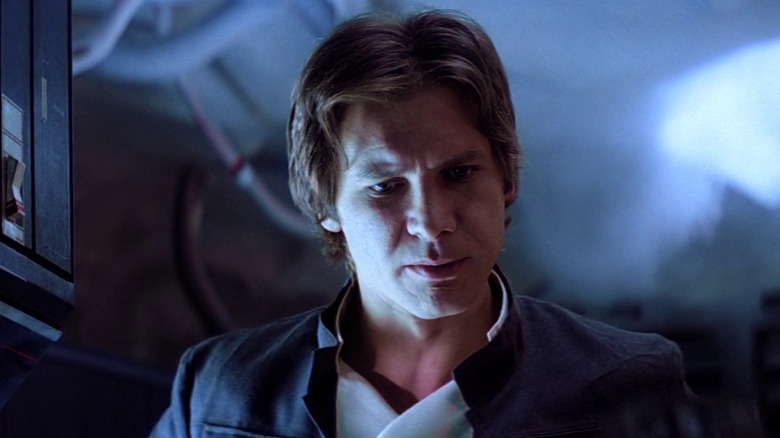
Most "Star Wars" fans will tell you that Harrison Ford has always hated playing Han Solo. The truth is a bit murkier, as he's given conflicting statements over the years, but one thing seems certain: He has always felt the character needed a noble sacrifice.
Han starts the original "Star Wars" as a brash, devil-may-care pilot who isn't concerned about anything beyond his own reimbursement. However, he grows up and becomes an asset for the Rebel Alliance, and the real reason Ford always wanted Han Solo to die was that it would complete his character arc. He'd go from selfish to making a completely selfless decision, and he wanted it to happen during the original trilogy. The whole point of Han getting frozen in carbonite at the end of "Star Wars: Episode V — The Empire Strikes Back" is that Ford wasn't committed to appearing in a third movie, so it would give him an automatic out if he didn't renew his contract.
Of course, he did return; but even then, Ford felt Han Solo should die in "Star Wars: Episode VI — Return of the Jedi" to help raise the stakes. However, George Lucas vetoed that decision. Han Solo lives and gets to celebrate with the Ewoks. Instead, his noble sacrifice would come years later in "Star Wars: Episode VII — The Force Awakens," when he's stabbed by his own son, Ben Solo (Adam Driver), while trying to convince him that there's still good in him. It devastated fans, but it was the only way for a guy like Han Solo to go out.
Charlton Heston agreed to Beneath the Planet of the Apes -- on some conditions
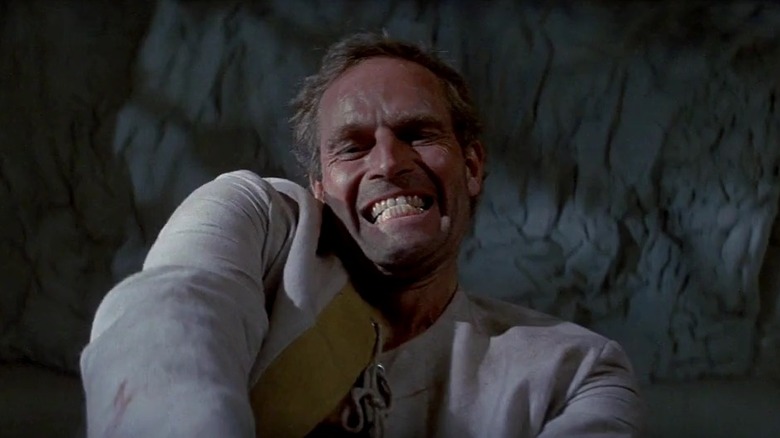
The original "Planet of the Apes" has one of the bleakest (yet best) endings in science-fiction history, where Taylor (Charlton Heston) discovers the ape-infested world he's been on this entire time isn't some far-off planet but actually a future of Earth, where humanity has been all but wiped out. The film was a hit and a sequel was greenlit, titled "Beneath the Planet of the Apes." The only problem is that Heston didn't want to return, but he ultimately agreed with the caveat the Taylor would die.
He didn't want to spearhead a whole franchise, so he would only appear as Taylor at the start of the film and then get killed off as the movie picked up with a different astronaut, Brent (James Franciscus). However, before the script was finalized, a key change went into effect. Instead of only having Taylor at the beginning of the movie, he appears at the end. The way "Beneath the Planet of the Apes" concludes is with the reveal that Taylor is being held prisoner by mutants, and after suffering a fatal wound, he triggers a bomb that kills everyone and everything on Earth.
Somehow, "Beneath" manages to have an even bleaker ending than the first film. One might assume such a resolution would effectively end any hopes of the franchise continuing past two installments. But in Hollywood, where there's a will to milk a franchise, there's a way. "Beneath" was followed by "Escape from the Planet of the Apes," in which we learn that a group of apes escaped from Earth before the big explosion and traveled back in time to 1973.
Daniel Craig was ready to leave James Bond behind after one movie
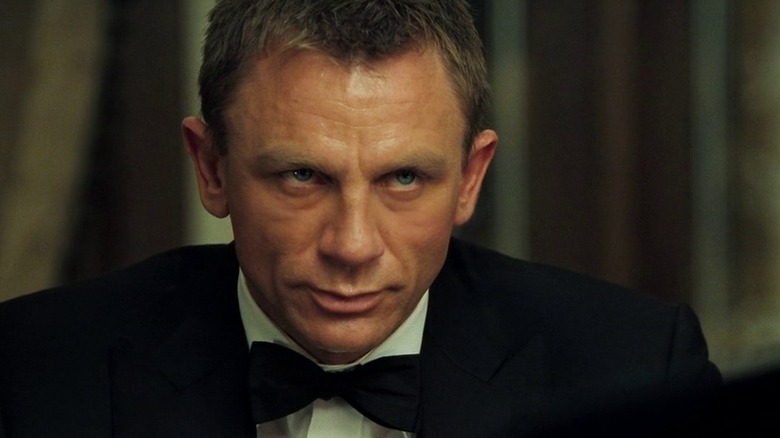
Following the campiness of the Pierce Brosnan James Bond movies, the franchise was due for an overhaul when his tenure ended. 2006's "Casino Royale" followed in the vein of dark and gritty reboots that were beginning to permeate pop culture like "Batman Begins." It saw Daniel Craig take over as Bond — but if Craig had his way, his time as the secret agent would've been a one-and-done affair.
Following 2015's "Spectre," Craig famously spoke to the press about how much he wanted to leave the character behind. But fans may not realize those feelings were percolating for a while. In a 2022 retrospective with The Times, Craig revealed how he had spoken to producer Barbara Broccoli about wanting out as soon as possible. "I had genuinely thought I would do one Bond movie, then it would be over," Craig explained. "But by then we knew we had a hit on our hands. I realized the enormity of it, so I said to Barbara, 'How many more? Three? Four?' She said, 'Four!' I said, 'OK. Then can I kill him off?' She said, 'Yes.'"
Craig, indeed, performed in four more Bond flicks, ending with 2021's "No Time to Die." Whereas previous Bond actors just kind of disappeared, Craig's version went out in a blaze of glory, dying in a massive missile strike. There's definitely no coming back from that, so Craig doesn't have to worry about getting asked back for any potential legacy sequel cameos.
Emma Caulfield wanted a poetic death on Buffy the Vampire Slayer
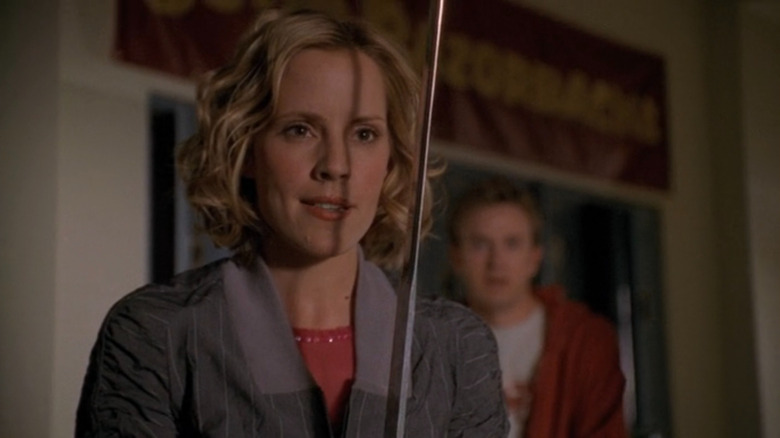
After seven seasons, "Buffy the Vampire Slayer" was ready to call it a day and delivered one of the best TV series finales that blew everyone away. Seven seasons is more than enough for any TV show, but Emma Caulfield — who played Anya from Season 3 through the finale — wanted to make sure she couldn't come back.
Anya dies pretty casually in the final episode, "Chosen." She gets sliced from behind with a sword, receiving an unceremonious end and showcasing how anyone can die in an all-out war. But the decision to get rid of Anya ultimately came to Caulfield herself, as she told Tell-Tale TV, "I asked [series creator Joss Whedon] to kill Anya. It was a pretty sure thing that we weren't going to go past Season 7, but there was an opportunity that we could. During that period I let them know I was ready to move on to something else, whatever that may be." It even sounds like she was onboard for the rather anticlimactic way she went out: "I thought that would be a poetic way to have her end — sacrificing herself for people she could never understand."
The good thing about a supernatural series is that death doesn't have to mean the end. With a "Buffy" sequel series in the works, one might assume Caulfield will remain a no-show. But the "Buffy" comics have Anya return as a spirit, so something similar could easily happen in the revival if the creative forces and Caulfield herself are game.
Alien vs. Predator made Sigourney Weaver beg for death
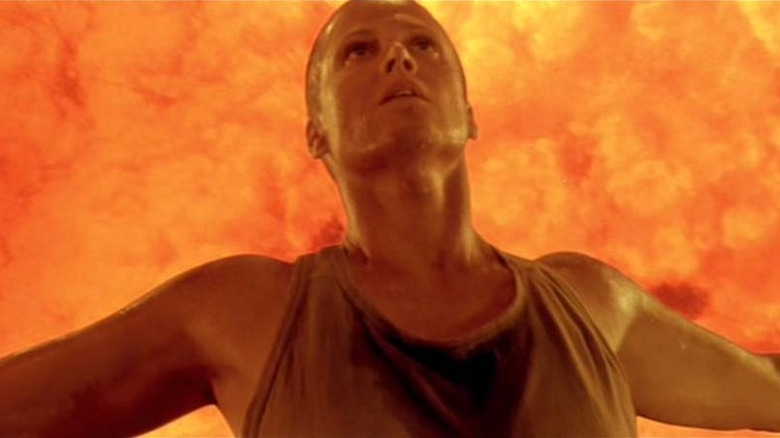
It's a blessing and a curse to spearhead a franchise. On the one hand, there's a certain level of professional stability knowing that another installment could be around the corner — but if you're not careful, you could wind up playing copies of copies of a once great role. Sigourney Weaver wanted out while the getting was good in the "Alien" franchise. Upon hearing that 20th Century Fox (now 20th Century Studios) was interested in an "Alien vs. Predator" movie, Weaver was ready to hang up the role by the time "Alien 3" came around.
An "Alien vs. Predator" comic had materialized in 1989, and a Xenomorph skull can be found in the Yautja's ship in 1990's "Predator 2." Both franchises were owned by the same studio, so a crossover seemed inevitable. Talk of a cinematic crossover must've been in the works around when "Alien 3" was getting made, because that was the deciding factor in Weaver wanting her character, Ellen Ripley, to finally die. When asked by Radio Times if she specifically requested for Ripley's death, Weaver replied, "Well, yes — because I heard that Fox was gonna do 'Alien vs Predator.' Which really depressed me because I was very proud of the movies."
Weaver would return to the role one actual final time with "Alien: Resurrection," with Ripley returning as a clone. "Alien vs. Predator" would eventually come out in 2004, and we're going to assume Weaver isn't a fan. The actor suggested Walter Hill had an "Alien" idea that could get her to return, but barring a really good story, the franchise has moved on without her.
Jeffrey DeMunn left The Walking Dead with Frank Darabont
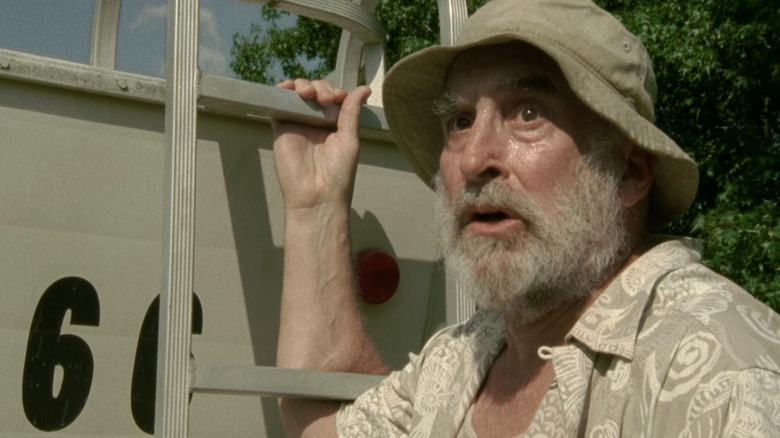
"The Walking Dead" Season 2 is notorious among fans for taking place almost exclusively on a farm. It has a slow pace, and there's not the kind of action that made Season 1 such a standout hit. One reason for that is due to AMC slashing the budget, but it also fired showrunner Frank Darabont, who had much grander plans for the follow-up season than what we got. Not only did Darabont's departure lead to a lackluster season, but it also meant Jeffrey DeMunn, who plays the group's moral compass Dale, was also leaving.
Dale dies in "The Walking Dead" comics, but it happens a lot later. The reason he dies via zombie disemboweling so early in Season 2 is due to DeMunn specifically wanting out in solidarity with Darabont. DeMunn would elaborate on his choice to leave "The Walking Dead," telling Cleveland.com, "Dale's death was my decision. I was furious about how Frank was pushed out of the show. I spent a week not being able to take a full breath. And then I realized, 'Oh, I can quit.' So I called them and said, 'It's a zombie show. Kill me. I don't want to do this anymore.' It was an immense relief to me."
DeMunn and Darabont go way back, as the two have worked together in "The Shawshank Redemption," "The Green Mile," and "The Mist." DeMunn didn't want to continue, which is admirable — and the series managed to pick back up once they left that very boring farm behind.
Raymond Cruz found Breaking Bad too draining
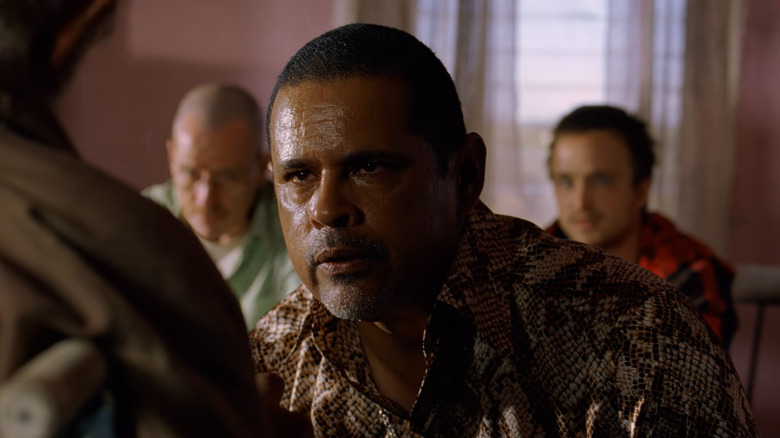
Tuco Salamanca (Raymond Cruz) is a crucial character at the start of "Breaking Bad." He becomes Walter (Bryan Cranston) and Jesse's (Aaron Paul) meth distributor, and he has a psychotic, unpredictable nature where you have no idea what he'll do next. It's in stark contrast to the buttoned-up personality of Walter, and the character was a little too dark for Cruz.
Tuco's finally killed off early in Season 2 when he gets into a shootout with Hank (Dean Norris), who delivers the fatal blow. But it's possible Tuco could've lasted a bit longer if Cruz didn't want out, according to AMCtv.com. "I asked them to kill me. Honestly, I wasn't looking forward to coming back and doing the part," he said. "They were like, 'We want you to come back and do eight more episodes.' And I said, 'No. I'll do one more and that's it. You guys have to kill me.'"
It's fascinating to think how Tuco was seemingly supposed to be a larger presence throughout Season 2. His demise allowed for Hector Salamanca (Mark Margolis) to have a bigger role and opened the doors for the Cousins (Daniel and Luis Moncada), and eventually Gus Fring (Giancarlo Esposito), to cause Walter and Jesse even more problems. The role may have been dark, but fortunately, it didn't stop Cruz from briefly reprising Tuco in a few episodes of "Better Call Saul."
Danny Trejo has a clause stating all his bad guys have to die
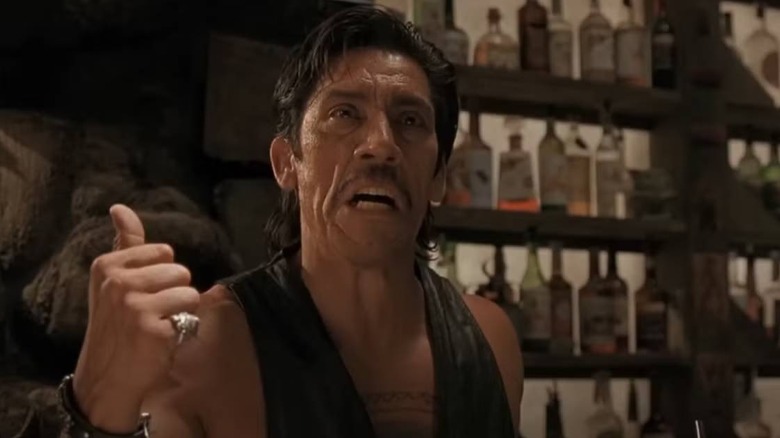
Danny Trejo has over 400 film and television acting credits to his name, so by sheer volume, it makes sense that he's one of those actors whose characters always seems to die. He could honestly give Sean Bean a run for his money, but there's a good reason why Trejo's character death count is higher than most, and it's because he often requires his roles to die — at least, if they're a villain.
On X, Trejo confirmed that he has a clause in his contracts stipulating that if he's playing a bad guy, they have to die. This is seemingly so that he can impart the message that crime will only lead to trouble. Going back through his filmography, you can see a lot of this happening, like his role of Razor Charlie in "From Dusk till Dawn," a vampire who gets staked through the heart. He also had a memorable death on "Breaking Bad" with his character Tortuga, who's a drug runner and DEA informant. He notoriously winds up decapitated with his head placed on a tortoise for the DEA to find.
Trejo has personal reasons for wanting to show the dark side of criminal life. He spent many years in and out of prison for drug dealing and assault. He turned his life around and started making waves in Hollywood, in part thanks to his inherently gruff demeanor making him a shoe-in for any criminal parts.
Channing Tatum knew G.I. Joe: Retaliation would be awful
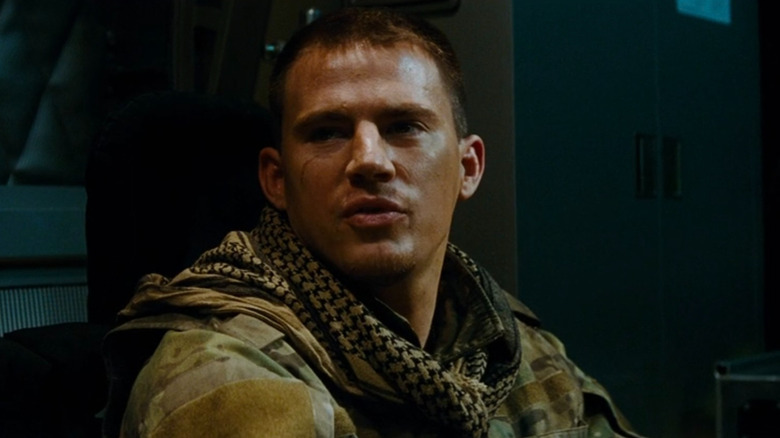
As an actor, you probably have an inkling when a movie you're working on is going to suck. That was definitely the case for Channing Tatum working on "G.I. Joe: The Rise of Cobra," a role he regrets filming. He's talked about how he would've been down to play the coolest character Snake Eyes (Ray Park), but Paramount wanted him as Duke instead. Unfortunately, he had signed a multi-picture deal with the studio, so Paramount had the upper-hand in getting him to do what it wanted.
That wasn't the case when the sequel, "G.I. Joe: Retaliation," came around — despite playing the lead in the first one, Tatum wanted out immediately. This resulted in his character getting killed off in the first 10 minutes, and Tatum's glad he asked to part ways with the flailing franchise. He told Vanity Fair, "The first one I passed on seven times, but they had an option on me and I had to do the movie. So the second one, I obviously just didn't want to do that one either."
It was a wise move on Tatum's part. The first "G.I. Joe" received a poor 33% rating from critics on Rotten Tomatoes, and "Retaliation" somehow did worse with a 29% rating. Tatum made the right decision focusing on projects like "Foxcatcher" and "22 Jump Street" during that time.
Liev Schreiber wanted out of Scream before it got repetitive
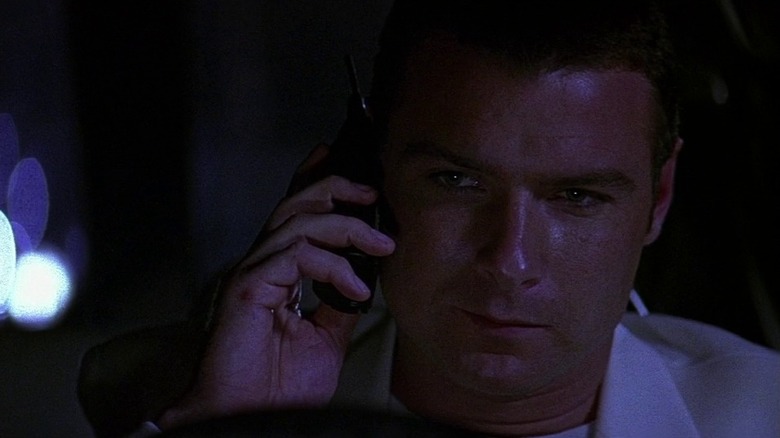
The "Scream" franchise is known for killing off a character in the opening scene. The first one is obviously the most iconic, with Drew Barrymore's Casey meeting a violent end at the hands of Ghostface despite Barrymore being such a prominent star. "Scream 3" broke the mold by killing off recurring character Cotton (Liev Schreiber) in the opening scene after he refuses to give up Sidney's (Neve Campbell) whereabouts. But this death wasn't merely done for shock value and getting rid of a character who had been there since the first "Scream." Schreiber specifically wanted it.
While breaking down his time in the world of "Scream" with GQ, Schreiber explained how he was ready to move on from Cotton. While the first "Scream" came early in his career, other opportunities arose, and he didn't want to be locked into doing the same character repeatedly. "I kind of suggested that they knock me off," Schreiber explained. "Part of the device of the movies was that somebody in the first five minutes gets killed, and we really don't expect them to get killed. Which, now, I'm kind of kicking myself because I would've liked to be in 'Scream 5,' '6,' I can't remember what number it is."
With Cotton dead, there probably aren't many opportunities for Schreiber to return to "Scream." But he did join another franchise playing Sabretooth in "X-Men Origins: Wolverine," and seeing how much superhero movies love bringing back old actors into multiverse stories, maybe there's a shot of seeing him reprise a role there.