

Stranger Things Was Not The First Show Fans Theorized Had A Secret 'Good' Ending
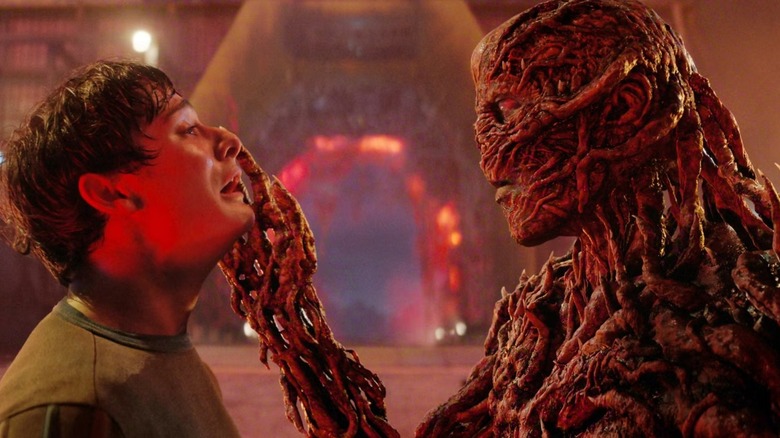
On January 7, 2026, at around 8pm EST, Netflix crashed. The service had crashed a week earlier on New Year's Eve from the flood of viewers hyped to watch the final episode of "Stranger Things." These crashes a week later came from a smaller but still noteworthy number of viewers hyped to watch what they thought would be the actual final episode of "Stranger Things." A section of the fandom had bought into the Conformity Gate conspiracy theory, which proposed that the final episode was so disappointing because it was actually an illusion created by Vecna (Jamie Campbell Bower), which would be revealed in a secret episode released a week later. No such episode exists, so now fans will simply have to accept that the "Stranger Things" finale is just kind of dumb.
If this story is giving you a sense of déjà vu, it's probably because you've been around TV fandom spaces long enough to remember when this exact same thing happened in 2017 with BBC's "Sherlock." Like "Stranger Things," "Sherlock" attracted a passionate fanbase right from the get-go. And, also like "Stranger Things," the Emmy-winning crime drama took long breaks between each subsequent season, with each new batch of episodes getting a little worse as the series limped towards a finale that kind of sucked. Some fans couldn't believe a show that started so promisingly had jumped the shark so dramatically — and that's where the JohnLock Conspiracy emerged from.
Shippers thought a secret ending would canonize JohnLock in Sherlock
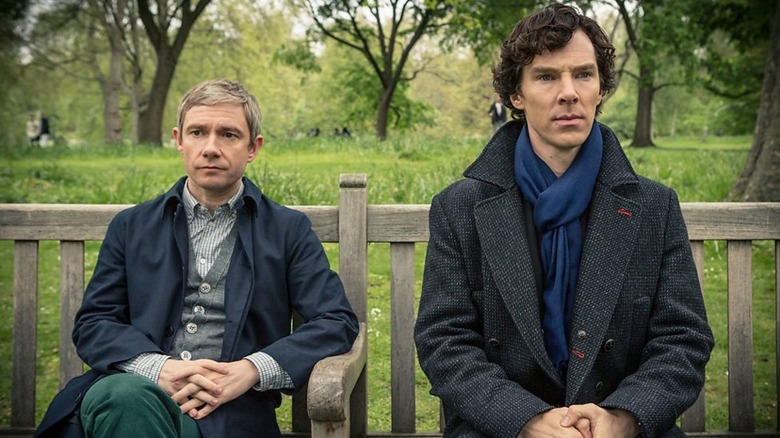
To understand the JohnLock Conspiracy, you need to understand the culture of 2010s Tumblr. The site was a safe space for queer people, and many users gravitated towards "Sherlock" in part because of how easy it was to "ship" its modern incarnations of Sherlock Holmes (Benedict Cumberbatch) and John Watson (Martin Freeman). The show seemingly made an effort to appeal to this section of the audience by dropping in moments that could be perceived as homoerotic, but it did so mostly for laughs. The result was that some Tumblr users continued to imagine the detectives as a couple while others criticized "Sherlock" for queerbaiting.
The JohnLock Conspiracy eventually made it to other parts of the internet, namely X, which was still Twitter at the time. When users caught wind of some comments that co-creator Stephen Moffat had made about the importance of queer representation, they took it as proof that JohnLock was real. However, Moffat was talking on a Comic Con panel that had nothing to do with "Sherlock" and was quick to clear up that he wasn't confirming anything. "It is infuriating, frankly, to be talking about a serious subject and to have Twitter run around and say oh, that means Sherlock is gay," he said (via Paste).
Despite these comments, internet sleuths convinced themselves the series would end with Holmes and Watson kissing. When that didn't happen, shippers subsequently convinced themselves that an additional episode would air the following week during the scheduled premiere of the unrelated drama "Apple Tree Yard" – which also didn't happen. The ending of "Sherlock" was so bad that it ruined the show for many fans, so the denial is perhaps understandable. What happened with the "Stranger Things" fandom (minus the shipping drama) is just history repeating itself.