

5 Dark Marvel Comics Storylines Too Disturbing For The MCU
After nearly two decades of incredible action and unforgettable heroes, the Marvel Cinematic Universe stands as one of the biggest pillars of pop culture in the 21st century. With dozens of projects spanning feature films and television shows, the franchise has adapted some beloved Marvel Comics storylines for the screen. However, as it's made to appeal to a wide audience, there are some stories from the comics that are way too dark for the MCU.
The animated miniseries "Marvel Zombies," based on the comics of the same name and the goriest MCU project yet, suggests that Marvel Studios isn't afraid to lean into violence, and "Deadpool & Wolverine" saw the MCU go R-rated on the big screen for the first time. However, both of those projects pale in comparison to the dark comic book storylines we're going to cover in this article, one of which has even been condemned by one of the credited writers.
The following article discusses sexual assault and incest. If you or anyone you know has been a victim of sexual assault, help is available. Visit the Rape, Abuse & Incest National Network website or contact RAINN's National Helpline at 1-800-656-HOPE (4673).
Carol Danvers gave birth to her rapist
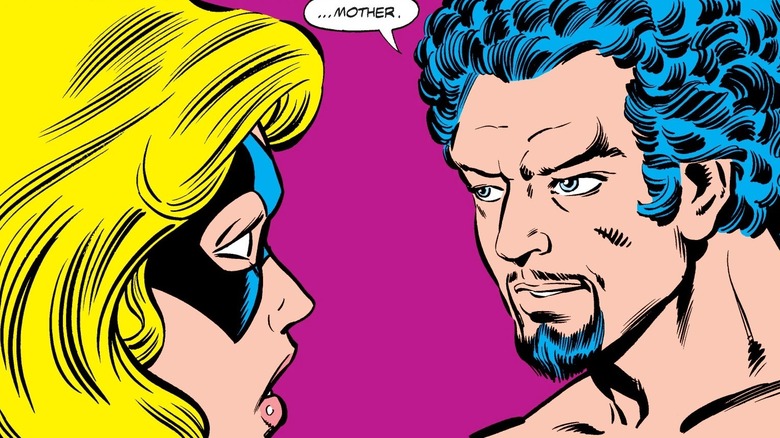
Today, Carol Danvers is best known as Captain Marvel, a United States Air Force pilot turned cosmic powerhouse played by Academy Award winner Brie Larson in the Marvel Cinematic Universe. In 1980, however, Carol Danvers was Ms. Marvel and she was at the center of the most infamous "Avengers" comic book storyline ever published. In "Avengers" #197, Carol learns she is pregnant by an unknown force, and in "Avengers" #200, she gives birth. Carol is horrified, but, bizarrely, her teammates are thrilled to have a new baby in the Avengers mansion. The baby quickly grows to adulthood, calling himself Marcus and informing the Avengers that he is his own father.
The child of Immortus, a variant of Kang the Conqueror, Marcus was born in the dimension Limbo. He kidnapped Ms. Marvel and impregnated her with his essence so that he could be reborn on Earth. He actually states that he managed to do this "with a subtle boost from Immortus' machines," confirming that Danvers was mentally manipulated. With the Avengers' help, Ms. Marvel returns to Limbo with her lover/son to continue their "relationship."
"Avengers" #200 was immediately controversial. Readers noted that Marcus "seducing" Carol via mind control was sexual assault and were appalled that the Avengers had betrayed their friend by aiding him. Carol returns from Limbo in 1981's "Avengers Annual" #10 in which she cathartically unleashes her fury at the Avengers, who acknowledge their failure. In 2011, former Marvel editor-in-chief Jim Shooter admitted on his website that he regrets signing off on the book. "The buck stopped at my desk. I take full responsibility. I screwed up. My judgment failed, or maybe I wasn't paying enough attention. Sorry. 'Avengers' #200 is a travesty."
Ultimate Quicksilver and Scarlet Witch were too close for comfort
In 2000, Marvel launched the Ultimate Universe, a publishing line that reinvented their classic heroes like Spider-Man and the X-Men for a brand new century. The Avengers were reimagined as The Ultimates, with the comic's stylish and cinematic approach to modern superheroes serving as a major influence on the MCU. While a massive success, "The Ultimates" faced some criticism for its more graphic and sensationalist plotlines, like Ultron leaking Black Widow and Iron Man's sex tape. And then there are Ultimate Quicksilver and Scarlet Witch.
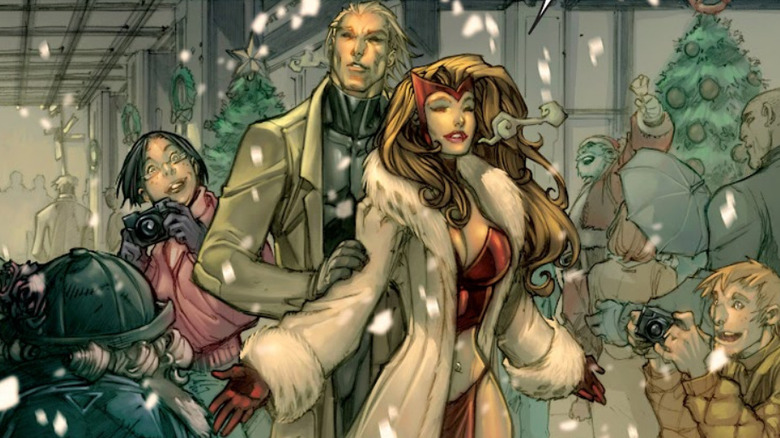
In the mainstream Marvel Universe, Pietro and Wanda Maximoff have an insanely complicated personal history, but are nevertheless loving and dedicated siblings. "The Ultimates" takes things much further, suggesting that the co-dependent mutant superheroes have a more illicit relationship. 2007's "Ultimates 3" #1 throws away the subtext, confirming to the reader (and a flummoxed Captain America) that Pietro and Wanda are incestuous lovers, which is just one of the many things Marvel wants you to forget about Scarlet Witch.
After a cameo at the end of "Captain America: The Winter Soldier," Scarlet Witch and Quicksilver joined the Marvel Cinematic Universe in 2015's "Avengers: Age of Ultron," played by Elizabeth Olsen and Aaron Taylor-Johnson. With Quicksilver dead at the end of that film, the siblings' screentime together was short and mercifully free of incestuous overtones. Scarlet Witch is now deceased in the MCU, as well, so — thankfully — this ick-inducing version of the twins' relationship won't ever make it to the MCU.
X-23 was an underage sex worker in her comic debut
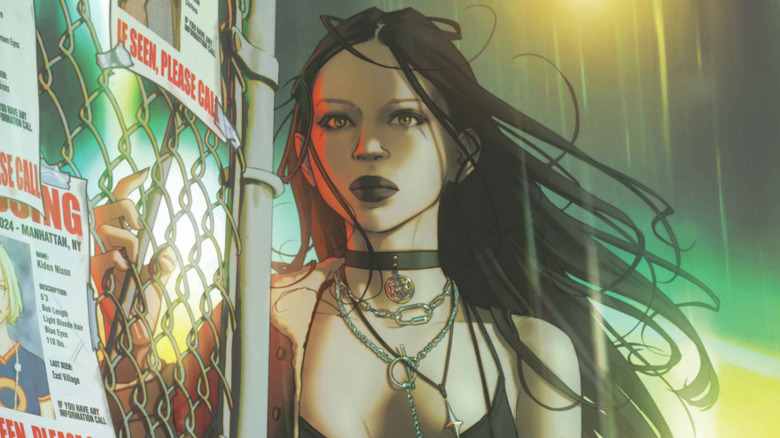
Wielding six adamantium-laced claws and a powerful healing factor, X-23 has cut an incredible swath through the Marvel Universe and proved herself as one of the defining female superheroes of the modern era. A teenage clone of Wolverine, X-23 was created by Craig Kyle and Christopher Yost for a 2003 episode of the animated series "X-Men: Evolution." X-23 proved popular enough to cross over into Marvel Comics continuity, but her debut in "NYX" #3 is deeply disturbing.
"NYX" was a short-lived Marvel series about the teenage mutants who didn't become X-Men, exploring themes like homelessness, school violence, and drug use. The series introduces X-23 as a self-harming teenage sex worker catering to sadomasochistic clients. Though "NYX" ends with X-23 free from the clutches of the pimp Zebra Daddy, it remains a bizarre choice to feature a character from a kids cartoon as an underage sex worker in an adult-themed comic book.
After the end of "NYX," Kyle and Yost returned to establish X-23's origin as a clone engineered by the Weapon X program to be an assassin. Breaking free of her programming, X-23 (real name Laura Kinney) began a long career as a superhero, eventually inheriting the "Wolverine" mantle. Memorably played by Dafne Keen in the hit film "Logan," it remains to be seen if Laura will appear in future MCU X-Men projects -– if she does, you can guarantee that they'll skip this part of her backstory.
The Lizard killed and ate his own son
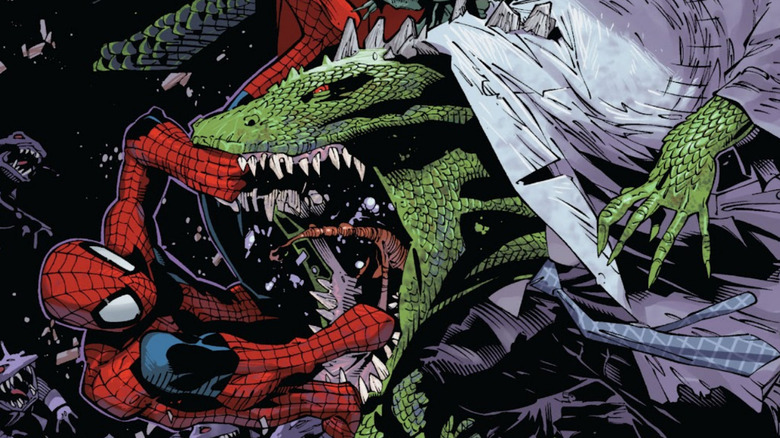
The Lizard is one of the oldest and most tragic members of Spider-Man's rogues gallery. Introduced in 1963's "Amazing Spider-Man" #6 by Stan Lee and Steve Ditko, The Lizard's real name is Dr. Curt Connors, a brilliant scientist whose experiments with reptilian DNA transform him into a monstrous, humanoid lizard. Spider-Man develops a cure for his condition, though over the decades Connors repeatedly shifts from his human self — Spider-Man's ally and devoted father to his young son Billy — to the sinister supervillain The Lizard.
Dr. Connors' crisis of character has tragic consequences in the now infamous "Shed" storyline. In 2011's "Amazing Spider-Man Vol. 2" #631, The Lizard attacks Billy, who tearfully confesses he knew that his father would someday kill him. "You're going to kill me, aren't you? I knew it. I've always known it," he says before The Lizard eats him alive.
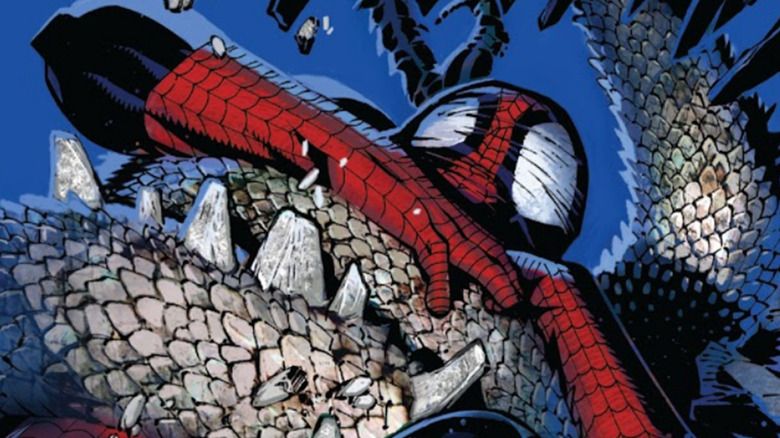
Spider-Man has seen more than his fair share of death in his long career, but Marvel seemed to realize that a supervillain killing and eating a little boy was going too far. In 2015's "Amazing Spider-Man Vol. 4" #4, the evil super-scientist Jackal clones Billy, who is later transformed into a human/lizard hybrid. Then, in 2019's "Amazing Spider-Man Vol. 5" #21, the restored Connors and Dr. Strange use magic to confirm that the clone possesses the soul of the original Billy, making him truly Connors' son reborn. The Lizard is a classic Spider-Man foe, but the "Shed" storyline belongs at the bottom of a swamp, not in the MCU.
Bruce Banner became a mass of tumors in Ruins
In 1994, Marvel Comics published "Marvels," a four-issue limited series by Kurt Busiek and Alex Ross that depicts the early days of heroes like the X-Men and the Fantastic Four through the lens of Daily Bugle photographer Phil Sheldon. "Marvels" is a modern classic and a moving tribute to the Silver Age of Marvel Comics. A year later, writer Warren Ellis pessimistically parodied "Marvels" with the two-issue series "Ruins," which ruthlessly re-imagines the Marvel Universe as a place where anything that can go wrong, will go wrong. Mutants are mutilated to control their powers, aliens are imprisoned in a concentration camp, and people don't get superpowers from exposure to cosmic rays –- they die horrible deaths.
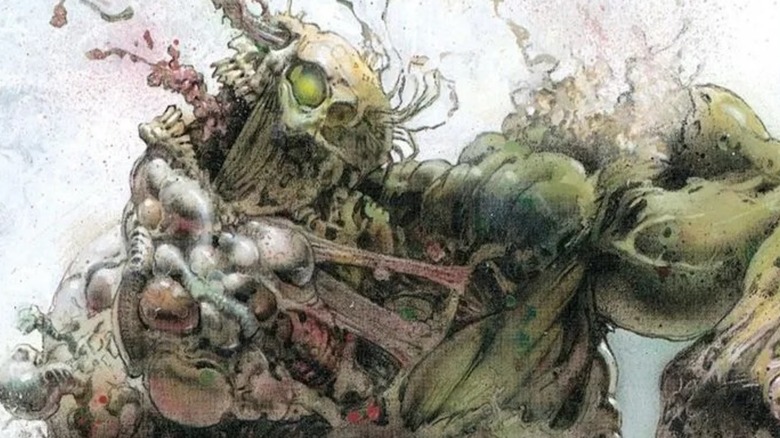
Perhaps the most disturbing storyline in "Ruins" concerns the fate of Bruce Banner, who Marvel fans know as the Hulk. Phil Sheldon interviews paranoid addict Rick Jones, who in the Marvel Universe is Hulk's best friend and sidekick. In both worlds, Bruce Banner saves Jones from an experimental bomb, only to be bombarded with gamma radiation. In "Ruins," Banner isn't transformed into a jade giant in purple pants — instead, he mutates into an enormous, exploding mass of tumors and is mercilessly kept alive by his captors, the CIA. The married artistic team of Cliff and Terese Nielsen had divorced before "Ruins" hit shelves, adding to the bleakness of the whole endeavor.