

15 Worst Horror Movie Endings Of All Time
Horror movies should have spectacular endings: The killer dies, the girl makes it out of the cave, the demon is sent back into The Further, the list goes on. It's part of what makes the jump scares and tension worth it. You root for the final girl to run fast enough, the priest to complete the exorcism, and the strange creature to melt under water. Without a great final note, a film flops like a fish across the finish line.
There are times when even the best movies have awful endings. Sometimes the ambiguity feels less planned and more like the writers weren't sure how to end it. Or maybe who the killer is doesn't actually make any sense. No matter what it is, a lackluster finish can happen to any film, but only some can claim to have the worst. Be warned, every horror flick on this list gets spoiled (and so do a few others), so only continue if you're ready to find out just how bad the worst horror movie endings of all time are.
Would You Rather (2012)
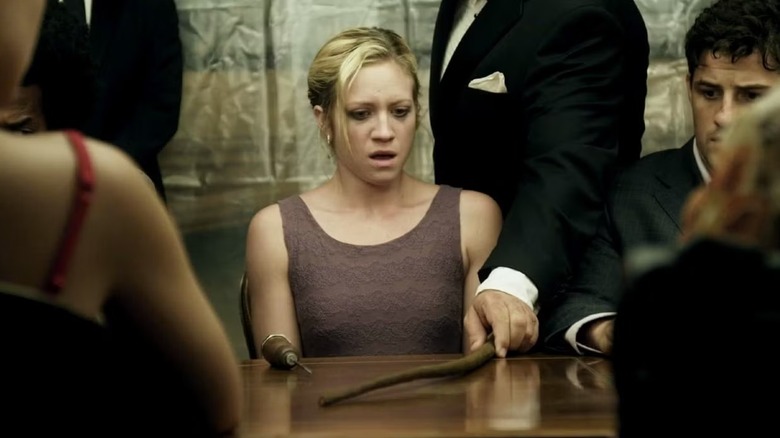
"Would You Rather" follows Iris (Brittany Snow), a woman trying to help her younger brother receive his cancer treatment. It's expensive, but after his doctor introduces her to a wealthy man, she finds a way to afford the treatments. If she wins a game at the man's dinner party, he'll give her the money she needs.
What ensues are twisted games that result in the deaths of the other players. It isn't what Iris thought she was in for, but she wins. This should make for a good ending after the terror she's experienced, but it's short lived. Iris gets home and finds her brother dead. He died by suicide in an attempt to help her, and it means everything she just went through was for nothing.
This isn't the kind of ending you want after a horror film like this. Iris has done horrible things, even willingly shooting someone, all because she thought it would save her brother. It is a macabre finish that makes the entire movie feel pointless — which is probably the intention, but it isn't fun to watch.
High Tension (2003)
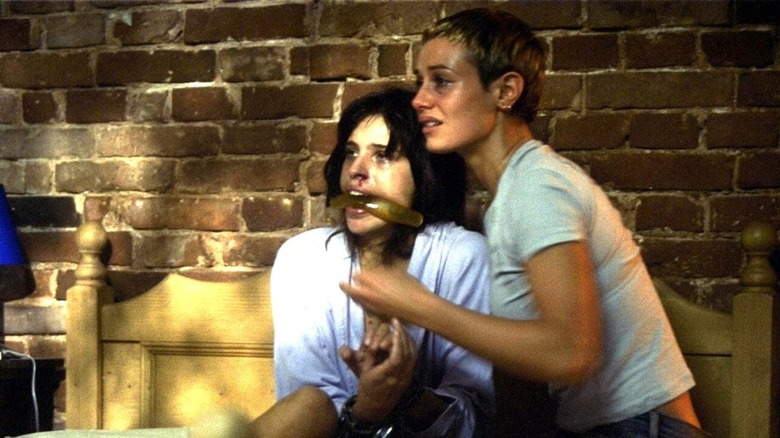
A weekend trip becomes a fight to stay alive in "High Tension." Marie (Cécile de France) and Alex (Maïwenn) are heading to the latter's house, and things start off great. However, after Marie witnesses a man come into the home and kill Alex's father, she tries to keep herself and Alex alive.
When the killer takes them away from the home, things become more clear. It turns out the killer is actually Marie, based on footage of her killing a gas station employee presented to the audience. She's obsessed and in love with Alex, and has decided the only way to show that affection and have Alex for herself is to kill her family and kidnap her. The "killer" we've been seeing is entirely in Marie's head.
Rather than being a compelling twist, finding out Marie is the killer actually stalls the movie. The plot was building to something, and despite a final fight between Marie and Alex after the reveal, it never regains its footing. "High Tension" didn't need a twist to keep audiences tuned in — it had the potential to be a great slasher, only for the ending to make it feel like another B-list horror.
The Devil Inside (2012)
What starts as a found footage, documentary-style film about exorcisms turns into a scary possession in 2012's "The Devil Inside." Isabella (Fernanda Andrade) is just trying to learn more about her mother, who killed three people during an exorcism. In the process, she becomes possessed herself, seemingly by the same entity as her mother.
The movie initially ends a bit ambiguously, with Isabella disappearing into the unknown. "The Devil Inside's" mysterious ending is immediately ruined by a title card with a website to go to learn more about the case, taking the audience out of the film. It has photographs and videos, and contains links with information about possessions and how to become an exorcist.
The website's inclusion feels like the creative team is trying to lean on the success movies like "The Blair Witch Project." However, what made them successful is that they used websites as promotional materials before the film came out. Directing someone to a website that ultimately provides little information isn't creating a fun experience — it just feels like the writers didn't know how to end it.
Psycho (1960)
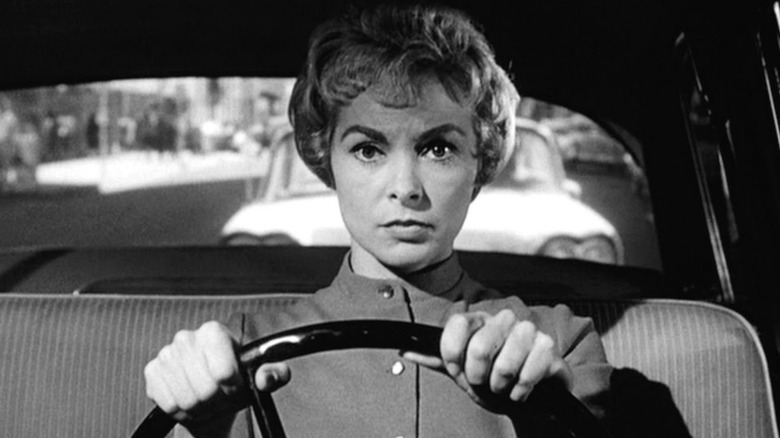
"Psycho" is the iconic Alfred Hitchcock film that brought Norman Bates (Anthony Perkins) to life. Marion (Janet Leigh) steals money in an effort to help her boyfriend clear up some debt, but it turns into a sinister road trip when she comes across the Bates Motel. There's something odd about Norman, but Marion dies before she realizes what's actually going on at the motel.
The movie is considered one of the best of Hitchcock's filmography and one of the most influential horror projects of all time. However, "Psycho" stumbles in its ending, and reception on it was fairly mixed. Rather than let the audiences work out what's happening, too much exposition takes place at the police station, breaking it down in a way that almost feels like it's overexplaining the twist. While the film is considered groundbreaking, the ending also lacks nuance. Audiences (especially modern ones) don't want or need everything spoon-fed to them — and unfortunately, that's the direction "Psycho" chose. But perhaps we can chalk that up to the difference between 1960s filmmaking and that of today.
The Happening (2008)
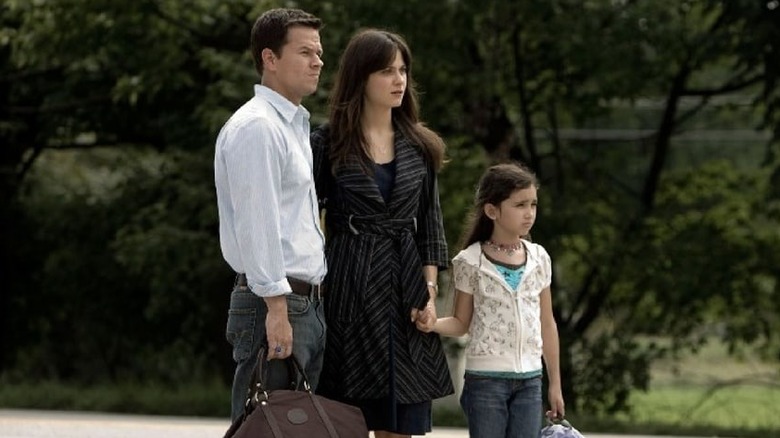
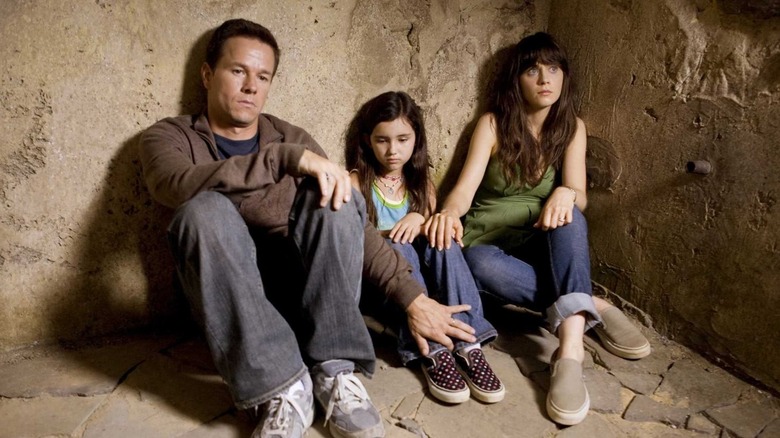
In a world where an airborne neurotoxin causes people in large groups to die by suicide, "The Happening" follows couple Elliot (Mark Wahlberg) and Alma (Zooey Deschanel) trying to survive by leaving the city. They pick up a young girl, Jess (Ashlyn Sanchez), along the way, encountering a variety of people, all with their own agendas and thoughts about the strange event.
M. Night Shyamalan is known for his twists, like the actual time period in "The Village," but "The Happening" takes the title for his worst ending. Though groups of people are initially impacted, it changes to attacking lone individuals; and then, when Elliot, Alma, Jess embrace their impending doom, the neurotoxin just disappears. There's seemingly no reason the mass casualty stops — no actions taken by the main characters or anyone around them can be credited as stopping the disaster.
It's one of the most anti-climactic endings of all time. While it should be mysterious, especially with the revelation that it's starting to happen in other cities, it comes across as a lack of direction and is more frustrating than intriguing.
It: Chapter Two (2019)
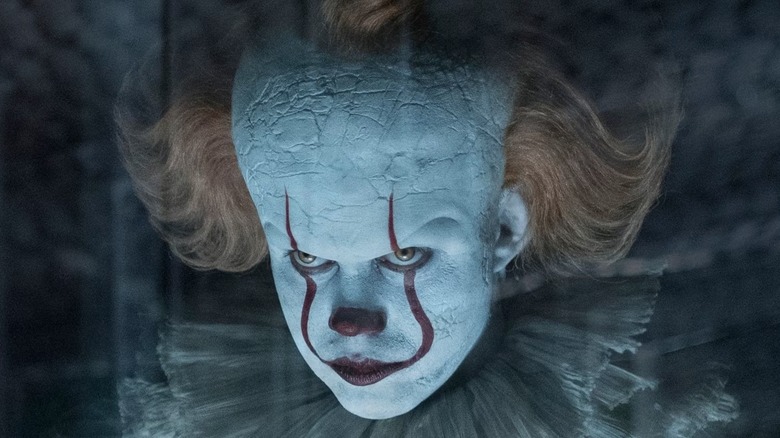
"It: Chapter Two" follows the film's so-called Losers as adults, returning to Derry because Pennywise (Bill Skarsgård) is back. They should have more power now to force the clown away, but it won't be without a fight. What ensues is rituals, tracking down mementos from their childhood, and, unfortunately, more death.
Pennywise is easily competing with Art the Clown for the scariest clown in cinema, but the ending of "It: Chapter Two" might give Art the win. The group basically bullies Pennywise out of existence, which is about as silly as it sounds. While there is a great part where Mike removes the clown's heart, it isn't as epic as it could've been because he's only able to do it after making Pennywise cry.
Sure, it's meant to show how the Losers have become fearless, and that Pennywise — in a form akin to a poltergeist — loses his ability to physically manifest without their fear to feed on. The problem? It's kind of lame. Pennywise is a truly frightening entity, and for him to just disappear because the group says mean things to him is a lackluster ending that is anything but satisfying.
V/H/S/2 (2013)
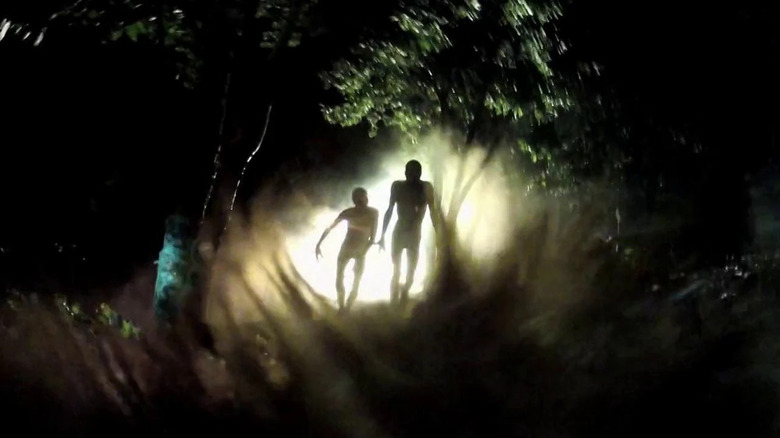
The second "V/H/S" installment takes audiences on another trip across four short films. In the fourth short, "Slumber Party Alien Abduction," a scene similar to the birthday party footage at the start of "Signs" plays out. This time, the aliens have no qualms with water and lurk in a lake next to a picturesque house as three siblings aim for a relaxing trip.
People are abducted by an alien, and that doesn't come as a surprise based on the name of the short. What is a surprise is that, as one of them is abducted, they let go of their dog's leash, causing the animal to fall to the ground and die at the end. Death in horror isn't unexpected (it's honestly a staple in the genre), but no one likes it when a dog dies.
There's literally a whole website for people to check if a dog dies before watching a movie. It wasn't needed, and feels like they only did it so everyone we meet is abducted or dies. A final girl is part of the fun of many horror movies, and they couldn't even let the dog have that.
Halloween Ends (2022)
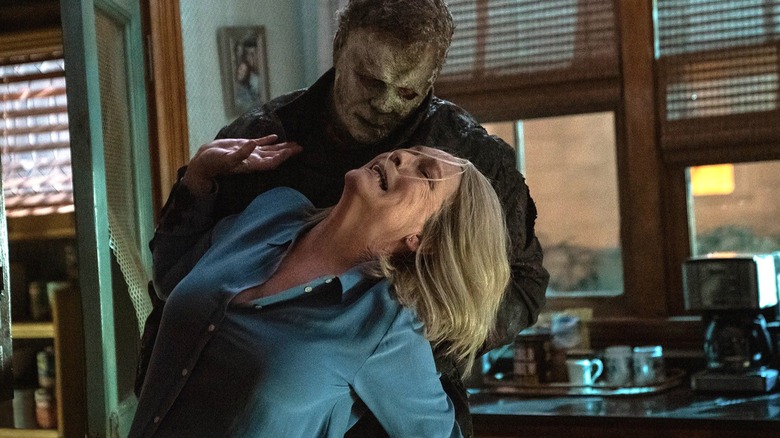
When Jamie Lee Curtis returned as Laurie Strode in the recent "Halloween" trilogy, horror fans were ready for an iconic fight between her and Michael Meyers. In "Halloween Ends," the final installment of the new trilogy, Meyers has a helper in Corey (Rohan Campbell), a 20-something who was arrested after the accidental death of a child he was babysitting. He wasn't convicted, and that's made him a bit of a pariah in town, but Laurie's granddaughter Allyson (Andi Matichak) gets along with him just fine.
What starts as an intense duke-out to the death in Laurie's house between her and Meyers turns into a lackluster ending when Allyson kills him, not Laurie. Sure, Laurie technically delivers the final blow, but it doesn't feel deserved. Allyson's actions are why Laurie could get away and why Meyers is dead. "Halloween Ends" has an ultimately disappointing ending to what should've been a film franchise that finally sees Laurie win after all this time. She's been battling him — both in real life and in her mind — for a long time, and it feels disrespectful to her journey to end the movie like that.
Sinister (2012)
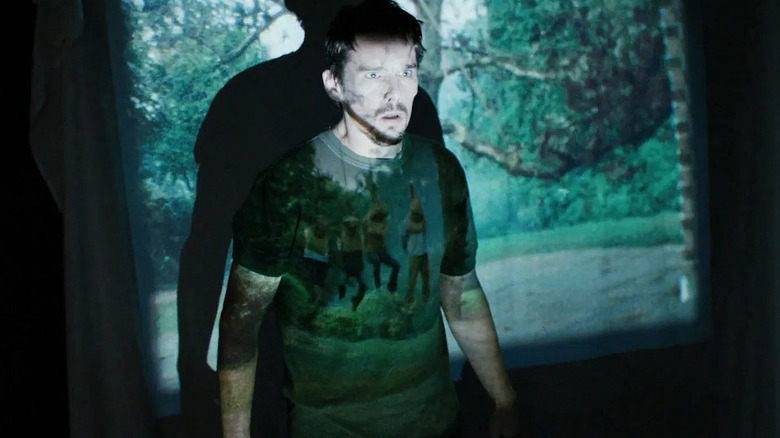
When writer Ellison Oswalt (Ethan Hawke) moves his family into a home in Pennsylvania to be near the subject of his new book, everything goes wrong. He's writing about the death of a family and the disappearance of one of their children, hoping to uncover new evidence by living in their house. Instead, he finds strange tapes in the attic that show people dying in horrific ways.
"Sinister" sits with you long after it ends. The nature of the demon and its attachment to children is intriguing to watch because the stakes continue to grow as we learn more about his methods. But the movie stumbles when it ends with a random jump scare. The demon's face suddenly appears on screen after a slow pan out from a box with the camera and tapes, adding nothing.
The scene makes the entire movie feel cheap because it butchers the sense of dread "Sinister" builds with a tired trope. Part of why the film is successful is because, while it leans into the genre's expected conventions, they never feel tired or overused. Ending with the jump scare, which is the worst of the genre's conventions, ruins that.
The Turning (2020)
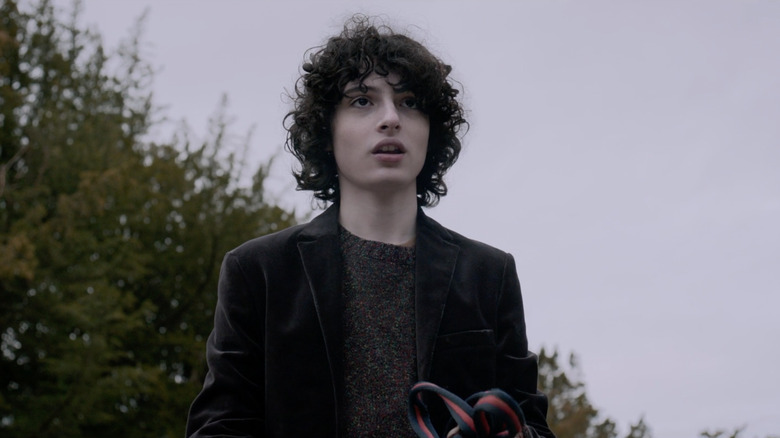
"The Turning" channels the creepy kid dynamic when Kate (Mackenzie Davis) takes a new live-in tutor job. The son, Miles (Finn Wolfhard), has been expelled from his previous school for violent behavior toward his peers. Perhaps unsurprisingly, the family dynamic between him, his sister, and their caretaker is also odd.
As things continue to escalate, Kate eventually has a strange vision, which audiences only find out is a vision after it happens. It all goes back to her mother, who is receiving care for hallucinations. As Kate's vision seems to continue, audiences are left wondering what's actually happening, who is alive, who is dead, and what Kate's fate will be.
There are times where an ambiguous end works well, but "The Turning" is not one of them. What could've been a strong payoff — especially considering that the ending of the novel this film is based on is also ambiguous — falls incredibly flat. It lacks focus, so rather than a final sequence that adds mystery and intrigue, it seems like the writers weren't sure of how to end the movie and took the easiest exit.
I Am Legend (2007)
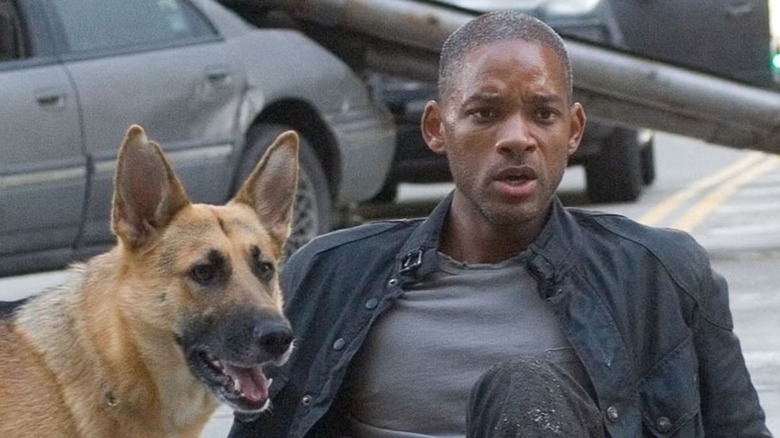
Will Smith is Dr. Robert Neville, a man alone in New York City after a viral apocalypse. With a dog's companionship, Robert tries to find a cure in hopes of saving those who remain around the world. While he does have some success, it's all in vain when he blows up his lab to kill some who are infected — ultimately dying as well.
The theatrical ending of "I Am Legend" is no one's favorite. Everything feels needlessly hopeless with Robert's death. It doesn't feel like it was for the greater good or even necessary, considering what he survives up to that point in the movie. In the alternate ending, which was swapped out due to poor test screenings, Robert survives and goes to a survivor camp. Though his survival is now considered canon with the announced sequel, it doesn't change the pain of the original ending — especially since it means both Robert and his dog die.
47 Meters Down (2017)
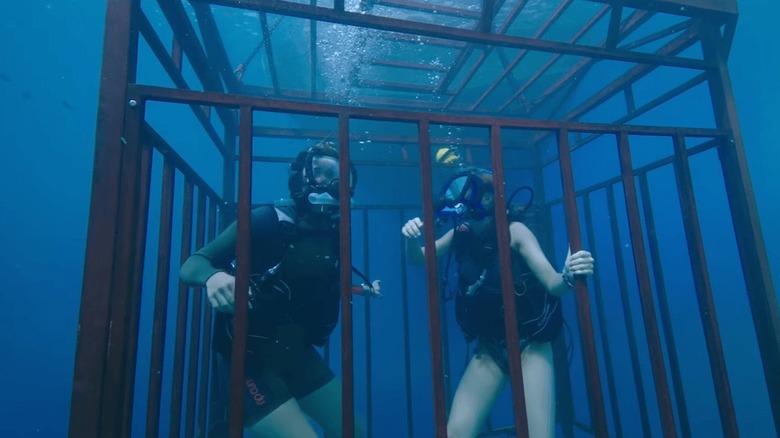
What is meant to be a cool way to see sharks from the theoretical safety of a cage turns into a nightmare when mechanisms break and the cage sinks to the bottom of the ocean in "47 Meters Down." Lisa (Mandy Moore) and Kate (Claire Holt) then have to fight for survival as they try to avoid sharks and get up to the surface before their oxygen tanks run out.
This should be a fun, summer horror, but the ending takes that away. As the movie continues, it ends by showing audiences that Lisa has actually been stuck in the cage alone, her leg pinned by it, and was hallucinating the entire time. Kate was killed by a shark already, since help didn't arrive in time.
The reveal that something has been a dream or a hallucination the entire time can work, like in "Jacob's Ladder," but it doesn't here. It almost feels like the writers were unsure of how to end the movie, so they latched on to a popular gimmick. Instead of being an action-packed survival horror, the film swiftly becomes a let down.
Scream 3 (2000)
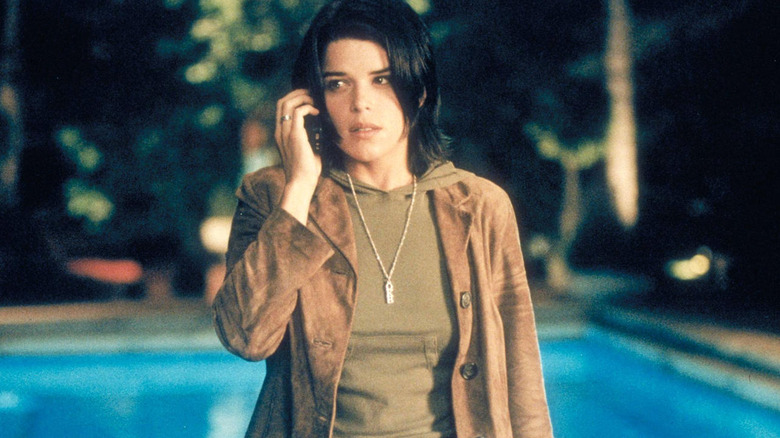
Ghostface is on the hunt for Sidney (Neve Campbell) in "Scream 3." The masked killer is willing to do anything to track her down, including kill the actors of the "Stab" movies, fictional films within the "Scream" universe based on the Ghostface killings. As the villain bothers Sidney from afar, it turns out the man behind the mask is a bit closer to her than she thought.
Roman (Scott Foley), director of the in-production "Stab 3," is Ghostface. This might seem weird, until the other shoe drops: He's Sidney's half-brother and was rejected by their mother. While this could be an interesting reveal, and Roman's connection to the first "Scream" movie doesn't necessarily retcon the original installment's ending, it's ultimately introducing a new character only to kill him off — which rarely works.
Combined with the final scene, which features an ominous door opening to leave the franchise open to additional sequels, it all just feels a bit much. Part of what makes "Scream" great is how off-the-wall the reveal feels in the first movie, and that's lost in "Scream 3" with a tired idea.
Unfriended (2014)
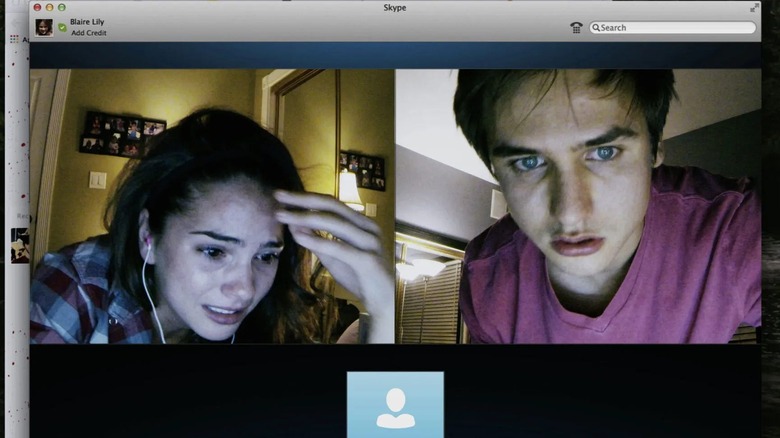
"Unfriended" is all about Blaire (Shelley Hennig) meeting with her friends on Skype. However, the call takes a turn when an unknown person joins. After they realize it belongs to Laura (Heather Sossaman), a classmate who died by suicide the previous year, strange paranormal occurrences start causing them to die one by one.
As a film taking place entirely on Blaire's computer screen, watching as settings change, Blaire's friends are seemingly possessed, and the truth behind Laura's death comes out is a thrilling ride. It's seemingly paranormal, but it also could be an incredibly skilled hacker. Whoever is behind it is operating both on and off screen, cutting the lights to their homes while making strange posts on their social media pages.
However, that mystery is ruined with the ending. Blaire is attacked by Laura's spirit, who comes at her from above, taking the audience away from the screenlife format. By both confirming it was paranormal the entire time and breaking the style of the movie, the ending of "Unfriended" feels disjointed and unsatisfying.
Truth or Dare (2018)
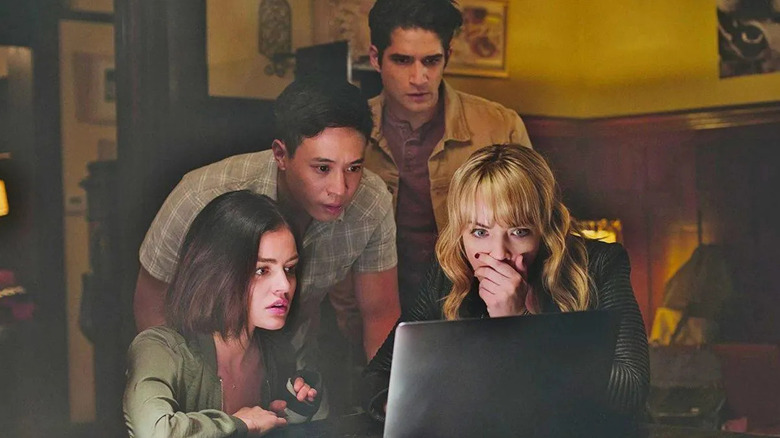
Everyone loves a good game of truth or dare, until it has a supernatural element that forces you to participate. A trip to Mexico results in Olivia (Lucy Hale) and her friend group becoming cursed with the game, and they try to find a way out of it as they start to die for refusing to play.
What's the best way to deal with the game when a ritual to end it fails? Make as many people join as possible. That's how "Truth or Dare" ends, with Olivia posting a video on YouTube to reach the masses. It means millions will join the game, effectively putting more and more people in between her and her next turn, which should increase her survival rate.
The ending feels a bit phoned in. Sure, Olivia found a loophole, but she's also dooming thousands of others to a horrible fate. It can't even be argued that the number of people in the game overloads the demon and causes everything to crumble, since there's no evidence of that. It is a lose-lose situation that leaves everyone in the audience frustrated.
If you or someone you know is struggling or in crisis, help is available. Call or text 988 or chat 988lifeline.org.