

5 Cartoons That Were Way More Adult Than You Remember
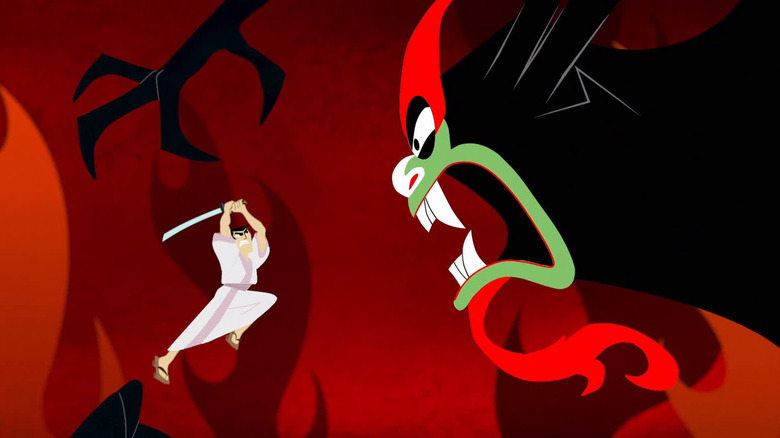
Animation is for all ages, from content literally aimed at babies all the way up to cartoons you should never watch in front of your kids. Sometimes the dividing line is clear. For instance, Cartoon Network switches over to its explicitly labeled Adult Swim animation block to make sure it's known that the programming is about to leave kid-friendly territory. However, there are times when the delineation isn't quite so obvious. More to the point, there are shows that check all the boxes of being aimed at youngsters, but retrospective reexamination suggests a greater level of maturity than was initially apparent.
To be clear, this isn't all about shows that sneaked in inappropriate jokes here and there that went over kids' heads — though some of that type of thing is definitely touched upon. We also won't be talking about more obvious examples like "Ren & Stimpy" (it only took about 10 minutes to realize wasn't the most child-friendly show around, despite it initially airing on Sunday mornings on Nickelodeon).
Instead, these five shows were on networks or aired in timeslots that leaned toward the young demographics, and subsequently had the kind of merch you'd find in the toy aisle; but only in looking back on them as adults do we realize that most of it went over our younger selves' heads.
Batman: The Animated Series
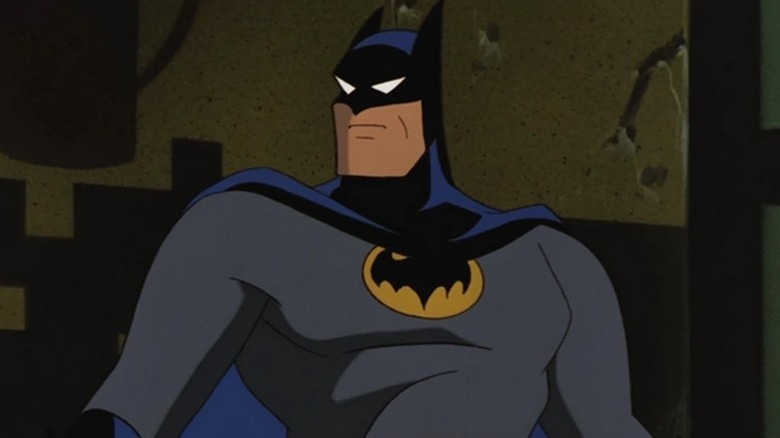
In retrospect, many signs pointed to "Batman: The Animated Series" not being the typical superhero show for kids. Consider "X-Men: The Animated Series," which launched the same year and featured wailing guitar opening credits, heroes in bright yellow and blue jumpsuits, flashy action, oversized personalities, and tons of '90s 'tude. In other words, it was everything "Batman" is not. Instead, the latter is dark, moody, deliberately-paced, and sometimes has long stretches — if not entire episodes — where nothing explodes and nobody throws a punch.
Despite often airing between shows like "Tiny Toon Adventures" and "Eek the Cat," "Batman" was essentially a show for at least teenagers, if not adults. The storylines dealt with heady topics like mental health, and a number of fairly major characters actually died during the show's run. Had it aired on HBO, thrown in some swears, gave Poison Ivy and Harley Quinn more revealing outfits, it could've easily passed as a cartoon for adults.
But even with the concessions made for it to be suitable for its timeslot, "Batman" is still one of the best comic book adaptations ever brought to television. And it's most certainly one of the greatest animated series of all time, for any age group.
Animaniacs
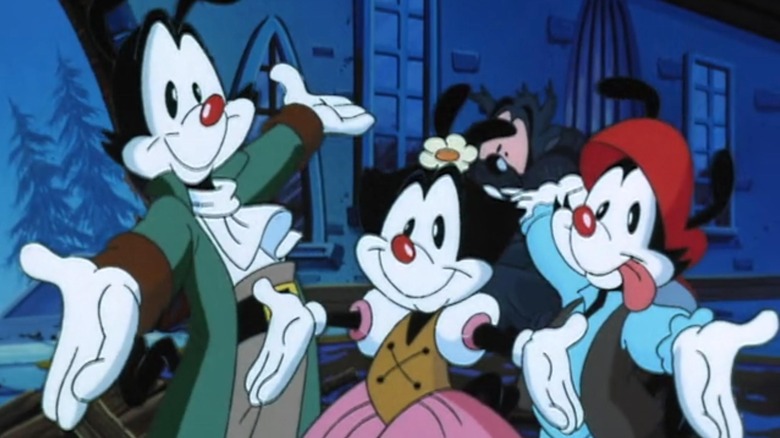
When discussions about why "Animaniacs" is more for adults than kids come up, they typically point to the racy stuff. From the quite curvaceous Hello Nurse, to one particularly infamous joke involving pop star Prince, the show's writers certainly didn't shy away from pushing the limits of what they could get away with in a show for kids. However, we posit that there is a lot more than that that proves that "Animaniacs" was just as much — if not more — a show for the older teenagers and young adults of the early-to-mid '90s than it was for the children of that era.
The theme song to "Animaniacs" not only name checks then-President Bill Clinton, but even makes reference to his sax playing. Typically, young kids are barely even aware of who the president is, let alone a detail like what musical instrument they can play. That was one of the first clues as to who the true target audience of the show actually is. There is also an ongoing segment called "Goodfeathers," which is not just a pun on "Goodfellas" but is about three pigeons who talk and behave like mobsters. You know, that classic children's touchstone, "Goodfellas."
There are numerous examples like that. "Animaniacs" frequently referenced films, movies, music, and celebrities of more adult-centric pop culture of the day. Moreover, the show was chock full of throwbacks to an era that only twentysomethings in the '90s would've been old enough to have nostalgia for.
Samurai Jack
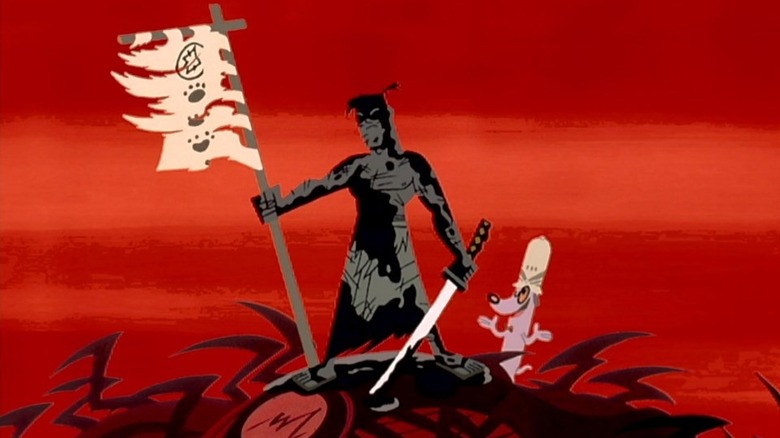
No, we aren't talking about the 2017 revival of "Samurai Jack" that aired on Adult Swim and was very clearly aiming for a grown-up audience. Rather, we are referring to Seasons 1 through 4 of the show, which ran on Cartoon Network between 2001 and 2004. While that stretch of the show lacked the blood of Season 5 and was only rated TV-Y7 rather than TV-14, it was a much more adult show than it gets credit for.
For starters, the titular character doesn't talk very much. In fact, there are multiple episodes where he says only a few words, if any. Right there, you know you're dealing with a show that will leave many kids bored and scratching their heads. If that doesn't do it, the prolonged periods of near silence where there is no music and nary a sound effect will seal the deal. "Samurai Jack" had the confidence to be quiet and contemplative, never feeling like it needed to throw in a funny quip or an arbitrary battle just to keep kids interested.
"Samurai Jack" has more in common with Akira Kurosawa than "Cowboy Bebop" or "Samurai Champloo," and that's what made it so great — even if it didn't make it the most ideal show for kids to watch between episodes of the much flashier "The Powerpuff Girls" and the much funnier "Dexter's Laboratory."
Avatar: The Last Airbender
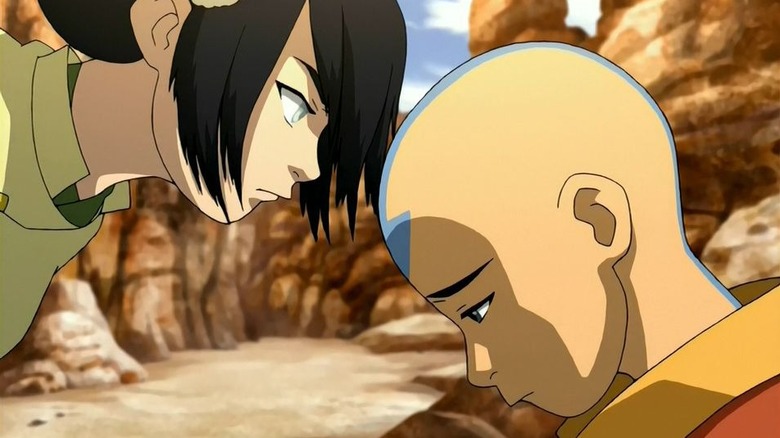
While Cartoon Network had started to build its brand around shows that could appeal to older kids, if not young adults, Nickelodeon seemed to mostly double down on its focus on the younger market in the 2000s. And "Avatar: The Last Airbender" seemed to fit in with that trend, with its bright animation and a smiling Aang shown in most of the marketing seeming to suggest a show that fit perfectly in the same programming block as "SpongeBob SquarePants" and "The Adventures of Jimmy Neutron."
In fact, "Avatar" had more in common with future Cartoon Network fare like "Adventure Time" and "Steven Universe," in that it built an impressively deep lore and offered an ongoing narrative that built and evolved in a way that is rarely seen outside of anime. Sure, there are definitely funny characters and slapstick moments in "Avatar." But those things betray just how deep and complex the show could get, and the themes that it often dealt with — much of which is built around the extremely adult concept of wars between nations and what that does to the people of those nations.
Not unlike the aforementioned "Adventure Time," "Steven Universe," and other shows of its ilk, it's not even a requirement that you were a kid when "Avatar" first came out in order to appreciate it in rewatching it as an adult. Those who have never watched a single frame of "Avatar" can start it today and become just as engrossed, and that's not something that can be said for many so-called kid shows from 20 years ago.
The Flintstones
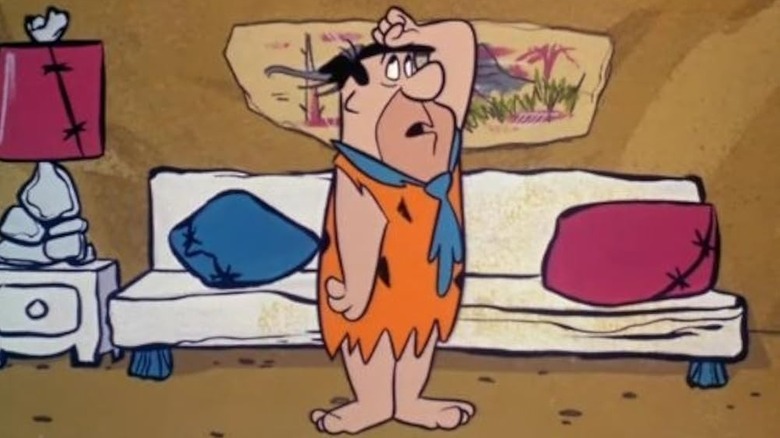
"The Flintstones" technically was aimed at adults when it first aired in the 1960s. Or, at least, aimed at adults in the way that "Friends" or "The Big Bang Theory" is, in that it was a prime time sitcom — which is when adults typically take over the television. But younger generations didn't see "The Flintstones" that way, as it was packaged to kids of the '70s and '80s in daytime syndication alongside reruns of "Scooby-Doo" and "Tom & Jerry." The fact that it has dinosaurs, a catchphrase-spouting main character, and an alien sidekick gave kids of those generations no reason to think the show wasn't aimed at them.
Of course, there are numerous thing only adults notice in "The Flintstones" when the show is revisited by the kids who grew up thinking it was just a silly children's cartoon. Much of the show revolves around adult characters, their marriages, and their jobs. Pebbles and Bamm-Bamm are very much background characters during much of the show's run, and sometimes they aren't seen for entire episodes. And not only does the show focus on adults, but also their very adult problems, from struggles at work to literal domestic abuse.
What seals the deal is something that you no longer see during actual broadcasts and streaming versions of "The Flintstones" but are easy to find online: the smoking. Not only can Fred and Barney be seen smoking cigarettes, but ads for real cigarettes were built right into the show itself. Unfortunately, considering the era, advertising cigarettes and how cool it is to smoke them didn't automatically make it a show for adults, but that's a whole other discussion.