

10 Star Trek Episodes That Fans Still Debate Decades Later
"Star Trek" has long been known as the more intellectual of the science fiction franchises, acclaimed for its thought-provoking stories more than it is recognized for big-budget action. Whether it's stories that delve into the depths of human nature or stories that get seriously political, "Star Trek" explores complex issues, often using science fiction as a way of discussing real modern-day problems through the lens of tomorrow.
With so many episodes that get into nuanced subjects, and stories that could even be considered cerebral, there are many entries in the franchise that have sparked plenty of discussion among fans. In fact, "Star Trek" is often cited as one of the main drivers of early internet discussion boards and chat rooms in the earliest days of the World Wide Web.
Some episodes, however, do more than generate talk among fans. They have become the subject of vociferous debate. Stories with moral dilemmas often put fans at odds, sparking debates over the consequential choices made by a character. Other episodes spark a tense back-and-forth because of how their social message might be interpreted, or even because of a controversial decision by producers. But whatever reason fans might have, we've found 10 episodes that fans still debate decades later.
Tuvix
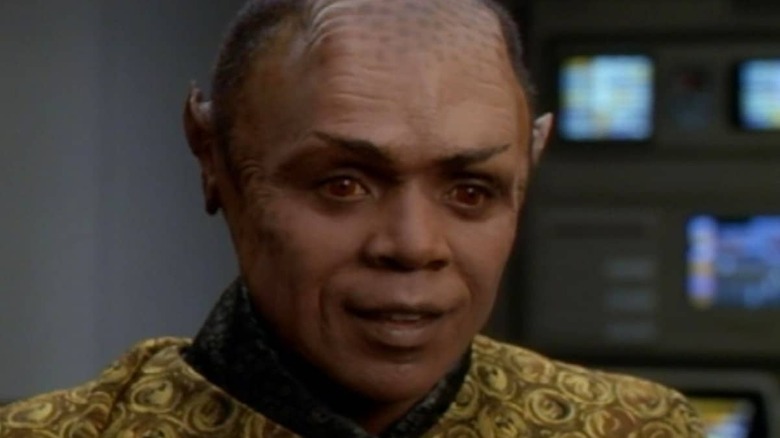
The "Star Trek: Voyager" Season 2 episode "Tuvix" is, without question, the most debated hour in the history of the franchise. The episode guest-starred actor Tom Wright as the eponymous Tuvix, an alien who is inadvertently created when the transporter malfunctions and mixes up the DNA of Lt. Tuvok (Tim Russ) and the ship's bespeckled hobbit, Neelix (Ethan Phillips).
While the Doctor (Robert Picardo) looks for a way to turn him back into their separate identities, Tuvix begins fraternizing with the crew. He's demonstrating that, while he may be a hybrid of two people, he's a new and unique person, with his own thoughts and feelings. That makes it all the more shocking when the Doctor comes up with a solution, and Janeway (Kate Mulgrew) forces the procedure on Tuvix against his will. It effectively kills him so that Tuvok and Neelix could live their separate lives again.
On one side, many fans agree with Janeway's calculus: One life for two, so "the good of the many" surely applies. But those on the other side of the debate insist that the math doesn't matter. At the end of the episode, Tuvok and Neelix are gone, and Tuvix is here: he alone should decide what to do with his life. And since he's part Tuvok and part Neelix, only he knows what each would have wanted. Actor Tom Wright has defended the episode's controversial decision, but don't expect fans to settle their own debate any time soon.
Dear Doctor
"Star Trek: Voyager" doesn't have a monopoly on ethical quandaries. Perhaps the second-most debated episode of "Trek" is the "Star Trek: Enterprise" episode "Dear Doctor." This time, though, the choice is even more difficult. Millions of lives are at stake, no matter which side of the debate you fall on.
"Star Trek: Enterprise" takes place before the supremely breakable Prime Directive is written into Starfleet's standing orders, which will establishe rules around contact with pre-warp civilizations and interference with primitive cultures. In "Dear Doctor," the Enterprise comes upon a world dominated by two humanoid species: The highly intelligent Valaki and the more caveman-like Menk.
The Valakians are dying out from a devastating plague, and Doctor Phlox (John Billingsley) may be able to help save them from extinction. But in his research, Phlox realizes that if the Valaki die out naturally, the Menk are destined to evolve and become a thriving, highly intelligent species. The good doctor insists that they have no right to interfere with this world's natural development and doesn't want to hand the Valakians a cure.
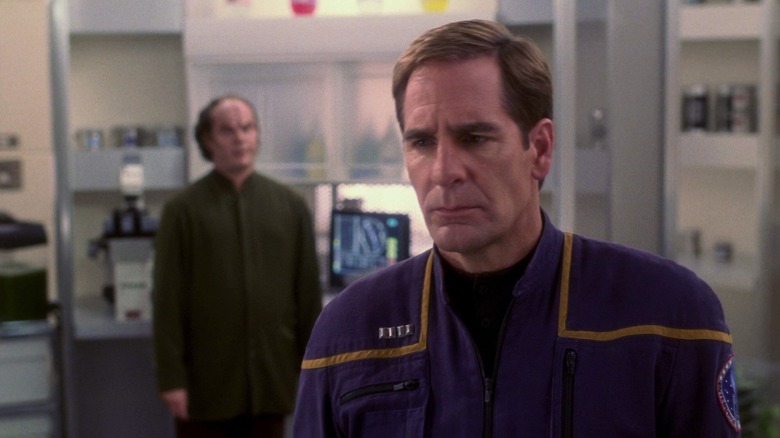
Ultimately, Captain Archer (Scott Bakula) reluctantly agrees not to provide that panacea and only offers them medicine to alleviate their pain for roughly a decade. But the simple fact is that by not helping the Valakians, they are dooming millions of people to a painful death and their civilization to extinction. Understandably, many fans take umbrage with what seems like a callous course of action, but others feel that, especially in a pre-warp society, natural selection should be allowed to run its course without outside intervention.
These are the Voyages...
"These are the Voyages..." is arguably the most divisive individual episode where the conflict relates to its concept as an episode, proper. While many episodes are universally hated, the "Star Trek: Enterprise" series finale has its fans and its detractors, who defend and attack it in equal measure, not for its ethical dilemma, but for the fact that it exists.
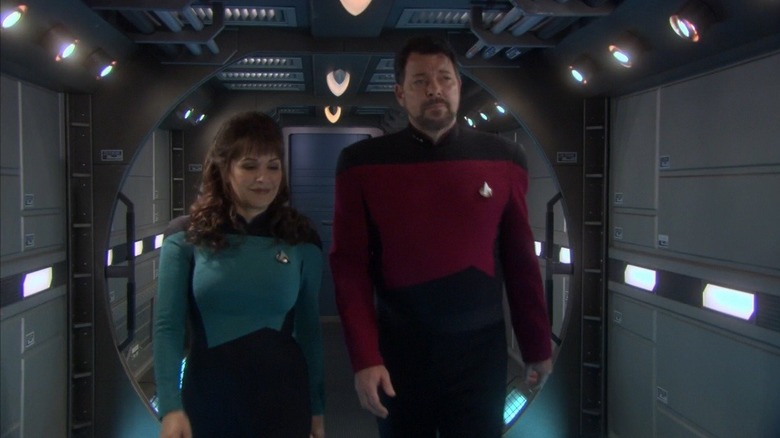
The episode, which capped the prequel series' four-year run, takes place 10 years after the previous episode, when Captain Archer is taking the NX-01 Enterprise on its final mission before the signing of the first Federation charter. But much of the episode is spent 200 years after that moment, where we find Commander Riker (Jonathan Frakes) and Deanna Troi (Marina Sirtis) aboard the USS Enterprise-D from "Star Trek: The Next Generation," as they're looking back at Archer's final mission on the holodeck.
The choice to center the "Enterprise" finale on the adventures of the "TNG" crew was intended as a bookend to this era of "Trek" on television, as the episode didn't just close out four years of the show, but 18 years of "Trek" that began with "The Next Generation" in 1987. But many, including Frakes, argue that it was disrespectful to the cast of "Enterprise" to focus on Riker and Troi in a story that was supposed to be saying goodbye to Archer and the NX-01 Enterprise.
Plato's Stepchildren
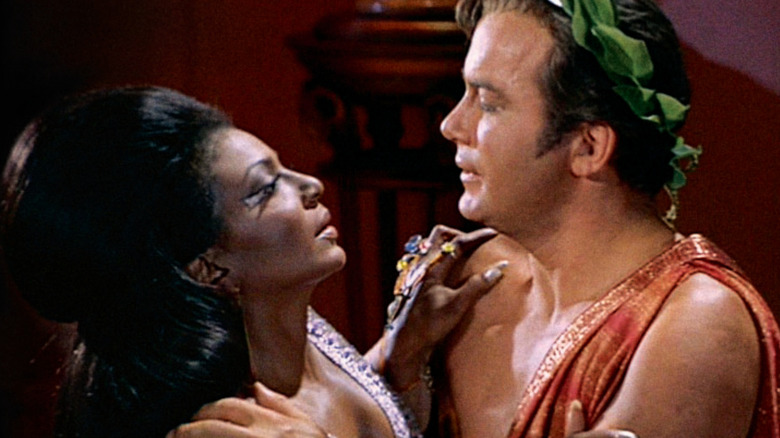
When the original "Star Trek" series debuted in the fall of 1966, the Civil Rights movement in the United States was in full swing. Martin Luther King's march on Selma was just three years in the rear-view mirror, while the landmark Civil Rights and Voting Acts of 1965 were a year old. So it was a major source of controversy when, in the episode "Plato's Stepchildren," Captain Kirk (William Shatner) and Lt. Uhura (Nichelle Nichols) met on screen for what is still often regarded as the first-ever on-screen interracial kiss.
Debated at the time for its scandalous nature in 1968, the episode was problematic for multiple reasons, and even banned in the UK for an entirely unrelated reason. But in more recent years, the episode has been debated over the kiss for different reasons itself. Historical dives into the timeline of television firsts have cast doubt on whether the episode was truly the first interracial kiss on television. Even more debatable, if you can believe it, is the question of the kiss itself, with many arguing that Shatner and Nichols only appeared to lock lips, and never actually made physical contact to constitute an actual smooch.
So controversial was the kiss at the time that producers wanted different takes with and without the kiss to avoid riling affiliate TV stations. But as strange as it sounds, the actors have acknowledged that they intentionally flubbed multiple takes that didn't include the kiss, which forced the studio's hand. They couldn't edit that historic moment out of the scene.
In the Pale Moonlight
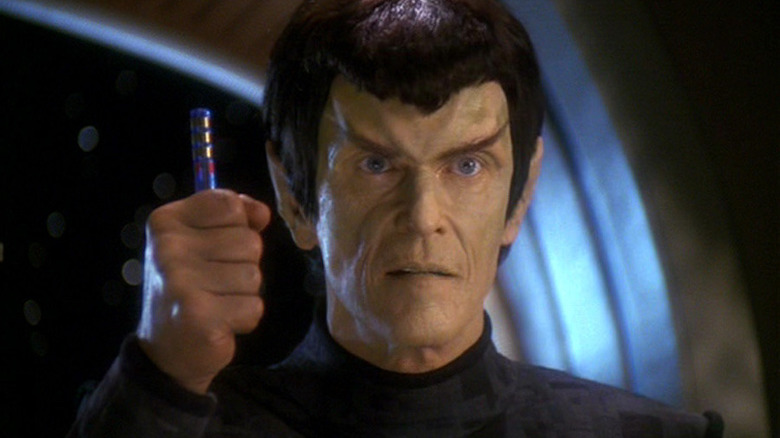
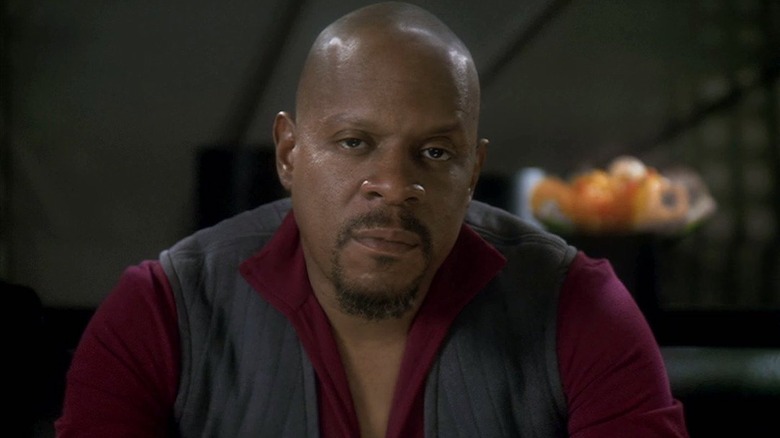
The "Star Trek: Deep Space Nine" Season 5 episode "In the Pale Moonlight" is unique among oft-debated "Star Trek" stories. Despite it drawing arguments from ethically minded viewers who were appalled by the conduct of Captain Sisko (Avery Brooks), it's still universally regarded as one of, if not the best, episodes in the series — and arguably one of the best ever produced. But just because it's a stellar story doesn't mean it isn't justifiably divisive.
"In the Pale Moonlight" takes place amid the ongoing war with the Dominion, a protracted conflict that had already drawn in most of the quadrant's great powers, with the Federation and Klingons on one side, and the Dominion, the Cardassians, and the Breen on the other. But the war isn't going well, and Sisko believes that the only way to turn the tide is to convince the Romulans to join the war on their side. Unfortunately, to do it, Sisko is forced to work with the morally dubious Garak (Andrew Robinson), assassinate a Romulan politician, and fake evidence that the Dominion is preparing to invade Romulus.
On the one hand, Sisko is violating countless Starfleet regulations, committing an actual war crime, and more broadly, breaking numerous ethical rules of his own. On the other, of course, is that if the Dominion succeeded in conquering the Alpha Quadrant, it would mean dooming billions of people to death — or servitude under an interstellar totalitarian regime.
Turnabout Intruder
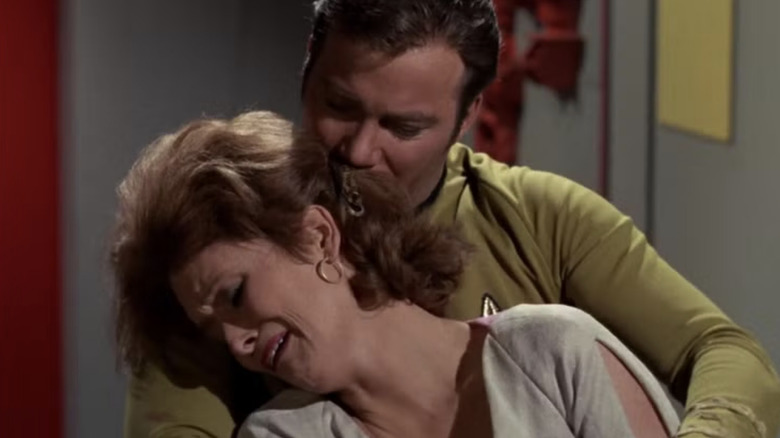
"Star Trek" in 1966 was extremely progressive for its time, but there are still some episodes that are somewhat problematic today. Case in point, the final episode of the series, "Turnabout Intruder," which is rightly labeled as grossly misogynistic for a variety of reasons. Mostly, its critics point to the extremely sexist portrayal of Janice Lester (Sandra Smith), who steals Captain Kirk's body — and suddenly, actor William Shatner is acting out every stereotype of a whiny, unlikeable woman one can conjure up. But that's not why Trekkies debate this episode. It's actually in regard to a line of dialogue that some fans have interpreted differently.
The episode revolves around Lester, who is a jilted one-time lover of Captain Kirk. Part of her revenge scheme involves stealing his body so that she can have the male privileges he enjoys, including his captaincy. But at the end of the episode, she tells Kirk that his "world of starship captains doesn't admit women." For years, many fans had interpreted this literally: That Starfleet doesn't allow women to serve as captains. Coupled with the fact that we'd never see a woman in the captain's chair until "Star Trek IV: The Voyage Home," and that the episode was written when women in the workplace was still a touchy subject, it wasn't an unfair assessment.
Other fans, however, especially those looking to defend "Trek" from sexism, claim the line has a less literal interpretation: Lester was criticizing the career-minded Captain Kirk for not making time for the women in his life. And that debate is still being waged.
For the Uniform
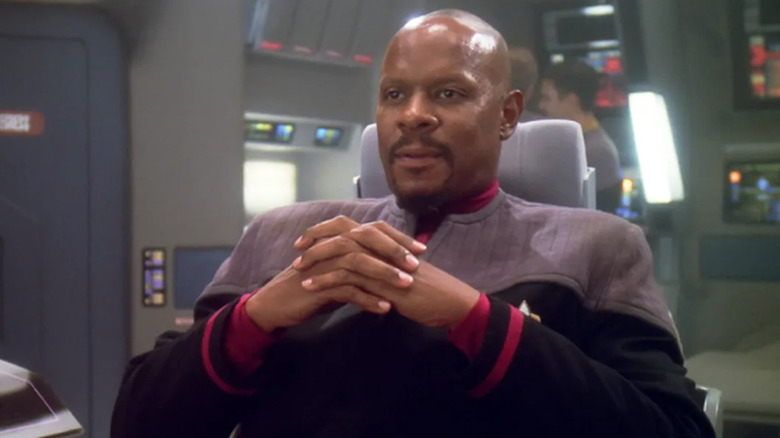
In the "Star Trek: Deep Space Nine" episode "For the Cause," Captain Sisko once again crosses an ethical line — but he does so for much more personal reasons than he did in "In the Pale Moonlight." And that's left fans divided for decades over whether Sisko is really the upstanding officer the show claims him to be.
In "For the Uniform," Sisko is on the hunt for Michael Eddington (Ken Marshall), a former member of his crew who betrayed Starfleet. Eddington joined the Maquis, the group of citizens living along the Federation/Cardassian border who were waging war on Cardassians and causing problems for the Federation, and escaped Sisko's grasp in a previous episode, "For the Cause." Now, Eddington has attacked a Cardassian colony with a biological weapon, forcing its evacuation. But Sisko becomes so obsessed with catching Eddington and settling a personal score that he abandons his oath to Starfleet and commits what could constitute a war crime: He arms his own biological weapon and fires it at the Maquis colony, destroying the ecosystem, making it uninhabitable to humans.
Those who defend Sisko's actions point to the fact that Eddington's weapon made a world uninhabitable to Cardassians, and Sisko did the reverse, so the colonists could simply switch planets. But Sisko's gambit could have gone disastrously wrong, and critics of the episode think it's a moment where Sisko went too far.
Conspiracy
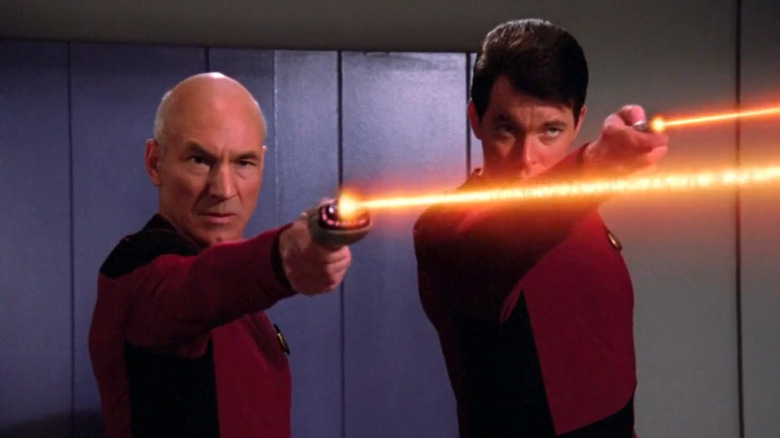
"Star Trek: The Next Generation" is often cited as the best "Star Trek" series, and it's fair to argue that it boasts some of the franchise's best episodes. But its debut year is also the absolute worst first season in the franchise, with too many bad storylines to cite. One of the few bright spots, though, is the late-season "Conspiracy." It's also a rare "Star Trek" episode that is the source of debate for whether its good or bad. And there's fair arguments on both sides.
"Conspiracy" sees Picard (Patrick Stewart) uncovering a sinister plot to take over the Federation, with deadly alien parasites taking over the bodies of Starfleet's highest ranking officers. It's an overly serious, grim installment with an excessively violent climax: When Picard and Riker discover the leader of this race of alien parasites, they kill the creature — in the body of Lieutenant Commander Remmick (Robert Schenkkan) — by blasting him with phaser fire. It blows his entire torso apart in a grisly, gory scene.
Many "Star Trek" fans love "Conspiracy" for its thriller aspects and its serious tone, a welcome shift in a season famous for groan-worthy and often downright silly episodes. But on the other hand, many aren't fond of the episode's overly dour tone, nor a fan of the graphic violence, which feels out of place even four decades later.
Rejoined
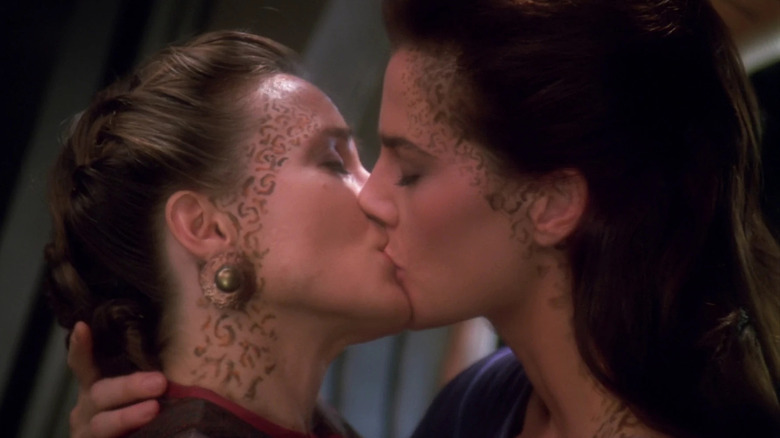
"Star Trek" has long had a reputation for addressing important social problems, going all the way back to the original 1966 series. It covered controversial and even taboo subjects at times, rare for prime time television in its day, with episodes that openly discussed issues like war, racism, and the class divide. In the 1990s, with gay rights a hot-button issue, "Deep Space Nine" produced the episode "Rejoined," an early TV episode to feature a same-sex kiss.
The debate around "Rejoined," however, has been the subject of much debate among fans for how it addressed the issue of same sex coupling. Because, while many in the LGBTQ+ community have praised it for handling the issue with delicacy, others felt it didn't go far enough. The episode involves Dax (Terry Farrell), a Trill, who can change host bodies to live for centuries. Dax reconnects with a lover from a past life, which is taboo in their alien culture, much like same sex partners were in the '80s and '90s. The episode never actually points out that they are both women, and focuses solely on the allegories around a controversial couple that society shuns.
Those who love "Rejoined" appreciate that the same-sex nature of the couple is never addressed, feeling that the allegory is made even more powerful. But others feel the opposite, while also pointing to the episode's conclusion, which sees the pressures of Trill society forcing the couple apart.
Scorpion
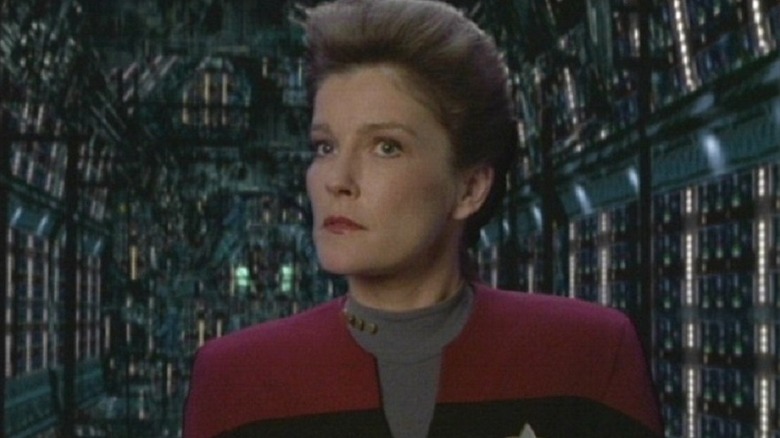
Captain Janeway was arguably the most headstrong and bold captain the franchise had ever seen. Even more than Kirk, Janeway was willing to take some big chances in an effort to get her crew home from the distant Delta Quadrant. Often, however, this meant making controversial decisions that fans have debated for decades since. Right at the top of that list is the choice she made in the two-part episode "Scorpion."
The episode that introduced Seven of Nine (Jeri Ryan) to the series, "Scorpion" is the first appearance of Species 8472, a race of aliens from "fluidic space" — a dimensional shift — who are seemingly more powerful than the Borg. And when Janeway and Voyager venture into the heart of Borg space, they are confronted with a dilemma: Stand by and allow Species 8472 to destroy the Borg in an all-out war, or ally themselves with the Borg in exchange for safe passage. Janeway chooses the latter, and helps the Borg develop a weapon that can cripple Species 8472.
Even within the episode, many, including much of Janeway's senior staff, are appalled by the decision to help the Borg, a race that has tried to destroy humanity more than once. What's worse, a season later she does the opposite, refusing to hand over an injured 8472 when threatened by the cybernetic hive mind. To make matters worse, we later learn that 8472 aren't villains — but misunderstood aliens who are reasonably threatened by incursions into their realm.