

10 Franchise Entries Studios Pretend Never Happened
Franchises consisting of interconnected movies and TV shows are big business today, but they've been around for decades. Movies that are a big hit in theaters inevitably get a sequel, and some get three, four, or more. They might even get a TV spin-off, or a remake and a reboot that reinforces their legacy. But in some cases, one entry is so sour that it leaves no legacy because its creators chose to almost never comment on it again.
Sometimes it's a sequel that bombs in theaters, and later installments simply ignore it. Other times, following an attempt so awful that they try again, a movie or TV show is rebooted more than once. As odd as it may sound, a bad reboot can even sometimes inspire a franchise to go back to the original series. Either way, there are franchises that wish they could erase an earlier project, on rare occasions even going to great lengths to hide it from the public. Here's a list of ten such movies or TV shows that failed so badly that the franchise refutes their existence on all but a Walmart DVD collection.
Sony's Ghostbusters remake was an embarrassment that was quickly erased
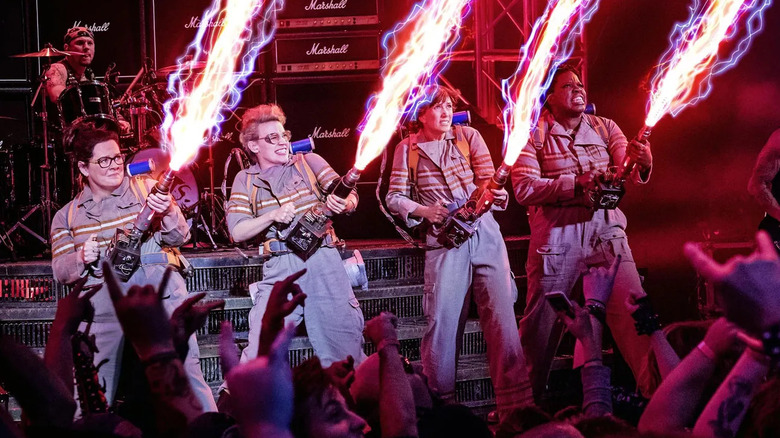
When talking about movies that franchises pretend don't exist, it's hard not to immediately be reminded of Sony's disastrous attempt to reboot "Ghosbusters." With legacy sequels proving popular with franchises like "Star Wars" and "Jurassic Park," the decision was made to completely remake the iconic 1984 film "Ghostbusters" with no connection to the original — and it couldn't have gone worse.
A deeply unfunny comedy that completely missed the point of the original, 2016's "Ghostbusters" made some bizarre choices, including too much slapstick and a woefully out-of-place Chris Hemsworth. Despite some phenomenal talent behind it — from its starring trio of "SNL" alum to "Bridesmaids" director Paul Feig — the film flounders from start to finish. And while the studio even created an entire production company called "Ghost Corps" to handle the prospective sequels and spin-offs, a poor box office performance and middling critical response made it clear that no one wanted anymore of this train wreck. So of course, Sony immediately reversed course.
Canceling every plan to spark a cinematic universe, Sony brought in the son of original producer Ivan Reitman, Jason Reitman, who kickstarted a proper legacy sequel. "Ghostbusters: Afterlife" arrived in 2021, bringing back most of the original cast while introducing younger heroes who'd return to lead a 2024 sequel, "Ghostbusters: Frozen Empire."
Halloween H20: 20 Years Later wiped the slate clean ... and was later nixed
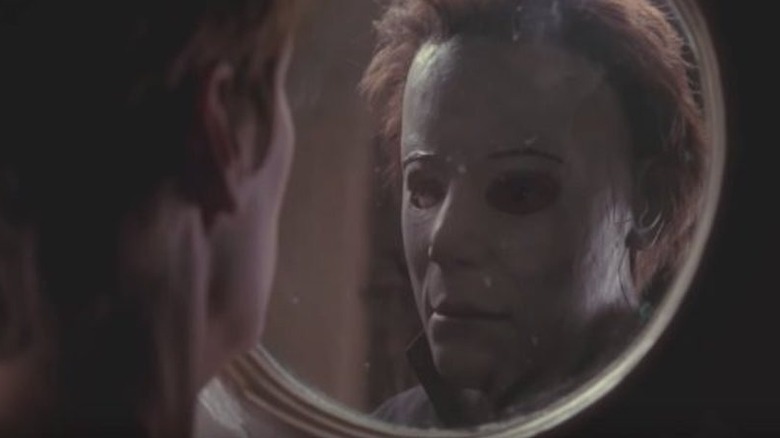
The "Halloween" franchise has had its ups and downs for decades. After starting with one of the most iconic horror movies of all time, it returned with a lesser sequel before departing wildly for "Halloween III: Season of the Witch." By the 1990s, the franchise was on fumes, and so original star Jamie Lee Curtis was brought back, and all previous installments outside of the first two were erased from continuity. The result was 1998's "Halloween H20: 20 Years Later."
An entire multi-movie saga involving the Laurie Strode's daughter was forgotten, and instead the film sees a much older Laurie Strode face off against the villainous Michael Myers once and for all. Unfortunately, despite some modest success and even a direct sequel in 2002, "Halloween H20" wasn't the return to form the studio was hoping for, and the franchise was rebooted not long after with a straight-up remake.
When that remake series (from musician Rob Zombie) similarly failed, the studio chose to go back to the original. Not wanting another sequel to "Halloween H20," they flushed the baby out with the bathwater and erased that film from continuity, too. Instead, they produced a new trilogy from director David Gordon Green starting in 2018 that served as a direct follow-up to the 1978 original (and even shared the exact same title).
George Lucas wants to destroy the worst Star Wars movie
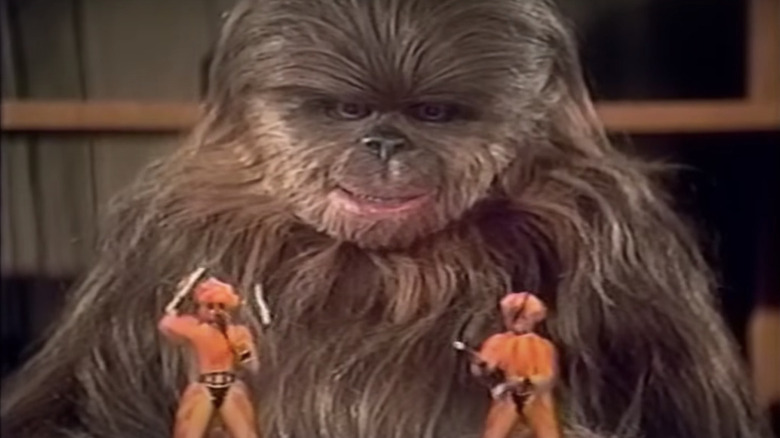
Since Disney acquired the "Star Wars" franchise, a slew of new movies and TV shows have been churned out to divisive reactions. Some fans may even wish that the worst of them never happened, but if you were to ask George Lucas, it's "The Star Wars Holiday Special" that should be deleted from history. So infamously terrible was the 1978 television special that it was only ever aired once, and to this day has never been officially released for home viewing in any format.
There's a lot of things you probably didn't know about "The Star Wars Holiday Special," which was a bizarre mix of comedy and drama, with interstitial segments that included a cooking show and an animated adventure that debuted Boba Fett. Cheaply made and downright cringe-worthy, it's hard to imagine how it ever got produced. Embarrassed by the final product, George Lucas, in the decades before streaming and online piracy, attempted to stop the sale of bootleg copies, even famously stating that if he'd had "time and a sledgehammer," he'd destroy every copy in existence (per Salon).
Ironically, thanks to the wonders of the internet, the special can be found today fairly easily. It's gained a cult following for its oddity, and while Disney would surely like to sell copies of it, Lucas has helped keep it buried, at least officially.
An ill-fated remake sent teens back to the '90s
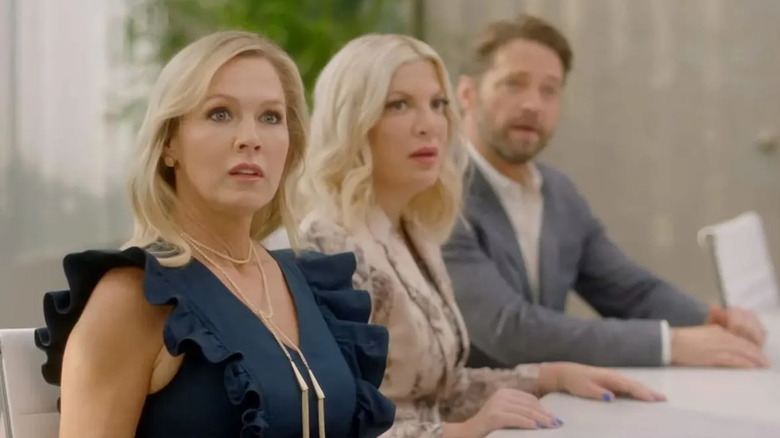
"Beverly Hills, 90120" was a watershed teen drama in the early '90s that changed TV forever, leading to a new genre of show. It was such a sensation that it received several spin-offs and sequels, including "Melrose Place," "Models Inc.," and "90210." In 2019, the series returned with a radical reboot. Unlike its predecessor, "BH90210" featured none of the original characters and wasn't even a teen drama. Instead, it's a meta drama about the real-life actors from the original series, who are all struggling in their careers and hoping to put together a reboot of "Beverly Hills, 90210."
With an awkward title and high concept that may have been a bit much for fans looking for simple soap opera drama, "BH90120" didn't even receive a full season, getting just six episodes before it was canceled. Despite high hopes they'd get a second season, the studio was so ready to pretend it didn't exist that they allowed it to end on a dramatic cliffhanger that will probably never be resolved.
They did it, they blew it up
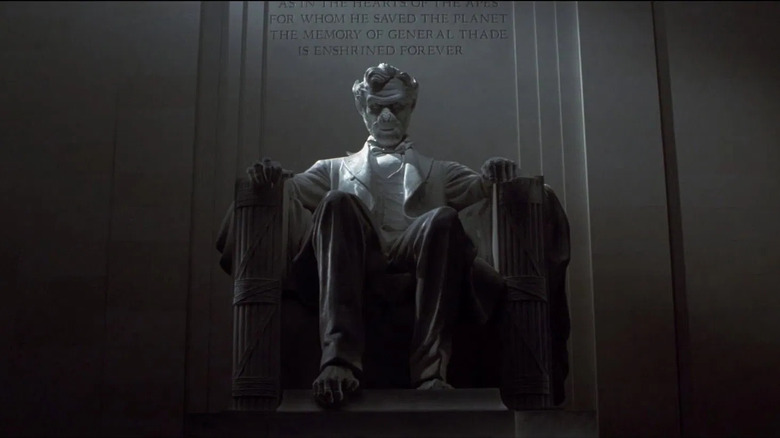
The "Planet of the Apes" franchise has nearly a dozen movies, a short-lived TV spin-off, and even a children's cartoon. By the turn of the millennium, the series was sorely in need of a refresh. The answer came in 2001, with "Batman" director Tim Burton helming a big budget remake that starred Mark Wahlberg as an astronaut lost in space who lands on a world ruled by primates.
Unlike the original, 2001's "Planet of the Apes" ends with that astronaut arriving back on Earth, now ruled by monkeys. It was a clear lead-in to a sequel, but despite major box office success, the studio nixed further follow-up plans. That may have been the result of lackluster critical reaction, as audiences and reviewers rolled their collective eyes at the film's focus on action spectacle over thoughtful science fiction. Despite top-notch production values, the remake lacked the original's charm and missed the point, making it the worst Planet of the Apes movie.
A decade later, 20th Century tried again with a more stripped-back sci-fi tale that eschewed over-the-top action for more thoughtful drama. It succeeded and birthed three Oscar-nominated sequels, leaving Tim Burton's ill fated attempt in the dust — which the studio is probably fine with.
The less said about Fant4stic the better
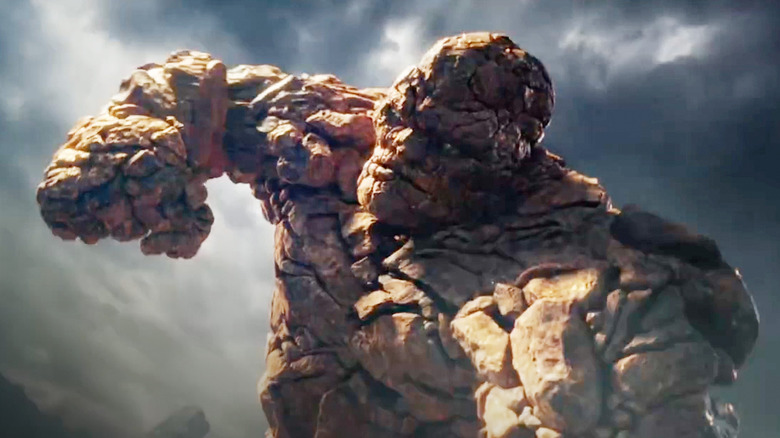
The "Fantastic Four" franchise is bigger than you think, with no fewer than five current live-action films. While many are familiar with the Tim Story-directed duology from the 2000s and 2025's "The Fantastic Four: First Steps," there's also the still-unreleased 1994 live-action Roger Corman movie. But the one Marvel probably wishes remained buried is the 2015 reboot, derisively referred to as "Fant4stic" thanks to some awkward marketing.
By 2015, the Marvel Cinematic Universe was already a monster, dominating the box office with colorful superhero adventures for the whole family. So, it was a curious decision when 20th Century had indie director Josh Trank helm a dark, gritty take on the "Fantastic Four" that at times felt like an R-rated body horror movie. The studio eventually got skittish, and after a conflict with Trank, had the film retooled midway through production. The mish-mash didn't work, and the final result was an abject disaster. In retrospect, it would have been better to simply let Trank finish his superhero horror movie, and let it sink or swim on its own merits.
In late 2017, of course, Disney agreed to acquire 20th Century Fox, finally granting the MCU control of the "Fantastic Four" characters. It took another decade for Marvel Studios to produce its own version, possibly to ensure that the vile stink of "Fant4stic" had faded completely from audiences' minds.
You probably forgot that Chris Pine played Jack Ryan
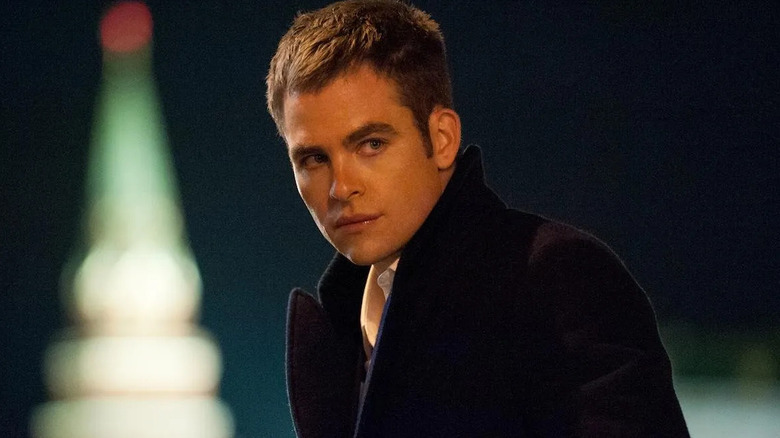
Over on Amazon, John Krasinski has been playing Jack Ryan for years in his critically acclaimed action-drama, with a sequel movie on the way. Before, the role was filled by a string of superstars, beginning with Alec Baldwin in 1990's "The Hunt for Red October," Harrison Ford for a pair of films in the '90s, and Ben Affleck in 2002's "The Sum of All Fears." But what you might have forgotten is that Chris Pine also played the character in a failed reboot, "Jack Ryan: Shadow Recruit." And that's probably by design, as despite Pine's star status, it's a lackluster and sometimes downright boring movie that failed miserably.
"Shadow Recruit," unlike the other Jack Ryan movies, is an original story, exploring the origin of his terrorist-fighting mission statement. It features a pre-"Yellowstone" Kevin Costner as Ryan's first mentor, but lacks the kind of riveting story the character is known for. The action is weak, the narrative meandering, and overall, it feels more like a direct-to-video imitation than the bona fide article. So it's not surprising that Paramount doesn't market it at all, with its attention instead going towards earlier installments.
Get Smart wisely ignored the Nude Bomb
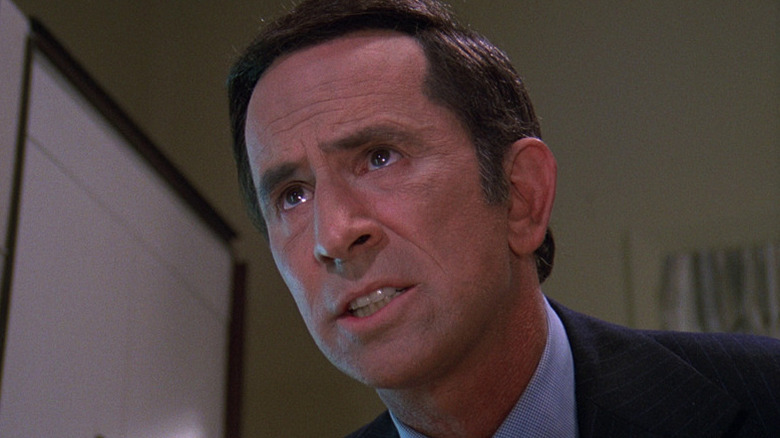
"Get Smart" got its start in the 1960s as a comedic send-up of the "James Bond" franchise. Starring Don Adams and co-created by "Young Frankenstein" and "Blazing Saddles" director Mel Brooks, the series was a wickedly funny homage to the spy genre decades before "Austin Powers." In the late '80s, it was rebooted for the small screen and received a big-budget movie remake starring Stephen Colbert, Anne Hathaway, and Dwayne Johnson in 2008. But it wasn't the first time the series hit theaters. However, its first theatrical effort was so bad and nonsensical that the franchise has tried to pretend it never happened.
Titled "The Nude Bomb," the first "Get Smart" movie was so bad that the made-for-TV sequel, "Get Smart, Again!" completely ignored its existence. The series' original creators weren't involved, co-star Barbara Feldon was never approached to begin with, and the plot involves an explosive that literally turns people naked. It's deeply unfunny, totally misguided, and barely works on any level. Its only ironic saving grace, is that the movie never uses the "Get Smart" name in the title, making it easier to act like it never existed.
The Mummy killed an entire cinematic universe
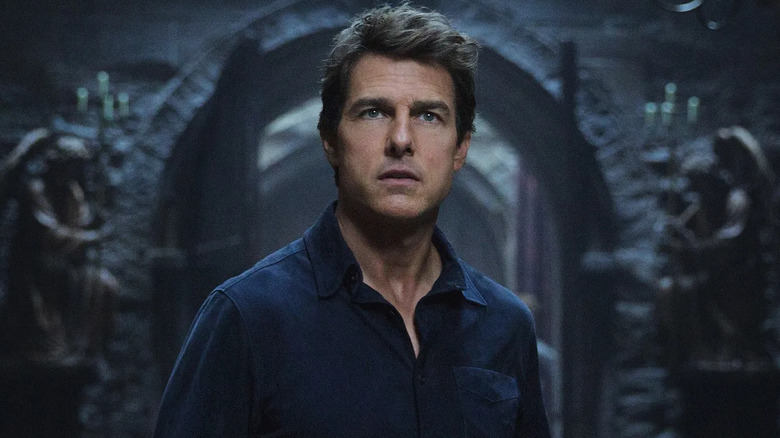
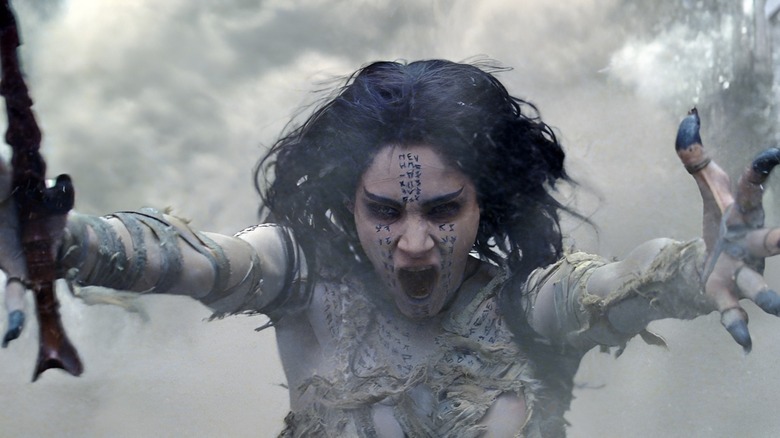
Few movies have been abandoned as swiftly and thoroughly as 2017's attempted remake of "The Mummy." The series began as one of the classic Universal Monster movies of the 1930s, before being remade to great success in the late '90s. But rather than bring back Brendan Fraser, Universal brought in Tom Cruise and turned the story into a supernatural action thriller designed to spark a cinematic universe.
Earning its place as one of the worst movies of 2017, there's a lot wrong with the film, starting with the woefully miscast Tom Cruise. His name was one of many slated to join Universal's interconnected Dark Universe, with the likes of Russell Crowe, Angelina Jolie, Johnny Depp, and Javier Bardem all set to star in redos of "Bride of Frankenstein," "The Invisible Man," and "The Creature from the Black Lagoon." But only Crowe, who had a minor role in "The Mummy," ever appeared in the proposed franchise, as Universal quickly scrapped every movie in development as soon as "The Mummy" bombed in theaters.
Shortly after, Universal handed its classic monsters to Blumhouse, who delivered lower-budget affairs "The Invisible Man" in 2020, "The Wolfman" in 2025, and another crack at "The Mummy" slated for 2026. In addition, Brendan Fraser and Rachel Weiz were announced to be making a long-awaited fourth installment to the '90s series.
Godzilla '98 was reduced to a punchline
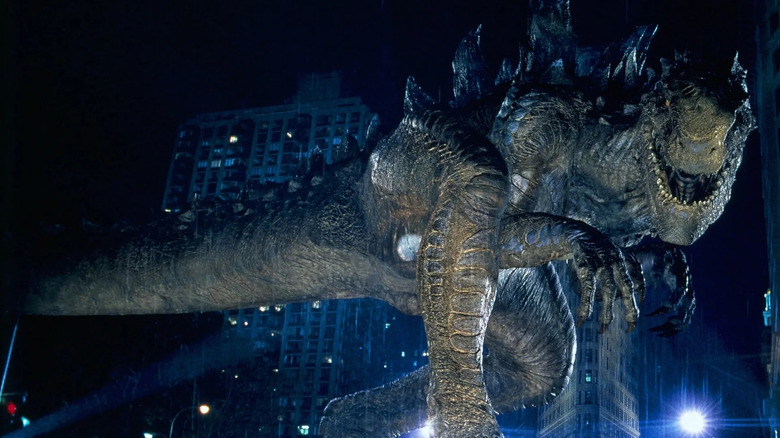
In Japan, there are few bigger movie franchises (or characters) than Godzilla. But Toho, the studio behind the series, was long protective of their crown jewel and didn't like the idea of an American studio creating its own version. They finally relented in 1998, and the resulting film was so bad that Toho wouldn't allow another studio to try again for almost 20 years.
A major summer tentpole blockbuster, "Godzilla" was an obvious attempt to cash in on the popularity of "Jurassic Park." The titular Godzilla was reimagined as a monster with more in common with a Tyrannosaurus Rex than the monster from the classic Japanese film series. Early CGI was disappointing and ineffective, while its attempts at humor fell so flat that it was nearly concave. Sony and TriStar were hoping for a full-fledged franchise, but all that came from it was a short-lived Saturday morning cartoon. Instead, Toho became even more protective, and it wasn't until 2014 that we got another attempt, this time from Gareth Edwards, which eventually led to a big-budget crossover with King Kong.
Godzilla '98 has become a lesson in how not to reboot a movie series. Outside of a minor cameo in 2004's "Godzilla: Final Wars" — where the monster met its end at the hand of the real Godzilla in mere seconds — Toho all but acts like it never happened.