

10 Sci-Fi Cliffhangers That Never Got Resolved
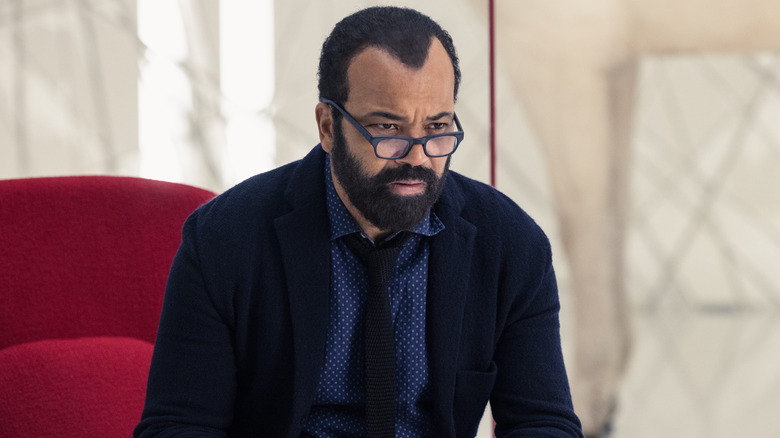
There's no feeling quite like spending weeks, months, or even years waiting to see how your favorite character faces their latest catastrophe. That's why TV and movie writers love using cliffhangers — despite the inherent dangers. After all, there's never a guarantee that a TV show is going to go on for another season, or that a movie will get a sequel. Sometimes, fans are left hanging, forcing them to start online campaigns to save canceled shows that deserve revivals or write fanfiction to wrap up dangling plot threads themselves.
Unresolved cliffhangers aren't restricted to one genre, but sci-fi stories tend to have particularly frustrating endings for fans who are left without answers. Surprise alien invasions and sudden time travel twists leave audiences screaming for more, but they don't always get what they want. Plenty of sci-fi shows have been ruined by terrible endings, but the movies and shows we've gathered here aren't necessarily bad. They're just the kind of sci-fi stories that are going to leave you hanging at the worst possible moment.
Sliders
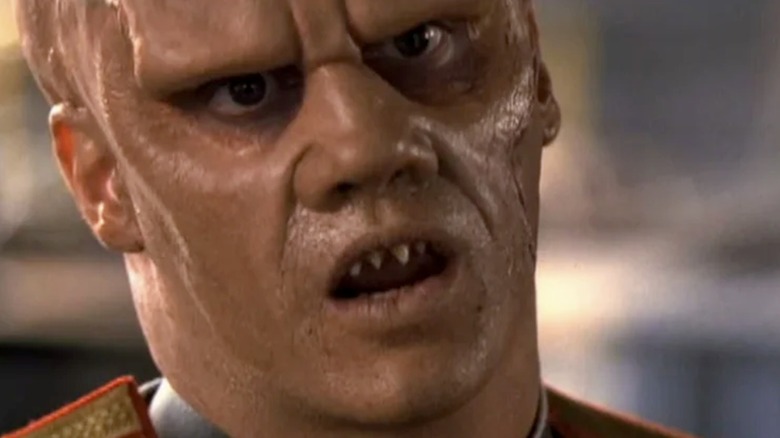
"Sliders" ran for five seasons' worth of multidimensional adventures. The series follows a group of people who, thanks to some questionable science and a nifty sci-fi machine, find themselves lost in the multiverse. The characters "slide" into a new dimension — and a new set of problems — each episode, all while trying desperately to find their way home.
The show was on the air from 1995 to 2000, but the series finale left the entire story unresolved. In that episode, the Sliders finally thought they'd found their way home ... only to end up in a universe where they're all celebrity actors starring in a TV show called "Sliders." Even more confusing, the Sliders meet a man named Marc LeBeau (Roy Dotrice), who's had a prophetic vision that their final slide home will result in their deaths.
Eventually, the evil Kromaggs arrive, and the Sliders find themselves fighting their old foes. In the show's final few moments, the Slider Rembrandt (Cleavant Derricks) injects himself with an anti-Kromagg virus and uses a new machine to slide home, potentially killing himself and all the Kromaggs in one fell swoop. Sadly, the show never reveals Rembrandt's fate, and it leaves the other Sliders trapped in the universe in which they're famous. Decades later, fans online still discuss their disappointment at the show's cliffhanger ending.
Quantum Leap
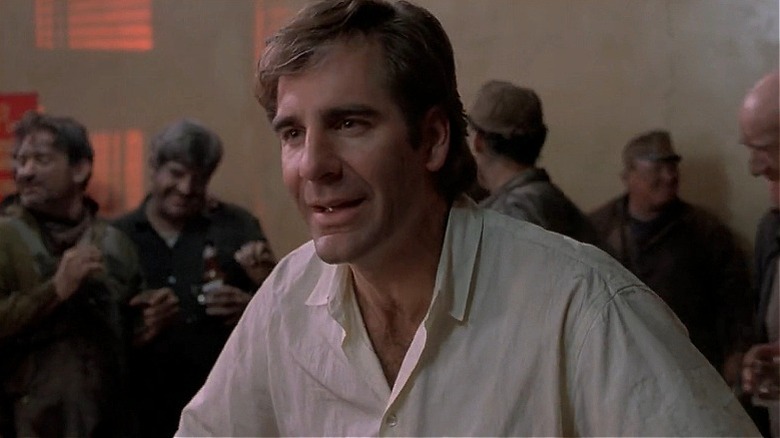
"Quantum Leap" is another sci-fi show with a world-hopping premise. The show follows Sam Beckett (Scott Bakula), a scientist who attempts to create a time travel machine. Instead of exploring history at will, however, Sam ends up trapped in an endless loop in which he "leaps" into the body of someone in the past. With help from a hologram of his best friend Al (Dean Stockwell) and a supercomputer named Ziggy (Deborah Pratt), Sam travels through the past, correcting events in history and, hopefully, finding his way back home.
The ending of "Quantum Leap" didn't see Sam return to his own timeline, though. In the series finale, Sam learns that his own desire to help people and right the wrongs of history is what's been causing him to keep leaping into new lives. Sam makes another leap to a part of Al's past to help out his friend before disappearing into the swirl of time, with the show revealing that he never returned home.
There was a "Quantum Leap" revival series that aired for two seasons starting in 2022, but that show didn't address the cliffhanger ending of the original show. And while we may not have any solid answers about Sam's fate, fans still enjoy the direction the series took: More than 30 years after the end of the original "Quantum Leap," fans still have lively discussions online about what all Sam's leaping really means — and how things might have turned out for him.
FlashForward
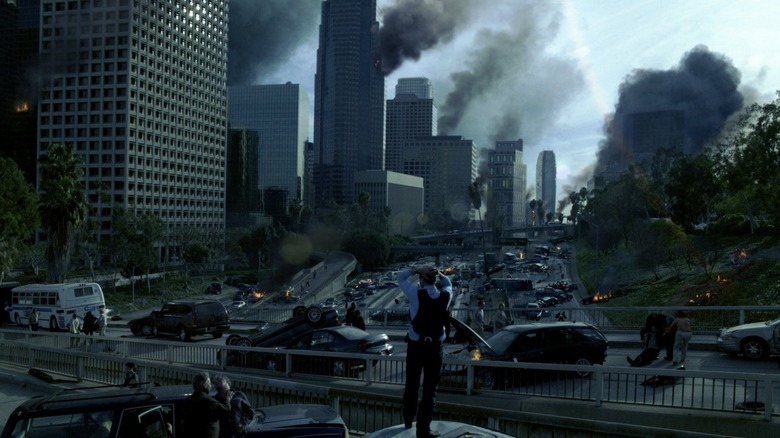
Based on a novel by Robert J. Sawyer, "FlashForward" had all the makings for a great sci-fi show when it began airing on ABC in 2009. The basic premise of the series is that a mysterious global event has caused people around the world to black out for two minutes. While they were unconscious, the people saw visions of their own lives six months in the future. But what caused the blackouts? What do the visions really mean? What will our characters do with their new knowledge?
Unfortunately, "FlashForward" turned into a total mess behind the scenes. Series showrunner Marc Guggenheim stepped down from the project just two weeks after ABC picked it up. Then, the second showrunner, David S. Goyer, left five months into the production. Because of that, the series had to take a mid-season break during its first season, which disrupted the pacing and did nothing to help the relatively low viewership numbers. In the end, ABC canceled the series — but not before the show's team filmed the Season 1 finale. Tying the series back into the book's main premise, the finale sees the world struck by another blackout. This time, though, the people affected get to look 20 years into the future. It's an intriguing idea that could have set the stage for an incredibly impactful second season, but now it's stuck as yet another unresolved mystery.
District 9
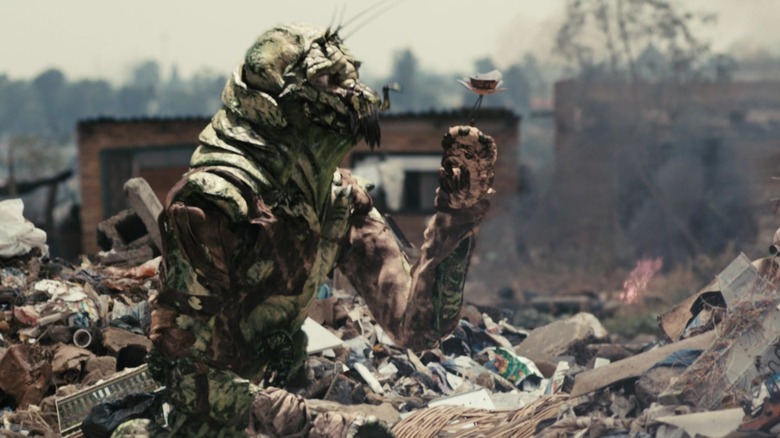
There are too many sci-fi movies begging for sequels to count, but "District 9" still stands out from the crowd. The feature-length debut for writer-director Neill Blomkamp blew audiences away with its unique setting, intricate plot, and next-level visuals. Yet while those elements got fans invested in the movie, it was the ending that had them begging for more.
The ending of "District 9" provides some closure for the movie's protagonist Wikus (Sharlto Copley), who completely transforms into one of the aliens known as prawns — but it leaves many other plot elements up in the air. Will Christopher (Jason Cope) come back for Wikus? What will happen to Multinational United now that the world knows they were performing illegal scientific experiments? Will prawns and humans find a way to peacefully live together? And what happens to the new District 10 that we see at the end of the film?
Those questions and more have left fans wondering why we never got to see a "District 9" sequel. Blomkamp created the movie as a one-off story, and despite all the demand for another outing, he's been busy with other projects ever since. As recently as 2022, Blomkamp said he was working on a sequel, but how far he's come with it is anyone's guess. All we know is that, nearly two decades later, fans still have no resolution to the questions posed at the end of "District 9."
V (2009)
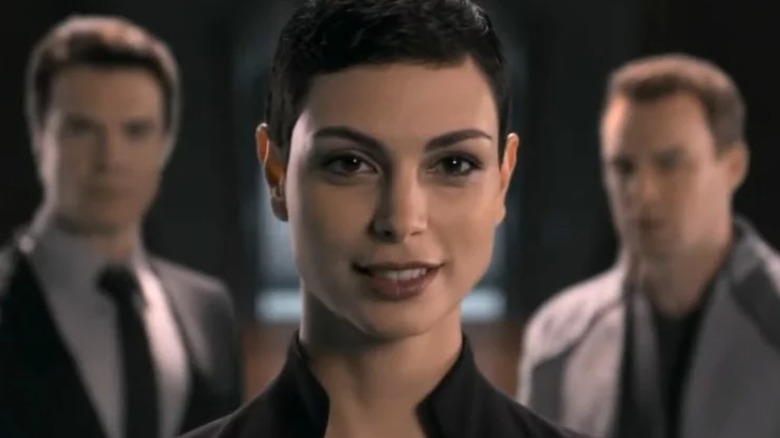
A remake of a 1983 Kenneth Johnson miniseries, 2009's "V" expanded on the original show's story — or at least, it tried to. "V" ran on ABC for two seasons but never gained much popularity or critical acclaim. The second season was cut to just 10 episodes, down from 13, forcing the writers to wrap up the season quickly. At the time, the cast and crew working on the show were still hoping that "V" would get picked up for a third season; executive producer Scott Rosenbaum even told Entertainment Weekly that he knew the Season 2 ending could never work as a satisfying series finale. "So I said, 'You know, I'm going to hope there's another season, because I've pushed the story too far [and] it won't make sense [to conclude it this soon]," he said. "I don't feel like the audience will feel like we've earned those moments.'"
"V" didn't get another season, though, and now Season 2's dramatic cliffhanger is simply a horribly grim ending for the series. In the show, aliens called the Visitors come to Earth posing as humanoids. Led by a woman named Anna (Morena Baccarin), the Visitors offer peace and advanced knowledge while slowly taking over the planet. FBI agent Eric Evans (Elizabeth Mitchell) discovers the Visitors are evil reptilians in disguise and joins a human resistance group. At the end of Season 2, Anna uses a new piece of technology to control all of humanity with her brain. The season ends with the entire planet dominated by Anna and the Visitors, with seemingly no hope for the resistance to rise again.
Chronicle
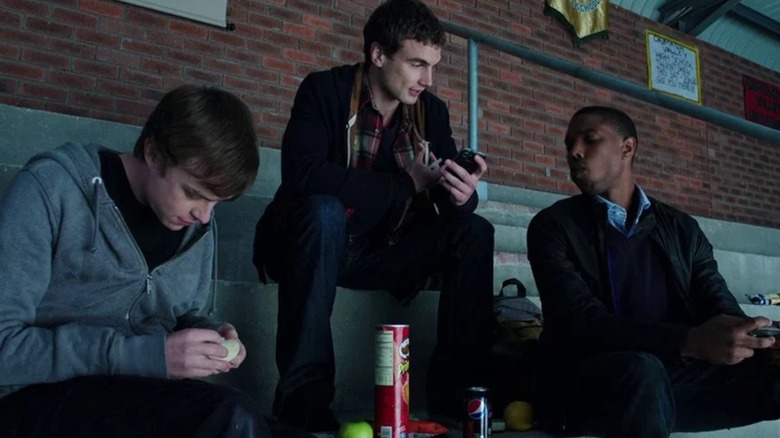
"Chronicle" is a found footage movie written by Max Landis and directed by Josh Trank. The film follows high school friends Andrew (Dane DeHaan), Matt (Alex Russell), and Steve (Michael B. Jordan), who develop powers after discovering a mysterious artifact in the woods. Over the course of the movie, Andrew begins to see his newfound abilities as a way to take revenge on people he thinks have wronged him, prompting Matt to confront him. Unable to subdue Andrew, Matt stabs him to death. In the final shot of the film, Matt tells the camera that he's going to commit himself to using his new powers for good, and he flies offscreen, presumably to live the life of a superhero.
Fans have been dying to find out what happens to Andrew next, but they've never gotten any answers. What's especially tragic for "Chronicle" fans is that a sequel was essentially ready to go. At one point, Landis had a sequel script written, but Trank had no interest in it. Feeling no real passion for the project, Trank apparently decided to sabotage "Chronicle 2" in any way he could. "I made it difficult for them to set up meetings," he later told Polygon. "I was dodgy about stuff. I did a lot of s**** things. Because I really didn't ever want to see 'Chronicle 2' happen." Trank was successful, and now fans of the original will forever be left with an unresolved cliffhanger.
Salvation
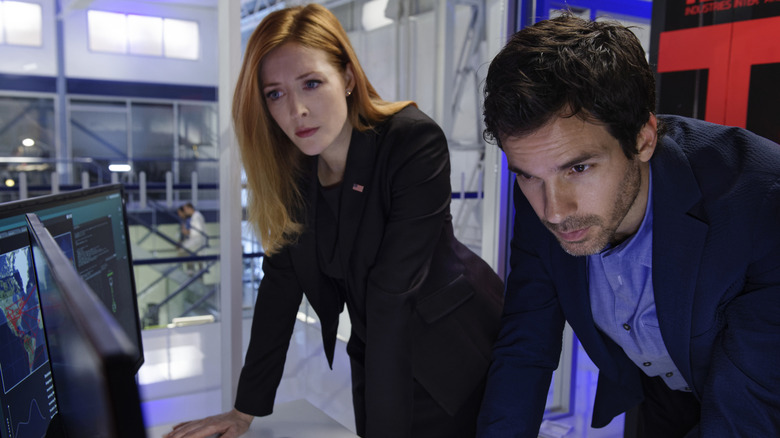
CBS's "Salvation" is an ensemble show that tries to take a realistic approach to a sci-fi catastrophe. The show takes place six months before an asteroid is set to crash into the Earth. Over the course of two seasons, fans watched as different people across the world tried to find ways to save the planet or to deal with their own impending doom. Everything changes in the Season 2 finale, however, just as humanity prepares to launch a nuclear weapon at the asteroid to try and destroy it. As it passes the moon, the asteroid comes to a standstill, revealing itself to be an alien spaceship.
That massive cliffhanger is, unfortunately, where "Salvation" ends. The show was canceled before a third season could deliver on the promise of an apparent alien invasion. And while "Salvation" wasn't particularly popular among critics, the series had some diehard fans: The show has a 48% approval rating with critics on Rotten Tomatoes, but an 81% rating from viewers.
Some of those fans were understandably upset by the way the show wrapped up — or didn't. One fan spoke about their reaction to the ending on Reddit, writing, "I was so furious I wanted to destroy some of my personal belongings like phone and laptop." It's rare for even the most extreme cliffhangers to reimagine the premise of an entire series, and it's definitely disappointing that we never got to see what "Salvation" would do with its big twist.
Westworld
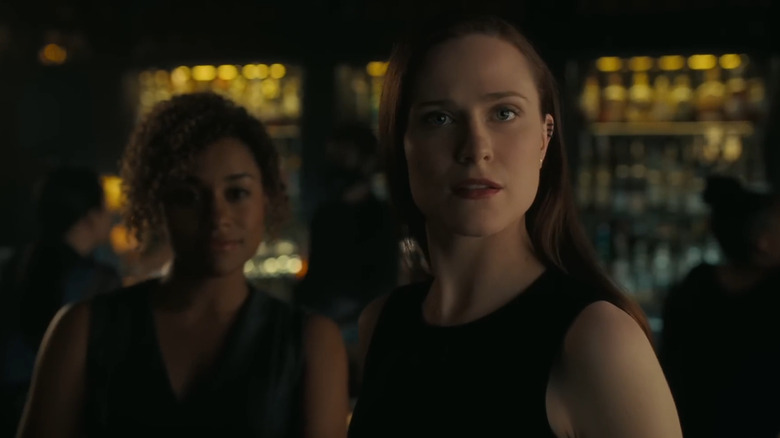
Loosely based on the 1973 movie of the same name, "Westworld" is a mind-bending sci-fi drama created by Jonathan Nolan and Lisa Joy. For four seasons, the show kept its fans guessing as it pitted human beings against androids called hosts in a battle over the fate of the world.
At the end of the fourth season, Dolores Abernathy (Evan Rachel Wood), a host with a complicated history, essentially reboots the universe and all of the mostly-dead hosts she's known in a simulation called the Sublime. What happens next is just one of the many unanswered questions we have about "Westworld" Season 4, and it's unlikely we'll ever get answers.
Three months after the Season 4 finale aired — and before what would have been its fifth and final season — HBO unceremoniously canceled "Westworld." Fans were understandably upset to learn they wouldn't find out how the story ends, but they weren't the only ones reeling with disappointment. "First of all, they don't tell us where the show is going," Wood told Entertainment Weekly after the cancellation. "After building an arc and a character for almost 10 years and not getting the payoff at the end to see where it was all going — I think for us and the audience, it was awful in a lot of ways."
The OA
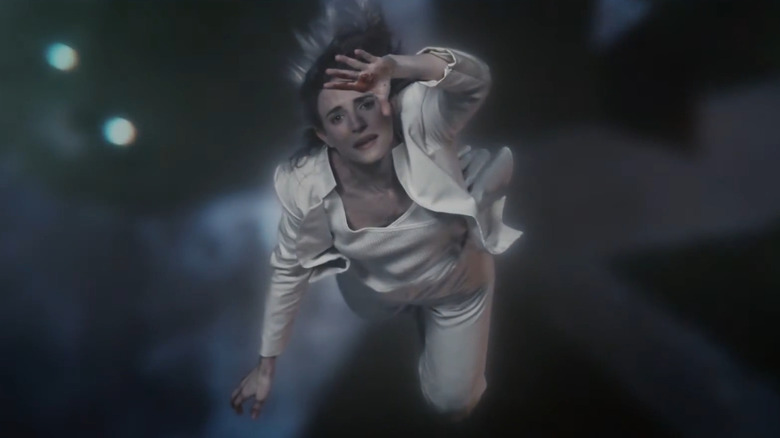
Netflix is as famous for canceling great shows as it is for making them, and "The OA" counts towards both parts of the company's reputation. When the show began airing in 2016, it immediately gathered a following of sci-fi fans intrigued by the startlingly original premise. The story centers on a blind girl named Prairie Johnson (Brit Marling), who vanishes for seven years. When she finally reappears, she's regained her sight. She's also started calling herself the Original Angel and claims that she can open portals to other dimensions.
"The OA" is a deeply compelling slow-burn mystery, but it's hard to recommend to new viewers today because its ending offers no resolution whatsoever. A year before Season 2 debuted, Netflix Vice President of Original Series Cindy Holland confirmed that "The OA" had a pre-planned story that was to last five seasons. Suitably, then, Season 2 ended on a massive cliffhanger, one that saw Prairie travel through the multiverse and apparently end up in our dimension on the set of "The OA" itself. The show never made it to Season 3, however, despite having a dedicated following — leaving many to wonder why Netflix really canceled "The OA." Now, the ending of the series is a painfully open-ended cliffhanger with a ton of promise that will never be fulfilled.
Alien: Covenant
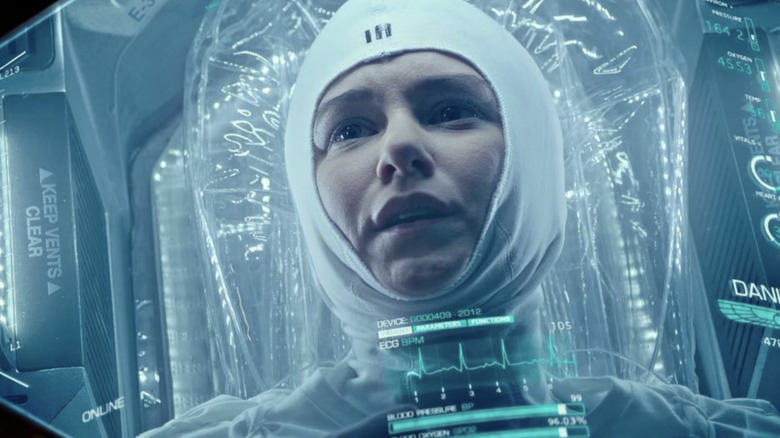
It's easy to forget now, but Ridley Scott's "Prometheus" was supposed to be the start of a brand new series in the "Alien" universe. Scott originally envisioned the film having multiple sequels, and at one point he said he had plans for four movies to build out the connection between "Prometheus" and the original "Alien." Only one of those sequels came to fruition, though, and the ending of "Alien: Covenant" gave fans a whole slew of questions that'll likely never be answered.
"Covenant" debuted to mixed reviews and disappointing box office returns. Technically, the movie is actually one of the highest-grossing in the "Alien" franchise, but it earned over $160 million less than "Prometheus." Since then, the "Alien" franchise has gone in a different direction with projects like "Alien: Romulus" and "Alien Earth" distancing the series from Scott's prequels. Scott himself has also seemingly walked back his prequel plans, suggesting in interviews that he doesn't necessarily have an idea for a "Covenant" sequel. Fans better get comfortable with envisioning their own resolutions for David, the fallen Engineer society, and the black goo seen in "Covenant" — because official answers likely aren't coming.