

5 TV Series Finales That The Writers Regret
How a television series ends can impact its entire legacy. Some join the list of the worst finales of all time, changing how audiences view the show forever, while others tie a perfect bow on an amazing story. For example, "Game of Thrones" is known for its universally panned ending, yet "Parks and Recreation" went down in TV history for how great its final episode was. No show is safe from a disappointing ending, no matter how great the creative team is behind it.
That said, sometimes the writers regret the series finale they wrote. It doesn't matter if it was well-reviewed or not — if it wasn't what they intended, they may not be happy with it. Situations like key actors leaving or a meddling network can be to blame, but sometimes the writers simply made a decision that, if put in the same position today, they wouldn't make again. Be warned, spoilers are ahead, so if you don't know how the series on this list end, you're about to.
Battlestar Galactica
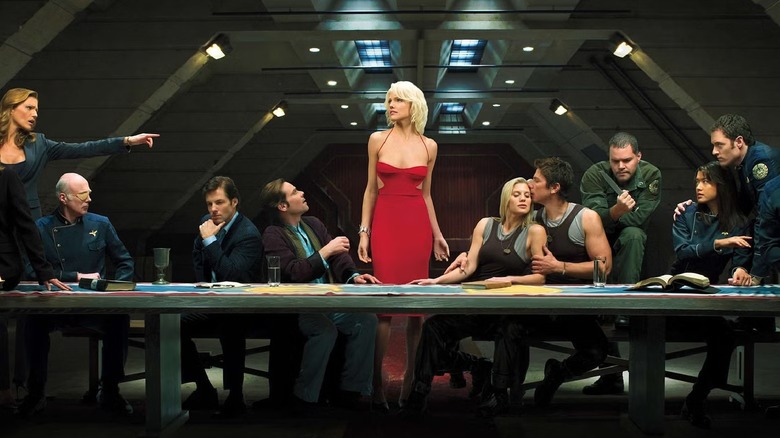
When the 2000s series "Battlestar Galactica" ended, it was with a literal bang. In the final episode, the ship is destroyed and people assimilate back on Earth, effectively stamping out the chance of a reunion, which is what showrunner and writer Ronald D. Moore intended at the time. However, looking back, he regrets that decision.
"To me, I wanted ['Battlestar Galactica'] to have a definitive ending. I felt strongly at the time that I didn't want to then try to put the gang back together later on, so I destroyed the Galactica, sent this fleet into the sun, landed them on Earth, and said, 'This is the end,'" he said to Screen Rant in 2024. "There's a part of me that wishes I hadn't done that because how much fun would it be to work with Eddie again? How much fun would it be with Mary and James, Katie and Tricia, and all of them?"
While Moore is still happy with how and when the show ended, it makes sense that, now that time has passed, he looks back on the finale a bit differently. "There's a part of me that would have very much enjoyed doing that, but I feel like we said everything we wanted to say and we've gone off stage at the right point," he continued. "I'm happy to leave that desire as our legacy."
Dexter
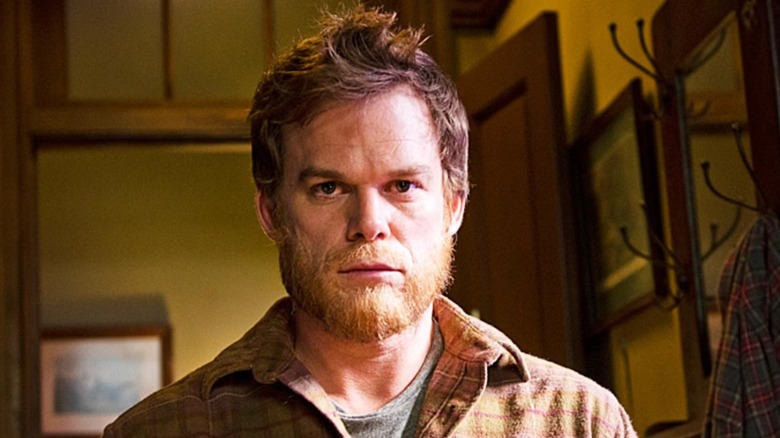
Audiences weren't pleased with the ending of "Dexter," which saw the titular character, played by Michael C. Hall, fake his own death in the ocean and start over somewhere new. It was an odd choice, but showrunner and executive producer Scott Buck had limited options.
"The one thing I was told I could not do is kill Dexter, because [Showtime] wanted to bring him back," Buck told Bloody Disgusting in 2022. Dexter's original ending, conceived by the first showrunner Clyde Phillips, did include Dexter dying, but that wasn't on the table anymore. Buck felt he couldn't have Dexter be caught either, as that could pose an issue for a spin-off too. If the public knew who Dexter was, a continuation wouldn't work as well, since a huge part of "Dexter" is that he's right under everyone's noses the entire time. All of this meant Buck instead gave Dexter a new life, one that worked as an ending, but also left space for another series like Showtime wanted.
However, many people think the new installments are because of the poor reaction to the finale, which isn't true. "The feeling out there seems to be that people were so unhappy with the [original] ending, and that's why they had to come back all these years later and give it a new ending," Buck continued. "But from my perspective, it was really the other way around."
How I Met Your Mother
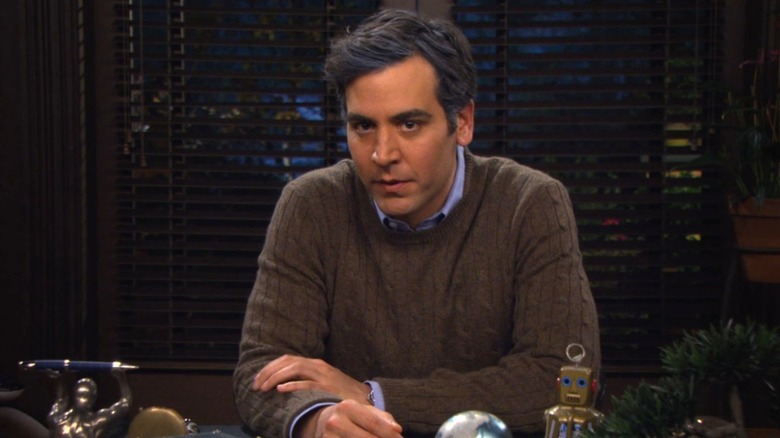
The finale of "How I Met Your Mother" is one of the most controversial sitcom endings of all time. After the build-up of Ted (Josh Radnor) looking for the mother across nine seasons, audiences meet her and watch an amazing love story, only for the writers to kill her off and put Ted with Robin (Cobie Smulders) in the end.
In an interview with TVLine in 2025, Craig Thomas, co-creator of the series and co-writer of the last episode, shared his regrets over Robin's characterization in those final moments, and how a deleted scene might've been the key to getting their true intentions across. "We just wanted to plant the seed that she missed Ted, and she does love Ted. There's this deep connection there," he said. "Others were like, I hope [the scene] doesn't make her seem like a sadder character than we mean it — as if not getting married meant she wasn't happy. That was not our intention at all."
Due to the time constraints of network television, the scene didn't make the cut, and that's something Thomas regrets, as it might've helped audiences accept the ending. "I'll go back and watch it now, but assuming it communicated what I wanted and didn't mistakenly communicate something I didn't, I do kind of wish it was in there," he continued. "I gotta admit that is a bit of a regret."
Lost
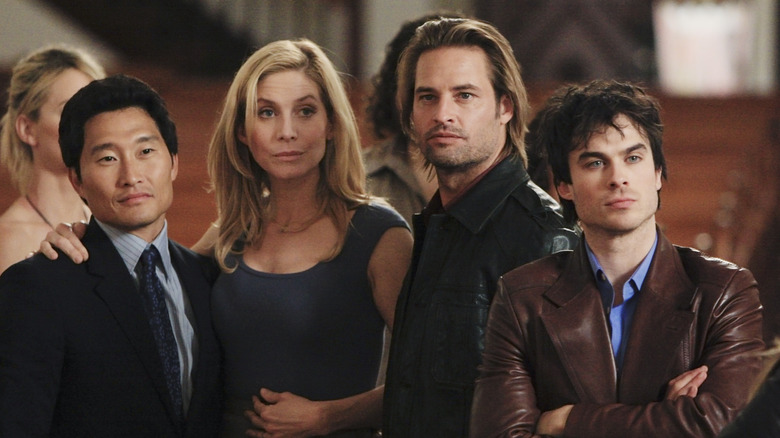
The end of "Lost" felt like a fever dream. After watching the passengers of Flight 815 crash on a mysterious island and find a way to survive, it seemed odd that the final episode implied that everything was a dream and everyone had been dead the entire duration of the series. That wasn't what the writers meant for the audience to take away.
While speaking with Vulture in 2024, executive producer, co-showrunner, and co-writer of the finale Carlton Cuse expressed that the footage used at the end of "Lost," which is actually unaired footage from Season 1, was meant to create a nice ending, not one that would change how audiences viewed the entire story. Using that footage is his "one regret about the whole journey of 'Lost.'"
"We put that footage at the end of the show and I think that the problem was that the audience was so accustomed on 'Lost' to the idea that everything had meaning and purpose and intentionality," Cuse said. "So they read into that footage at the end that, you know, they were dead. That was not the intention. The intention was just to create a narrative pause. But it was too portentous. It took on another meaning. And that meaning I think, distorted our intentions and helped create that misperception."
The Vampire Diaries
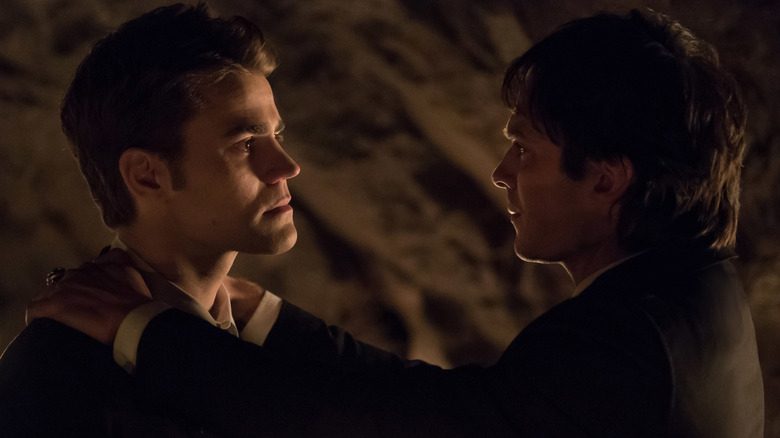
"The Vampire Diaries" was meant to have a completely different ending, but the exit of Nina Dobrev, who played the main character Elena, forced the writers to change their intentions. The original end goal, developed during Season 2, was for both brothers to die in the end, watching Elena from the afterlife.
However, Dobrev's departure caused Julie Plec, co-showrunner, executive producer, and writer, to feel like "The Vampire Diaries" had "a commitment to seeing Damon and Elena through to the end," though Damon wasn't who they had planned Elena to end up with, intending to ride the love triangle through to the end. "If Nina had never left, I would've loved to have been able to see if Stefan and Elena could've found their way back to each other," Plec said to Entertainment Weekly in 2017.
While Plec wasn't quite sure what that looked like, she did know that, without Dobrev, she wasn't going to kill off both brothers, forcing them to find a new ending as the direction of the series changed. Though Plec and Kevin Williamson, co-showrunner and writer, got to end "The Vampire Diaries" on their own terms, it wasn't with the ending they had planned from the early days of the show.