

10 Famous Directors Who Regret One Of Their Biggest Movies
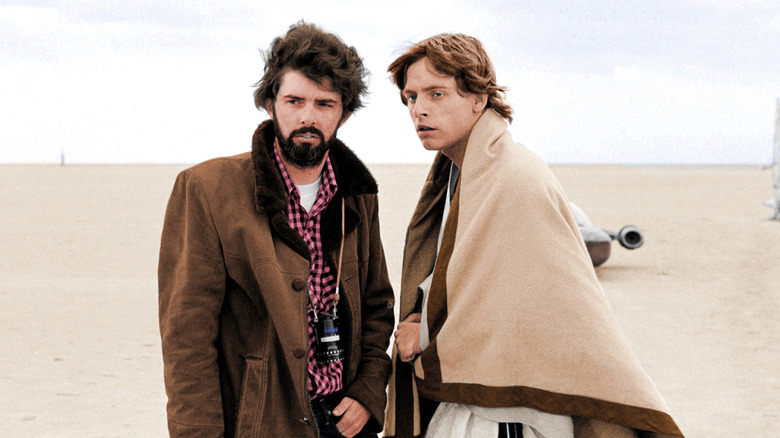
Any artist understands the feeling of being dissatisfied with their own work. Now imagine that frustrating piece being what you're world-famous for. That puts you in the shoes of the 10 directors on this list, who came away from some of their most well-known films with some form of regret.
Directors hating their own movies is nothing new, but the most interesting examples are those disregarded by their directors which have gone on to become classics. A filmmaker's vision not being wholly realized, dated storytelling choices, or historically hectic production experiences have had little bearing on the larger reputation these works have amassed in the eyes of audiences and critics alike. Some are controversial, but all have fresh scores on Rotten Tomatoes and have in some way made their mark on cinema history. It's not just schlock like "Transformers: Revenge of the Fallen" and "Batman & Robin" that filmmakers apologize for; even some of the most beloved movies of all time turned into sources of deep personal disappointment for their creators.
Fritz Lang was dismissive of Metropolis
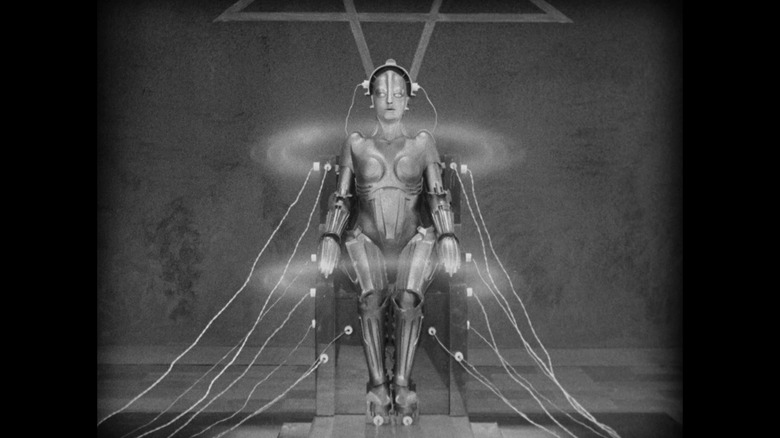
Fritz Lang's 1927 feature "Metropolis" has been celebrated for nearly a century as one of the most visually stunning movies of the silent era and a pioneer of cinematic science fiction. Lang himself, however, was not among those who celebrated it.
Even as its vision of the future was coming true in the Space Age, Lang remained conflicted on whether to give credit to the film he detested. Speaking to Peter Bogdanovich in 1965, in an interview later published in the 1998 book "Who the Devil Made It: Conversations with Legendary Film Directors," Lang described "Metropolis" as "silly and stupid," finding its message "that the intermediary between the hand and the brain is the heart" to be naive and disliking the depiction of humans as "nothing but part of a machine."
Lang assigned much of the blame to screenwriter Thea Von Harbou, his ex-wife who joined the Nazi Party shortly after their divorce in 1933. Bogdanovich reasonably speculated that Lang's hatred of "Metropolis" was due to Adolf Hitler and other Nazi officials loving the film. Propagandist Joseph Goebbels personally asked Lang to lead his film operation; Lang, who was of Jewish ancestry, chose to flee Germany in response.
Charlie Chaplin stopped finding The Great Dictator funny
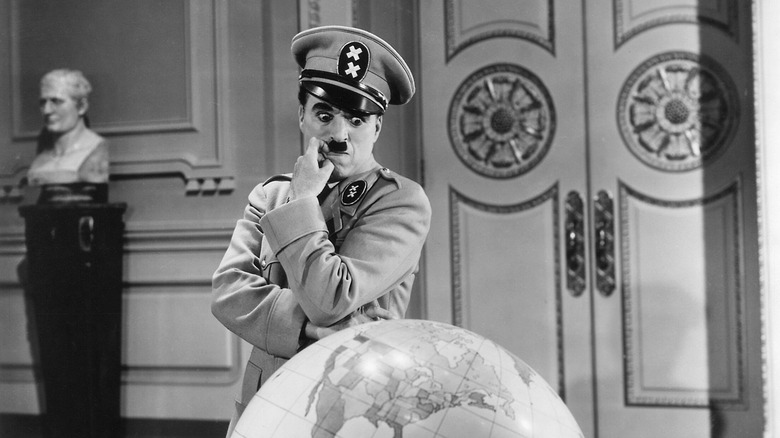
Here's another classic ruined in the mind of its director because of Hitler. To be clear, unlike "Metropolis," no Nazis were involved in the production of "The Great Dictator." Charlie Chaplin's 1940 comedy was a satire mocking the rising tides of fascism across Europe. It took bravery to produce such a film at a time when the United States was staying neutral in World War II, and Chaplin's big speech at the end — the first time the silent comedian spoke on-screen — still goes incredibly hard.
But not everything in "The Great Dictator" aged as gracefully. Comic mishaps involving concentration camps might have had audiences laughing in 1940, but after the world learned the full extent of the genocide the Nazis were committing in those camps, suddenly these bits weren't funny anymore. In his 1964 autobiography, Chaplin said as such, writing, "Had I known of the actual horrors of the German concentration camps, I could not have made 'The Great Dictator'; I could not have made fun of the homicidal insanity of the Nazis."
Alfred Hitchcock considered Rope a failed experiment
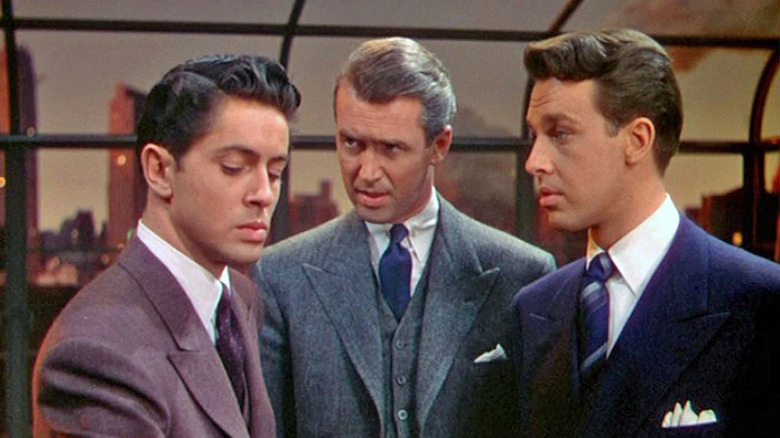
Alfred Hitchcock's 1948 thriller "Rope," about an ambiguously gay duo (John Dall and Farley Granger) who commit murder as an exercise in Nietzschean superiority, was one of the Master of Suspense's most ambitious works, being made to look as if the entire film was done in one long take. After mixed reviews and weak box office, the director reportedly deemed it "an experiment that didn't work," a sentiment echoed by actor Jimmy Stewart, who played the killers' professor, in Donald Spoto's book "The Dark Side of Genius: The Life of Alfred Hitchcock" (via Far Out Magazine). The film wouldn't be rereleased until 1984.
Today, "Rope" is looked back on more fondly than its director could have ever anticipated — it has a 93% fresh score on Rotten Tomatoes. Whether or not the stylistic gimmick was 100% successful, "Rope" acted as a blueprint for even more ambitious one-shot contemporary works like "Birdman," "1917," and the miniseries "Adolescence." The queer subtext, scandalous in the '40s, has also been of greater interest to modern audiences; while far from anything you could call "positive representation," it's got plenty of entertainment value for anyone who's posted "Be gay, do crimes" memes.
Stanley Kubrick pulled A Clockwork Orange from release
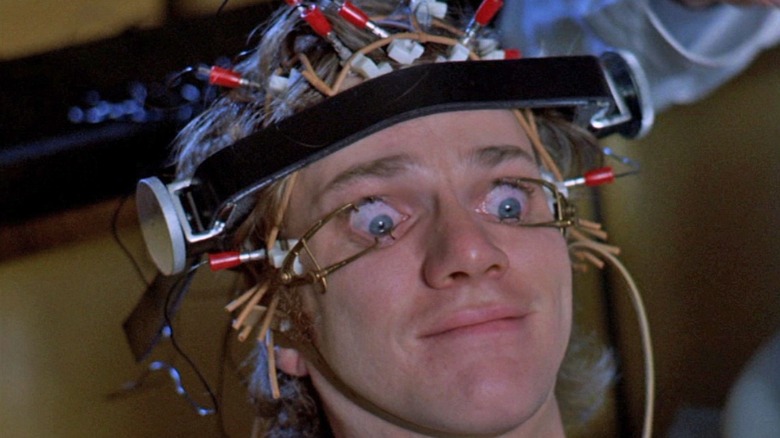
It's one thing for an auteur to criticize their own work. It's another thing for them to ban it entirely in their home country. The latter is what happened with Stanley Kubrick's controversial best picture-nominated 1971 sci-fi film "A Clockwork Orange" in the United Kingdom from 1973 until 2000, a year after the director's death.
The notoriously private Kubrick never gave a public explanation for this self-censorship. Many assumed it was in response to a series of crimes allegedly inspired by the movie, but when asked about the relationship between cinematic and real life violence in the past, Kubrick remained firm that movies couldn't turn people criminal. His wife, Christiane Kubrick, implied he initiated the ban to protect himself against death threats he was receiving from the public.
How much, if anything, Stanley Kubrick regretted artistically or morally about "A Clockwork Orange" is unclear. He let Warner Bros. continue distributing the film everywhere else outside the U.K., so he didn't think it was too dangerous to be out in the world. What is clear, however, is he hated how "Clockwork" had been misunderstood, and his extreme reaction to that delusion makes the film a historically noteworthy inclusion.
Francis Ford Coppola says The Godfather Part II was only made for money
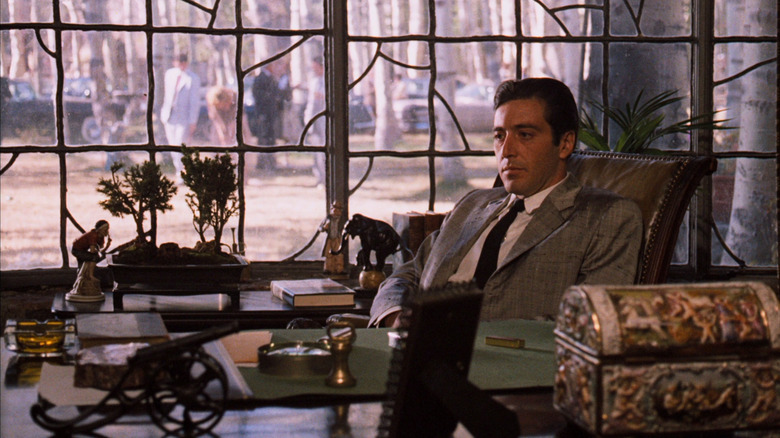
The popular consensus is that 1974's "The Godfather Part II" is one of those rare sequels which rivals, if not surpasses, the quality of its predecessor. It's one of only two sequels to win the Oscar for best picture, the other being "The Lord of the Rings: Return of the King." And yet its director, Francis Ford Coppola, considers the film a cash-grab, something only made because the studio demanded it after the first "Godfather" broke box office records.
Coppola explained his opposition to making "Godfather" sequels in a 2009 interview with MovieLine, "I don't think 'Godfather' ever should have had more than one movie, actually. It was not a serial, it was a drama. The first movie wrapped up everything. To make more than one 'Godfather' was just greed." In a 2024 Washington Post profile, the director apologized for being "the jerk that started numbers on movies." Take that as you will from the guy who spent his fortune on "Megalopolis."
Woody Allen found Annie Hall disappointing
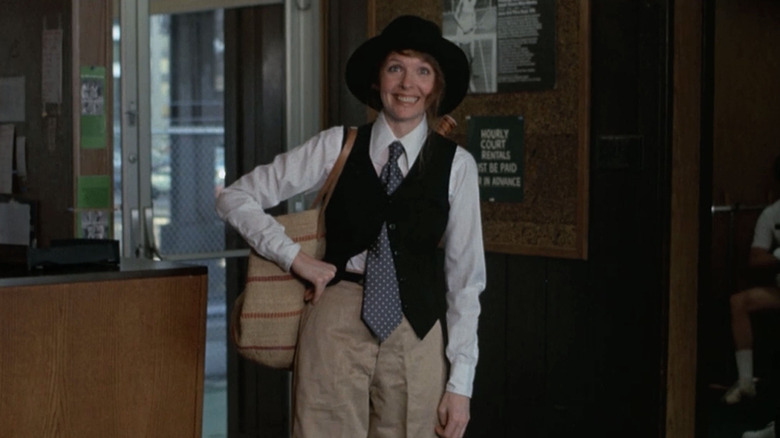
Turns out that Woody Allen is kind of a neurotic guy. All sarcasm aside, the man who managed to make a new movie almost every year until certain disturbing issues caught up with him isn't too fond of his own work — including, and especially, 1977's "Annie Hall," the beloved rom-com that won him his first two Oscars.
Allen's particular issue with "Annie Hall" is that it strayed too far from his original concept entitled "Anhedonia." The director told Collider in 2012, "The film was supposed to be what happens in a guy's mind, and you were supposed to see a stream of consciousness that was mine, and I did the film and it was completely incoherent. Nobody understood anything that went on. The relationship between myself and Diane Keaton was all anyone cared about. That was not what I cared about." Re-cutting the film to focus on the relationship drama worked wonders for its popular success, but its eternally unhappy auteur couldn't enjoy the finished product.
Steven Spielberg deemed Temple of Doom too dark
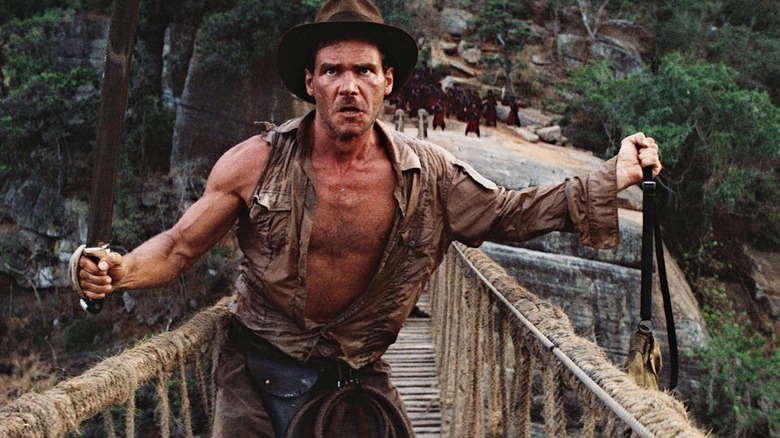
"Indiana Jones and the Temple of Doom" is a darker, grosser, and more problematic movie than its 1981 predecessor, "Raiders of the Lost Ark." The prequel's extreme violence broke the PG rating in 1984, and is part of the reason the PG-13 rating exists today. It was still a huge hit, but a divisive one — those who love it praise the incredible action sequences, while those who hate it call out the retrograde racism and sexism. Director Steven Spielberg's opinion of the film is closer to that of haters than of its fans.
While promoting the lighter "Indiana Jones and the Last Crusade" in 1989, Spielberg told the Sun-Sentinel (via Den of Geek), "I wasn't happy with the second [Indiana Jones] film at all. It was too dark, too subterranean, and much too horrific. I thought it out-poltered 'Poltergeist.' There's not an ounce of my own personal feeling in 'Temple of Doom,'" a stance he's maintained in the decades since. Story writer George Lucas is more positive about the film, attributing its sinister nature to the dismal emotions he and Spielberg were experiencing at the time following their respective break-ups.
Makoto Shinkai doesn't understand Your Name's blockbuster success
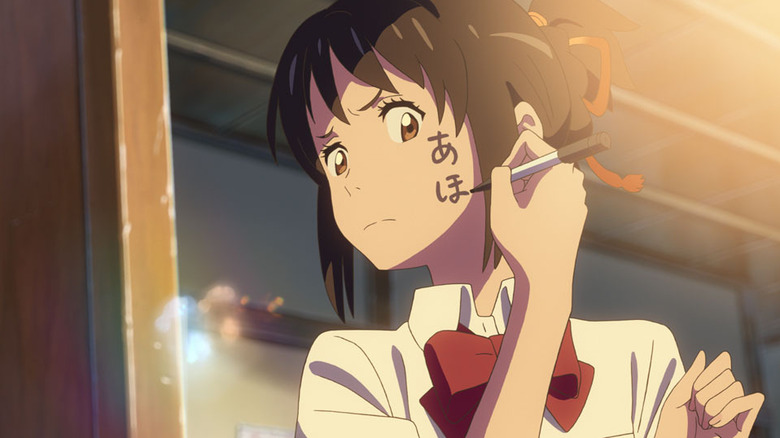
Before the "Demon Slayer" movies, "Your Name" was the highest grossing anime film ever, with engrossed moviegoers seeing the critically acclaimed sci-fi romance over and over again in theaters. Although one person not happy with its popularity was the film's director, Makoto Shinkai.
While Shinkai doesn't consider "Your Name" bad, he described the film as "incomplete" and "unbalanced" to The Japan Times. He blamed his dissatisfaction with "Your Name" on not having the resources to do everything he wanted with the material. For all his talk of its "flaws," Shinkai's biggest frustration was that the film might have come out better than he expected following an early audience response, stating that he "was afraid that it had worked too well." He even begged people to stop watching it and for the Academy not to give the film an Oscar; the latter wish being granted, as it wasn't even nominated.
Another issue Shinkai has had is that "Your Name's" success has constrained him creatively. In a 2023 interview with Looper, Shinkai revealed his producer pressured him to include a "boy meets girl" romance in "Suzume" — originally conceived as "a more sisterhood type of romantic story" between two girls — to stick closer to the "Your Name" formula.
Denis Villenueve won't do sequels to classics after Blade Runner 2049
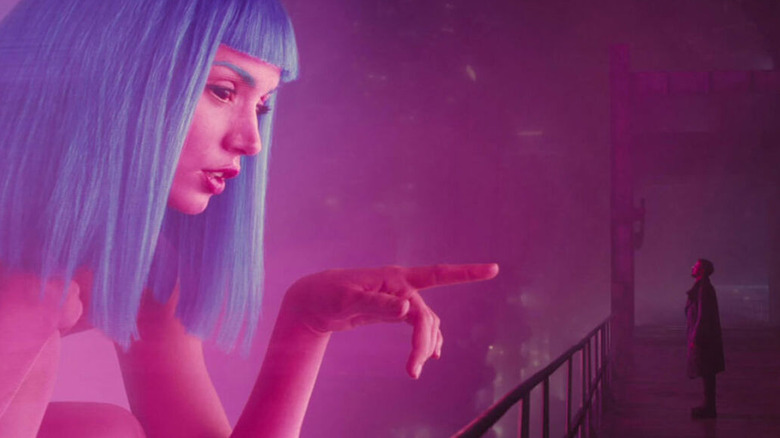
Before 2017, the idea of a sequel to "Blade Runner" sounded like sacrilege. But "Blade Runner 2049" surpassed all expectations in following up Ridley Scott's original cult classic, building on its themes without reducing its mystery. While "2049" has its fair share of perks and flaws, the sequel has largely been deemed a creative success, despite its commercial failure. However, its director, Denis Villeneuve, isn't sure whether it should have been made in the first place.
Speaking to The Hollywood Reporter while promoting "Dune: Part Two" in 2024, Villeneuve confessed that the pressures of doing right by "Blade Runner 2049," and constant self-comparisons between his sequel and the original, discouraged him from ever making movies in another filmmaker's universe again. "I still wake up sometimes at night, saying, 'Why did I do that?,'" he shared. Even if Villeneuve took on the task as well as anyone could have, the extremity of the challenge alone left him with a sense of regret.
George Lucas disliked the original cut of Star Wars
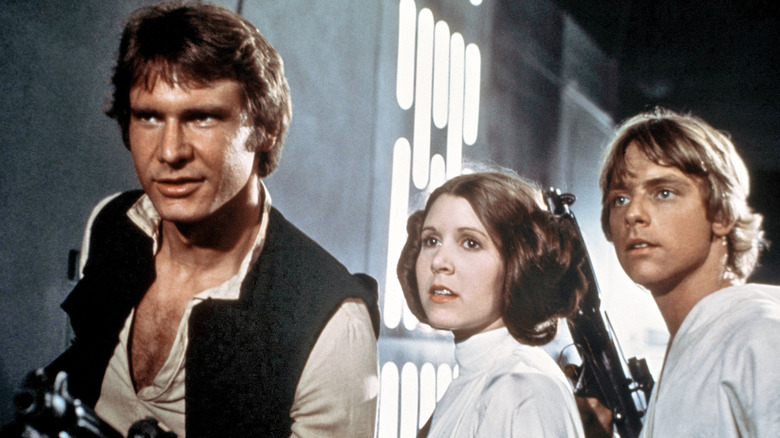
In many cases, director's cuts are better than the originals. What's made George Lucas and his "Special Editions" of "Star Wars" so controversial is that since 1997, his various revised versions have been the only versions made widely available. Since then, the original cuts have only been officially released as low-quality LaserDisc rips as special features on a limited edition 2006 DVD release. Watching "Star Wars" now comes with Greedo shooting first and CG effects that didn't exist in 1977.
Explaining his 2004 DVD revisions to the Associated Press, Lucas said the original theatrical cut was only "25 or 30 percent of what I wanted it to be," and that said version "doesn't really exist anymore." Even when selecting "Star Wars" for preservation in 1989, the National Film Registry failed to acquire the original negative from Lucasfilm, instead relying on the Library of Congress' copyright deposit print for preservation.
Lucas was seemingly never fully satisfied with the original "Star Wars" trilogy, making additional changes to the first film and its sequels "The Empire Strikes Back" and "Return of the Jedi," up until the IP was sold to Disney in 2012. Thankfully, Disney has announced it will finally re-release a new restoration of the original 1977 cut of "Star Wars" in theaters on February 19, 2027.