

James Cameron's Biggest Avatar Problem Is Worse Than Ever In Fire & Ash
Contains spoilers for "Avatar: Fire and Ash"
There's undeniably a lot to love about the "Avatar" movies. They look incredible, the characters are compelling, and they're filled with the sort of set piece action moments you only get from a director of James Cameron's caliber. At the same time, the "Avatar" franchise has a big, fat asterisk, which is its explicit deployment of Indigenous cultural aesthetics — a practice that has been criticized as everything from simple cultural appropriation to deeply harmful stereotyping, mythologizing, and white saviorism. The fact that the vast majority of actors in the "Avatar" films are white with hardly any Indigenous representation in the cast or in major roles behind the camera doesn't help.
Cameron, for all of his anticolonial messaging activism around natural preservation, has often made things worse. In a 2010 interview with The Guardian, he said that he believed the Lakota Sioux "would have fought a lot harder" against European colonists if they could have seen the suicide rates of Lakota children in the present day -– a quote that drew widespread backlash from Indigenous groups and organizations. While the films clearly casts the humans as violent aggressors and villains and the Na'vi as heroes protecting their natural homeland, the overall messaging has generally come out mixed at best.
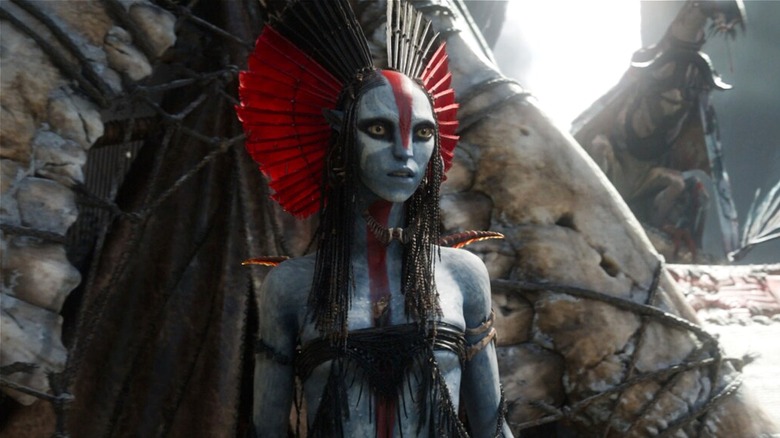
Unfortunately, this issue isn't resolved in the third film, "Avatar: Fire and Ash." To the contrary, there's even more egregious material in the film's representation of its native-inspired aliens. Specifically, the villainous Mangkwan clan (led by Oona Chaplin's Varang) plays deeply into "savage" stereotypes and iconography, right down to vague blood sacrifices and references to scalping.
Avatar: Fire and Ash embraces the idea of the savage
Yes, the first "Avatar" was essentially White Savior: The Movie. Yes, Native American groups called for boycotts long before "Fire and Ash." But at the very least, the films portrayed the Na'vi as an intelligent, noble people on the side of good. Appropriative and in many ways infantilizing? Yes. But they weren't eating hearts a la "Temple of Doom."
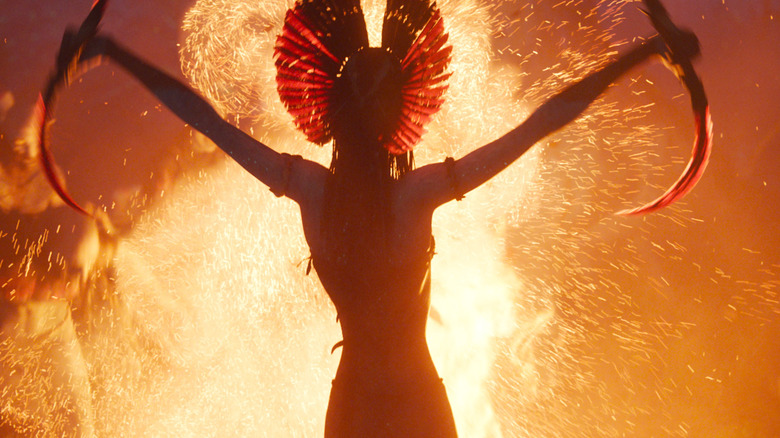
In "Fire and Ash," they very much are. And while the idea of a villainous Na'vi sect is an interesting wrinkle on paper, the distinctions between the Mangkwan and the other, more "civilized" tribes do little to soften the blow of their, well, savagery. The Mangkwan dress in red body paint and sharp ornaments and piercings, a generic hodgepodge of what Hollywood has generally portrayed as "cannibal aesthetics." Varang thrills after being taught how to shoot a gun, as if her very soul craves violence. Later, she orders that her prisoners be sacrificed — an act that makes little sense given that she and her people have forsaken Eywa, the only known deity of Pandora. But hey, blood sacrifices are what savages do, right? Why bother worrying about who they're being sacrificed to?
The real kicker comes in the film's third act when Miles Quaritch (Stephen Lang) shows up with a small army of Mangkwan warriors and threatens that if Jake (Sam Worthington) doesn't surrender, they will start "taking scalps" — a phrase Jake himself quickly echoes. While this is meant to be a sort of snappy villain line from one of the franchise's most deranged characters, it plays into the worst tropes of American Indigeneity.
Avatar needs to reckon with its past missteps
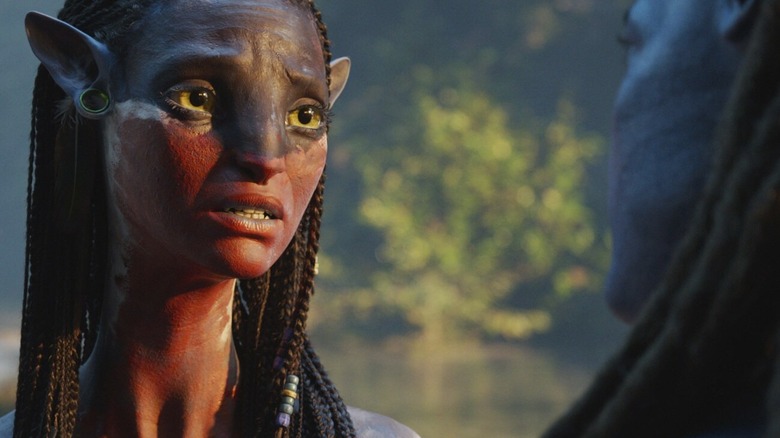
Is there a version of "Avatar" that can repair the damage done by its problematic 'native' storylines? It's possible that we're too deep in and the series itself is too big to fail for any real change to take place between now and the next movie. Absent the savagery, there is something interesting in Varang — a character who rejects a faith that's universally held by her species. As a foil to Neytiri (Zoe Saldana), she works better, but her scenes are overshadowed by the tired way she and her clan are personified.
"All people can be turned bad" isn't a wildly interesting idea, and "Avatar: Fire and Ash" does much better work with its other themes of grief and motherhood. The most damning critique of the Mangkwan storyline comes in its juxtaposition to the human RDA faction — a group that causes far more destruction and which is portrayed as categorically evil but which still maintains a sort of civilized veneer. Their evil is business. There is nothing spiritually corrupted in the portrayal of Edie Falco's General Frances Ardmore in the same way there is about Varang.
At the same time that the Mangkwan are shown to be brutal and cruel, they are similarly frivolous, wowed by the advanced technology of violence provided by the RDA. Line by line, there may be something more materially interesting here, but the total image is little more than the same grotesque mural of 'less civilized' cultures that "Avatar" has pulled from since the start.