

Avatar: Fire And Ash's Biggest Cliffhangers Explained (And What They Mean For Avatar 4)
Contains spoilers for "Avatar: Fire and Ash."
Even though it will be at least four years before we get another movie in James Cameron's epic "Avatar" saga, "Avatar: Fire and Ash" doesn't hesitate to leave big threads hanging. Some fans may have expected the third film in the franchise to act as the end of a trilogy, with the next two movies, currently slated for 2029 and 2031, delivering a new arc to wrap up the whole saga.
Instead, "Fire and Ash" plays more like a narrative repeat of "Avatar: The Way of Water," with lots of great new material for all the core characters but very little forward momentum when it comes to the overarching plot. Humanity still has a massive presence on Pandora, Kiri (Sigourney Weaver) and her magic are still largely a mystery, and Jake Sully (Sam Worthington) is still fighting the same battles he's been fighting this whole time. Even the climax of "Fire and Ash" is basically a repeat of the finale of "The Way of Water," right down to the whale vs. ship battles, the eclipse, and Jake's duel with Miles Quaritch (Stephen Lang).
While plenty climactic in its own right, "Avatar: Fire and Ash" passes the buck of major story development to its waiting successors. In the meantime, we have plenty of theories about what could be coming next, all tied to the big cliffhangers that "Fire and Ash" leaves dangling.
Can the other humans recreate Spider's breathing?

Arguably the biggest story development in "Avatar: Fire and Ash" is the revelation that humans can breathe the air on Pandora mask-free with the assistance of a symbiotic mycelium network — or at least Spider (Jack Champion) can. When his breathing mask runs out of power after an attack by the Mangkwan clan, Kiri makes a desperate plea to Eywa to save him. When that doesn't work, she calls upon the planet itself, drawing mycelium out of the ground and into Spider's body, where it transforms him on a cellular level.
The danger, of course, is that if this ability can be recreated by the Resources Development Administration (RDA), it would make it far easier for humans to aggressively colonize Pandora. Right now, the hostile atmosphere is one of the main things slowing that mission, and both the Na'vi and the RDA know how crucial the ability to breathe the air would be.
The middle act of the film includes a storyline in which Spider is captured and studied, so the humans can learn how he's able to breathe. Whether or not they can duplicate the effect without Kiri's magic, however, is less certain. It's hard to imagine the technologically obsessed RDA scientists managing to crack the code of Pandora's symbiotic ecosystem, but this is also one of the big threads left hanging at the end of the movie, so it's easy to imagine it coming back in an even more significant way next time.
Can the united Na'vi clans defeat the RDA?
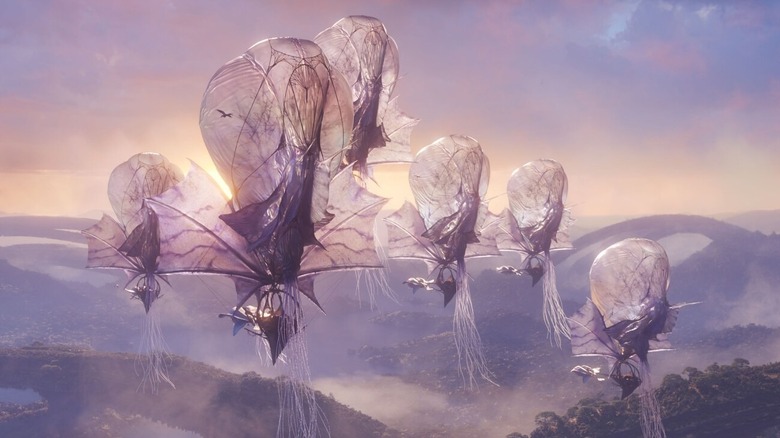
If the humans are able to figure out how to breathe Pandora's air naturally, the Na'vi will be in for an even more deadly war than the one they're already in. The RDA's ability to wage full-scale war would no longer be limited by its supply of protective technology. Even if those advancements don't come to pass, what we see of humanity's development on Pandora in "Fire and Ash" is already alarming for the Na'vi. They've decimated the ecosystem, and while the united clans have now won several key victories, there's a growing momentum to the colonial effort.
That's why Jake's decision to reclaim his Toruk Makto title in "Fire and Ash" feels so significant. He and Neytiri have had grand plans of uniting the planet against the RDA since the first movie, but these unions have been brief. If some combination of Kiri's powers, Jake's reputation as a leader and warrior, and the totality of humanity's devastation can come together to create a truly united Pandora, then the Na'vi have a real chance of pushing the humans off their world for good.
What will happen to Quaritch?
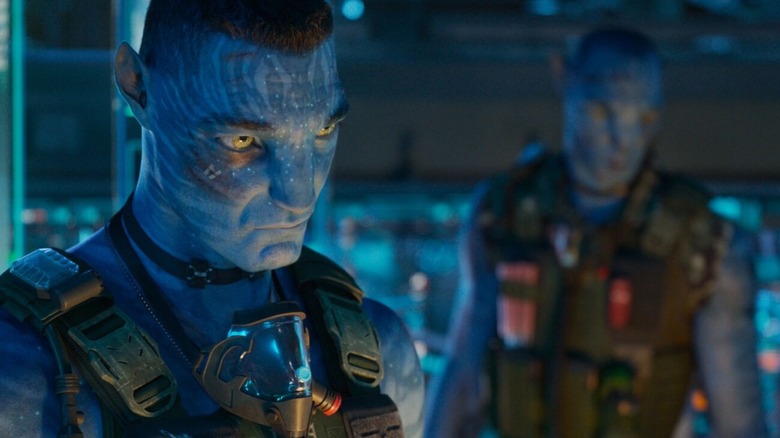
Yes, "Avatar: Fire and Ash" ends with a screaming Miles Quaritch leaping backward off a floating rock into a fire pit, but no, he almost certainly isn't dead. His story is too central to the "Avatar" franchise for him to go out with no confirmation of his death, and his arc — which gets a lot of interesting new material in "Fire and Ash" — is far from complete.
So what will happen to him after his banshee, or Varang (Oona Chaplin) on her banshee, likely comes to save him from plummeting to his doom? That's one of the most interesting questions the film leaves open. The film sees Quaritch reach a certain level of shared respect with both Jake and his son Spider, though he also continues to cause widespread death and destruction at a level that can likely never be redeemed, even if Stephen Lang thinks it's possible. Jake urges him at multiple points to embrace his new nature as a Na'vi and plug into the magic of Pandora, and while Quaritch shrugs off these pleas, the words clearly have an effect.
The most intriguing piece of Quaritch's arc in "Fire and Ash" is his relationship with Varang, which leads to him adopting the distinct body paint and battle wear of the Mangkwan, rather than his typical military gear. In the RDA, he's seen as a pariah, and he knows it. While joining the most murderous and evil Na'vi clan isn't exactly a step toward redemption, Quaritch's time with the tribe clearly has a lasting impact on his perspective about the whole enterprise.
How do Kiri's powers really work, and where are they leading us?
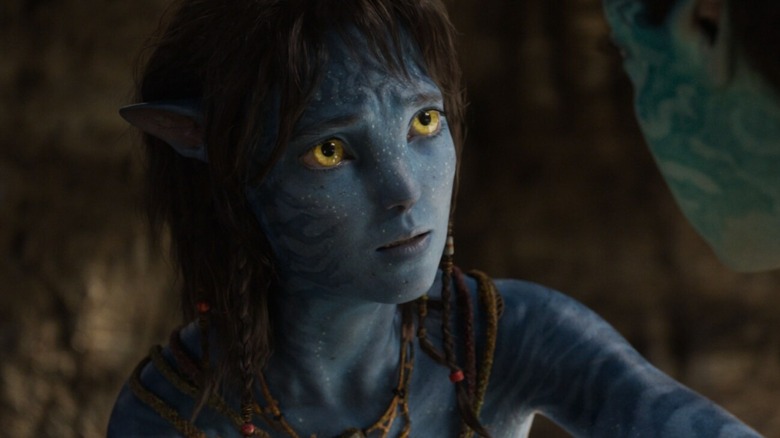
For two movies now, we've been dancing around Kiri's powers and potential. "Avatar: Fire and Ash" offers a lot more clarity than "The Way of Water," but it also doesn't reveal much that we all didn't already suspect. Kiri has no father, she is a perfect genetic clone of her mother, and everyone on Pandora seems to believe that her birth was a sort of immaculate conception enacted by Eywa.
The bigger developments in "Fire and Ash" come from the actual application of Kiri's powers — namely, calling on the mycelium within the earth to transform Spider's body and allow him to breathe without a mask. In the climactic battle, she also calls upon Eywa and brings a renewed force of creatures to fight the RDA, though it's a bit unclear how much of that is Kiri's own connection to the planet and how much is literal divine intervention.
Right now, it still feels like she's only scraping the surface. We know that Pandora is a massive, interwoven ecosystem, almost like a single massive organism with a trillion individual parts. If Kiri can call on some of those parts to do her bidding, it stands to reason that she can call on others. While we still don't know where the overarching "Avatar" story is heading, Kiri seems like the most likely candidate to defeat the RDA for good, as she could wield and command a truly united Pandora.
How will the Avatar story end?
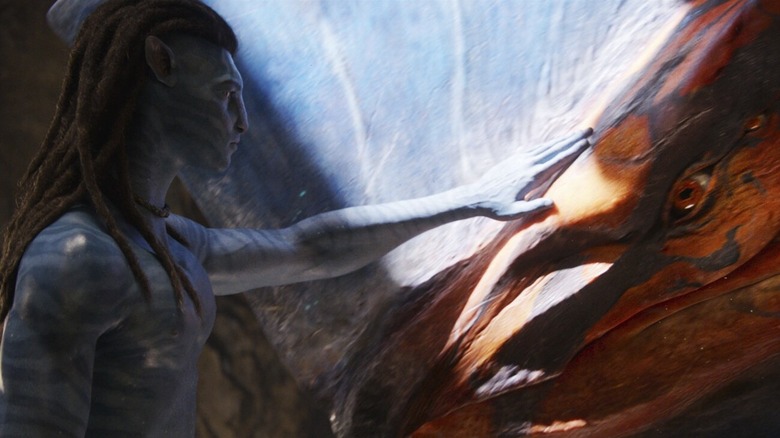
"Avatar: The Way of Water" and "Avatar: Fire and Ash" were made as a unit. Now, we have another long break before the fourth film is scheduled to be released in 2029. You'd think that with "Fire and Ash" being the end of a pseudo-trilogy, and with it being the last film before the next planned duology (the franchise has only been announced through "Avatar 5"), it would end with a pretty clear picture of what's coming next. But it doesn't — at least, not really.
Here's where we stand: The RDA is slowly expanding its "city" on Pandora and its efforts to extract all valuable resources, but it has been dealt back-to-back blows in losing battles against the Sully family and the Na'vi. Jake and company have slowly bolstered support for a united Pandora, with the Tulkuns now willing to do battle, the Toruk back in action, and more and more clans rallying. At the same time, Kiri's growing abilities provide a secret weapon, should she learn how to master them.
"Avatar" is an epic, meant to encompass many years and characters. You'd think that with that framing, we're gearing up to some major, all-for-one showdown between the RDA and the Na'vi, but "Fire and Ash" doesn't explicitly push us in that direction. The humans want to mine and colonize, but this isn't "Star Wars." At least, not yet. But with "Avatar 4" and "Avatar 5"? Who knows?