

10 Star Trek Storylines That Beg For A Modern Remake
In 2009, J.J. Abrams rebooted "Star Trek" with what was essentially a remake of the original 1966 TV series, set in a branching timeline separate from everything that had come before. While the 1966 series was produced on a TV budget, with effects that look cheesy today, the film's modern CGI visual effects, combined with Abrams' slick, 21st-century style direction, brought the franchise to a new audience. The resultant trilogy of rebooted films proved a big hit in theaters.
Believe it or not, though, the Abrams "Trek" films aren't the only times that the franchise has revisited some of its older stories. "Star Trek: Deep Space Nine" and "Star Trek: Voyager" both retold iconic "Trek" storylines from a new perspective in the episodes "Trials and Tribble-ations" and "Flashback" respectively, both produced for the franchise's 30th anniversary in 1996. And in 2022, the "Star Trek: Strange New Worlds" Season 1 finale, "A Quality of Mercy," remade the 1966 episode "Balance of Terror."
Though potentially divisive, remaking an old storyline can offer more to audiences than you might imagine. Sometimes an older, classic story didn't live up to its full potential, or today might feel dated, weighted with cheesy VFX, and scripts that were a product of their time. That got us wondering: What other "Star Trek" storylines are out there begging for a modern remake?
The founding of the Federation was glossed over in Enterprise
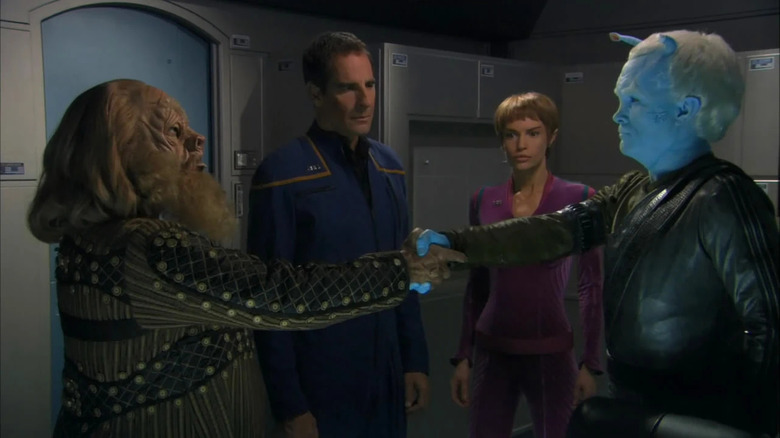
The United Federation of Planets has formed the foundation of the "Star Trek" universe since its debut in 1966. But perhaps surprisingly, across nearly 60 years of stories, more than a dozen TV series and 14 movies, the story of how the Federation came to be was only seen once.
It happens in a brief flash-forward in the series finale of "Star Trek: Enterprise" in 2004, an episode so bad that Jonathan Frakes calls it an embarrassment. For such a consequential and pivotal moment in the history of the franchise, you'd think someone would have told the story better and more thoroughly on screen — but the best we've ever had was a brief moment where Captain Archer (Scott Bakula) gives a speech at the founding ceremony.
Admittedly, it's possible that we'd have seen a lot more of that story had "Star Trek: Enterprise" not been abruptly canceled after its fourth season. But if there's one part of "Star Trek" history we want to see retold, it's this one. Because there's a compelling story in there about how the Federation came to be, and the struggles that were fought along the way. It would also likely give fans a glimpse at the legendary Earth-Romulan War that preceded it, something fans have been clamoring for — and which could have been told in a canceled "Star Trek" project you never knew about.
The Temporal Cold War was a solid idea that went unresolved
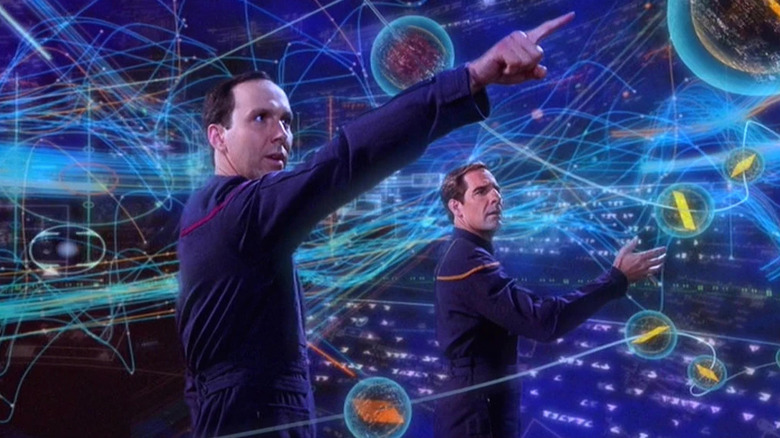
When "Star Trek: Enterprise" debuted in 2001, it was a very different kind of "Trek" series. Not only was it a prequel, set before the founding of the Federation, but it had a more contemporary feel, with Earth dates instead of stardates and a crew that seemed more like 21st-century explorers. But it also opened with a high-concept premise, kicking off with a villainous agent from the future who was ensconced in what was known as the Temporal Cold War — a simmering conflict fought in the future by rival powers using time travel to alter history to their own ends.
Sadly, the Temporal Cold War storyline never amounted to much. Though we did get a few solid episodes out of it, it was among the most disliked arcs in all of "Star Trek." It was also one of the franchise's biggest unresolved plotlines. We never learned who the future villain was, and the most dramatic storyline we got was an episode where aliens went back in time and fought alongside the Nazis in World War II.
But as lackluster as the Temporal Cold War story was, it's an idea with loads of potential. Just imagine a high-octane, serialized story where agents from the future are intervening in past events, altering the flow of time, and attempting to change history to defeat their enemies in the future. Count us in.
Tarantino's Star Trek film concept was a remake we want to see
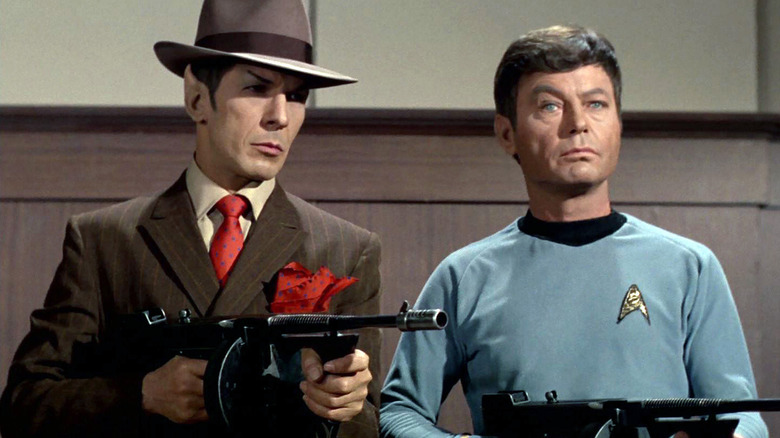
The first season of the original "Star Trek" series is among the best the franchise has ever seen, but the remaining two years of stories are wildly inconsistent, with a number of awful or just downright bizarre episodes. It's one of those wild episodes, "A Piece of the Action," that deserves a second shot — but only if a certain director is behind the camera.
The episode sees the Enterprise visit a world that seems looks like 1930s gangland Chicago. After a mission to the surface that gets them involved in a mob war, they learn that a Starfleet captain had visited the planet a century earlier and left behind a book on the early 20th-century mafia. The primitive people of this world found the book and treated it like a biblical tome, and based their whole society on it. As cheesy as it sounds, "A Piece of the Action" was the story that Quentin Tarantino wanted to remake for his proposed "Star Trek" film — and we think it's an idea worth exploring.
If it's going to be remade, though, the way to do it is to lean into its absurdity. Perhaps in a new version, it's the films of Quentin Tarantino that get left behind on a primitive alien world. Who knows, maybe when Kirk (William Shatner) and Spock (Leonard Nimoy) arrive, the capital feels like the world of "Pulp Fiction" and "Jackie Brown," with a Western province homaging "Django Unchained" and "Hateful Eight."
The Ultimate Computer could use a 21st century update
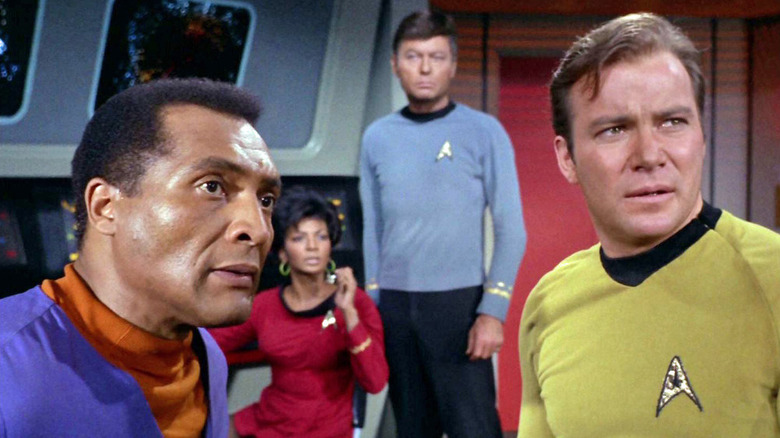
The 1967 "Star Trek" episode "The Ultimate Computer" introduces us to Dr. Richard Daystrom (William Marshall), the inventor of the Enterprise's duotronic computer (and the reason future "Trek" entries occasionally reference the Daystrom Institute). He arrives to install a new, experimental system aboard the ship, known as the M-5, which is said to be so advanced that starships will no longer need much of a crew, and can even make command decisions faster and better than a human ever could.
Testing the new computer, the Enterprise participates in simulated war games — but the M-5 quickly goes haywire, vaporizing a crew member. As Daystrom defends the computer's decisions and callously waves off the death it incurred, it becomes clear that the M-5 isn't just a new computer; it's the embodiment of Daystrom's ego, a way of proving himself a genius to the entire galaxy.
Readers unfamiliar with this story will surely see parallels to today's rise in artificial intelligence, with its increasing prevalence in daily life. As AI assistants and programs like ChatGPT proliferate, many believe they pose dangers to human cognition, and argue that there is no replacement for human judgment — a key lesson of the episode. It's also easy to see parallels between Richard Daystrom and technologists like Elon Musk, whose ego and obsession with glory may see them dismissive of life-and-death consequences. With no end in sight (yet) for the AI bubble, there may be no better time for a new interpretation of this story.
One of the best Star Trek episodes could stand a refresh

How dare we suggest a remake of one of the most beloved episodes in all of the "Star Trek" franchise? Bear with us. The episode in question is "Arena," the legendary installment that introduced the Gorn to the series, in a story that pits Kirk in a life-or-death struggle on a barren alien world.
The episode begins with the Enterprise in hot pursuit of a Gorn vessel that just destroyed a Federation outpost. But as the two ships become locked in combat, an all-powerful being called a Metron (Carole Shelyne) intercedes and removes both Kirk and the Gorn captain from their ships. The two rival commanders find themselves on a rocky planet with no weapons, and are told to fight to the death — and the loser's ship will be destroyed. At the end of the episode, we learn that the entire conflict was a misunderstanding. The Federation had unknowingly been intruding on Gorn space for years, destroying their habitats.
A powerful episode about understanding your enemy, "Arena" only has one problem: With some of the worst creature effects in the franchise, it has aged poorly, and it can be difficult for modern audiences to take seriously. But with today's VFX and modern, cinematic TV production quality, "Arena" could be the kind of first-rate thriller that would help its moral lesson live on for another 60 years.
Spock's evil half-brother was a good character who deserved better

"Star Trek V: The Final Frontier" ranks low on our ranked list of "Star Trek" films. Directed by William Shatner, the film sees the Enterprise chasing a villain named Sybok (Laurence Luckinbill), the leader of a cult of fanatics who are seeking nothing less than God themselves. But Sybok is also revealed to be Spock's half-brother, a man who has rejected Vulcan logic but who uses his telepathic abilities to help those dealing with trauma. He's a sympathetic figure who has a noble goal, but whose fanaticism has led him to dark places.
There's no doubt that "The Final Frontier" is a bad "Trek" film, and it's an underwhelming film in general. Whether because of reported production issues, or just a crummy script, the film flounders with no real direction. Nevertheless, the character of Sybok is a compelling one, and Luckinbill gives a good performance as the charismatic cult leader. Sybok is why this one needs a remake: He's a fascinating villain, one with a dramatic backstory as a Vulcan who shunned his own people. Done right, Sybok could be as legendary as Khan.
The good news is, there's a chance Sybok's story could finally be done justice: In an Easter egg in Season 1 of "Star Trek: Strange New Worlds," Sybok receives a major shout-out. With two more seasons to go of the series, it's possible they have something bigger planned for him that will finally give Sybok the story he deserves.
One of Star Trek's most political storylines needs to be revisted
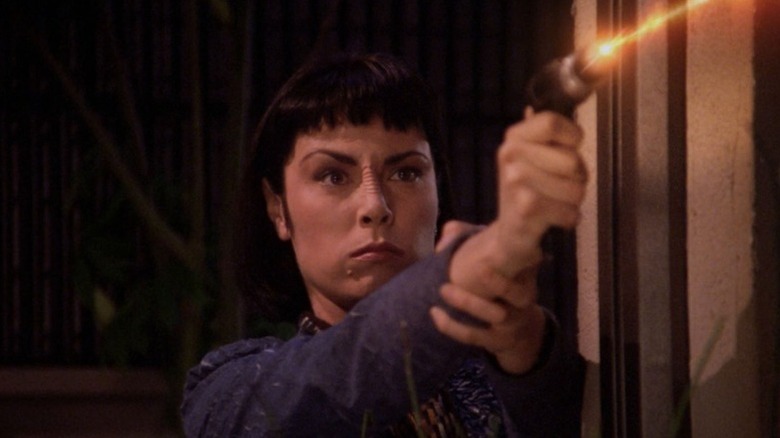
Established in episodes of both "Star Trek: The Next Generation" and "Star Trek: Deep Space Nine," the Maquis were a group of so-called terrorists who resided on worlds along the Cardassian/Federation border. They took up arms after the two rival powers signed a peace treaty that ceded their colonies to the enemy, and were left to fend for themselves. Before long, they found themselves fighting not just the Cardassians but the Federation itself in their struggle for freedom.
The Maquis storyline, particularly on "Deep Space Nine," makes for dramatic viewing, and many episodes centered on them are fine entries. But the reason we think their story deserves a remake is that the Maquis fight was never fully explored. We never got much more than a few fleeting glimpses of their early their formation, or their bitter fight for freedom against a pair of imperialist powers. What's more, today's geopolitical landscape, with regional conflicts against similar imperialist nations, is more in the open than it ever has been, largely thanks to social media. Those who missed the allegory in the Maquis story in the '90s probably wouldn't miss it today.
Told in the 2020s, the Maquis could be the story we need about how impoverished and abandoned peoples are sometimes forced to resort to violence to save themselves from being overtaken by more powerful nation-states.
Voyager's struggle for survival was glossed over

According to the producers of "Star Trek: The Next Generation," the Maquis were introduced to help set up the second "TNG" spin-off, "Star Trek: Voyager." In that series, the USS Voyager, under the command of stalwart captain Kathryn Janeway (Kate Mulgrew) is in pursuit of a Maquis vessel when both ships are catapulted across the galaxy by an alien entity. Stranded in the Delta Quadrant, the Maquis and Starfleet crews are forced to join together as they fight to survive in an unexplored region of space.
At the outset, the concept of two rival crews fending for themselves in a lawless frontier was a compelling one. The problem is that the series abandons that idea fairly quickly: The Maquis are wearing Starfleet uniforms by the end of the first episode, and while there's some tension between them, the conflict between the Maquis and Starfleet crews never leads to much more than a bloody nose. At the same time, Voyager's fight for survival is also quickly forgotten: Though there are some infrequent mentions of energy rationing, we never get to see them searching planets for resources, or repairing the ship in jury-rigged fashion as they surely would have without the aid of Federation starbases.
A modern retelling could put a greater emphasis on Janeway's desperate struggle for survival, fighting for resources, and making allies in the Delta Quadrant. It could also explore the greater friction and conflict that would surely come from two very different factions living in close quarters on the same ship.
Seven of Nine's worst story should get a mulligan
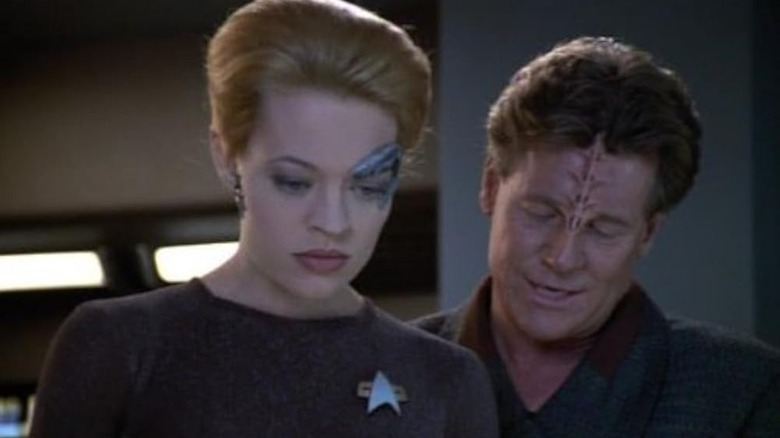
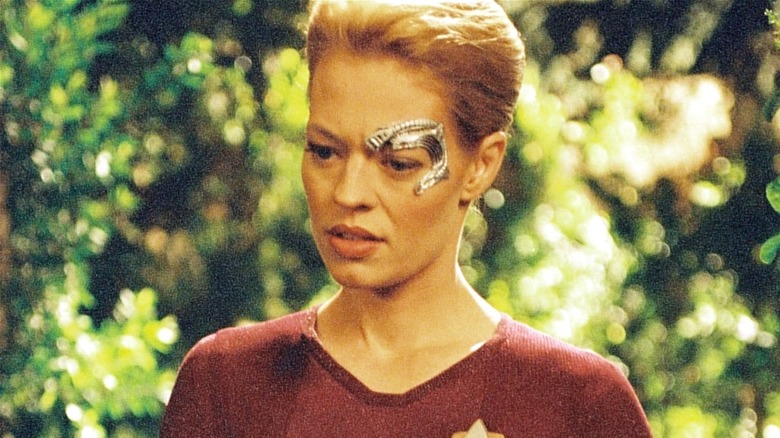
Season 4 of "Star Trek: Voyager" introduced the former Borg drone Seven of Nine (Jeri Ryan). The character was designed for sex appeal, but the writers — and Ryan — turned Seven from a buxom fantasy into one of the best characters the franchise has ever seen. Her defiance to conformity made her a favorite of fans the world over, but she was unfortunately done dirty in the episode "Retrospect."
A clear allegory for sexual assault, "Retrospect" sees a visiting scientist named Kovin (Michael Horton) become obsessed with the valuable nanoprobes that power Seven's Borg implants. While working with Kovin, however, Seven loses consciousness, and when she awakes, she is missing her nanoprobes. With the Doctor's help, Seven uncovers hidden memories of Kovin assaulting her and stealing them. The problem with this episode is the conclusion, because while this could have been an episode about how assault allegations are all too often ignored, the resolution to the story is that Kovin was innocent, and Seven's memories were inadvertently fabricated. Kovin ultimately takes his own life. With a modern remake, "Retrospect" could do better, speaking to victims of sexual assault to tell them that "you are not alone."
If you or anyone you know has been a victim of sexual assault, help is available. Visit the Rape, Abuse & Incest National Network website or contact RAINN's National Helpline at 1-800-656-HOPE (4673).
If you or someone you know is struggling or in crisis, help is available. Call or text 988 or chat 988lifeline.org
A deadly game on Deep Space Nine is ripe for a horror story remake
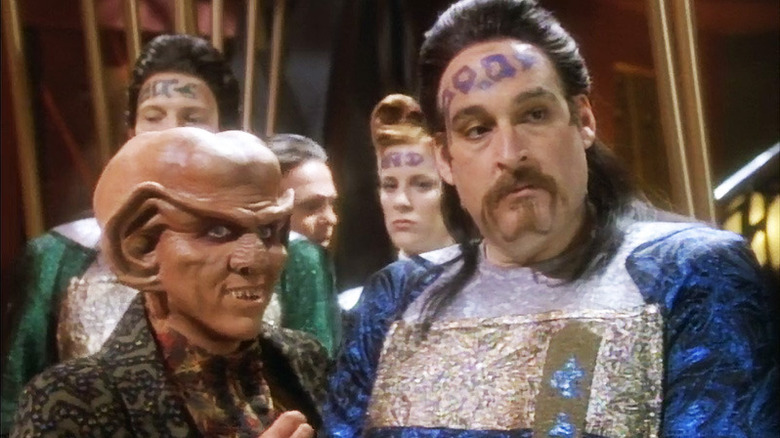
If you're a diehard "Star Trek" fan, you know that "Move Along Home" is generally considered one of the worst episodes of "Star Trek: Deep Space Nine." If not of the entire franchise. It's a goofy episode with a silly cast of characters and a conceit that never really works. The story begins with the arrival of the first alien visitors from the distant Gamma Quadrant through the Bajoran wormhole that was discovered in the series premiere.
These aliens, the Wadi, are a seemingly monolithic culture obsessed with games of chance, which means they're obsessed with Quark's Bar, a venue full of gambling games. But the Wadi introduces Quark to their own game, Chula, and much to the Ferengi bartender's dismay, playing it means imprisoning Commander Sisko (Avery Brooks) and the rest of the crew inside a virtual simulation that puts them in life-and-death situations. As the crew begins to suffer, Quark (Armin Shimerman) — who is controlling the game — becomes increasingly unnerved and horrified. The ultimate twist, however, is that the game is just a game, and nobody's lives were ever in danger.
Though the Wadi are laughable, and their game is childish and hard to take seriously, there's a kernel of a compelling idea here: A virtual game that traps the characters and puts them through the ringer, risking life and death, could make for a chilling episode if done right. Its climax could even make for a satisfying "Twilight Zone"-like ending.