

10 Worst Casting Choices In DC Comics Movies, Ranked
A lot of people have a lot of opinions when it comes to casting existing characters in live action films. Daniel Radcliffe's eye color has long been cited as an annoying discrepancy between the "Harry Potter" books and films, and that is literally just about eye color. Even though actors are far from the most foundational part of a film, they are often the element that can make or break the success of a project. Bad acting stands out like a sore thumb, and often it comes more from an actor being cast in the wrong role as opposed to the actual talent of the actor (though there are definitely some bad actors out there in Hollywood).
Some of the most disastrous film castings of all time have come from live-action adaptations of DC Comics characters. Frankly, DC characters have suffered way more from bad casting than characters from Marvel (though Ben Affleck and Jennifer Garner as Daredevil and Elektra were pretty bad). There are more than ten poor choices that could be discussed, but the following ten castings from various DC Cinematic Universe (DCCU) movies have proven to be the worst of the worst. Comic characters have decades of reinventions and canon from which to draw when casting live-action portrayals, and that's probably a big part of why bad DC Comics casting feels egregious; especially to fans.
10. Kate Bosworth as Lois Lane
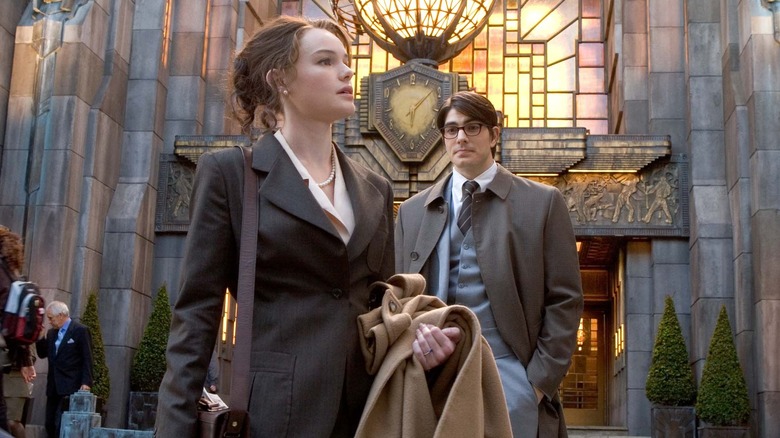
Lois Lane is a DC character with a history just about as storied as Superman. Superman co-creator, Jerry Siegel, always meant for Lois to be a "hard-nosed working girl" and not a damsel for Superman to save. That's a characterization that has survived dozens of DC Comics universe reboots and live-action portrayals from great performers like Margot Kidder and Rachel Brosnahan. Lois Lane is actually one of the most consistent characters in all of comics, so it makes sense that her most uneven portrayal would be on this list. When she was cast as Lois Lane in "Superman Returns," Kate Bosworth was an industry darling and a tabloid fixture — someone with a lot of exposure in Hollywood but an underwhelming filmography. Unfortunately, her industry popularity didn't necessarily translate into audience appeal.
Kate Bosworth did her best in "Superman Returns," but Lois Lane is an erudite, outspoken reporter; Her energy is very different from most of Bosworth's prior roles. The other actresses who have played Lois Lane did so with the kind of effortless wit the character requires, and usually entered the role with a track record. Lois, as a person, weaves between journalistic instinct and sarcastic comedy, and that's a tone that Bosworth simply does not have the personality to mimic. Even with the support of a script, Bosworth can't capture Lois Lane because she literally can't convey Lois's intellectual spark. Bosworth also had no chemistry with Brandon Routh (the actor who plays Superman in "Superman Returns") and fails to engage him in effective banter. Lois Lane and Clark Kent are an iconic couple, and yet their connection is one of the weakest parts of the film.
9. Willem Dafoe as Vulko

To be clear, Willem Dafoe does not do a bad job acting as Vulko, Aquaman's undersea combat mentor in "Aquaman". Dafoe has rarely turned in a bad performance, even when faced with a mediocre script. He's a fantastic actor, but this casting choice is so infuriating. Vulko isn't a particularly nuanced character, he's not even recognizable by name to any random comic fan. He easily could have been played by another prestige actor, perhaps one who seems to be winding down their career. Dafoe is certainly not winding down his career, and will likely turn in several more iconic performances before he's done. He's already become an acting legend thanks to his work in the Spider-Man films, "The Florida Project," and his depiction of Vincent van Gogh in "At Eternity's Gate," to name a few.
Dafoe had already been utilized in a Marvel franchise as Norman Osbourne/Green Goblin in Sam Raimi's "Spider-Man" well before Jason Momoa came around and reinvented Aquaman, so it was a shame when his role in the DC Comics cinematic universe was so underwhelming. Willem Dafoe is the kind of actor who could take an awesome, obscure character — like, say, DC's The Question — and make them iconic in a whole new way. Dafoe wasn't able to do that for Vulko because Vulko is a largely inconsequential side character, and it will be a shame for DC fans if that role counts him out of the DCCU.
8. Keanu Reeves as John Constantine
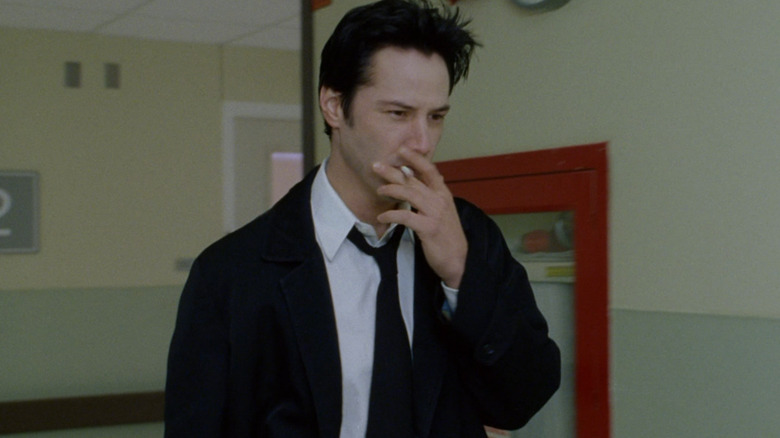
This casting could definitely have been ranked higher to the top, but Keanu Reeves is simply too awesome to deride thoroughly. Thanks in large part to Reeves' working/online reputation as a great guy to be around and his huge success as the stoic, vulnerable, and virtually unstoppable John Wick in the "John Wick" franchise, Reeves' stock has gone up as a public figure since he played John Constantine in 2005's "Constantine." At this point, he's beloved enough that people would probably be okay with a second film starring Reeve's version of the character, if only to see Keanu Reeves fight as a badass sorcerer.
Keanu Reeves can't capture essential elements of John Constantine's personality because he's too serene. He gives the portrait of a man who knows himself and yet often accepts his fate as a leaf blowing in the wind; The portrait of a man who can't help but project sincerity. This is crucial to his portrayals of characters like Neo and John Wick, but it's not exactly compatible with John Constantine as he's written. Constantine is a troubled, grizzled, cynical man on the run, tortured by his past and his nature. He works hard to avoid knowing himself. Reeve's performance is lacking because he had to fight his natural sincerity (which, when he's playing a cynic like Constantine, is difficult to take seriously) while also playing Constantine as a fresh-faced, dark-haired, pale young man in a suit. In the comics, Constantine is blonde and ruddy, rarely clean-shaven and always wearing a trench coat.
7. Shaq as Steel
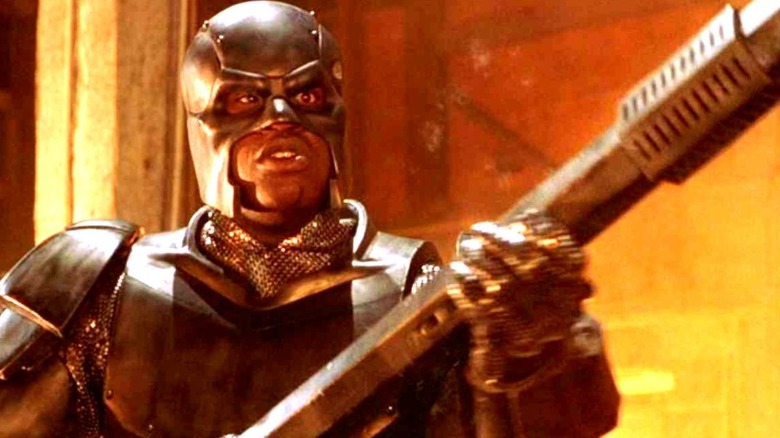
Famed basketball player Shaquille O'Neal (Shaq), was once such a successful personality in the cultural zeitgeist that he attempted a secondary career as an actor. In 1997, O'Neal starred as the titular character in a superhero movie called "Steel." The film was a bona fide box-office bomb, one of the biggest superhero movie bombs ever, in fact, and the filmmaker's dissatisfaction with Shaq's casting (which was urged by the studio) is likely where things started going wrong. Steel, aka John Henry Irons, is a comics figure rich in lore and potential. He's an engineer who became a superhero from a desire to do good and undo his work for weapons manufacturers: smart, loyal, honorable. He's a character that requires a bit of finesse for a live action portrayal because he's usually stoic, not expressive. Shaquille O'Neal did not have the acting ability to portray Irons back then (and probably doesn't have it now either).
"Steel" had more problems beyond O'Neal's lack of acting skills, but ultimately it is the main character's depiction — the piece of the puzzle that's meant to unlock the rest of the picture — that needs to bear the brunt of the blame. O'Neal seems incapable of connecting with the script, failing to nail emphasis where it's needed and showing a serious countenance at times where it feels silly. It's a real shame that the film was such a disaster because Steel is an interesting character, but his relation to Superman might allow for a more fruitful depiction in the newly relaunched DC cinematic universe.
6. Frank Grillo as General Rick Flagg Sr.
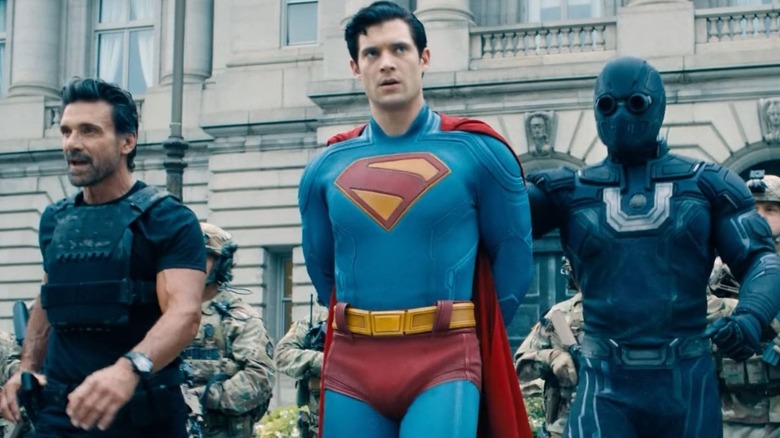
Frank Grillo wasn't a bad casting choice for General Rick Flag Sr. when he was only doing the voice acting, but when he crossed over into live-action for 2025's "Superman," it became a pretty bad choice. For one thing, he's only fourteen years older than Joel Kinnaman, the actor who plays his son in the "Suicide Squad" movies (Grillo is 60 and Kinnaman is 46). It wouldn't be the first time there's an unrealistic age difference between actors playing parent and child, but Joel Kinnaman and Frank Grillo do not look like father and son; In fact, they actually look closer in age than they are. Setting that aside, Grillo is still a bad casting choice when it comes to physicality. Rick Flag Sr. hasn't been explored as thoroughly in the comics as Rick Flag Jr., but he has always been portrayed as a beefy, all-American Army guy. Frank Grillo is relatively short (5'10"), wiry, and looks like the kind of bruiser who moonlights as a Jersey Shore bouncer (it's the haircut!).
As the newly appointed leader of A.R.G.U.S. in "Superman" and "Peacemaker," General Flag is a black ops specialist, one who is very similar to the character Frank Grillo played in early Marvel Cinematic Universe (MCU) films, Brock Rumlow. Rumlow's outing as a Hydra agent and disfigurement at the end of "Captain America: The Winter Soldier" facilitated his transformation into the Marvel villain Crossbones, but as Rumlow, he looks indistinguishable from his later role as General Flag. There's bound to be crossover between the DC cinematic universe and the MCU, but this one seems unnecessary.
5. Jesse Eisenberg as Lex Luthor

Jesse Eisenberg definitely has a great villain or hero in him. He's the kind of idiosyncratic actor that could really sink his teeth into an iconic character. Lex Luthor was not that character. Where Eisenberg's characters are usually frenetic, anti-social, and/or awkward, Lex Luthor is meant to be self-assured, smooth, and socially savvy. He's brilliant, yes, but he's also a businessman. If Lex Luthor actually acted the way Jesse Eisenberg portrays him in Zack Snyder's DC cinematic universe, he would certainly not be maintaining the social standing that he traditionally enjoys in the comic books. After he goes to prison, Eisenberg's Luthor becomes even more unhinged, and he's frankly more reminiscent of the Joker than Lex Luthor.
Gene Hackman, Michael Rosenbaum, and Nicholas Hoult have all played Lex Luthor beautifully in their respective projects ("Superman: the Movie," "Smallville," and 2025's "Superman"). Nicholas Hoult's performance — and the most recent live-action depiction of the character — might at first seem similar to Jesse Eisenberg's. Where Hoult differs is that, instead of depicting Lex as a manic person, he depicts Lex as manic solely in his pursuit of Superman's downfall. Hoult's Lex begins the film as a composed, confident, ruthless figure — Lex Luthor at rest. As the film continues, Lex becomes more obsessive and reckless because he cannot seem to tamp down Superman permanently. Superman serves as a catalyst for Lex's most villainous tendencies and reactions, but they are things that he normally keeps well in-hand. Hopefully, a great actor like Eisenberg can find a better character to portray in James Gunn's DC Comics cinematic universe.
4. George Clooney as Batman
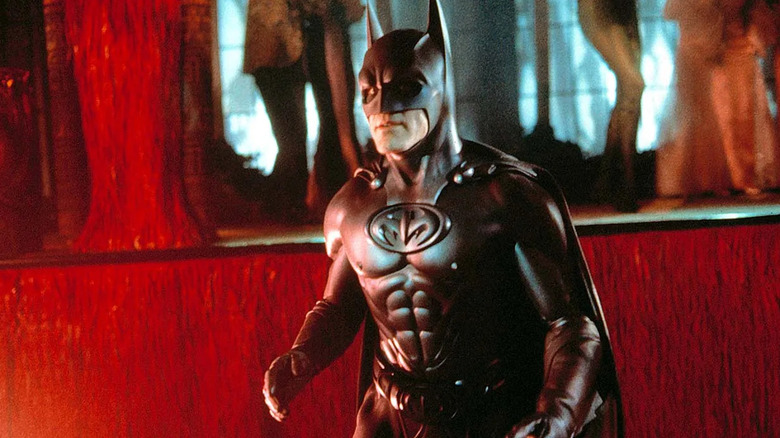
When most people think of the worst live-action Batman film, 1997's "Batman & Robin", the first things they probably remember are Arnold Schwarzenegger's hammy portrayal of Mr. Freeze and George Clooney's nipple-defining Batman suit. George Clooney's performance as Bruce Wayne/Batman is not a particularly memorable part of the film, but that's even worse than if it had been memorably awful. Clooney, as the lead, should be the first thing someone considers when they remember the film, and people usually remember Val Kilmer and Michael Keaton from their Batman films first and foremost. It probably made sense at the time, to cast such an up-and-coming actor in a big franchise blockbuster, but it was the decision that ensured the film's failure.
George Clooney has made a career as a cool guy. In "ER," and in films like "Ocean's 11" and "Up in the Air," Clooney's characters work well because they feel both cinematic and contemporary. He is believable as a modern figure with mesmerizing charisma, and as an actor, Clooney genuinely understands how to harness his charisma and turn it into a nuanced performance. That all said, George Clooney is not believable in a fantastical setting. He simply does not read as someone who can convincingly suspend their disbelief. Bruce Wayne is occasionally wry, and Clooney is more at-home as Wayne, but Batman is a serious figure who takes a lot of apparently silly things (like, for example, Schwarzenegger wearing an elaborate villain costume and a ton of silver and blue makeup) very seriously.
3. Tom Hardy as Bane
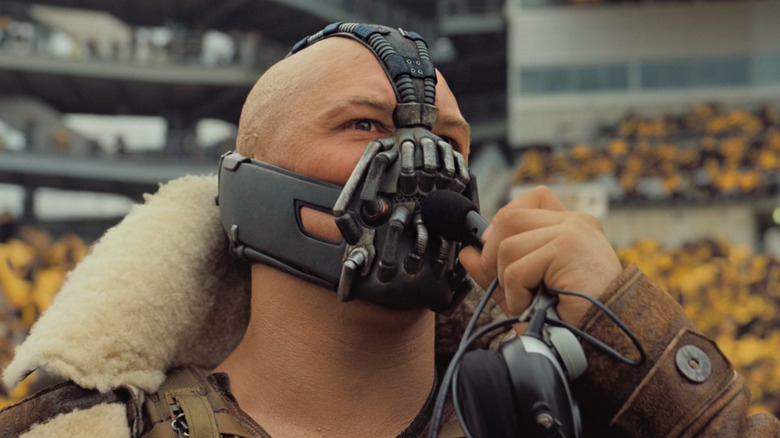
"Batman Begins" introduced Ra's al Ghul to the big screen. Ghul is an important villain in Batman and DC canon, and is specifically Chinese-Arabic. Nolan cast Liam Neeson to play him. Liam Neeson is a wonderful actor, but he is not Chinese or Arabic. In the third film, Ghul's daughter, Thalia, is played by Marion Cotillard; another character of color played by a white actor. Nolan's most egregious, whitewashed casting choice, though, was definitely Tom Hardy as longtime Batman villain, Bane. Bane comes from a fictional, Latinx-Caribbean nation in the DC Universe, akin to countries like Puerto Rico and Grenada. Tom Hardy is British, white, 5'9, and relatively lean. Bane's whole advantage over Batman is his size and strength, as evidenced by a famous Comic panel in which Bane breaks Batman's back over his knee.
Christopher Nolan's entire Dark Knight trilogy is actually very overrated. Nolan is a good director, but if a viewer looks closely, all of his movies actually feature the same kind of protagonist with the same problems, just altered to adhere to different costumes and time periods. The Dark Knight trilogy isn't about Batman, it's about a Christopher Nolan protagonist wearing a Batman costume. Nolan's protagonists (who are almost all white men) usually carry burdens in direct proportion to their handsomeness (that's why Cillian Murphy faces the potential of nuclear fallout with his incredibly beautiful face) along with a refusal to engage in any kind of self-reflection or healing behavior. Christopher Nolan doesn't care about anyone's canon but his own, and that's probably why he white-washed three major characters in his Dark Knight trilogy.
2. Jared Leto as The Joker
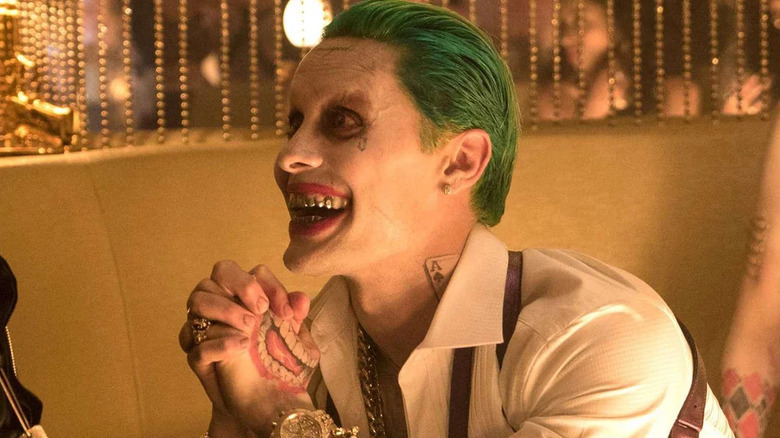
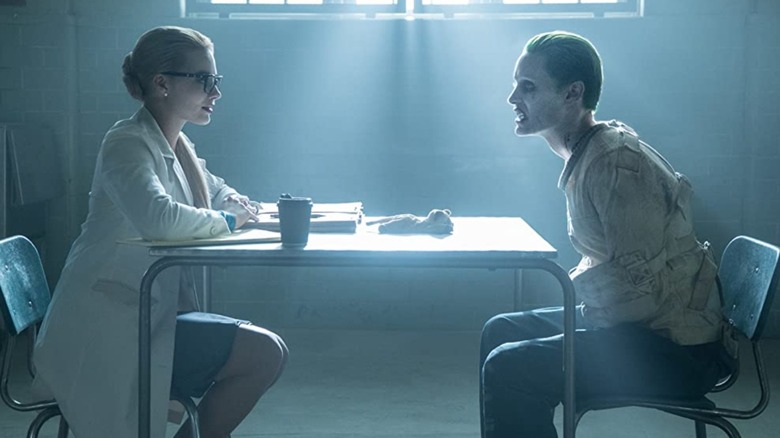
Jared Leto was still hot off his 2014 Academy Award win for Best Supporting Actor in "Dallas Buyer's Club" when he was cast as the Joker in "Suicide Squad." Leto's casting, and the Joker's role in the "Suicide Squad" film, were always going to be difficult to sell thanks to 1) Leto's uneven (often scandalous) reputation among fans, media, and the industry, and 2) the fact that it would be the first life-action depiction of the Joker following Heath Ledger's iconic, Academy-Award-winning performance in "The Dark Knight." When filming began, reports from the set alleged that Leto — who pridefully ascribes to the philosophy of method acting — was terrorizing his costars. Leto is one of many performers who has taken method acting to unconscionable extremes, but didn't even make sense in relation to his character.
The Joker seems like nothing but a chaos agent, but he's actually a very intentional, intelligent villain. Despite his twisted connection with Harley Quinn — one that Harley frequently expresses in romantic terms without direct reciprocation — the Joker is actually not a villain we tend to associate with sexuality as a means of manipulation or a motivation for crime. It makes no sense for Leto to send his costars multiple sex toys, and sex-related "presents," and this behavior preceded a truly abysmal depiction of the Joker. Jared Leto's casting as the Joker wasn't just a bad idea because of Leto himself, but also because his interpretation of the Joker was ridiculous. Leto's actual acting as the Joker was over-the-top and yet still lackluster, and the depiction of him as a heavily tattooed, blinged-up gangster was nearly the opposite of the character's actual essence.
1. Ezra Miller as The Flash
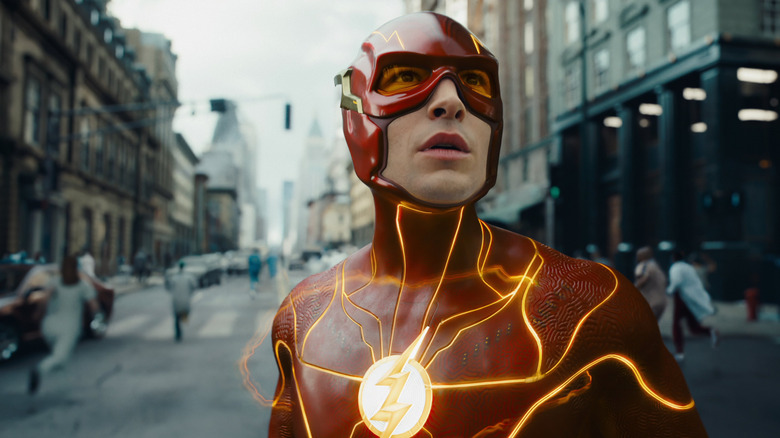
Even before many of their worst career moments came to pass, Ezra Miller was a bad choice to play The Flash/Barry Allen. For one thing, Barry Allen is a blonde-haired, blue-eyed guy in the comics, and while hair and eye color probably shouldn't be the main guiding elements for casting (unless they're named by the original text as a particularly important aspect to the character), it is fundamentally strange that Warner Brothers cast a person with opposite coloring. When a comic reader looks at Ezra Miller — with their black hair and dark brown eyes — there's no way they think of Barry Allen. What's more, Barry Allen is a congenial, accessible guy. He's one of the most "normal" superheroes in the DC Comics universe. If there's one word that definitely doesn't describe Ezra Miller, their appearance or their acting, it's "normal."
Miller's casting never made sense, especially given the actor's focus on dark indies and involvement in another huge franchise ("Fantastic Beasts and Where to Find them") as the very serious and mentally unstable Credence Barebones. Instead of casting a relatively fresh face, someone with a background in comedy (say what you will about Chris Pratt, his casting as Star Lord in "Guardians of the Galaxy" was brilliant), Warner Brothers cast the acting equivalent of a lightning rod. Miller's most notorious behavior wasn't alleged to have happened until after they were cast in and completed work on Zack Snyder's 2017 "Justice League" film, but it's hard to believe that there were no warning signs of the difficulties that would erupt only a few years later.