
The Big Bang Theory's Original Title Would Have Probably Ruined The Show
We may receive a commission on purchases made from links.
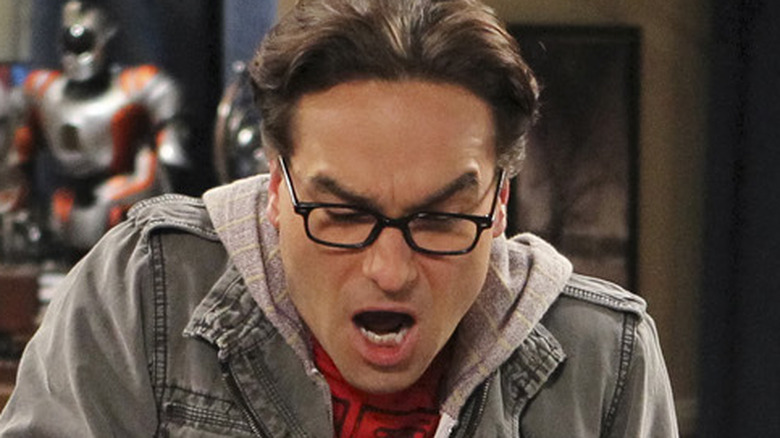
Imagine sitting down to watch your favorite half-hour comedy that stars four "nerdy" guys adjusting to life with a new, cool girl who moves in down the hall — and now, imagine the show in question is called "Lenny, Penny, and Kenny." Not so great, right?
"The Big Bang Theory," created by Chuck Lorre and Bill Prady — which enjoyed a massively successful run on CBS for 12 seasons between 2007 and 2019 — has an undeniably great title, but you probably didn't know that the sitcom was originally called "Lenny, Penny, and Kenny." Fans can easily figure out that "Lenny" refers to Leonard Hofstadter, one of the series leads played by Johnny Galecki, and "Penny" is, well, Penny, the show's first real female lead played by Kaley Cuoco. (A few seasons into "The Big Bang Theory," Cuoco was joined by female co-leads Mayim Bialik and Melissa Rauch, who play Amy Farrah Fowler and Bernadette Rostenkowski-Wolowitz, respectively). So who the heck is "Kenny?" That would be Sheldon Cooper, the neurotic but weirdly lovable guy made famous by Jim Parsons' Emmy-winning performance — because he was, apparently originally going to be named Kenny.
All of this is explained in Jessica Radloff's 2022 book "The Big Bang Theory: The Definitive, Inside Story of the Epic Hit Series," an oral history of the beloved show that interviews Lorre, Prady, Parsons, Cuoco, Galecki, Bialik, Rauch, their co-stars Simon Helberg and Kunal Nayyar — who play Howard Wolowitz and Raj Koothrappali — and many more. Not only was Sheldon's name not Sheldon, but the show originally bore a truly terrible title. So what inspired that, and how did it change?
Why was the show originally named Lenny, Penny, and Kenny?
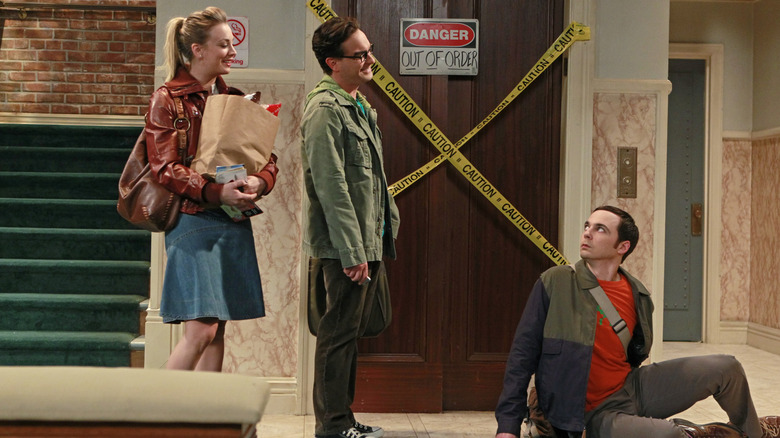
If you can't imagine Sheldon Cooper going by the name Kenny, you'll be happy to hear that, according to Prady, the show was probably never actually going to be named "Lenny, Penny, and Kenny." As Bill Prady told Jessica Radloff, "'Lenny, Penny, and Kenny' was the original placeholder title of the show, so Lenny was the Leonard character, and Kenny was the Sheldon character. That title lasted for about five minutes. In fact, my contract says 'Lenny, Penny, and Kenny' a/k/a 'Big Bang Theory.'" (The book even has a copy of Prady's original contract which does, in fact, bear that awful title."
Chuck Lorre, though, did share with Radloff that the names they settled on — Leonard Hofstadter and Sheldon Cooper — are actually an homage to a sitcom legend. "We wanted to pay homage to TV producer-director-actor Sheldon Leonard, so that's where Sheldon and Leonard came from." Leonard's biggest projects as a producer and director included "The Danny Thomas Show," "The Andy Griffith Show," and "The Dick Van Dyke Show," and others, netting Leonard a handful of Emmy Awards throughout his career.
You might be surprised to learn, though, that Hofstadter isn't a name that Lorre and Prady pulled out of thin air; it's a very specific reference. "And we needed the guys' last names right away for set dressing with their diplomas," Prady shared. "Hofstadter I liked, because Douglas Hofstadter had written a book of philosophy of math and physics called "Gödel, Escher, Bach: An Eternal Golden Braid,' which is a book I'd read a zillion times, and I assumed these guys would've read it, too. And I like the name 'Hofstadter.'" Okay, so with the names all settled, how did "The Big Bang Theory" end up as the show's title?
How did they choose the title The Big Bang Theory?
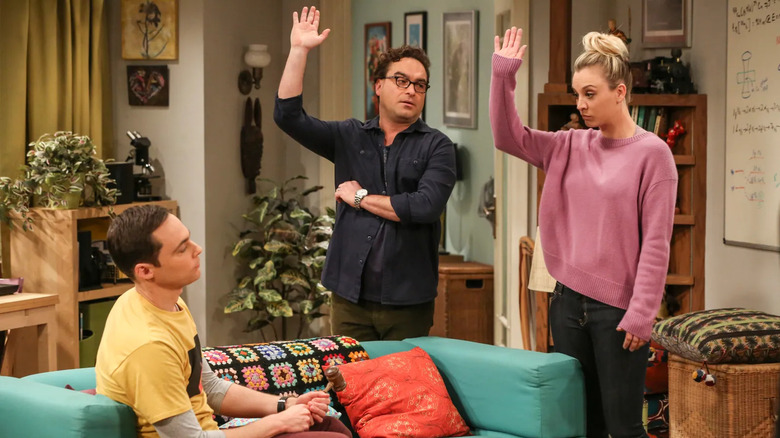
So how did "The Big Bang Theory" end up with its absolutely perfect title? As Chuck Lorre told Jessica Radloff, he wanted something with a basis in science. "I emailed Bill [Prady] and said, 'Let's take a look at various scientific phrases and see if there's anything in any of them,'" Lorre recalled. One of the titles on the list was 'The Big Bang Theory...' something you learn studying sciences."
As Lorre continued telling this story, he said that his other CBS sitcom at the time had a huge influence on him. "Looking back, this is somewhat embarrassing, but given how much the success of 'Two and a Half Men' impacted me, the title 'The Big Bang Theory' had in it the inkling of an ... innuendo," he admitted. "And I was crass enough to grasp on to that."
Hilariously, one of the show's stars never really understood Lorre's intention here. "Yeah, I never got that; I just literally never made the connection. I don't get the double entendre there, I sincerely don't," Johnny Galecki admitted to Radloff before musing about the way "The Big Bang Theory" eventually took shape as its own show separate from Lorre's other work. "But it takes a while for a show to find itself ... and I think it took a while for Chuck to realize, understand, and appreciate that the show he was doing next door ['Two and a Half Men'] was a very different show than where 'Big Bang' thrived, and where 'Big Bang' was meant to live," Galecki concluded.
"The Big Bang Theory," with its impeccable title, is streaming now on HBO Max.