

5 Best TV Shows Like Blade Runner 2099
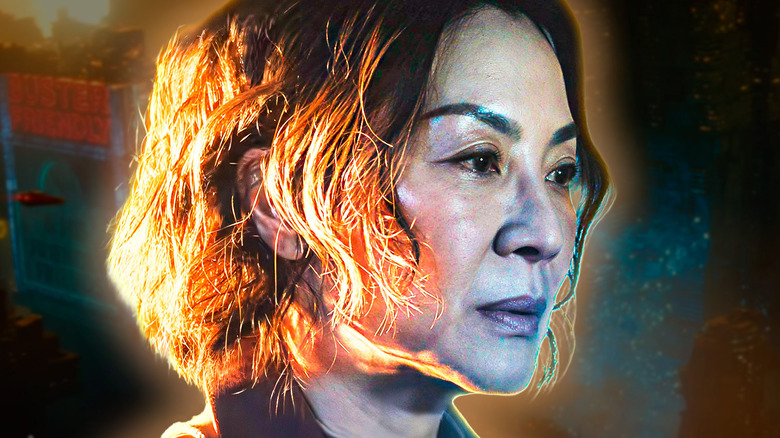
The Blade Runner timeline has gotten a little longer with the introduction of "Blade Runner 2099." Rick Deckard (Harrison Ford) is nowhere to be found, but that doesn't mean there aren't still ample questions to ask about the nature of humanity and empathy.
This time, we follow a human Cora (Hunter Schafer) pretending to be a replicant-based blade runner so she can acquire something that threatens to upend the balance between people and artificial beings. Replicants are now in charge, so Cora will have to keep her cover if she wants to convince her new partner, Olwen (MIchelle Yeoh), that there's nothing human about her. And while humans fight to get back to the top of the food chain, some rogue replicants are fighting to achieve the next level of godhood.
It's a heady series wrapped in a noir package. Of course, it follows the lineage of the movies that came before, but after watching all eight episodes, you might desire something similar to scratch that dystopian itch. Fortunately, there's no shortage of sci-fi TV shows like "Blade Runner 2099" that explore androids, mortality, and the cost of power.
Blade Runner: Black Lotus
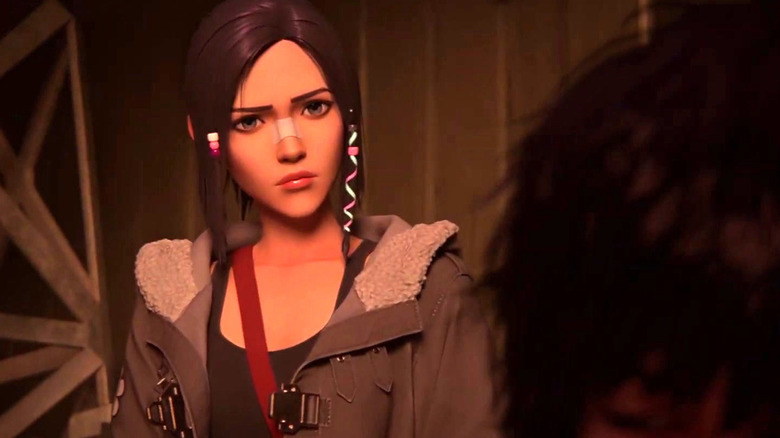
A new Blade Runner project is always cause for celebration, so it's a little wild that "Blade Runner: Black Lotus" flew under the radar for many. Perhaps that's due to it being animated, but it's worth a look for fleshing out this world between the events of "Blade Runner," which takes place in 2019, and "Blade Runner 2049."
"Blade Runner: Black Lotus" is set in 2032, 10 years following a massive catastrophe known as the Blackout. This was an electronic collapse in 2022 that wiped out power grids and digital records in Los Angeles, meaning many replicant files, including determining who was actually a replicant, were gone. The Tyrell Corporation went bankrupt and was later acquired by the Wallace Foundation. "Black Lotus" picks up with an amnesiac replicant named Elle (Arisa Shida/Jessica Henwick) who's trying to find out who she is and her connection to the Wallace family.
The futuristic noir aesthetic of the movies translates superbly into anime, and the series is filled with kinetic action sequences. Plus, the soundtrack is far better than it has any right to be. For "Blade Runner" completionists, "Black Lotus" is a must-watch for filling in some of the blanks from "Blade Runner 2049."
Altered Carbon
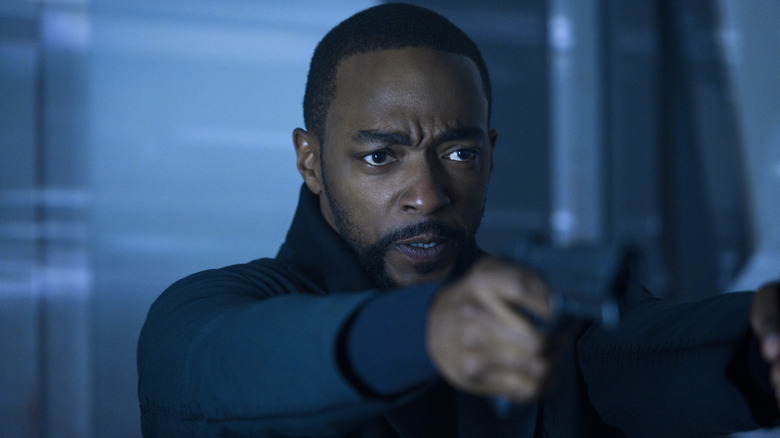
The central theme of the Blade Runner universe is what truly makes someone human when we can create something that looks, feels, and thinks just like us. The franchise, including "Blade Runner 2099," continually posits that empathy is what separates us from any simulacrum. "Altered Carbon" takes a similar look at what makes someone human through a slightly different lens.
Based on the cyberpunk novel of the same name by Richard K. Morgan, this Netflix series takes place in a world where a person's consciousness can be recorded onto a stack and re-uploaded onto a new sleeve (read: physical body). The series follows Takeshi Kovacs (Joel Kinnaman, later Anthony Mackie), who was part of an elite rebel group centuries prior but is resurrected to solve a murder case. Like "Blade Runner," "Altered Carbon" explores what truly makes us human in addition to how near-immortality can impact one's identity when death changes meaning.
"Altered Carbon" also has many similar stylistic flourishes to the Blade Runner universe. Both take place in worlds influenced by cyberpunk. They also draw from noir stories and center on investigations where the main character questions their own identity.
Almost Human

"Almost Human" is the network primetime version of "Blade Runner," so while it's a bit more accessible, it still retains a lot of fascinating philosophical concepts. Here, a human detective, John Kennex (Karl Urban), awakens from a coma to join a police force that pairs actual people with synthetic cops. In John's case, that's DRN-0167, otherwise known as Dorian (Michael Ealy). John has good reason to be suspicious of androids, but as the series goes on, Dorian's emotions become far more complex, blurring the lines between what's human and what's artificial.
In that way, "Almost Human" is very similar to "Blade Runner 2099," which also follows a human/replicant pairing investigating a case. However, while Cora is trying to hide her true identity as a flesh-and-blood person, "Almost Human" plays up this dynamic more for laughs. It leans into buddy cop tropes, where John has to learn to trust his new partner, even if he has good reason to be suspicious of his true nature.
While not as complex as something like "Altered Carbon," "Almost Human" still presented plenty of hard sci-fi concepts, just packaged for a more general audience. This is a show that had a lot of potential, but sadly, it's destined to remain the best robot cop series that only lasted one season.
Ghost in the Shell: Stand Alone Complex

It's easy to see the great influence that "Blade Runner" had on the original 1995 "Ghost in the Shell." Both projects tackle themes of what humanity looks like in an increasingly cyber world and depict gritty, rain-slicked cityscapes. A more direct reference gets made in the sequel, "Ghost in the Shell: Innocence," where a man asks if a dog is real or artificial, a nod to how actual animals are hard to come by in the Blade Runner universe.
As such, it only makes sense to watch "Ghost in the Shell: Stand Alone Complex" if you're a fan of "Blade Runner 2099." The first part of the anime mostly has a case-of-the-week format. But in the latter half of the show's run, Major Motoko Kusanagi (Atsuko Tanaka) tracks down a case involving "The Laughing Man," who's hacking into cybernetic brains and blackmailing corporations.
Much like the "Ghost in the Shell" movie, "Stand Alone Complex" tackles ideas surrounding identity. Memories can be stored externally and then uploaded into a new body, raising questions as to what defines the "self." And both "Stand Alone Complex" and "Blade Runner 2099" involve characters stumbling upon a massive conspiracy, so each program is great for folks who like their detective shows with a healthy dose of existentialism.
Ergo Proxy
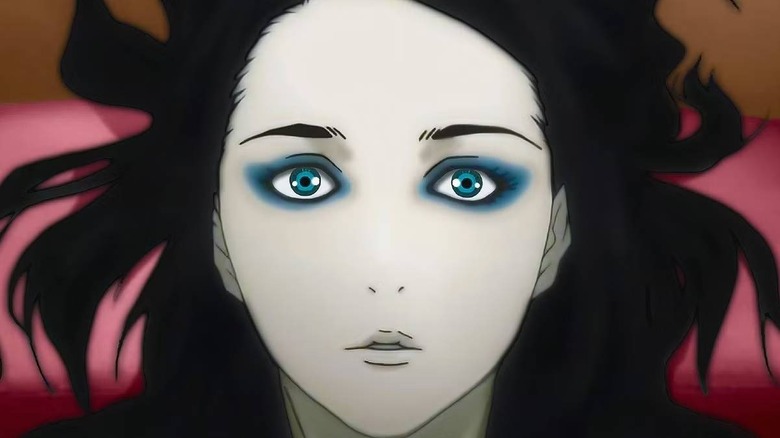
"Blade Runner 2099" differentiates itself from past Blade Runner projects by depicting a future where replicants have become the dominant class. They're no longer on the run, but the ones calling the shots in a future where humans are now second-class citizens. On the whole, the series examines what it would be like for real and artificial humans to live side-by-side and the conflicts that could ensue.
"Ergo Proxy," a criminally underrated sci-fi anime, also explores life if these two entities tried co-existing. Set in the far future, "Ergo Proxy" sees humans living with artificial beings called AutoReivs, in domed cities. Everything's fine for a while until some AutoReivs get infected with the Cogito virus, causing them to become self-aware and start murdering. The show raises questions about the relationship between organic and artificial creations and each's place in society. Another fascinating wrinkle gets added with humans being born in artificial wombs and having their role in society already dictated for them.
Through the format of a procedural, "Ergo Proxy" examines whether it's possible for all of us, organic or artificial, to break out of the roles designated to us. "Ergo Proxy" refuses to offer any clear-cut answers to its deep philosophical questions, making it a rewarding watch and something you'll want to parse through repeatedly to figure out what it all means.