

5 Sci-Fi Movies From The '90s That Predicted The Future With Scary Accuracy
A good science fiction movie speaks to our times, but the finest films in the genre just keep getting better with age. This is why many of the movies we now revere as the best sci-fi movies of all time now could just as easily be holding up a mirror to the modern era, just as they were reflecting the period in which they made.
Let's dive into five beloved titles from the 1990s which managed to do just that — create plausible dystopian visions which eerily and uncannily predicted what life in 2026 would look like, or hint at scientific breakthroughs which could continue to have ripple effects in years to come.
This isn't a ranked list, so all the titles below appear in alphabetical order, and all are equally worth your time if you haven't seen them yet. But this is about more than just quality: our focus is entirely on the parallels these movies have with the modern era, what they managed to get right, and what we're glad they missed the mark on.
12 Monkeys

Thankfully, we've never lived through a pandemic that wiped out five billion people and forced the rest of us underground, but ignore the specifics of the bleak dystopia in Terry Gilliam's best film, "12 Monkeys," and you'll find dark parallels to COVID lockdowns and the rise of health disinformation.
In one of his finest performances, Bruce Willis stars as James Cole, a prisoner sent back in time from a ravaged 2035 to the 1990s, with the goal of gathering enough scientific insight about the upcoming pandemic to develop a cure and alter the course of history. Unfortunately, instead of arriving in 1996 as planned, he winds up in a mental institution in 1990. From there, he's thrown back and forward through time, with his mission growing increasingly hopeless as he tries to find the answers he was sent back for.
Co-written by David Peoples, who helped bring "Blade Runner" to the screen, "12 Monkeys" should be a bleak experience: a time travel movie that quickly reveals time is already pre-determined, and nothing can be changed for the better. Viewing the film in the wake of COVID, when pandemic death counts rose because of people ignoring basic health advice, should make this a relatably frustrating experience. However, the message beneath the despair is an oddly optimistic one, blossoming into an unlikely love story as the movie argues that even as things get worse, embracing loved ones and living in the moment is of more value than succumbing to nihilism and despair. With the world feeling like it's ending every year since COVID, that bittersweet thesis is more relevant now than ever.
Demolition Man
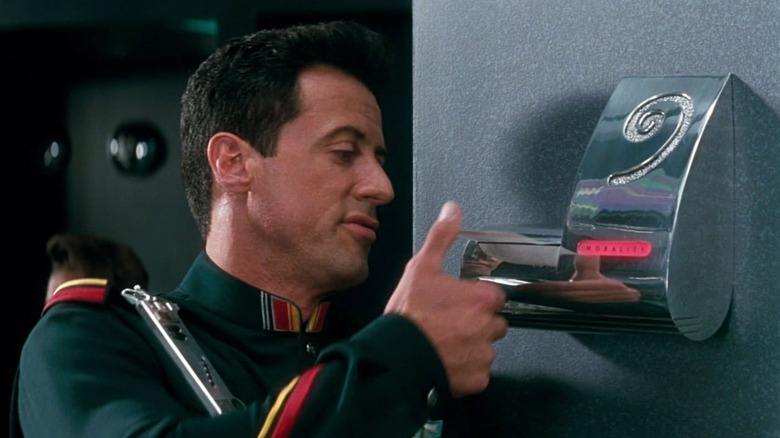
Okay, so we've never needed to replace toilet paper with seashells — likely because the movie never told us how that would work — but a surprising number of the colorful details in the satirical 1993 sci-fi actioner "Demolition Man" have proven prophetic to every spot on the political spectrum.
The libertarian right can point to predictions of "verbal morality fines" in this overly nice future as a precursor to online cancel culture, and the left can see a world where Taco Bell is the only surviving restaurant as a damning critique of corporate mergers, as relevant as ever following the Skydance acquisition of Warner Bros. San Angeles is a crime-free utopia in name alone, prescient in the way it's symptomatic of a future where advances in technology and law enforcement have still managed to make everything worse.
The specific tech predicted — such as Zoom-style video conferences, self-driving cars and voice-activated smart homes — aren't too dissimilar to what we see today, while the widespread germophobia and fear of contact is eerily representative of those initial post-COVID anxieties. It's an interesting backdrop for a Sylvester Stallone action vehicle, with his John Spartan a man out of time in this oppressive future that's high on morality and low on excitement, a place with so many laws it's easy for criminal Simon Phoenix (Wesley Snipes) to start breaking them upon arrival.
Although it's mostly held up as a libertarian-leaning movie due to the overreach of its totalitarian government, the world of "Demolition Man" resonates because it unknowingly held up a mirror to what irritated people of all political stripes. All the wonder of a sci-fi future is here, but it's rendered mundane and joyless — which is less exaggerated in today's reality than it seems.
Gattaca
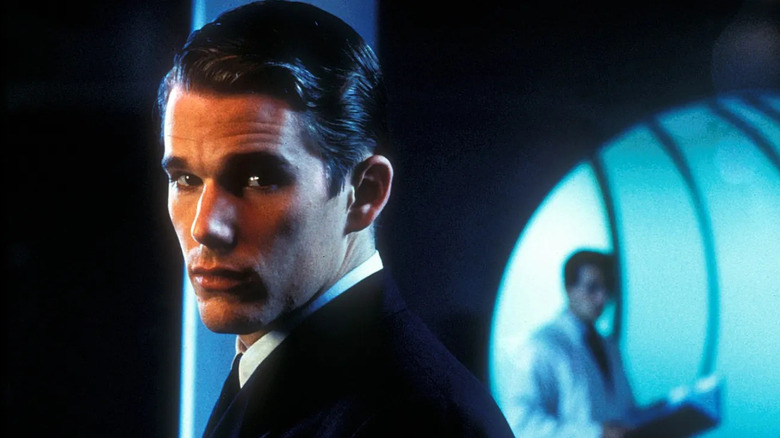
Named as the most plausible sci-fi movie ever made by NASA in 2011, Andrew Niccol's cult 1997 directorial debut "Gattaca" imagined a future defined by eugenics, where parents could learn their child's fate from genes alone, and social Darwinism is the norm. Vincent Freeman (Ethan Hawke) attempts to escape his fate: he steals the identity of Jerome Morrow (Jude Law) to fulfill his dream of working in space travel, while exploring the social, personal, and professional barriers faced by those with genetic disorders. Vincent's parents, feeling guilty over naturally conceiving a child with an expected short life span, instead use genetic selection for their next baby.
Any discussion of eugenics should make any sensible person think back to the many crimes against humanity of the Third Reich, such as their attempts to forcibly sterilize (and later, euthanize) those with physical and mental disabilities. Unfortunately, tech advancements have made the ethically dubious practice linger in the cultural consciousness, with many of the predictions in "Gattaca" of embryonic genetic screening and gene editing becoming a controversial reality.
In 2015, the movie came closer to reality with the invention of CRISPR, a tool that can find and change specific parts of DNA sequences. Although there are some limits — several countries prohibit it from editing reproductive cells, so far only using it for specific blood disorders — it's one step closer to realizing Niccol's dystopia, when manipulating human genomes is such an everyday practice that the very ethics of it aren't lingered upon.
The Matrix
So many of the concepts introduced by the Wachowski sisters in 1999's "The Matrix" — from the idea of being "stuck in The Matrix" itself, to having your mind expanded via the "red pill" — have been co-opted by some of the worst people on Earth in the years since its release, although their fatal misunderstanding of the movie's message doesn't count as a prediction of the future. The directors' groundbreaking blockbuster riffed on decades of cyberpunk, sci-fi, and anime, but added brand new technological anxieties to the mix, which are far more resonant than whatever some Manosphere podcaster tells you the movie really is a metaphor for.
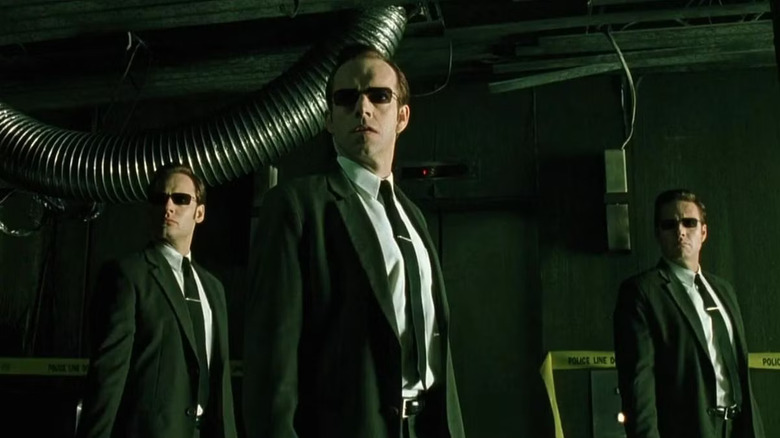
Take the Agents, led by Hugo Weaving's eternally menacing Agent Smith, whose job is protecting the Matrix by making sure nobody realizes it's an artificial simulation. What was a dense concept for many viewers to grasp in 1999 is now just a heightened equivalent of what we see online every day, when unhelpful virtual AI assistants have replaced real customer service employees and verified troll accounts on social media compose each incendiary post via ChatGPT.
It's no surprise that the theory we're living in a simulation became increasingly popular in the years since the movie's success, as it can often seem like nobody on the internet is real. When our feeds are wall-to-wall posts from AI engagement accounts endlessly reacting to each other, it does feel like the Agents have succeeded in infiltrating our online lives.
The Truman Show
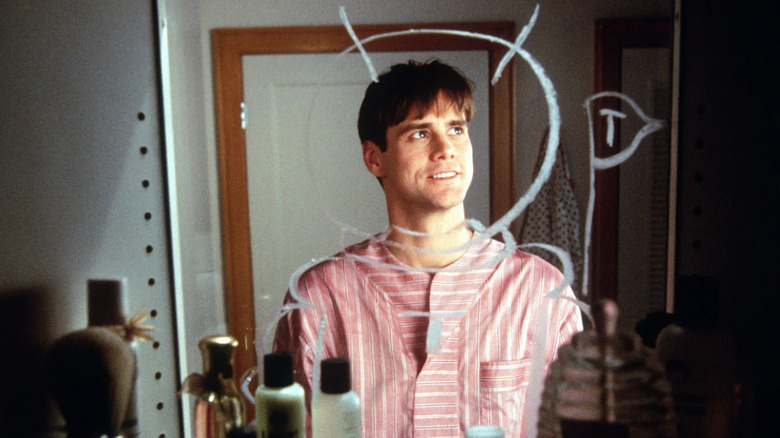
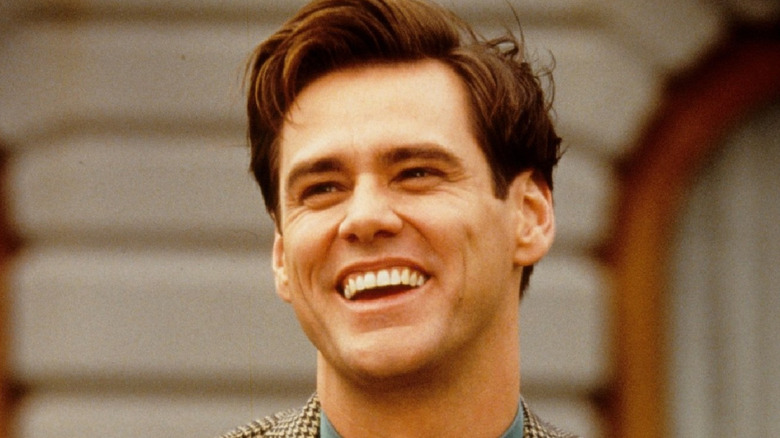
Arguably the most prescient of the titles on this list — and the second to be scripted by "Gattaca" director Andrew Niccol — this reflection of the early reality TV boom proved to be a lot more of a Nostradamus in its predictions for the next wave of lowbrow media. The success of shows like "Big Brother" a couple of years later would lead to them looking at director Peter Weir's movie for greater influence, introducing 24/7 livestreams of contestants in the Big Brother house in later seasons for obsessive viewers wanting more unscripted drama.
However, in the social media age — and specifically, the age of endlessly rolling Twitch streamers — it has gone one step further, as we can livestream countless influencers going about their routines, occasionally throwing in awkward product placement that would make Meryl's (Laura Linney) attempts to advertise mid-broadcast seem subtle.
"The Truman Show" may be about reality TV, but it accurately predicted an even greater societal shift, with the rise of surveillance in public spaces and online. The statistic that 5,000 hidden cameras could follow Truman at any time seems more plausible when considering that CCTV, smartphone tracking, and devices that are likely listening to our every word have become commonplace in our daily lives.
We've all mentioned an item in a conversation and found a targeted ad on our timelines minutes later; it's not a sign that we're living in our own personal Truman shows, but something even darker, as our devices continue to harvest our personal data without us even knowing. If you've bought a phone in the last 15 years, then you should relate to the undercurrent of social commentary that keeps Weir's movie relevant to this day.