

5 Worst Things Jean-Luc Picard Ever Did On Star Trek, Ranked
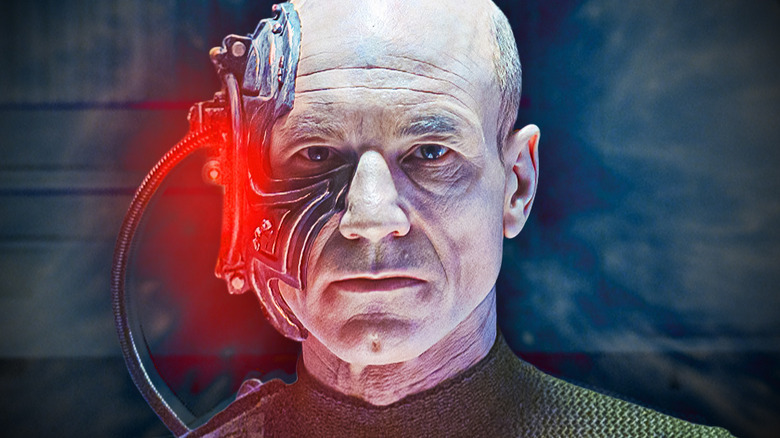
After "Star Trek" icon Patrick Stewart's death at age 86, revisiting the acting legend's finest roles is the best way to remember his work. Out of every character Stewart played, of course, one man stands above the rest: Jean-Luc Picard, the cerebral captain who ushered in a new era of "Star Trek" as the centerpiece and glue of "Star Trek: The Next Generation."
When he debuted, Picard was a sci-fi lead character unlike any other. Less prone to action hero antics than his "Star Trek: The Original Series" predecessor James T. Kirk (William Shatner), the French-born intellectual enjoyed diplomacy and the arts, generally preferring wise leadership over two-fisted improvisation. That being said, while Picard is arguably the greatest captain the USS Enterprise has ever seen, even he isn't exempt from the occasional bout of awfulness.
Yes, Picard has done some pretty bad things over the course of his lengthy presence in various "Star Trek" movies and shows. Some of them he did because he literally had no choice, while others came as a result of his own temper or otherwise ill-informed actions. In this article, we look into some of the worst things Jean-Luc Picard has ever done in the "Star Trek" franchise — we'll let you decide how they stack up next to the worst things Captain Kirk has done.
5. Giving Shinzon way too much leeway
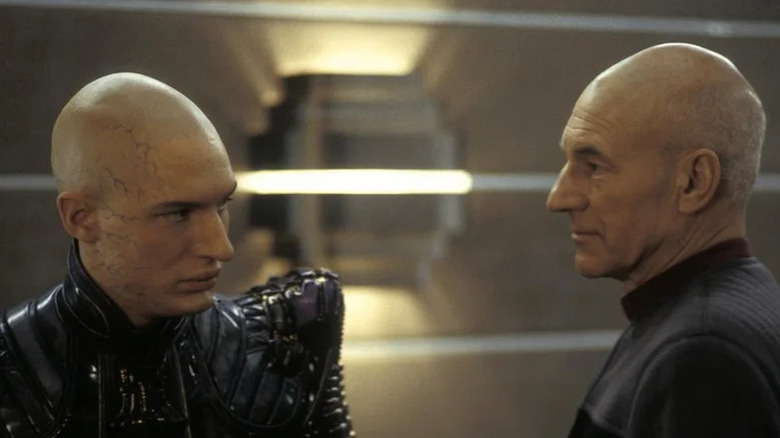
Tom Hardy's Shinzon in 2002's "Star Trek: Nemesis" is obviously evil. So, so obviously evil. He starts the movie as a rebel leader who takes over the Romulan Empire by killing its higher-ups. He dresses like a villain. He behaves like a villain. He has a gigantic villain battleship that he calls the Scimitar, and makes a point of being as ominous as he possibly can. Oh, and he's also a young, rapidly decaying clone of Jean-Luc Picard.
Even all the non-clone stuff should serve as a massive red flag to Picard, who's sent to negotiate terms of alliance with the guy. Granted, Picard can't exactly avoid meeting Shinzon, given his orders. However, he lives in a universe where the hostile Mirror Universe is a thing, and clones and genetic experiments (see: Ricardo Montalban's Khan Noonien Singh) are invariably evil. The second Shinzon meets him in a shadowy supervillain lair fashion and reveals his clone status, Picard should be more than savvy enough to pump the brakes and ring the alarms. Instead, Picard utterly fails to recognize Shinzon's obvious antagonism, waltzes off to attend a dinner with the guy — and rather stupidly rejects an opportunity to befriend Shinzon, which only furthers the clone's villainy.
Shinzon is not a particularly subtle villain — perhaps because his accelerated growth process equals emotional immaturity, or maybe because he's not very well written. Then again, based on Picard's track record in this particular movie, Shinzon might simply have inherited his decision-making skills.
4. Seeing a majestic new lifeform and immediately facilitating its death
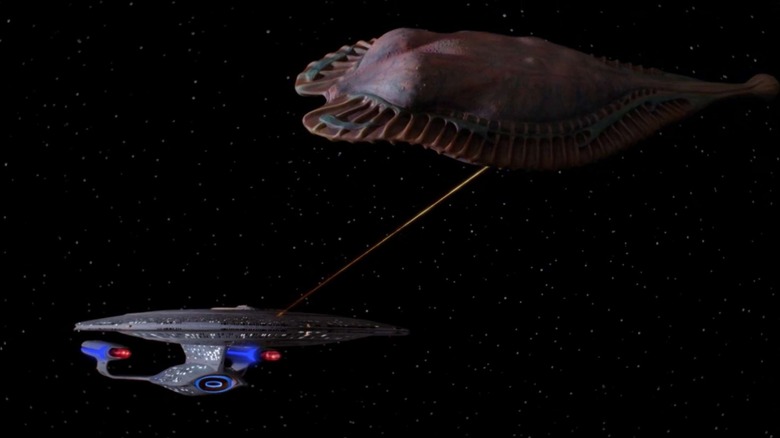
In the "Star Trek: The Next Generation" Season 4 episode "Galaxy's Child," Jean-Luc Picard shows a side of himself that's not quite as strategic as his overall reputation would indicate. When the Enterprise pauses to observe a starship-sized space creature, Picard makes a decision that leads to disaster. Instead of playing it safe and raising the ship's deflector shield as Worf (Michael Dorn) very strongly recommends, he just lets the creature come closer, probe them, and attack.
Picard's attempt to let the creature be curious is not particularly smart, but it does prove to be deadly. It blasts the Enterprise with a form of energy dampening field, preventing the ship from escaping and risking a radiation-themed disaster. As a result, Picard orders the ship to fire phasers at the creature, promptly killing it — and tasking the Enterprise with figuring out what to do with the energy-hungry offspring that it was protecting all along.
Yes, there are mitigating factors. Picard does specifically use a low phaser setting to damage the creature as little as possible, and the Enterprise is temporarily all but disabled by the dampening field. Still, what happened to warning shots? They're dealing with an animal; why not try to scare it off? And even though the dampening field might have been able to affect the ship's shields, there really is no reason why Picard didn't raise them anyway when a gigantic space creature of unknown hostility approaches, what with his duty as a captain to protect his own crew. Though there are variables here that Picard simply couldn't be aware of, this kind of utter failure to take precautions is not stellar captaining.
3. Everything about the Crusher family
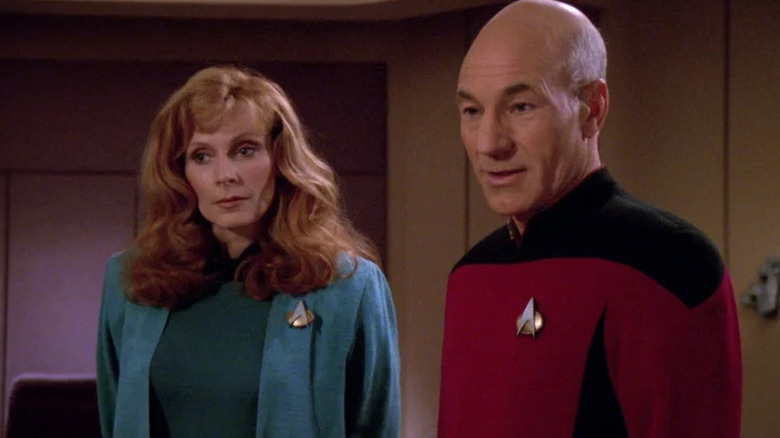
Jean-Luc Picard's relationship with Beverly Crusher (Gates McFadden) is complicated to say the least, but Picard's relationship with the whole Crusher family is nothing short of a soap opera. Before the events of "Star Trek: The Next Generation," Picard was buddies with Jack Crusher (Doug Wert) but inadvertently caused his death during a dangerous mission. This, of course, is par for the course with the complexities of Starfleet command, and removed from the rest of the context, can hardly be held against him.
However, things soon get weird with Beverly, Jack's widow. "Star Trek: The Next Generation" makes it abundantly clear that the two have intense romantic tension, which is not the greatest look considering that Dr. Crusher serves on the ship Picard commands. Picard's long-gestating love for Crusher (and vice versa) isn't fully revealed until the Season 7 episode "Attached," but the signs of mutual attraction are there long before that. This, of course, doesn't prevent Picard from having numerous invariably doomed relationships over the course of the show. The pair eventually hooks up offscreen. Decades later, Picard learns in "Star Trek: Picard" that they have an adult son — who's named Jack Crusher (Ed Speleers) after Beverly's lost love, of course. Soap opera, remember?
And then there's the matter of Wesley Crusher (Wil Wheaton). While Picard can be gracious and protective toward the youngster, he has a strange tendency to treat Jack and Beverly's son like an annoying pest, even famously telling him to shut up when the poor kid tried to reveal that the evil Lore (Brent Spiner) is impersonating Data (Spiner). Granted, Picard isn't necessarily wrong about Wesley being annoying. Still, Jean-Luc, isn't that a bit overkill, considering you caused the death of the kid's father and secretly desire his mom?
2. Rejecting Q's Starfleet application
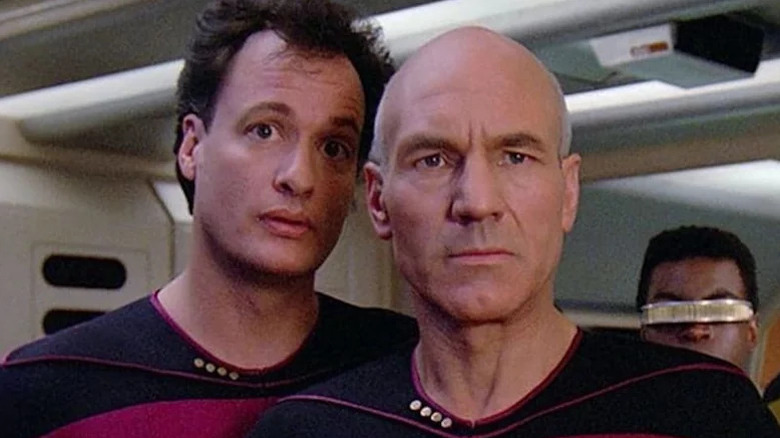
John de Lancie's Q is a constant thorn in Jean-Luc Picard's side. The reality bender puts the captain through a wringer every time he appears, and their dysfunctional dynamic continues well into "Star Trek: Picard." You'd think Picard would jump at the chance to gain some control over Q. Yet, when the "Star Trek: The Next Generation" episode "Q Who" presents him the opportunity to swear Q in as an Enterprise crew member — and therefore Picard's subordinate — the captain immediately tells the entity to stuff it.
Q's motivation seems genuine. He wishes to protect the Enterprise from the threats he knows they're moving toward. Yet, Picard wants none of it. Granted, he's not alone. Guinan (Whoopi Goldberg) specifically advises Picard to turn Q down, as she considers him untrustworthy. Still, you'd imagine that Picard would be smart enough to at least humor Q, instead of irritatedly brushing off a character who effectively amounts to a deity. You'd also imagine that, as a Starfleet captain, he might want to inform his superiors about the opportunity. What do you think they would say if Picard took two minutes to send a message: "Hey, so a literal god wants to join Starfleet under my direct command, yes or no?"
Picard gets his receipt without delay. Angered by the refusal, Q hoists the Enterprise to a faraway location where they encounter the dangerous Borg Collective. The ensuing conflict damages the Enterprise badly and kills multiple members of Picard's crew — it also alerts the Borg to the Federation's existence, leading to the Federation being targeted. In the end, Picard even has to admit that Q was right and the lesson was valuable. If only there had been another way to solve the issue.
1. Pretty much everything he does as Locutus of Borg
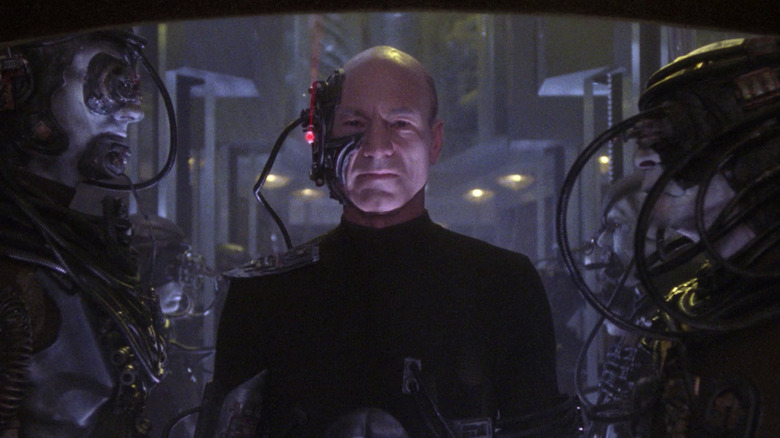
In all fairness, a guy can hardly be blamed for the actions he takes as part of the Borg Collective. Still, when it comes to the sheer danger he poses, even the worst thing Jean-Luc Picard the human man can't hold a torch to what his Locutus of Borg persona gets up to after his shock assimilation cliffhanger in "Star Trek: The Next Generation."
Though Locutus is only really active in "The Best of Both Worlds, Part II," he's an incredibly scary villain because he retains aspects of Picard's personality — and his knowledge of Starfleet's operational workings. This makes him a threat to every living thing in general and humanity in particular. In fact, "The Best of Both Worlds" two-parter and future installments that reference it establish that he's the specific entity who enables the Borg to annihilate 39 Federation starships and either assimilate or kill almost 11,000 people during the Battle of Wolf 359 – including "Star Trek: Deep Space Nine" main character Benjamin Sisko's (Avery Brooks) wife, Jennifer (Felecia M. Bell).
Picard is rescued from his tenure as Locutus soon enough, though later events establish that he continues to "hear" the Borg in his head due to genetic alterations. While the captain attempts to carry on more or less like nothing happened, no one's really fooled. Six years after the incident, Starfleet still considers him so affected by the Borg that when the collective attacks Earth in "Star Trek: First Contact," the Enterprise is specifically forbidden from participating in the conflict because Picard is way, way too close to the situation.