

5 Most Realistic Prison Movies Of All Time

Many of us have only learned what life in prison is like from the movies, and that's been enough to scare us away from a life of crime. But while many films in this crime movie subgenre have plenty of grit, their punishing, extreme narratives have little basis in reality, using their hard edge to appear realistic when they're anything but. Jail may be hell, but many filmmakers won't shy away from going as far over the top as possible to make it appear even more brutal.
So let's look instead at the films that offer a more authentic perspective on the nightmares that await one inside a cell. These include movies adapted from true stories, titles that worked extensively with real prisoners and charities to provide a lived-in account of their daily struggles, and in one case, a film that was written by a volunteer who had spent several years working in jails.
This isn't the definitive list of the best prison movies of all time, but very few of the classics of the genre can hold a candle to these when it comes to pure authenticity. The following five are unranked and listed in order of release, starting with the oldest movie first.
Le Trou
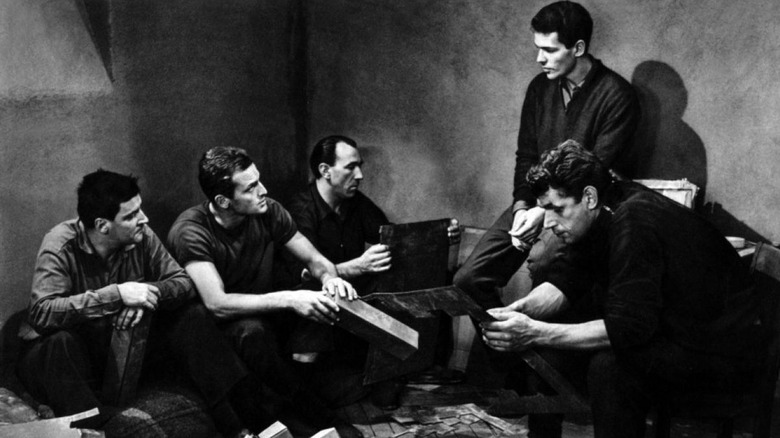
Many of the most beloved prison break movies are complete fantasy — but director Jacques Becker's posthumously released 1960 effort "Le Trou" (or "The Hole," if you want the less exotic English title) is an authentic account of a 1947 breakout from La Santé Prison in Paris. For maximum realism, Becker assembled a cast comprised largely of non-professional actors, including several of the inmates who participated in the real events playing fictionalized iterations of themselves; one even breaks the fourth wall to introduce us to his story, in place of traditional opening credits.
To increase the authenticity even further, Becker hired the inmates as consultants on the movie, which results in a more process-driven narrative than the tense thriller you might expect. The most famous scene is four uninterrupted minutes of the prisoners trying to break through the concrete floor of their cell, with no spoken dialogue. You can't accuse Becker of trying to Hollywoodize a true story.
The prison break takes place after inmate Claude (Marc Michel) is moved to another block while his is under repair. He discovers that the four prisoners in the cell he's been transferred to have plans to escape, using the noise from the renovation work as a cover to break into the tunnels below and flee. The narrative conventions are twisted even more as multiple inmates have second thoughts about risking their lives to make a run for it. The movie isn't perfect — Becker glosses over one of his real-life characters being a Nazi collaborator for the sake of telling a good escape story — but its genre subversions are engrossing. Digging holes has never felt more cinematic.
Cool Hand Luke
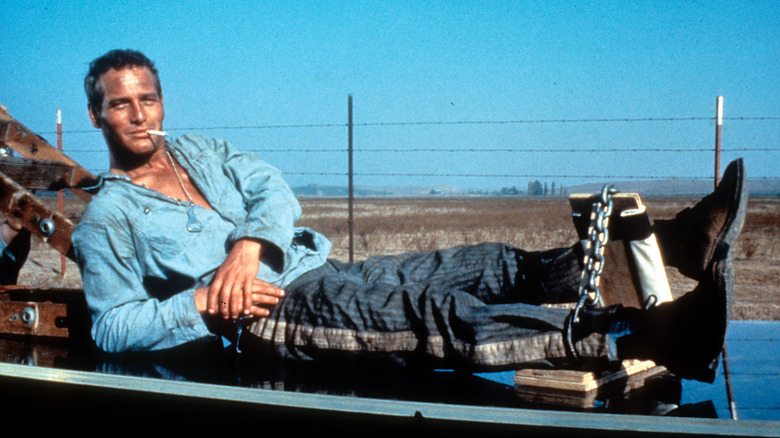
Donn Pearce's 1965 novel "Cool Hand Luke" blends the author's true, semi-autobiographical account of his time on a Florida chain gang with the near-mythical tales he was told about a former inmate many years later. Pearce adapted his own novel for the screen, but it was rewritten by Frank R. Pierson before being handed to director Stuart Rosenberg, with Pierson transforming the anti-establishment tale into one heavy with religious imagery.
Luke (a never-better Paul Newman) becomes a Christ-like figure in Pierson's drafts of the script, with his rabble-rousing playing out as a form of sacrifice for his fellow convicts. Even reimagined as a quasi-Christian parable, "Cool Hand Luke" maintains much of its realist edge from the page, not shying away from the most harrowing abuses Pearce saw firsthand, from routine beatings to starvation. On a lighter note, the egg-eating sequence is based on something which really happened to the author.
Road Prison 36 is inspired by the prison of the same name in Florida's Duval County, which is where Pearce was locked up. As a result, many other aspects of the movie's narrative are drawn from tales he was told about the prison population from a generation earlier, with young prisoner Arthur Maillefert's death in 1932 — chained up in a cramped "sweatbox" with wooden boxes on his feet — proving particularly formative. Translating these miscarriages of justice from a corrupt system to the screen has helped 1967's "Cool Hand Luke" to remain a rousing classic to this day.
A Prophet
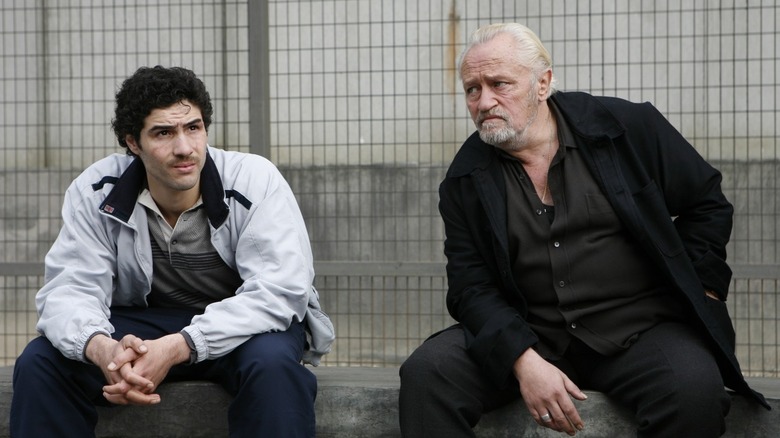
There are increasingly surreal flourishes during 19-year-old Malik's (Tahar Rahim) stint behind bars in 2009's "A Prophet." Forced into killing his cellmate by a group of Corsican mobsters in exchange for their protection — the victim was a witness at a trial involving the rival Maghrebi gang — he begins to be haunted by the ghost of the man he killed, although these apparitions gradually give him the powers of prophecy, allowing him to maneuver his way to the top of the prison food chain.
It sounds high concept, but director Jacques Audiard grounds these supernatural elements within one of the more grueling depictions of prison life we've ever seen onscreen. Working with former convicts as production advisors to guarantee a gritty realism (with many appearing as extras too), he manages to put his own twist on the genre without betraying the harsh realities of life behind bars. Audiard was also motivated by telling a story with a protagonist of Arab origin, believing that the population was severely underrepresented in French cinema, and wrote a rich anti-hero for the ages.
As a teen of North African origin immediately forced into murdering someone from his own community — all to help a crime family who are openly racist toward him — Malik is immediately thrown into the deep end, and his ascension through the ranks is driven more by simmering cultural tensions than prison drama cliches. "A Prophet" may not be adapted from a true story, but it has a hard-edged authenticity few prison movies can match.
Starred Up
As a young man, screenwriter Jonathan Asser used to struggle with extreme fits of rage that multiple experts didn't know how to handle; his own therapist even had to install a panic button in case he erupted. After seeking treatment, his own experiences made him well-equipped to deal with the most volatile prisoners, and he spent several years working as a volunteer therapist at two of London's most notorious facilities, seeking to help the men with the most uncontrollable anger outbursts.
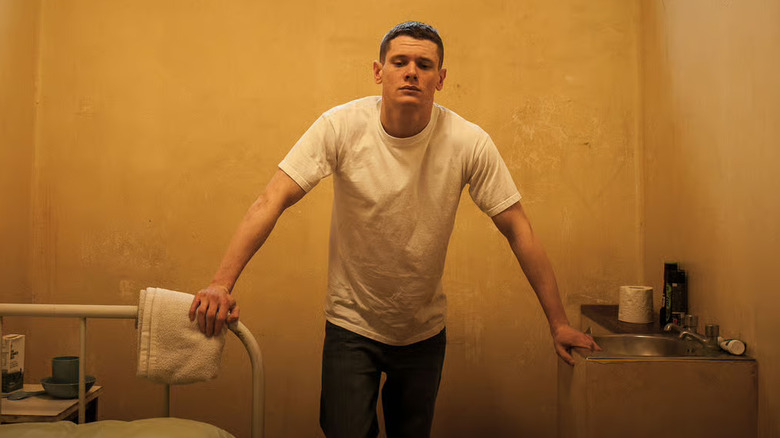
His groups were discontinued due to a lack of funding, but his experiences were immortalized in his semi-autobiographical screenplay for 2013's "Starred Up," in which Eric (Jack O'Connell), a teen transferred to adult prison from juvie, is given a second chance via an anger management group.
Asser and director David MacKenzie use this grounding to tell a more explosive prison drama, as Eric must navigate between a shot at redemption and the bad influence of his own locked-up father (Ben Mendelsohn). Just as Eric is articulating his own fragile emotional state through these group sessions, his father wants him to be mentored by the inmates at the top of the chain — and his refusal to follow that path makes him realize too late just how corrupt the institution is, and how much the guards bend to the rules of their prisoners, not the other way around. It may become a more over-the-top thriller, but "Starred Up" has its roots in a lived-in perspective of the prison system's failings.
Wasteman
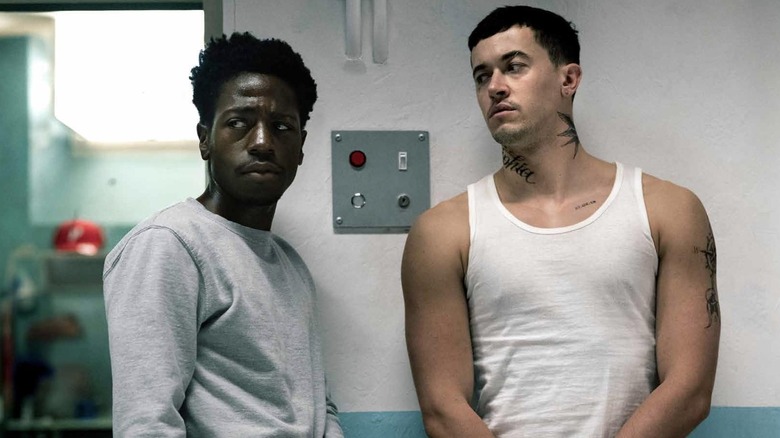
It's a classic set-up for a prison drama: Taylor (David Jonsson) is a week away from a parole hearing that will determine whether he can leave after more than a decade behind bars, while his new cellmate Dee (Tom Blyth) wants to become the prison's top boy and requires Taylor's help to climb those ranks. Director Cal McMau's gripping 2025 thriller is a stellar entry into the prison drama canon, as the protagonist is backed into a corner, forced to assist in an escalating battle between drug dealers that compromises his early release.
This tension is fleshed out via McMau's behind-the-scenes collaboration with London charity Switchback, which helps young ex-prisoners with long-term monitoring and support; the organization spent two years consulting on the script and the sets to help ensure maximum realism. They've seen firsthand that the societal issues causing former convicts to fall back into crime are due to a lack of both preparedness on the inside and continued support as they continue rehabilitation once released.
The screenplay by Hunter Andrews and Eoin Doran uses those societal failings as grounds for what often feels as much like existential horror as it does a prison thriller, making them as much of a lingering threat for Taylor as the unfolding gang drama. Adding even more versimilitude, the movie was shot in a real disused prison, with more than half the extras having experience behind bars. Never heavy-handed, "Wasteman" feels well-researched to the point that it feels lived-in.