

VisionQuest's Finale Reveals The Common Thread Between All 3 WandaVision Shows
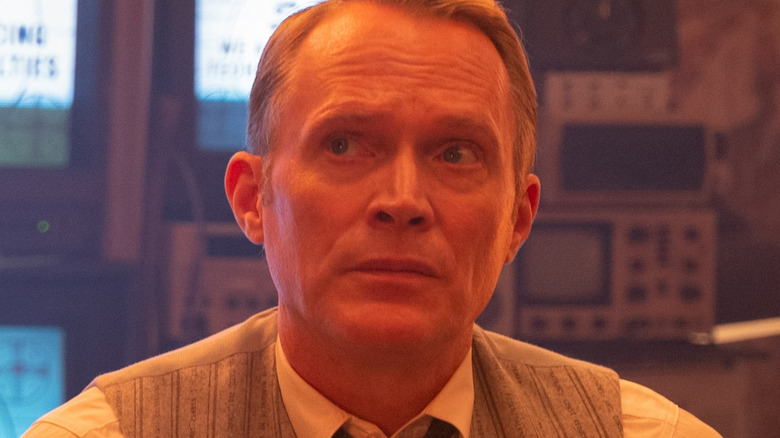
Contains spoilers for "VisionQuest" Season 1, Episode 8 — "Forever"
It turns out that "WandaVision" and its spin-offs, "Agatha All Along" and "VisionQuest," really did have a common theme. It just took until the "VisionQuest" Season 1 finale for the show to finally spell it out in no uncertain terms.
The theme, of course, has been present since Wanda Maximoff (Elizabeth Olsen) trapped Westview in the Hex bubble and started her deeply flawed sitcom coping mechanism: it's about losing a loved one and trying to deal with it in incredibly destructive ways. In "VisionQuest" Season 1, Episode 8 ("Forever"), Tommy Maximoff (Ruaridh Mollica) defines this sensation as being "trapped in grief," tying a neat bow around the metaphor by comparing Ultron's (James Spader) pain after losing Jocasta (T'Nia Miller) to Wanda's own after Vision (Paul Bettany) died.
The theme is indeed present from the very first show of the bunch. By the ending of "WandaVision," we find out that Wanda turned Westview into sitcom hell and its residents into her mind controlled slaves because she suffered a mental breakdown after Vision's death. Meanwhile, the "Agatha All Along" ending confirms that the death of Agatha Harkness' (Kathryn Hahn) son, Nicholas Scratch (Abel Lysenko), is the point that truly pushes the already morally gray Agatha over the event horizon. She embarks on a centuries-long rampage of using "The Ballad of the Witches' Road" to form covens and steal powers, murdering countless witches in the process and eventually snapping out of it during the course of the show. "VisionQuest" continues the theme of grief — on multiple fronts, no less.
VisionQuest delivers three arcs that fit the theme
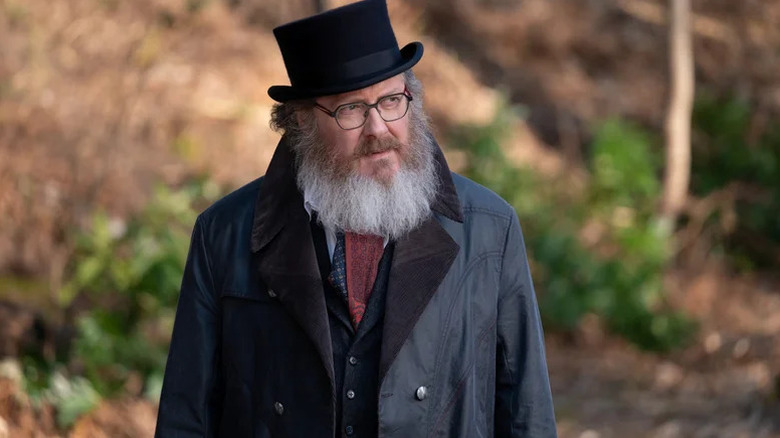
"VisionQuest" Episode 7 brings back Corvus Glaive's (Michael Shaw) cosmic weapon to facilitate Vision's mission to save Lisa Molinari (Lauren Morais) from nanobot infection. This soon turns into Vision's own quest to deal with his own hesitation to accept his true identity, and with it, the heartbreak of losing Wanda. This already ties into the theme of being trapped in grief, but the season finale adds two more grief-themed storylines to the mix.
The first of them comes in a skillfully condensed arc that centers around the Client, whose real name is Virgil Horton (also played by James Spader). Once married to the dying Jo Carrington (also T'Nia Miller), he was unwilling to let her go. Instead, he transferred her mind into the synthezoid Jocasta, which she absolutely hated until Virgil erased his role in the process from her memory. Realizing that Jocasta's might and metal aren't compatible with his mortal human frame, Virgil rebuilds Vision for S.W.O.R.D., and sets out to transfer his mind into the once fallen Avenger so he can stand with Jocasta as equals — and unleash 20 billion controller nanobots unto humanity.
Finally, Ultron gets his own grief sequence when Virgil (seemingly) kills his newfound love, Jocasta. After acquiring control of the nanobots, Ultron is quick to kill Virgil, but blames all of humanity for his actions. Ultron decides to end the human race in retaliation, forcing Vision to create "UltraVision," a version of the "WandaVision" sitcoms that's specifically designed to help Ultron overcome his grief. After plenty of difficulty, this succeeds. Ultron concedes defeat, ending the show in comparatively mellow form — and in possession of Jocasta's code. That's three different grief arcs with three different conclusions, a truly fitting finale to the "WandaVision" trilogy.