

Avatar: Seven Havens Season 1 Ending Explained
Contains spoilers for the end of "Avatar: Seven Havens" Season 1
They say that sequels are hard. If that's true, then delivering a quality threequel over a decade later, let alone to one of the best animated shows ever, must be next to impossible. It would be overdramatic to call "Avatar: Seven Havens" a miracle, but now that Season 1 is in the books, it's hard not to be astonished.
A rich, sophisticated, visually stunning successor to "The Last Airbender" and "The Legend of Korra," the new Paramount+ show carves a bold new path through a familiar world without losing what made those first two shows so special. And if the Season 1 finale is any indication, the best is yet to come. The final four episodes dropped on the streamer on October 30, ramping the stakes and action up way beyond what we've seen so far and blowing the carefully established status quo out of the water to pose some massive questions for Season 2.
Thankfully, one of those questions isn't whether or not the show will return. "Seven Havens" has already been ordered through Season 4 — the same length as "Korra" before it. Given how Season 1 ends, the next chapter (or "book," as the Avatar shows call their seasons), looks to be very different.
Let's get into it.
What happens at the end of Avatar: Seven Havens Season 1?
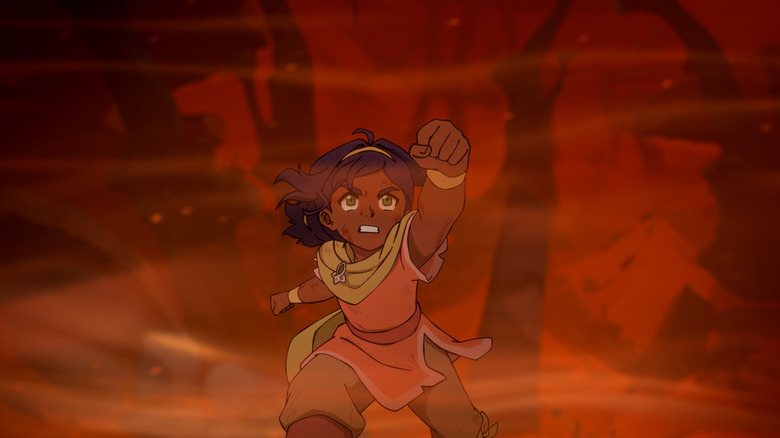
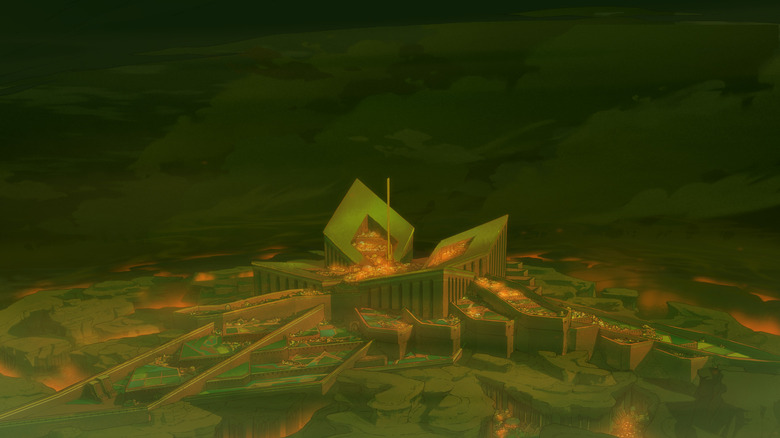
After revealing herself as the Avatar to the people of Ellora, Nisha (Aishu Devan) flees into the Harshlands, while Pavi (Saheli Khan) returns to hiding. The twins find each other out in the dunes and eventually link up with Agam (Sakina Jaffrey) and the Faceless, who are planning a voyage across the Harshlands to Republic Forest, which they believe will be a bastion from the brutal storms that wrack the desert. Before the group sets out, though, Kayoko (Jennifer Sun Bell) and the forces of Ellora attack with a reckless use of dark spirit essence, inadvertently creating an expanding dome of energy hurtling toward the haven.
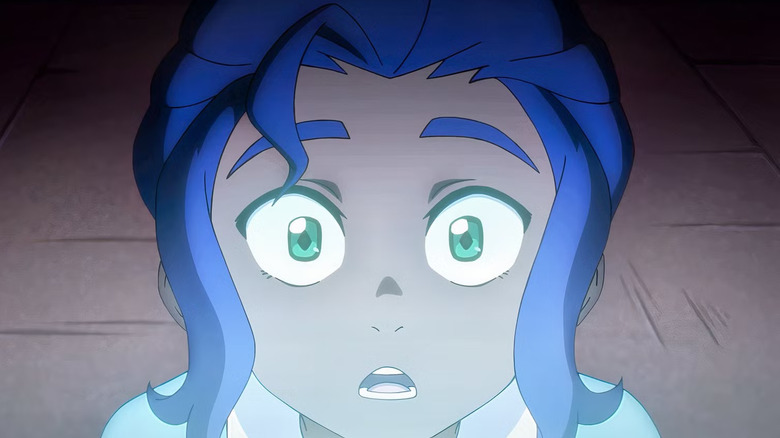
In their effort to stop the anomaly, which has been laying siege to Ellora all season, Nisha and Pavi both end up inside the energy dome. There, Pavi sees what really happened to their parents — how they fled their home with Pavi, fearing Nisha's power, and how Nisha chased them through the Harshlands, seemingly overcome by a similarly colored energy. In an uncontrolled rage, Nisha causes the tragedy that leaves their parents dead and Pavi with her injury.
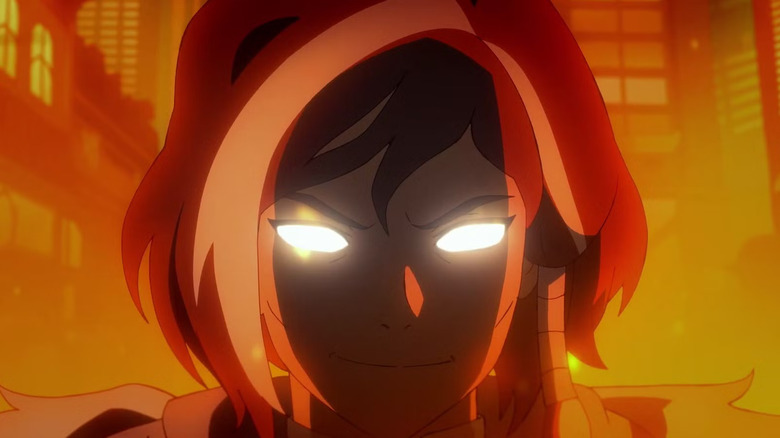
Overwhelmed by feelings of betrayal, Pavi lashes out at her sister and declares for all of Ellora that she is no longer afraid. Her root chakra unlocks, and she enters what appears to be the Avatar State, albeit a different one from what we've seen before. After dispelling the spirit energy, Pavi has a vision of her past lives and feels a call to venture to the Floating Isles. She leaves Ellora with Jae (Major Curda), while Nisha remains in Ellora with Karthik (Akshay Khanna).
Opening the root chakra
People often try argue that the Avatar shows are anime, and while there is some disagreement there (they are, ultimately, American shows), they have never been more anime than this. Pavi practically goes Super Saiyan in her big climactic scene, in which her root chakra opens and a red-orange energy seems to encase her body.
The root chakra has been the prevailing symbol throughout the season — tied to the element of earth and concerned with the spiritual essences of fear and survival. Those have been the major themes of Season 1, and when Pavi finally conquers her fear, the power flows through her, marking this first stage on her Avatar journey. It's a deeply thematic, visually stunning climax, anchored by Jeremy Zuckerman's outstanding score.
There's even more to dig into from a lore perspective. Pavi's red-orange glow matches both the anomaly, and the energy Nisha unintentionally channels in the earlier flashback. It also matches Vaatu, the ancient spirit of darkness introduced in "Korra" Season 2. Vaatu is the opposite of Raava, the light spirit who reincarnates into each new Avatar. The lore in "Korra" suggests that after Korra defeats Vaatu, he would slowly grow again within Raava — within Korra herself. This has led to a number of theories that one of Pavi and Nisha might be a "Dark Avatar" possessed by Vaatu, while the other holds Raava's light spirit.
Nothing has been confirmed, but seeing both Pavi and Nisha glow red-orange could mean they both possess the spirits of light and darkness. "Avatar" has always been a story about finding balance. What exactly Pavi did, and how, is something we'll all have to wonder about while waiting for Season 2.
Nisha and Pavi go their separate ways
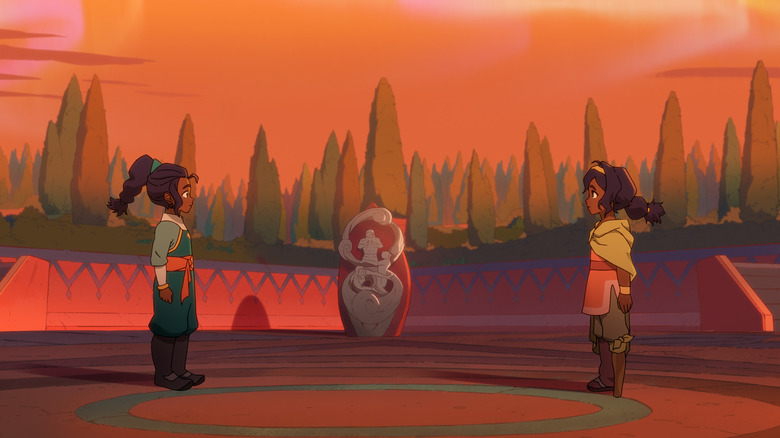
It's a strong narrative choice to split Pavi and Nisha going into "Seven Havens" Season 2. The two have had their fights as sisters, but always seem to have each other's back. At first, Pavi's reaction to the fate of their parents might seem overly aggressive, given how young both girls were at the time, and how out of control Nisha's powers seemed to be. But when you think about it, the split makes a lot more sense.
Throughout this season, it's always been Nisha pushing Pavi to abandon the past and step into her new life in Ellora. But Pavi never asked for any of it. She doesn't like fighting, or sleeping in a normal bed. And while Nisha has been ready to let their parents go all season, Pavi has been holding out hope that they just might still be alive. Grief, betrayal, anger, and confusion all hit at once, inside a nine-year-old girl who simultaneously receives a massive spiritual calling. And so, she leaves, and doesn't look back.
The most brutal part might not be her abandonment of Nisha, but the way it manifests. All Nisha has ever wanted to be is the Avatar, and the savior of Ellora. In the end, Pavi takes that destiny, defending the city on her own. With Pavi withholding forgiveness, Nisha will have to learn to forgive herself, as Karthik and the others rebuild Ellora. Pavi may come to regret how she leaves her sister, and there's rich narrative possibilities in that tension.
Seven Havens' biggest mysteries remain
The ending of "Seven Havens" Season 1 is downright cinematic, but it also leaves its biggest questions unanswered. The show's spiritual mysteries span the breadth of the "Avatar" timeline, and we have enough clues now for some more informed speculation.
First and foremost, it seems that Pavi may have found a way to reconnect to her past lives — an ability lost to Korra after her battle with the dark spirit Vaatu. She has yet to speak to Korra, or any of the other past Avatars, but even just seeing them in her astral mindscape is a big deal. In that same sequence, Korra acts as a kind of guide for Pavi, revealing her opened root chakra and showing that her journey to open the next will take her to the Floating Isles. The idea that Korra did destroy the world has never looked more like a ruse, but the details have yet to reveal themselves.
Then there's the anomaly, dispelled by Pavi in an amazing display of power, but still undefined. Is it a malevolent force? Or more like a hurricane, stirred up by the world being wildly out of spiritual balance? The reason behind the twin Avatars is likewise still unknown, though the flashbacks in the last few episodes — one of which shows Pavi glowing a Raava-esque blue-gold in self-defense, contrasting with her later red glow — have shown more and more of their true nature.
What's next for Avatar: Seven Havens Season 2
For our money, "Avatar: Seven Havens" is already one of the best shows on Paramount+ after its 1st season, but things are just getting started. With a full four-season order on the books, the team at Avatar Studios should have plenty of time to build this saga out properly. That means seeing other parts of the world, with Pavi and Jae now journeying to the Floating Isles. It's reasonable to assume, given that the show is called "Seven Havens," that we'll visit each one by the time the story is finished.
Pavi has already unlocked one chakra and connected in a small way to her Avatar spirit, while Nisha remains blocked. Season 2 will likely see her working with Karthik and Agam to open up her spiritual potential, while Ellora looks to new leadership. Kayoko's reign of terror ends with a brutal attack from the anomaly, leaving her future unclear.
The schism between Pavi and Nisha is the big storyline heading into Season 2. "Avatar" has often had heavy arcs (some of the best "Korra" episodes get especially dark), but the past shows have rarely veered into the zone of all-out tragedy. In other words, it's hard to imagine a future where the sisters don't get back together and reconcile, but there's no telling how long that might take. We also don't know yet when Season 2 will release, but since the first two seasons were commissioned at the same time, it hopefully won't be too long of a wait.