

What Happened To Isengard After The Lord Of The Rings
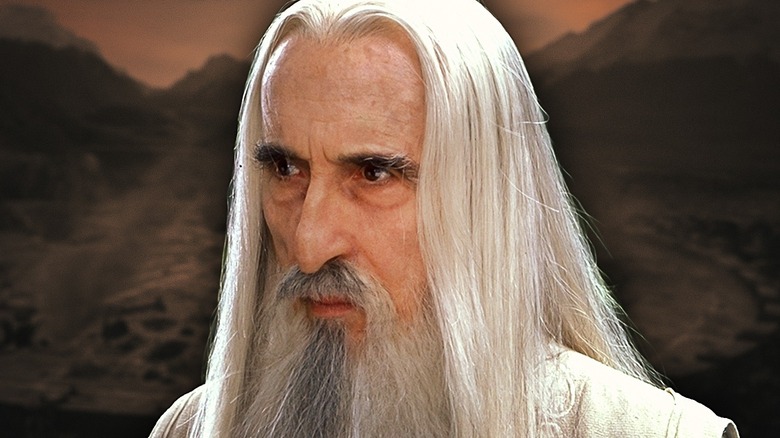
Saruman's fortress of Isengard goes through a lot of trauma during "The Lord of the Rings." First, it's transformed from a beautiful fortress into an industrial hub of evil activity. Then, the Ents stomp-smash it into oblivion. They even go so far as to flood the entire area to trap Saruman. One thing we don't get to see in the movies, though, is what happens to the area after the Wizard dies and the War of the Ring ends.
Fortunately, the book "The Return of the King" gives us a bit more detail about the fate of the fortress — and it's a fun ending, too. When Aragorn visits it as he accompanies Frodo and the other Hobbit heroes on their way back to the Shire, he declares: "I will give to Ents all this valley to do with as they will, so long as they keep a watch upon Orthanc and see that none enter it without my leave." Orthanc is the tower in the middle of the ring of Isengard — more on the tower in a minute. As for Isengard, though? It ends up being incorporated into the Entish domain, which is a fitting ending for a region that had been so thoroughly traumatized by Saruman.
It's important to add that by this point in the story, the flooding has gone down, and the area has been completely transformed. The Ents stay busy after Saruman is defeated. While everyone else is away south fighting wars and destroying Rings, they remove the stone circle of wall around Isengard and turn the interior into a giant garden with orchards, trees, a stream, and even a lake. So, not only does Isengard stop being an industrial center, it's also completely reversed into a beautiful Entish oasis.
What was Isengard's role in Middle-earth history?
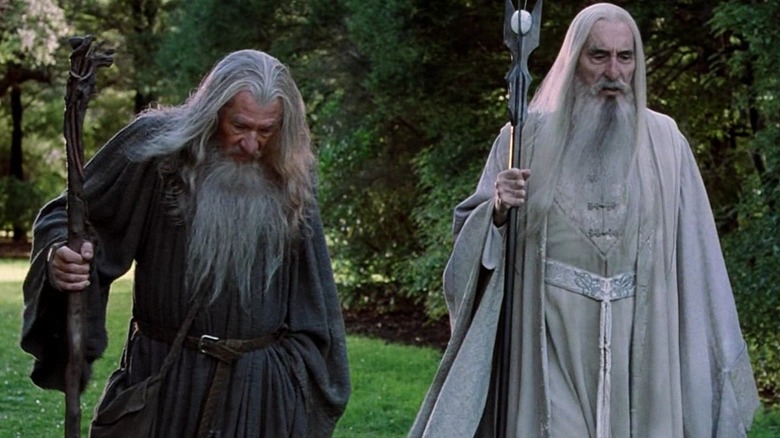
By the time of "The Lord of the Rings," Isengard is already a really old fortress. The book "The Two Towers" summarizes this by saying: "Beneath the mountain's arm within the Wizard's Vale through years uncounted had stood that ancient place that Men called Isengard." While it says ancient, though, it doesn't go back to the beginning of Middle-earth. Isengard is established late in the Second Age, several thousand years before "The Lord of the Rings," around the time when the Men of Númenor establish Gondor and Arnor. The kings of those realms use the spot as a key military outpost and even put one of the seeing stones called the Palantiri in Isengard (the same one Saruman eventually uses) so its leaders can communicate with the other stones scattered across the realms.
Eventually, Arnor collapses, and Gondor becomes weakened by famine and war. Isengard is slowly abandoned to local chiefs and warlords, who remain a threat on the borders of Gondor and later Rohan. It isn't until toward the end of the Third Age, just a few hundred years before The War of the Ring, that the Wizard Saruman arrives in the area and offers to help the struggling kingdoms of Men. His one condition? Letting him use Isengard as his base of operations. This is how we end up with Saruman in Isengard. At first, he does a lot of good. But as we all know, he breaks bad, and when he does, he uses the fortress as a stronghold for his nefarious double-crossing schemes.
Orthanc has a different fate than Isengard
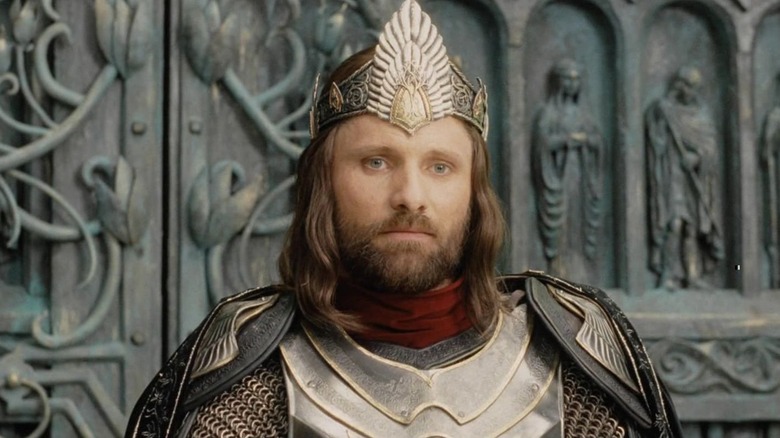
While the post-"Lord of the Rings" fate of Isengard is connected to the Ents, the tower of Orthanc in the midst of the fortress has a different story. When Aragorn gives Isengard to the Ents, the statement comes right after Gandalf points out that the Tower of Orthanc is now Aragorn's property as the king. The Wizard adds the unclear line "Though maybe he will not need it," to which Aragorn replies, "That will be seen later." That's why we get his caveat in his bestowal of Isengard to the Ents that they must "keep a watch upon Orthanc and see that none enter it without my leave." Treebeard tells Aragorn that the tower is locked, and the Ents give the king the two big, black keys that belong to the tower.
That's all we get in the main "Lord of the Rings" story, but we get more about what followed in the book "Unfinished Tales." It says that one of the first things Aragorn does as king to reorder his realm is to restore Orthanc. He even wants to set up the Palantir there again. As an added bonus, when his servants go in to clean up the place, they find a treasure trove of Saruman's hoarded wealth. The book explains, "Then all the secrets of the tower were searched. Many things of worth were found..." There are jewels and heirlooms, many stolen from funeral mounds and burial grounds. So, along with restoring the tower itself, Orthanc ends up housing countless treasures, all of which come to light when Aragorn's agents move in after the main "Lord of the Rings" narrative ends.