

The Lord Of The Rings: What Happened To Middle-Earth After Sauron's Defeat
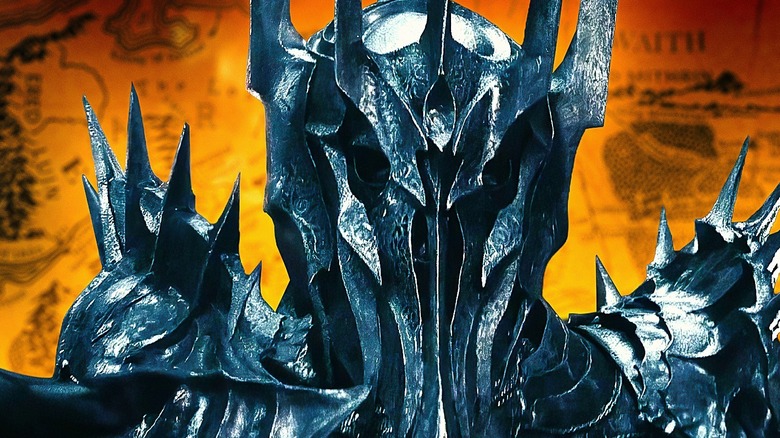
"The Lord of the Rings" ends with the downfall of Sauron as Middle-earth is released from his menacing threat. But what happens next? The short answer is that life goes on — at least for certain mortals, like Humans. For others, like Elves, Dwarves, and even the distant Human relatives, Hobbits, the post-story epilogue is a more depressing slog into uncertainty.
Before digging into the specific epilogues for each group, though, let's set the scene. "The Lord of the Rings" is the last event in the 3,000-year-long Third Age of Middle-earth history. Once the story ends, we're officially into the Fourth Age. Overall, we don't have many details around the Fourth Age. What we do know is that it is an age of Men.
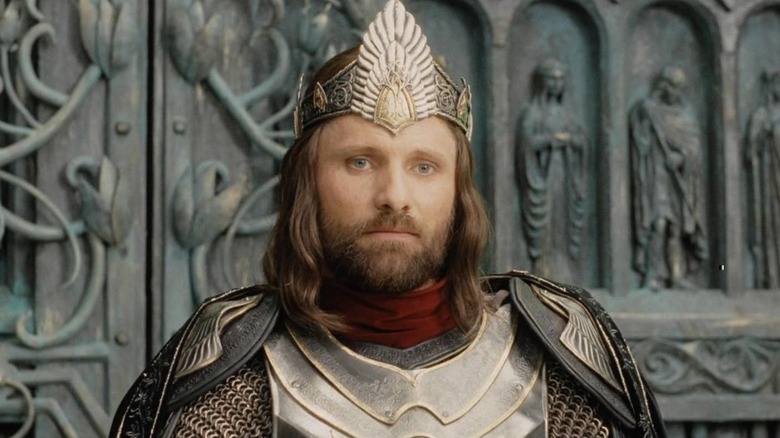
For instance, the appendices of "The Return of the King" book talk about how King Éomer of Rohan regularly rode with King Elessar (that's Aragorn) to war against other human kingdoms. It reads, "For though Sauron had passed, the hatreds and evils that he bred had not died, and the King of the West had many enemies to subdue before the White Tree could grow in peace. And wherever King Elessar went with war King Éomer went with him; and beyond the Sea of Rhûn and on the far fields of the South the thunder of the cavalry of the Mark was heard ... " So, the kingdoms of Men flourish, but also face resistance and fight one another. What about everyone else?
What about everyone else living in Middle-earth?
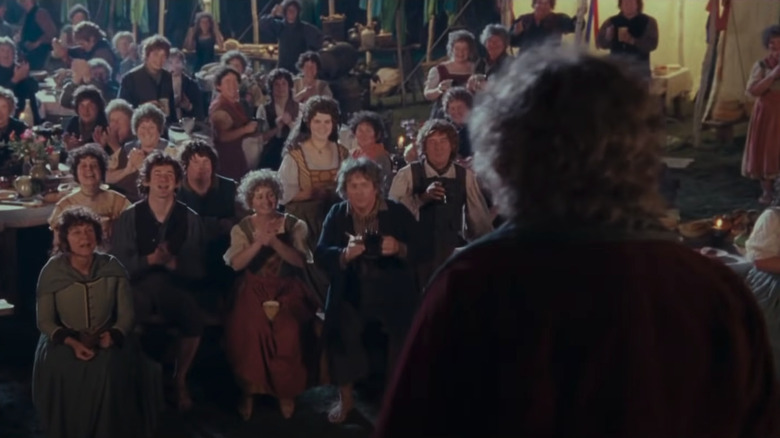
The aftermath of Tolkien's story sets up the Human future of his fantasy world. But what about everyone else? While there isn't a single source discussing the Elves, Dwarves, or Hobbits, there are hints. For instance, Elves live for a long time in "The Lord of the Rings," but their life cycles are tied to the physical creation itself. So, while some spend a few decades in Rivendell and Legolas brings some to Gondor, by and large, they either head into the immortal lands in the West or slowly dwindle in Middle-earth.
As for mortal Dwarves, Gimli similarly brings some of his Dwarf-folk to the Human kingdom of Rohan, where they build a colony in the caves behind Helm's Deep. The appendices explain this by saying, "After the fall of Sauron, Gimli ... became Lord of the Glittering Caves. He and his people did great works in Gondor and Rohan." The book "The Peoples of Middle-earth" adds that another colony of Dwarves retakes Moria and returns it to its ancient splendor. It says they stayed there "until the world grew old and the Dwarves failed and the days of Durin's race were ended." When that ending is, isn't made clear, though.
Ents are also reported to continue living around Isengard for some time. Hobbits also hang around in growing obscurity. The prologue to "The Fellowship of the Ring" describes the fate of the Hobbits, saying: "The regions in which Hobbits then lived were doubtless the same as those in which they still linger: the North-West of the Old World, east of the Sea."
Unending evil also endures, but it doesn't prevail
While most of the Free Peoples of Middle-earth stick around, the same can be said for certain enemies, too. We don't get much about Orcs, Goblins, Wargs, and Trolls. But they aren't wiped out at the end of "The Return of the King," and doubtless they continue pestering their neighbors, albeit without the organization they had under Sauron and Saruman.
And as for the Dark Lord himself? He doesn't die at the end of the story, instead, suffering a fate worse than death. Tolkien toyed with what would happen next in his barely started sequel to "The Lord of the Rings:" "The New Shadow." The author broke down the intention of that project in a letter written in 1972, where he said: "Almost certainly a restlessness would appear about [100 years after the death of Aragorn], owing to the (it seems) inevitable boredom of Men with the good: there would be secret societies practising dark cults, and 'orc-cults' among adolescents."
However, in at least one draft of the appendices of "The Lord of the Rings," Tolkien more positively summarized that Aragorn's son, Eldarion, was foretold to rule a great realm that "should endure for a hundred generations of Men after him, that is until a new age brought in again new things; and from him should come the kings of many realms in long days after." Not a bad legacy for the returned King.