

5 TV Shows To Watch If You Like The Mandalorian
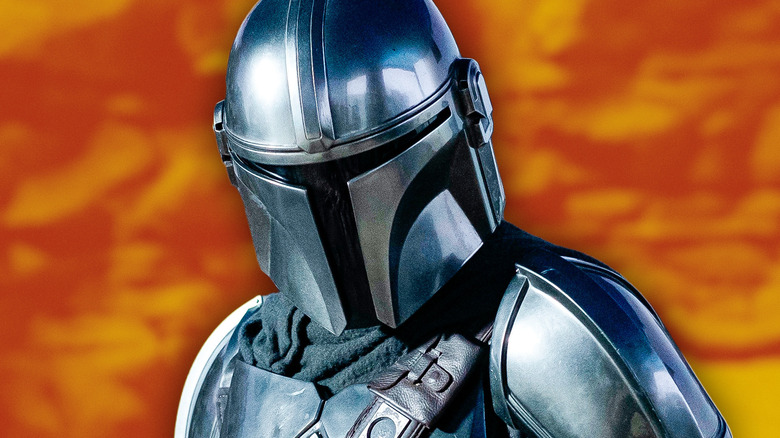
November 12, 2019 was a momentous day. Not only was it the launch of Disney+, but it's also when "The Mandalorian" was brought to the world, the first live-action Star Wars series that expanded the galaxy in bold, exciting ways.
Instead of being another tale about the Skywalkers, "The Mandalorian" honed in on Din Djarin (Pedro Pascal), a bounty hunter who rescues a small child named Grogu. Of course, we didn't know the kid's name at that point, so the internet dubbed him "Baby Yoda," and for a brief period, all was right with the world. "The Mandalorian" had plenty of Star Wars Easter eggs, but it was largely its own story, making it the perfect entry point for anyone who didn't want to bother with watching nearly a dozen movies first.
"The Mandalorian" became a flagship series for Disney+, going on to last three seasons and even receiving its own theatrical movie with "The Mandalorian and Grogu." But what's next after you have Din Djarin's story locked away in your memory banks? These are the best TV shows like "The Mandalorian" when you want more of that classic space Western feel (or just want other good Star Wars recommendations).
Andor
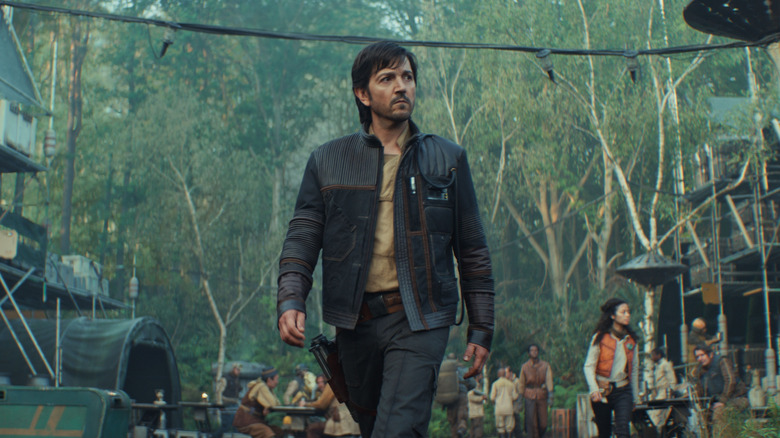
"Andor" is arguably the greatest thing Disney has done with Star Wars since buying Lucasfilm. It's an epic masterpiece of storytelling that once again shows a different side of the galaxy than what people are used to on the big screen. And if you've already gone through "The Mandalorian," watching "Andor" will scratch that same itch.
"Andor" takes place prior to the events of "Rogue One: A Star Wars Story," as we see Cassian Andor (Diego Luna) go from a cynical thief to being on the frontlines of the rebellion. The Empire has never been more terrifying, as the aesthetics of Darth Vader and Emperor Palpatine are traded out for an uncaring bureaucracy. There's a coldness to the Empire we hadn't seen before, and we actually get to know many of the Imperialists first-hand with their own storylines. They aren't epic villains but instead people trained to do a job, even if said job involves determining how many casualties is acceptable for a given prerogative.
Like "The Mandalorian," "Andor" isn't so much concerned with Jedi and Sith. Both shows focus on outsiders who don't want to get involved in the inner machinations of the galaxy. But even if they don't want to engage with politics, they'll get drawn in one way or another. Creator Tony Gilroy didn't set out to revolutionize Star Wars with "Andor," but that's precisely what he did, setting the bar for every Star Wars show that followed.
Lone Wolf and Cub
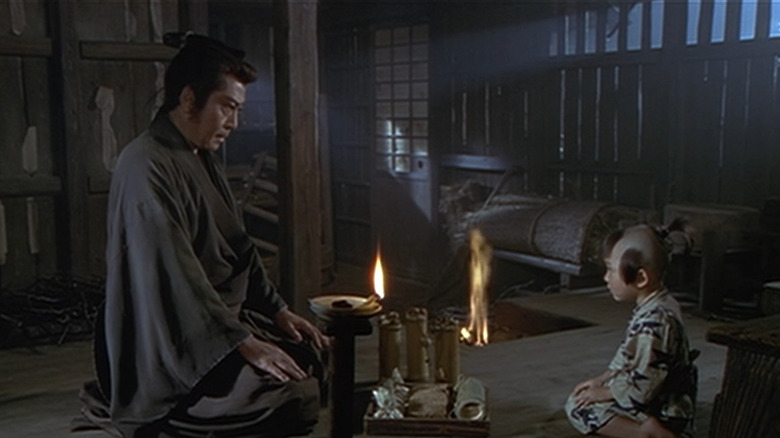
Star Wars has always drawn influence from Japanese cinema and culture. The Jedi themselves could be seen as analogous with samurai, and George Lucas was a big fan of Akira Kurosawa, particularly 1958's "The Hidden Fortress." When other creators took reign of the franchise, they've also turned to Japan for inspiration, and "The Mandalorian" clearly shares a lot of the same DNA as the popular manga-turned-film series-turned TV series "Lone Wolf and Cub."
The TV show follows Ogami Ittō (Kinnosuke Nakamura/Kin'ya Kitaōji), the shōgun's executioner who becomes disgraced following accusations from the Yagyū clan. From there, he goes from executioner to assassin, hitting the road with his young son Daigorō (Kazutaka Nishikawa/Tsubasa Kobayashi) to get revenge on the Yagyū clan. Given its premise, it's unsurprising that "Lone Wolf and Cub" was a direct inspiration for "The Mandalorian," with Din Djarin being a hired gun and taking Grogu in as his makeshift son.
Both Djarin and Ittō are hardened warriors who show softer sides when around their young wards. And they travel from town to town (or planet to planet) helping anyone who might need a hand, all while fending off threats from the overarching villain. In addition to the TV show, there's a manga series and six feature-length movies. But if you only want the TV series, you'll be delighted to hear that it's available to watch in its entirety for free on Tubi.
Cowboy Bebop
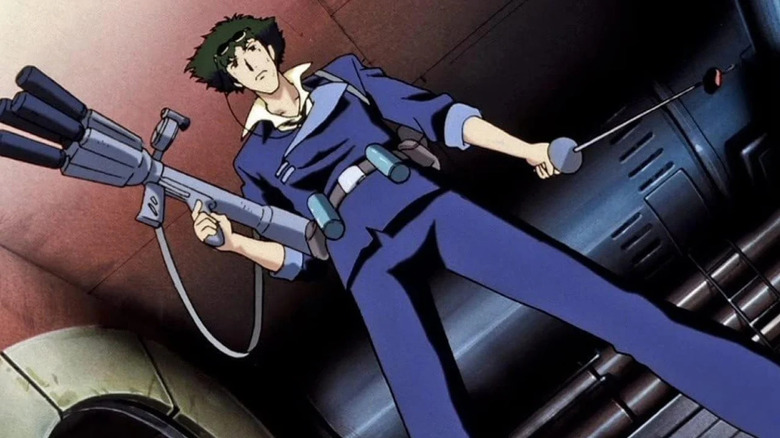
A hardened warrior with a heart of gold is a trope at this point, but that doesn't make it any less effective. Similar to how Din Djarin lets his guard down to become Grogu's protector, Spike Spiegel (Kōichi Yamadera) is a bounty hunter who creates his own found family and finds a semblance of peace in a chaotic galaxy.
"Cowboy Bebop" is one of the best anime shows of all time, following a bounty hunting crew as they travel from planet to planet to do jobs and maybe help some people along the way. There's a haunting melancholy to Spike where he feels perpetually isolated from others, but he finds people willing to give him some company when Faye Valentine (Megumi Hayashibara), Ed (Aoi Tada), and Ed's trusty corgi Ein (Kōichi Yamadera) join his crew.
"The Mandalorian" had a similar episode format to "Cowboy Bebop" earlier in its run where Din Djarin and Grogu were more likely to focus on a specific job each episode. This would culminate into some epic finale where Djarin has to face a big bad, with both shows borrowing heavily from classic Western tropes except with laser guns instead of pistols. Like "The Mandalorian," "Cowboy Bebop" has plenty of action, humor, and an adorable member of the crew who's easily merchandisable.
Firefly
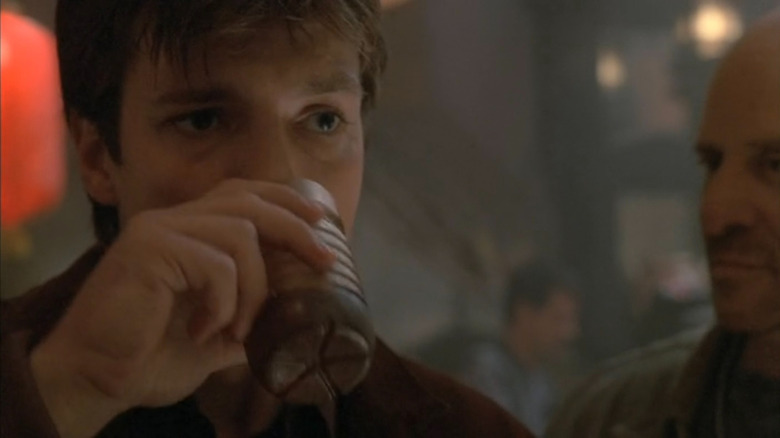
There's an argument to be had that "space Western" is the single coolest TV genre we have. Westerns may have faded from fashion decades ago, but if you take those tropes and put them into an interstellar setting, people eat it up. Case in point: "Firefly."
"Firefly" is led by Mal Reynolds (Nathan Fillion), the cunning leader of the Serenity. He's not above taking slightly illegal and dangerous jobs to make some quick credits. However, he also has a strong moral code, and there are some lines even he won't cross. Mostly, Mal just wants to stay off the radar of the Alliance, similarly to how Din Djarin wants to avoid any Empire business. But sometimes, you can't help but get in a little trouble from the law.
"Firefly" was infamously cancelled after one season, but it did receive a movie, "Serenity," to help wrap things up. Some answers were still left open-ended, but it was about as good a finale as fans could've hoped for following its unexpected conclusion. That gives it one more similarity to "The Mandalorian," which also got a big screen adaptation; however, "The Mandalorian and Grogu" isn't so much a conclusion. It's more of a larger-scale adventure compared to what they'd usually get into over on Disney+. Hopefully, it doesn't mark the last time we see Din Djarin and Grogu.
Star Wars: The Clone Wars
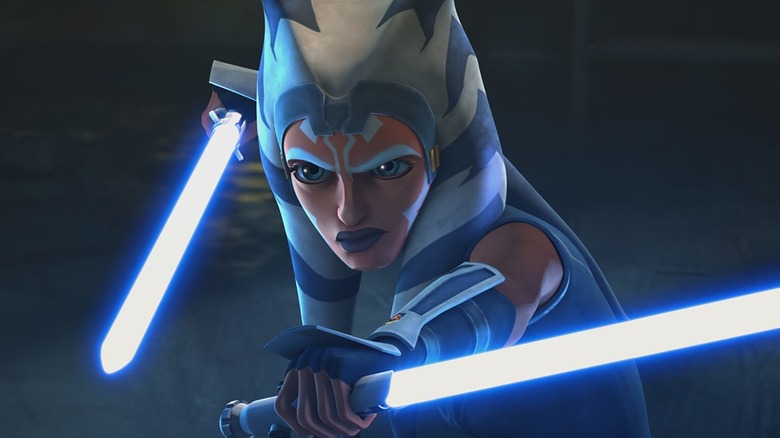
"Star Wars: The Clone Wars" is definitely more steeped in lore compared to "The Mandalorian." It offers essential connective tissue between the events of "Star Wars: Episode II — Attack of the Clones" and "Star Wars: Episode III — Revenge of the Sith," introducing new characters like Ahsoka Tano (Ashley Eckstein), who became one of the most popular in the entire franchise. And while you can watch "The Mandalorian" without knowing too much else about Star Wars, there are moments where knowing some history comes in handy.
Starting with "The Mandalorian" Season 2, the Disney+ series started incorporating other aspects of Star Wars. We're introduced to a live-action and grown-up version of Ahsoka, played by Rosario Dawson. And we start learning more about Mandalore's history, specifically how it endured a civil war resulting in different factions. "Star Wars: The Clone Wars" also introduces the darksaber, which is shown to be in Moff Gideon's (Giancarlo Esposito) possession during "The Mandalorian" Season 1 finale.
With seven seasons, there's a lot from "The Clone Wars" to dig into. And if you want to be prepared for any potential Easter eggs in future Star Wars projects, it'd be wise to watch through it at least once.