

All 5 Zach Cregger Movies, Ranked (Including Resident Evil)
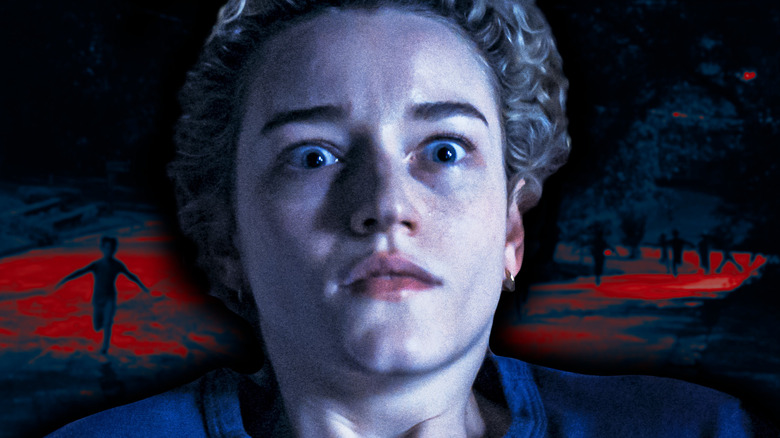
There's been a trend across the past decade or so with the new crop of horror filmmakers primarily coming from comedy backgrounds. It doesn't come as a complete surprise, given that comedians tend to have a good grasp on the significance of a punchline, resulting in the likes of Curry Barker, Josh Ruben, and Jordan Peele successfully translating their warped ideas to a different form. This roster wouldn't be complete, however, without Zach Cregger, whose streak of critically acclaimed horror films have made him one of the most buzzworthy genre craftsmen of the 2020s.
Cregger's professional career got rolling in the mid 2000s after meeting comedian Trevor Moore, leading to the co-creation of their sketch comedy troupe "The Whitest Kids U'Know" (WKUK) along with Sam Brown, Timmy Williams, and Darren Trumeter. Together, their boundary-pushing five-season television series grew to the extent that it's become considered by many to be one of the best sketch comedy shows ever. Amid their successes, Cregger and Moore were such peas in a pod that they even made their feature directorial debuts together with 2009's "Miss March." They'd earn another co-directing/writing/starring credit with the WKUK sketch film "The Civil War on Drugs."
Once the 2020s rolled around (and after we lost Moore), Cregger found himself settling into directing genre works like "Barbarian," "Weapons," and "Resident Evil." In spite of crafting a series of nightmarish imagery and characters, Cregger's horror films still maintain a strong comedic tenor. With that in mind, we're going to be looking at all five films in his filmography to determine their rank, based on how well they show off Cregger's capabilities.
5. Miss March

"Miss March" coming in at the bottom won't be a surprise to those who witnessed the critical thrashing it received upon release. Some have even asserted the 2009 raunchy sex comedy as one of the worst comedy movies ever made, especially with Peter Bradshaw's review in The Guardian hilariously going so far as to say it emitted whiffs of "pure evil." While the film isn't worthy of a full-on reappraisal, it's not nearly as noxious as its reputation would have you believe. That doesn't make it a good movie, either.
In spite of being public speakers for abstinence programs together, Cindi Whitehall (Raquel Alessi) decides she finally wants to have sex with her high school boyfriend Eugene Ball (Zach Cregger). But after taking some shots at a post-prom party to calm his nerves before the big moment, Eugene takes a nasty tumble down some basement stairs and falls into a coma. Upon being woken up four years later by his buddy Tucker Cleigh (Trevor Moore) taking a baseball bat to his face, Eugene learns that Cindi is now a Playboy centerfold. Together, they set off on a cross-country road trip to reunite the couple, while also warding off Tucker's understandably aggravated girlfriend Candace (Molly Stanton) and her army of axe-wielding firefighters.
The first half of "Miss March" gives the impression that it's going to be something along the lines of "Freddy Got Fingered," in which the movie itself feels like a joke on the studio system's dime. While there are some laugh-out-loud gags, Cregger and Moore never quite push the absurdism far enough to offset the traditional cliches of the 2000s sex comedy.
4. The Civil War on Drugs
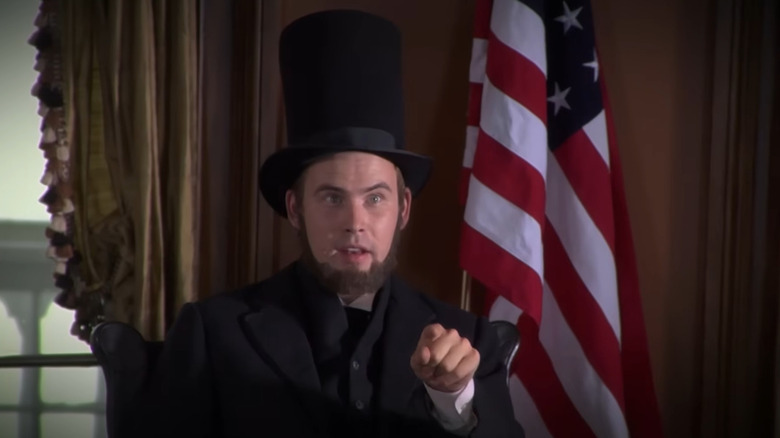
Although "Miss March" features bits that feel in line with what they would do on WKUK, it wasn't directly associated with the television show, nor the sketch comedy troupe. There's only been one feature under the WKUK banner, and if you want to be technical, it's not a true movie. "The Civil War on Drugs" is made up of a series of sketches that aired during the series' fifth and final season before being individually uploaded to YouTube a few years later. Amid the global pandemic, however, writer/directors Zach Cregger and Trevor Moore combined the sketches into a 79 minute movie. With that said, it counts as a flick in Looper's eyes.
Sam Brown and Moore star as two friends who trade in their drinking days after discovering the benefits of smoking weed. Not long afterwards, fighting has broken out between the Northern and Southern factions of the United States. Given that the boys are perpetually stoned, they mistakenly believe that the American Civil War is being fought over marijuana. Determined to get it legalized, Sam and Trevor find themselves roaming through (and accidentally becoming) important historical milestones of American history, and therefore have no clue as to the real reason behind the landmark conflict.
The biggest mark against "The Civil War on Drugs" is that it very much flows like a bunch of sketches stitched together to feature-length, and if you're not a fan of WKUK, it's going to be a challenging sit. It arguably works better in short form blurbs, and some jokes sink like a stone. But this largely manages to stay funny because the joke always comes back around to Sam and Trevor criticizing the country's unfair practices, albeit for the wrong cause.
3. Weapons
A prevalent theme in "Barbarian" is the idea that you have no idea what horrors persist in people, let alone when they're behind closed doors. Writer/director Zach Cregger expands on this idea in "Weapons," which tackles the ripple effects of a Pennsylvania town gripped by fear. On a seemingly random night, every student in the third-grade class of Ms. Justine Gandy (Julia Garner), barring young Alex (Cary Christopher), got out of bed, ran out of their houses, and disappeared without a trace.
While it's initially easy to point fingers at Justine, the complicated lives of devastated father Archer (Josh Brolin), temperamental police officer Paul (Alden Ehrenreich), burnout James (Austin Abrams), and exhausted school principal Marcus (Benedict Wong) indicate that Maybrook isn't as squeaky clean as it would appear.
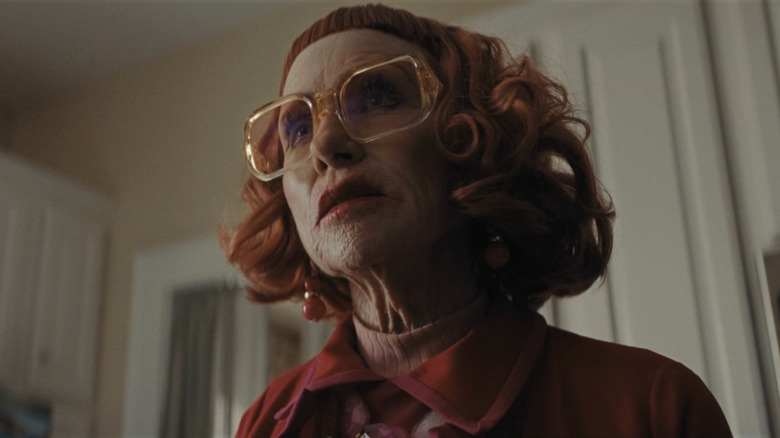
With all the buzz surrounding what kind of movie "Weapons" would actually be, the fact that it's revealed to be a "Magnolia"-inspired horror fairy tale about child abuse, paranoia, and mob mentality that still manages to be really funny is an achievement. The film can't help but lose momentum every time it has to shift perspectives, but it's well worth it to see how this bizarre puzzle all comes together. The laughs rarely overshadow its many effective scares, which Cregger stages in a way that lingers beyond the individual moment. On top of all that, you have Amy Madigan giving her (well-deserved) Oscar-winning performance as the sinister Aunt Gladys, who revels in being able to play people like a fiddle until she gets what she wants. She's easily one of the most memorable horror villains of the 2020s.
2. Barbarian
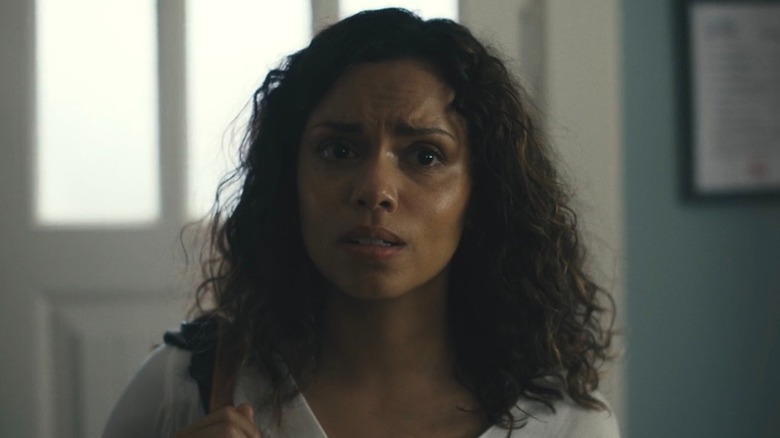
Akin to when Jordan Peele released "Get Out," most people had a collective "where did this come from" response to writer/director Zach Cregger unleashing "Barbarian" upon the world. You're given a great hook into a world that's immediately rife with potential danger, as Tess (Georgina Campbell) arrives at her Airbnb on a dark and stormy night, only to discover that a man named Keith (Bill Skarsgård) booked it prior to her arrival. Unfortunate circumstances force the two strangers to ignore the red flags and occupy the same house for the night. When Tess accidentally gets locked in the basement the next day, she discovers a secret door that leads to what can only be described as a labyrinth into hell itself.
Cregger spends so much time building up one story that it's jarring when Justin Long enters the film as a dirtbag actor trying to navigate sexual assault allegations. Yet, the introduction of a much quieter and more pathetic evil finds a way to regain that momentum. "Barbarian" is a Russian nesting doll of festering malevolence that keeps finding new ways to keep you on your toes, unaware if the ground beneath your feet is above to cave in.
Thankfully, the film's tricks don't lose any of their luster once you're given the full picture. The thematic thread of one's refusal to take accountability for causing harm will continue a cycle; one that will reach an unavoidable tipping point. While "Weapons" is arguably tighter, there's a palpable mean streak here that makes the film's most terrifying moments that much more better. It's safe to say this is among the most cursed basements in any horror movie.
1. Resident Evil (2026)
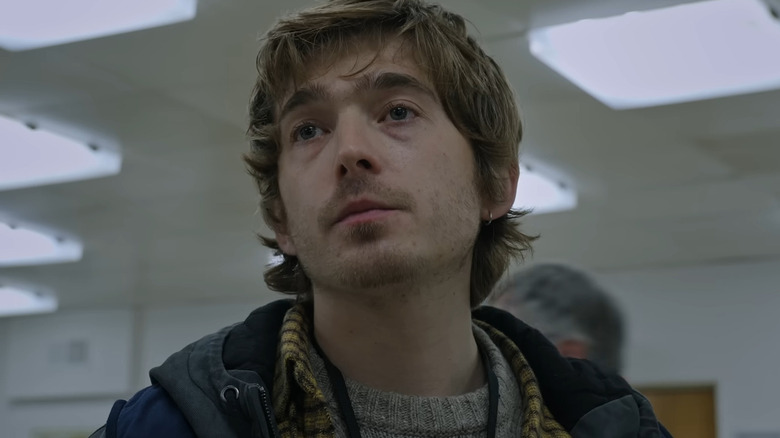
It may feel disheartening when a filmmaker known for his original concepts settles into directing an IP-driven franchise film, partly because the weight of brand integrity can place restrictions on their creative vision. Zach Cregger's "Resident Evil" is one of those rare examples where there's a concise vision that's more concerned with telling a singular story based on the filmmaker's sensibilities, rather than laying the groundwork for future installments.
The third theatrical "Resident Evil" reboot largely acts as a spiritual adaptation of Capcom's video game series by translating the experience of playing it. Bryan (Austin Abrams) is a medical courier tasked with delivering an important package to a hospital in Raccoon City, but his journey becomes a violent odyssey of obstructions, mutations, and trying to make the most of your limited ammunition. Cregger's "all gas, no brakes" approach brilliantly puts viewers in a situation where survival outweighs everything else. The only way out is to keep going forward, and it's a blast to live vicariously through the worst night of this guy's life.
With very few characters in "Resident Evil," the entire movie rests on Abrams' shoulders, and he carries it with confidence. He transforms into this generation's Bruce Campbell as Bryan's heroic intuition wages a constant tug-of-war with his ability to do something incredibly stupid. There's a sick pleasure in watching him make the same mistakes repeatedly. Cregger and co-writer Shay Hatten load the brisk 95-minute thrill ride with copious amounts of blood, monster designs, and well-earned laughs. "Resident Evil" is easily Cregger's best film to date.