

5 Best Samurai Movies Of The 21st Century, Ranked
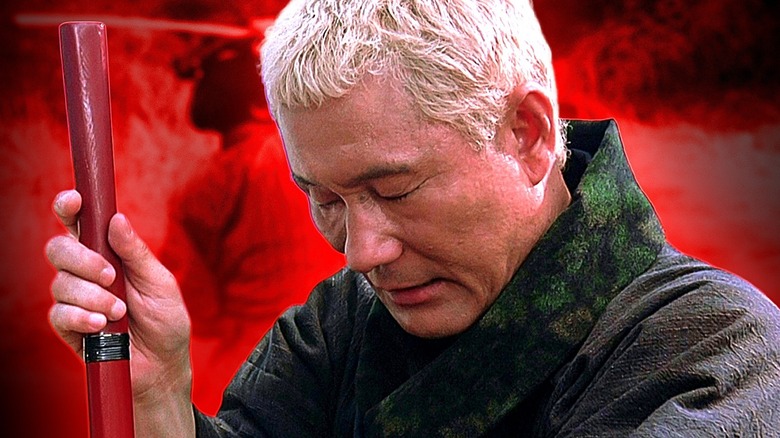
Samurai movies are an entire subgenre of historical dramas and action films, depending on the approach. They can also easily seem like a fairly old-timey genre, at least when it comes to the immediate mental image you summon when you think of them. With a few exceptions, the best samurai movies in history tend to be on the older side, thanks to the works of Akira Kurosawa and his peers dominating the field.
Still, just like how Hollywood's Golden Age Westerns are only a fraction of what the genre has in store, samurai films never really went away. In fact, they have been popping up on a steady basis all the way into the 21st century — and even though you may not have heard about some of the genre's more recent greats, that doesn't mean they're not worth paying attention to. In this article, we have collected five of the best samurai movies of the 21st century, ranked by their critical ratings.
5. When the Last Sword Is Drawn
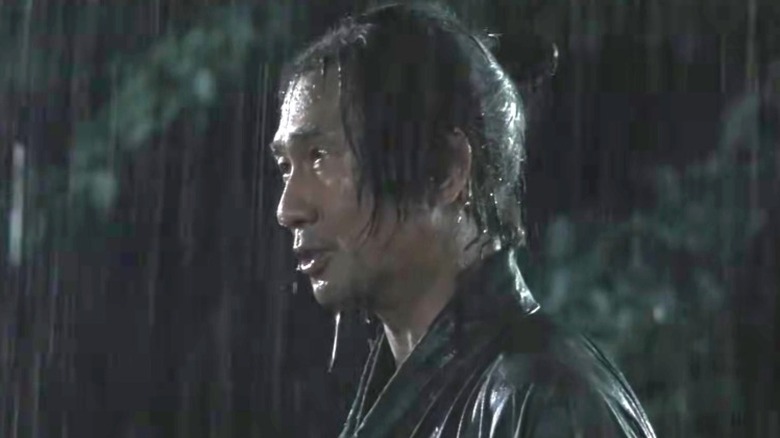
Director Yōjirō Takita's "When the Last Sword Is Drawn" tells a massive story. The Tokugawa Shogunate is on its last legs, and two men are sucked into the vortex of this turbulent period. Our protagonists here are hardly your typical samurai, at least when it comes to one-dimensional honor and commitment: Hajime Saitō (Kōichi Satō) and Kanichiro Yoshimura (Kiichi Nakai) are two fundamentally different members of the shogun-affiliated Shinsengumi elite unit. One of them is violent and murderous while the other is avaricious and survival-minded. Honor, loyalty, and the changing cultural and political landscapes become major themes in the movie, and many things are not as they initially seem to be.
Made in 2002, "When the Last Sword Is Drawn" won three Awards of the Japanese Academy and several other regional awards. Though hardly the kind of culturally ubiquitous samurai movie that the likes of "Seven Samurai" and "Yojimbo" have become, the film is a stellar example of samurai-themed historical drama. It has a respectable IMDb rating of 7.4 out of 10, and while it hasn't made enough of an impact in America to have a Rotten Tomatoes Tomatometer rating, its 87% Popcornmeter rating and awards haul are proof enough of its quality.
4. Blade of the Immortal
Takashi Miike is a unique (and uniquely productive) director who habitually works on multiple projects a year and likes to waltz across a number of genres. Because of his prolific output, the quality of the director's works is a touch scattershot by default. Yet, as this list shows, when Miike gets it right, he gets it very, very right. Just take a look at projects like the underrated slow-burn horror movie "Audition," which presents itself as an engaging drama before revealing its true face.
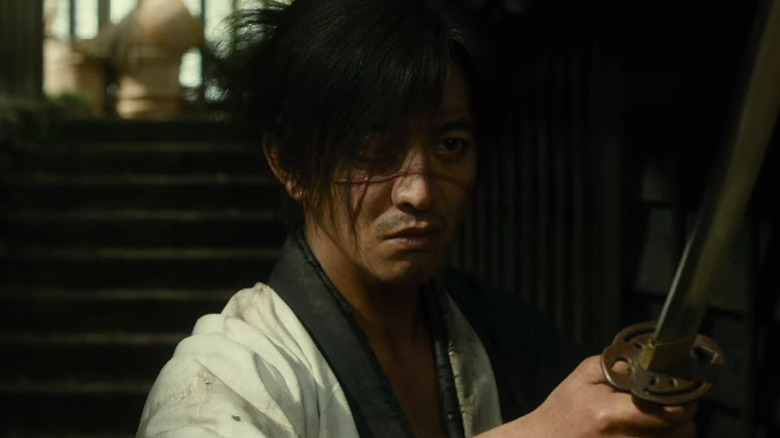
Miike's 2017 movie "Blade of the Immortal" is his 100th film and a live-action version of Hiroaki Samura's manga series of the same name. Here, deathless and deadly samurai Manji (Takuya Kimura) takes orphan girl Rin Asano (Hana Sugisaki) under his wing, with the intent to help her avenge her parents' violent death. It's essentially "True Grit" as an extremely graphic samurai action epic, and if that combination of words tickles your fancy, you'll be delighted to find out that "Blade of the Immortal" is a genuinely great movie.
The film stands at 87% on Rotten Tomatoes' Tomatometer, and details both the way Manji became immortal and the mission of vengeance he assists Rin on. Soon, fellow interesting characters, like main villain Master Kagehisa Anotsu (Sota Fukushi) and the lethal Makie Otono-Tachibana (Erika Toda), join the fray. This further adds to the film's allure — as does Manji's morbidly fascinating brand of immortality and the various imaginative weapons that the characters keep whipping out.
Gruesome and rife with body horror, Miike's movie is a worthy addition in the director's lengthy résumé. It's not a traditional samurai film by any stretch of imagination, but it's definitely an interesting one that's worth watching if you're not too hung up on realism.
3. Zatoichi
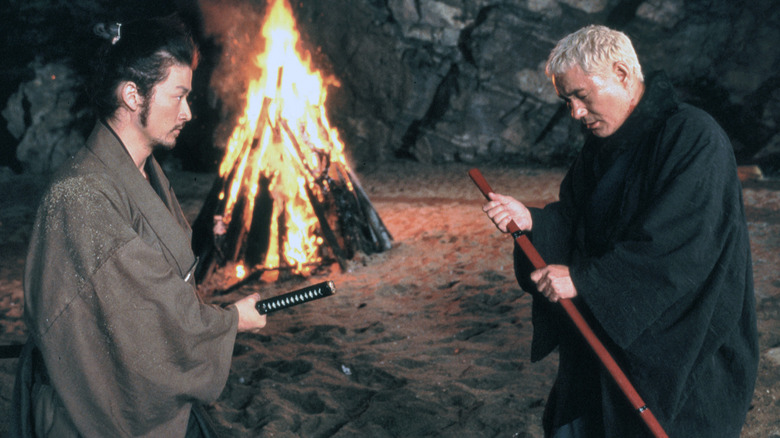
The blind masseur-swordsman Zatoichi (primarily portrayed by Shintaro Katsu) has been the subject of many movies over the years, including one made in 2003. Directed and written by none other than the legendary Takeshi Kitano, "Zatoichi" — also known as "The Blind Swordsman: Zatoichi" – tells a straightforward and incredibly effective version of your average Zatoichi adventure: The unassuming blind man arrives to town, finds serious crime everywhere, befriends plucky locals, and proceeds to carve a path of destruction until evil is vanquished and the people can live in peace once again.
The story has been told countless times in various versions, of course. However, this iteration of "Zatoichi" simply focuses on telling it extremely well. Zatoichi (played here by Kitano, of course) is a charming and intense figure, and "Zatoichi" utilizes him to the maximum. The movie knows precisely what it's selling on the story front, and puts all available chips on sheer style to back up a solid and classic core of substance.
This is a beautiful, well-choreographed, atmospheric, and very violent piece of action cinema that delivers incredible scenes of the "John Wick" variety, and doesn't pretend to be any deeper than it needs to be. Because of this approach, "Zatoichi" ends up actually coming across as far deeper than most films of this particular type, and reviews have rewarded it with a solid 87% Tomatometer rating on Rotten Tomatoes.
2. 13 Assassins
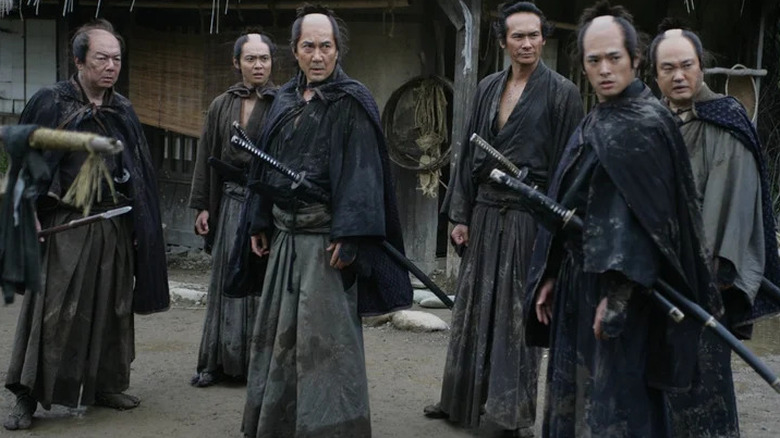
Improbably, Takashi Miike makes his second appearance on this list with a movie that's even better than "Blade of the Immortal." 2010's "13 Assassins" has a 95% Tomatometer rating on Rotten Tomatoes, and it's a completely different animal than "Blade of the Immortal," showcasing the amazing versatility of the director.
If the name of the film seems familiar, there's a reason for it. The first "13 Assassins" is Eiichi Kudo's take on the theme from 1963. The remake, however, manages to blow the original out of the water. The film focuses on a "Seven Samurai"-style team-up of a group of samurai — and one hunter (Yusuke Iseya) who may or may not be a powerful spirit in disguise. Together, they embark on a borderline impossible mission to assassinate the shogun's corrupt and violent brother, Lord Matsudaira Naritsugu (Gorō Inagaki), a vile villain if there ever was one.
As the disparate group of warriors team up for their dangerous mission, Miike's talent for delivering thrilling and violent moments while never losing track of the grander story is on full display. This might not be the most nuanced movie in the world, but it knows exactly what it wants to be — and Miike delivers the end product as expertly as anyone possibly could hope to. Whether you watch "13 Assassins" for its gross-out moments, its tense build-up, or the seemingly never-ending battle scene that releases all of the tale's accumulated tension in a ballet of blood, you can't go wrong with this samurai movie.
1. The Twilight Samurai
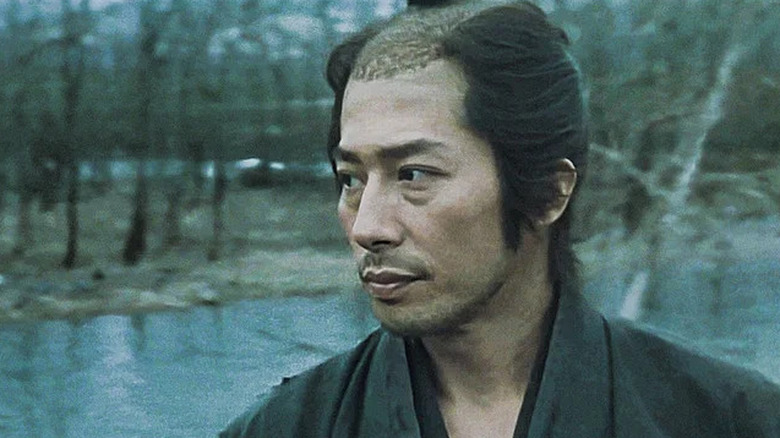
It's hard to top a film like Takeshi Miike's "13 Assassins," but Yoji Yamada's graceful historical drama "The Twilight Samurai" manages it to the tune of a 99% Tomatometer rating. Hiroyuki Sanada gives a masterful turn as Seibei Iguchi, who's technically a samurai, but in practice a frequently disrespected low level minion whose main duties are clerical and insignificant. Personal losses and disappointments in his home region eventually turn into the opportunity of a lifetime when his old friend Michinojo Iinuma (Mitsuru Fukikoshi), who has experienced considerably more success as a samurai, offers him a better position in Kyoto. With this new rank comes an opportunity to connect with Michinojo's divorcee sister, Tomoe (Rie Miyazawa).
As Seibei ends up entangled in Kyoto's violent politics, his true history and the circumstances that led to him becoming a disheveled backwater clerk unfold. Death, decay, loss, poverty, and the heavy weight of history surround our hero, who has already lost his wife and has to provide for his remaining family — but despite his personal lack of decorum and ambition, new opportunities and even love await.
"The Twilight Samurai" is no action movie, despite the fact that it features plenty of swordplay. It's not even a drama in the traditional sense. Instead, it's a long, steady march toward the inevitable death of the very culture it depicts — and it's all the better for it. Yamada would go on to make a whole trilogy of similar samurai movies, and "The Twilight Samurai" would be joined by "The Hidden Blade" and "Love and Honor." Still, the original reigns supreme — not only within the trilogy, but among its 21th century samurai movie peers in general.