

5 Classic Romance Movies That Are Unwatchable Today
This article contains discussions of sexual assault.
Movies about love and romance are perenially popular, to state the incredibly obvious. Ever since the dawn of cinema — even during the age of silent films, point in fact — we've flocked to see movies about two beautiful people kissing and, perhaps, falling in love. The idea of finding your soulmate in a neat and tidy fashion like this and encountering only a few obstacles before the credits roll is, understandably, seductive. Thanks to genuinely amazing romantic comedies like "When Harry Met Sally..." and modern classics and romantic dramas like Celine Song's debut film "Past Lives," we're fortunate enough to watch phenomenal directors like Rob Reiner, Song, and so many others explore the intracicies of love.
Then there are ... these five movies.
Let us get ahead of something. None of these movies are "bad," and if you find your favorite on this list, please take its inclusion with a grain (or block) of salt. These movies are, however, fables about love that provide decidedly mixed messaging about how you should interact with a potential or established partner, how much you should tell them the truth (and for the record, you should not lie in your relationships!), or how you should woo someone you like. Let's get into specifically why these romance movies just don't stand the test of time, and why, years after their respective releases, they're basically unwatchable today.
The Notebook
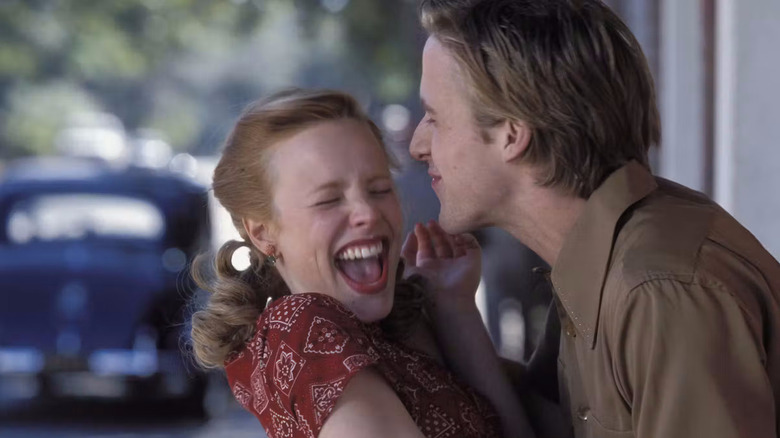
"The Notebook," adapted from the tearjerking Nicholas Sparks novel of the same name, is a perennial favorite when it comes to romantic movies. It's also problematic. (Sorry!) The film that made household names out of Rachel McAdams and Ryan Gosling — which stars the duo and short-lived real-life couple as as star-crossed lovers Allie Hamilton and Noah Calhoun — definitely features two future stars at the top of their game, some incredible chemistry, and gripping performances from late legends James Garner and Gena Rowlands as older takes on Noah and Allie. (Rowlands' son with her frequent collaborator and famous director John Cassavetes — Nick Cassavetes — directed "The Notebook.")
"The Notebook" tells the story of Allie and Noah's unlikely romance — while Allie comes from a wealthy South Carolina family, Noah comes from nothing and is a lumber mill worker — and separation, culminating in the heartbreaking story involving Garner and Rowlands' characters, wherein Garner's Noah spends all of his days reminding Allie, who's suffering from dementia, about their journey together. The problem here is the way Noah initially woos Allie; not the rest of their story (even though poor James Marsden, who plays young Allie's hopeful and wealthy fiancé Lon Hammond Jr., gets shafted through no fault of his own). When they first meet at a carnival, Allie turns Noah down for a date, so he scales a Ferris wheel and almost plummets to his death until Allie, under clear duress, agrees to go out with him. Gentlemen, please don't threaten self-annihilation just to get a girl to go on a date with you! That's called coercion, and it's bad — and it ultimately leads to a toxic relationship between the two.
Wedding Crashers
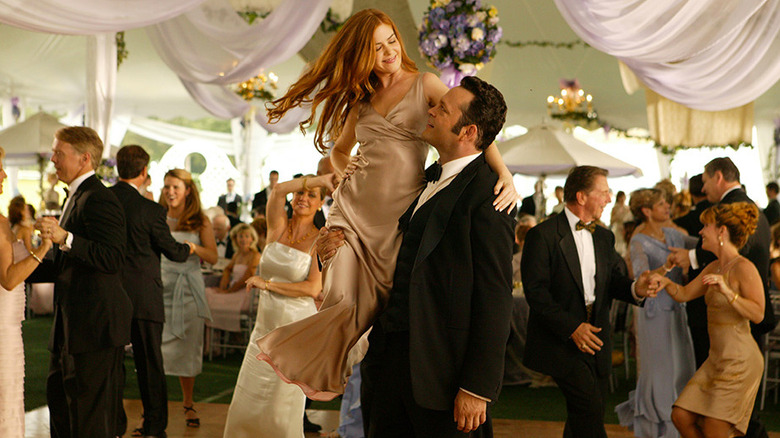
There are a handful of comedy movies that released in the decade known as the "aughts" that really don't stand the test of time, and unfortunately for director David Dobkin and his stars Owen Wilson and Vince Vaughn, "Wedding Crashers" is definitely one of them. The title really gives the game away here: as divorce lawyers and best friends John Beckwith and Jeremy Grey, Wilson and Vaughn portray two guys unwilling to grow up and settle down who invite themselves to weddings specifically to find one night stands among the guests and bridesmaids. That foundation is shaky enough — they literally are required to lie about their identities at these weddings to get away with the act of crashing — but the whole situation devolves rapidly when they crash a wedding where the father of the bride is William Cleary, the United States Secretary of the Treasury (played by Christopher Walken, because, sure).
After Jeremy gets involved with Cleary's youngest daughter Gloria (Isla Fisher) and she becomes very attached very quickly — and John hits it off with her sister Claire (Rachel McAdams), even though Rachel is dating the odious Sack Lodge (Bradley Cooper) — the two men, pretending to be brothers, end up ingratiated into the Cleary family. That's where this movie goes firmly off the rails. Not only does the Cleary matriarch Kathleen (Jane Seymour) sexually harass John alone in his bedroom, but scenes where Jeremy is actively sexually assaulted by both Gloria and her younger brother Todd (Keir O'Donnell) are both played for laughs. "Wedding Crashers" has its funny moments, for sure ... but these are not particularly hilarious years down the line.
While You Were Sleeping
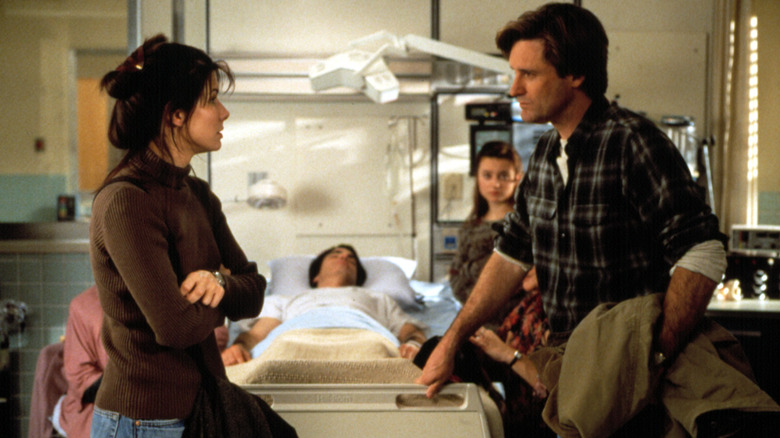
Director Jon Turteltaub's 1995 movie "While You Were Sleeping" features, without question one of the most insane concepts ever employed ... and yes, we're including the 2026 release "One Night Only" in that niche category. When we first meet Sandra Bullock's lonely fare token collector Lucy Eleanor Moderatz, she's pining after a random Chicago commuter, Peter Callaghan (Peter Gallagher) when he suddenly is pushed onto the train tracks by random muggers. When Lucy goes with Peter to the hospital, the staff assumes the two are an engaged couple, and when Lucy meets Peter's family — including his brother Jack (Bill Pullman), a scruffy but cute carpenter — she does nothing to dispel them of that notion.
Putting aside the idea that Peter would have a whole human fiancée and not bother to tell his family — with whom he seems pretty close! — what is Lucy thinking?! What is her endgame here?! At any point, it seems, Peter will wake up and reveal that he's never met Lucy in his life and definitely hasn't ever proposed to her, but Lucy seems to avoid this eventuality by, uh, falling in love with his brother Jack. "While You Were Sleeping" is just a creepy movie, all things considered — despite how charming Bullock and Pullman are together — and the concept is genuinely baffling at best and outright troubling at worst. Lock this woman up, honestly! She's deranged!
Love Actually
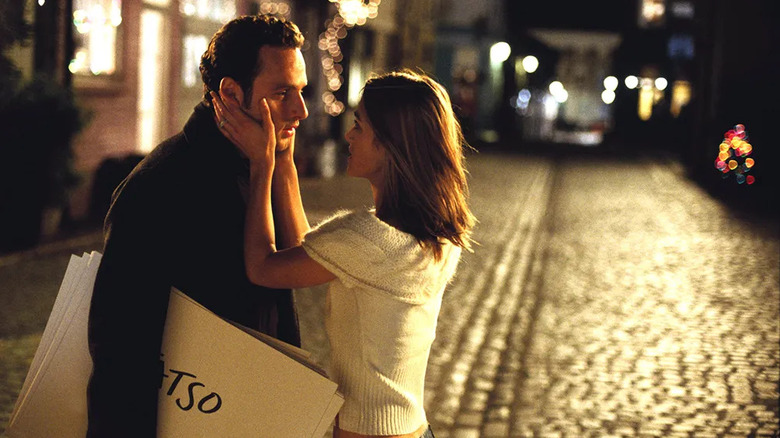
Where do we even begin with "Love Actually," the mish-mash ensemble romantic comedy from British auteur Richard Curits that spawned a ton of knock-offs like "Valentine's Day," "He's Just Not That Into You," and "New Year's Eve?" Those crimes aside, "Love Actually," which hit theaters in 2003, features a ton of seemingly independent storylines that eventually converge and range from overtly creepy to just sort of vaguely unsettling. In one, Colin Firth's Jamie heads to France to write his novel (after finding his girlfriend in bed with his brother) and "romances" his Portugese housekeeper, Aurélia (Lúcia Moniz), and the two end up getting together even though they have quite literally never spoken to each other. Shall we keep going?
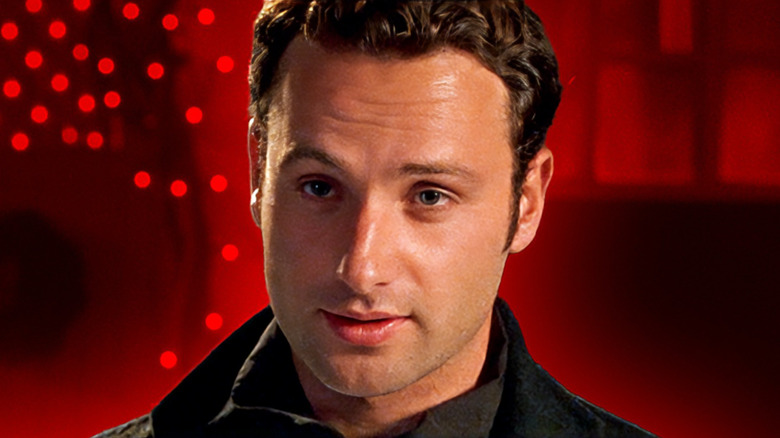
Andrew Lincoln's sadsack Mark is just flat-out rude to his best friend Peter's (Chiwetel Ejiofor, criminally underused in this) wife Juliet (Keira Knightley), only for her to realize, via a frankly terrifying video from their wedding that's just close-ups of Juliet's face, that Mark is rude to Juliet because he is obsessed with her. Hugh Grant's British prime minister David falls for his a junior member of his staff, Natalie (Martine McCutcheon), and their storyline would be at least sort of sweet (obvious power imbalance aside) if every single person in David's office didn't feel the need to call Natalie fat all the time. (McCutcheon is not only normal-sized and beautiful, but to be so clear, nobody should ever do that.) Harry, played by Alan Rickman, cheats on his loving wife Karen, played by Emma Thompson, with a personality-free secretary who's basically a walking human resources violation. Everyone in "Love Actually" is a rancid lunatic, even that little drummer boy who runs through an airport ... and the whole movie ages like milk you left out for Santa last year.
What Women Want
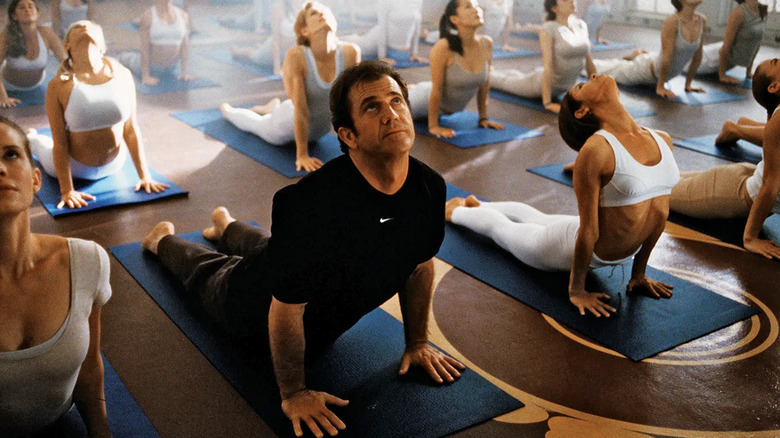
It's wild that Nancy Meyers, the woman behind so many great movies for and about women — beige sweaters, beautiful kitchens, and all — directed "What Women Want," one of the most poorly-aging and sexism-riddled movies to come out of the aughts. Released in 2000, "What Women Want" centers around Nick Marshall (played by, of all people, Mel Gibson), a deeply sexist advertising executive in Chicago who gets passed over for a promotion because his boss doesn't think he can effectively market to women. Thankfully, Nick falls into a bathtub holding a hair dryer, he dies, and the movie ends! Just kidding. He develops a superpower that lets him read women's minds and, ergo, figure out what they "want."
The way that Meyers sketches Nick's journey is that he actually stops to take stock of what women want and need and becomes a better person in the process, even managing to woo his coworker Darcy Maguire (Helen Hunt) — who got the promotion he wanted. All "What Women Want" does, though, is use dumb, outdated stereotypes and present Gibson, who once called a female police officer a term we literally cannot repeat here, as some sort of paragon of male understanding. Meyers, you are a phenomenal filmmaker ... but this movie aged so, so, so badly.
If you or anyone you know has been a victim of sexual assault, help is available. Visit the Rape, Abuse & Incest National Network website or contact RAINN's National Helpline at 1-800-656-HOPE (4673).