

5 Most Historically Accurate Vietnam War Movies, Ranked
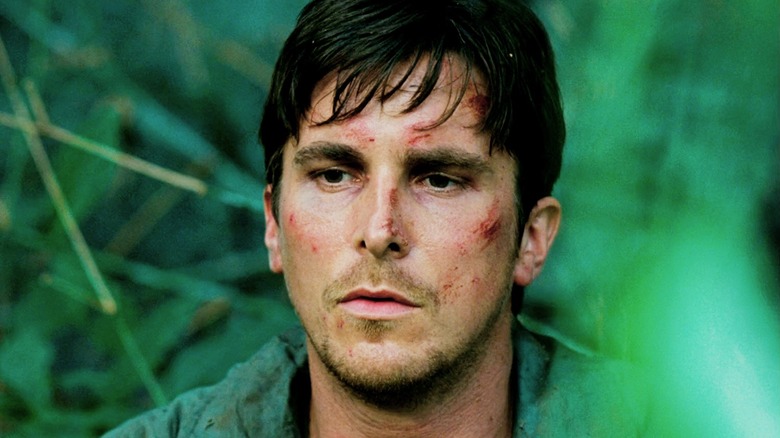
You don't necessarily need to follow the facts to make a good war movie, and that's still true for a conflict as extensively documented as Vietnam. Many would argue that "Apocalypse Now" is the defining movie about this war, and while it captures the disaffected nature of the soldiers enlisted to fight, it's more of a surreal odyssey than a faithful, fact-driven account, using Joseph Conrad's "Heart of Darkness" as a loose inspiration.
Francis Ford Coppola's anti-war epic arrived years after movies, such as John Wayne's widely derided "The Green Berets," served as propaganda in support of the conflict, and gritty New Hollywood films, like "Taxi Driver, explored the fallout through damaged character studies. With "Apocalypse Now" and "The Deer Hunter," Vietnam returned to the public imagination at the end of the 1970s, but it wasn't for another few years that we began getting more historically accurate tales from the frontlines.
The following five films here aren't all the best Vietnam movies ever made, but the ones most regularly cited by historians, veterans, and military experts as being the closest dramatizations of their experiences. These were made by people who served on or reported from the front lines, are faithfully adapted from other works that offer authoritative, first-person accounts, or were made in collaboration with veterans. While these titles stretch some truths, as you'd expect from Hollywood, they mostly get to the heart of what it was really like at the center of this war.
5. We Were Soldiers
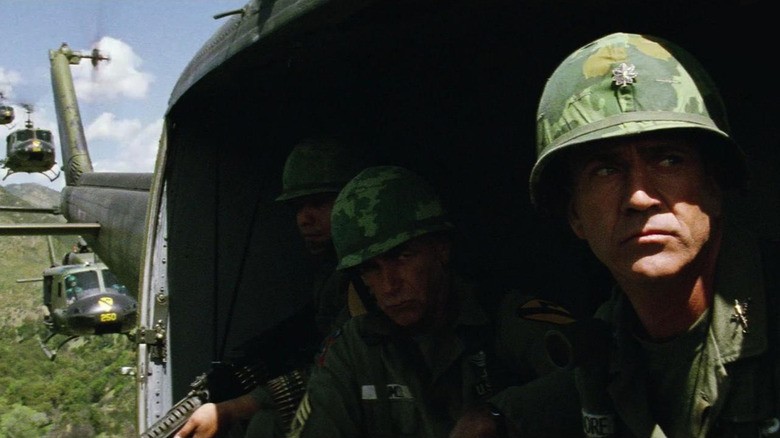
In their 1992 book "We Were Soldiers Once ... And Young," former army lieutenant colonel Hal Moore and journalist Joe Galloway complained that "every damn Hollywood movie got the Vietnam War wrong" (via Claremont Review of Books). This stood out to "Braveheart" screenwriter Randall Wallace, who was inspired to make a more truthful film about the conflict, and "We Were Soldiers" went on to be commended by Moore (played here by Mel Gibson).
This is largely thanks to the extreme brutality, setting the stage with an opening prologue depicting bloody, fatal attacks on the French army, and maintaining the uncompromising levels of onscreen violence once U.S. forces touch down. Wallace's screenplay faithfully follows the unit's faltering tactics on the frontline, although it does deviate slightly from the established timeline of events.
The biggest criticism has been extended towards the third act, which depicts a final bayonet charge by Moore's soldiers that has no basis in reality, as the campaign ended on a defensive note. By ending on a decisive, but pyrrhic, victory, the film also omits the ambush by North Vietnamese forces shortly afterwards that cost 155 more U.S. troops their lives. Wallace effectively depicts the brutality of war and the tactical shortcomings on the battlefield -– and by most accounts, offered an accurate dramatization of Moore himself –- but falls at the final hurdle by adding too much Hollywood sprinkle to an otherwise bleak tale of life on the frontlines.
4. Rescue Dawn
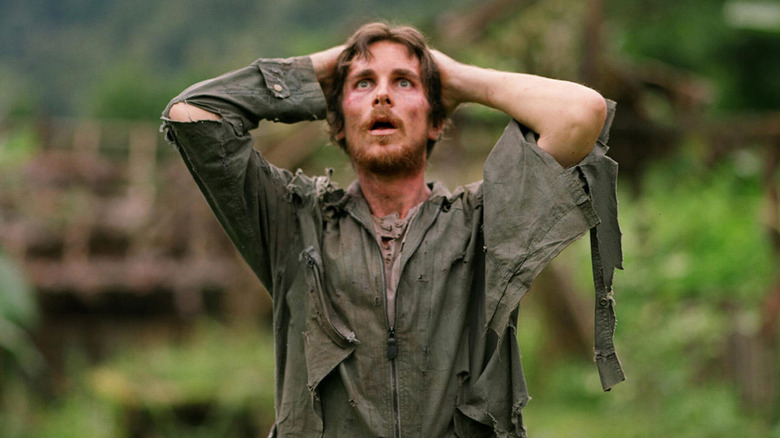
In 1997, Werner Herzog made the documentary "Little Dieter Needs to Fly," where he interviewed navy pilot Dieter Dengler, who was captured and held prisoner in Laos. Less than a decade later, Herzog returned to the story, adapting the it as a dramatic feature with Christian Bale portraying Dengler.
From the outside, it appeared like a slightly conventional drama for the controversial director. Without the direct account of his non-fiction effort, this threatened to be nothing more than a grittier "Great Escape" with a more grueling depiction of the desperation while under captivity. Surprisingly, it fits better in Herzog's back catalog of movies starring complex, uncompromising men determined to achieve the impossible –- there's a direct line between "Rescue Dawn" and his 1982 masterpiece "Fitzcarraldo," about an Irish rubber baron determined to carry a steamship over a Peruvian mountain.
However, to better suit his recurring thematic interests, Herzog deviated from some of the facts in his earlier documentary. Some of this was typical narrative streamlining, but the one which caused the most controversy was the minimization of Eugene DeBruin, another U.S. POW in the same camp, here depicted by Jeremy Davies as a more antagonistic, un-cooperative figure. His real status as a hero was corroborated by Dieter's own memoirs, although the film offers a truthful perspective on the tensions that rose in POW camps. In other words, it's heightened, but remains rooted in the emotional reality of the situation.
3. Hamburger Hill
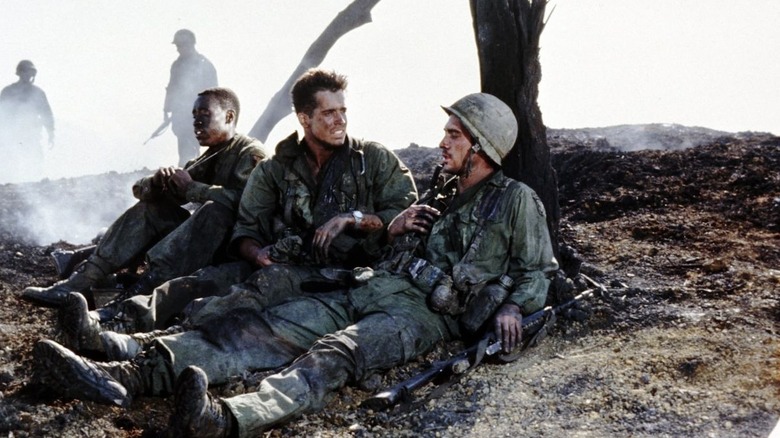
Hill 937, the military codename for a heavily fortified ridge on the mountain of Dong Ap Bia, earned its infamous nickname Hamburger Hill because of how the attacking North Vietnamese army chewed up and spat out soldiers like pieces of meat. Director John Irvin's film is celebrated as one of the most historically accurate Vietnam War movies ever made not just because of its depictions of the growing desperation of U.S. forces, but in how it explores the growing tensions within the ranks.
Screenwriter James Carabatsos served in the 1st Cavalry Division between 1968 and 1969 and based several of the characters on soldiers he served alongside; following the war, he spent an additional five years interviewing soldiers present at this conflict to get a more thorough perspective. Director Irvin, best known at the time for the Arnold Schwarzenegger vehicle "Raw Deal," had made several documentaries on the ground in Vietnam prior, and here he takes a fly-on-the-wall approach to exploring the dynamics between the troops.
If anything, those tensions drive the story more than the faithful recreation of military tactics on the campaign, and the relentless casualty rate. There's an unsparing depiction of the casual, violent racism the African American troops received, with these clashes more thoroughly examined than in many other films documenting the conflict. Often divorced from the wider context of the war, it makes for as harrowing a soldier's perspective as we've ever seen onscreen.
2. Platoon
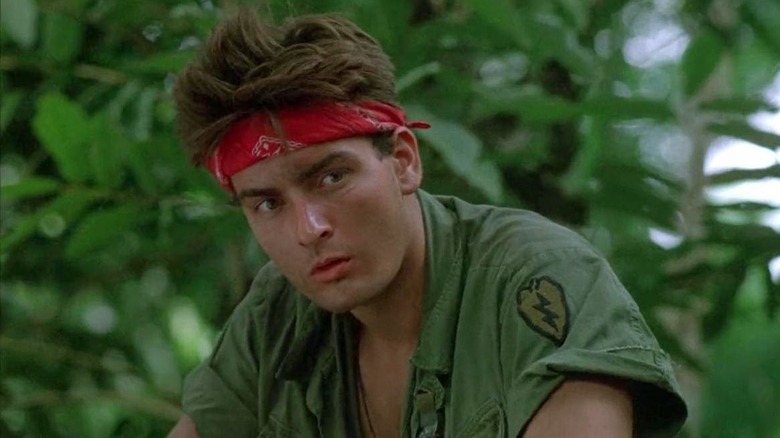
Many of director Oliver Stone's most acclaimed films are centered around different aspects of the Vietnam War, but his best picture-winning "Platoon" is the closest to an autobiography of his own experiences; the first Hollywood Vietnam movie written and directed by a veteran. Devised to counter the pro-war propaganda of previous Vietnam epics, his movie was groundbreaking for its harsh realism, with veterans particularly noting his approach to faithfully dramatizing different combat tactics away from the battlefield.
As seen through the eyes of Stone-surrogate character Chris Taylor (Charlie Sheen), the audience witnesses the dehumanizing nature of combat, bluntly showcasing the casual brutality many U.S. military members committed against innocent Vietnamese villagers. For a film made at the height of the Reagan administration, it's impressive how a film so unpatriotic and unafraid to depict the overlooked casualties of war on the other side of the conflict, became such a box office hit.
The most contentious aspect of "Platoon" among historians has been the depiction of casual drug use, with some debate about whether marijuana and other psychedelics were consumed on the front lines. However, this is a minor criticism of a movie which kicked off a wider reckoning of the war's legacy, going a lot further in exposing the crimes many subsequent American films were too timid to depict: it's a work of righteous anger, from a filmmaker who had a front row seat to this hell on Earth.
1. Full Metal Jacket
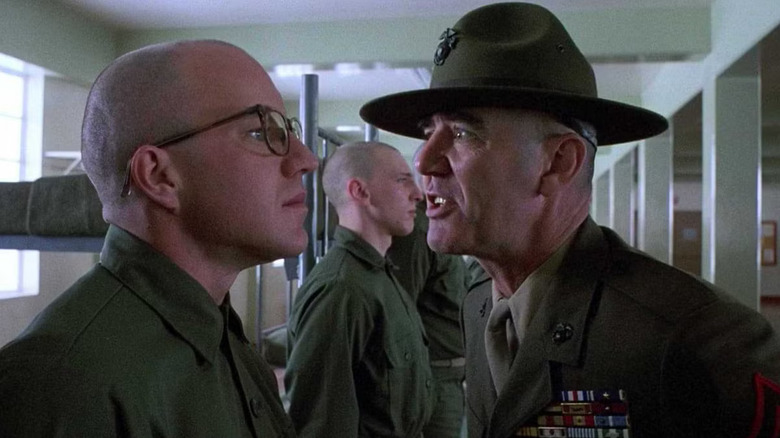
The second half of Stanley Kubrick's penultimate directorial effort is as artificial a Hollywood war movie as you could make, almost by design. As with most of his masterpieces, the legendary filmmaker shot the movie on soundstages in London, pushing for perfectionism in his recreations of various Vietnamese cities during the Tet Offensive.
Infamously, the common critical complaint is that the second half –- which condenses a few military operations from co-screenwriter Gustav Hasford's semi-autobiographical source novel "The Short-Timers" -– pales in comparison to the first, a punishing, authentic depiction of an army boot camp which lingers in your mind. The depiction is so visceral, so unnerving, that it makes the audience feel like they've entered hell long before being sent to fight in a doomed war.
Kubrick's commitment to realism has been extensively documented throughout his career, but hiring former Marine drill instructor R. Lee Ermey as a technical advisor was his biggest masterstroke here. Ermey proved himself in the role of Gunnery Sergeant L. Hartman, improvising so many insults Kubrick estimated he wrote half of his own dialogue, with the director even getting an assistant to throw fruit at him to make the actor even more unflinching when attacking his recruits. While not without its historical inaccuracies, Kubrick's script became even scarier due to the informed depiction of the psychological warfare designed to mentally break people and remake them as fearless soldiers. Of all the Vietnam movies, this one haunts us the most.