

The Best Spider-Man Movie Scene Nobody Talks About Anymore
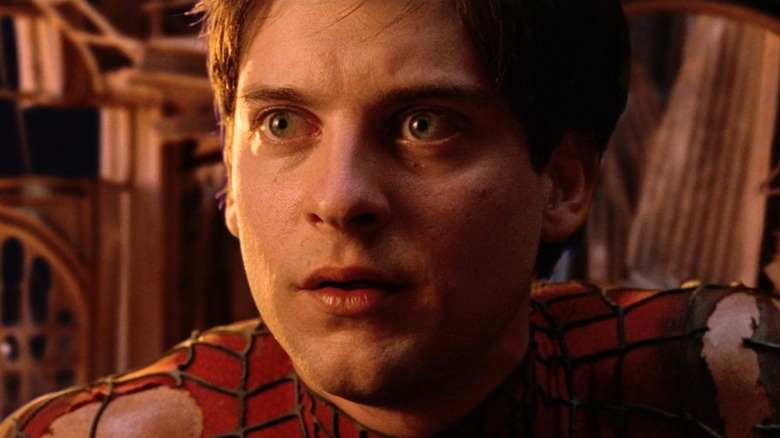
No superhero has gotten more solo movies in the 21st century than Spider-Man, and while Tom Holland's run and the "Spider-Verse" films have all received widespread acclaim, many still point to Sam Raimi's "Spider-Man 2" as the pinnacle for the wall-crawler on the big screen. With the release of "Spider-Man: Brand New Day" right around the corner, it's an appropriate time to revisit the Tobey Maguire classic, and one particular scene whose influence can still be felt today.
To be fair, there are lots of iconic moments in "Spider-Man 2," with the famous train sequence — in which Peter Parker, unmasked, saves a load of NYC passengers from certain doom and faints in the process — likely being the one most remember first. There's also Doctor Octopus' (Alfred Molina) bank robbery and his ensuing clash with Spider-Man. But today, we want to look back on a different moment from the film's final act.
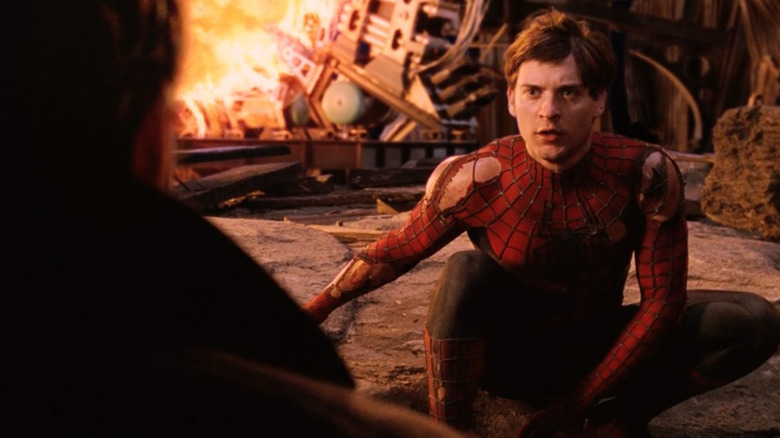
As Doc Ock's fusion reaction threatens to destroy New York, Peter pleads with the villain, his former mentor, to help him shut it down. After a brief showdown forced by Otto, Peter removes his mask and reveals his true identity, imploring the doctor to let go of his obsession. It's the moment when Peter fully embraces the lesson he learns throughout the film: sacrifice is necessary when you have the power to help people. It's the moment in the trilogy when his heroism as Spider-Man is the most immediate and fully realized, and it's indicative of why this particular superhero has been so popular for so long.
The ending of Spider-Man 2 shows everything great about the character
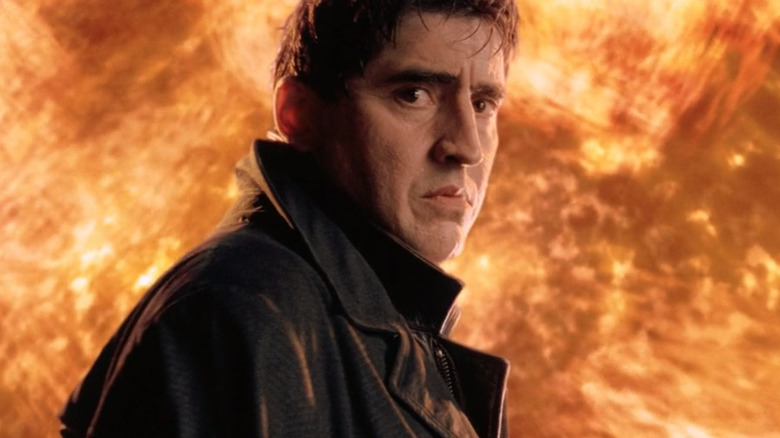
Most of the villains in the Sam Raimi "Spider-Man" trilogy are more victims of circumstance — well-meaning people who befall some tragic fate, often while reaching for more than they can grasp. And while there are a lot of great performances in that field from the likes of Willem Dafoe and Thomas Haden Church, Alfred Molina's Otto Octavius is the purest example. Peter's story in the film is about the division between his personal dream of a peaceful life and the responsibility demanded of him by his powers. Otto, by contrast, blends his selflessness and his selfishness into one. His dream is to achieve this source of limitless, clean energy, which in turn will help the world. But when that dream proves impossible to achieve, the obsession takes root and drives him to mania (well, that and a healthy dose of early-2000s AI psychosis).
After beating him in battle, Peter implores Otto to shut down the reactor, revealing his secret identity in a bid to break through. The whole film, he's been keeping his two identities separate, seeing one as a danger to the other. But here, at the climax, he is both Peter Parker and Spider-Man, and he knows that no amount of violence can stop the impending catastrophe.
In one of Tobey Maguire's best scenes in the series, Peter relays the truth he's struggled to accept to his friend: "Sometimes, to do what's right, we have to be steady, and give up the thing we want the most. Even our dreams." It's the simple sacrifice that defines the character, and it's the truth that saves the world.
Spider-Man movies are still inspired by the Spider-Man 2 ending
This nonviolent climax of empathy and sacrifice can be felt as an influence on many of the later "Spider-Man" movies we've gotten over the years. Tom Holland's third outing, "Spider-Man: No Way Home," is the clearest example, as it's a story all about finding sympathy for old villains and helping them in turn find peace. It's fitting that both Alfred Molina and Tobey Maguire reprise their roles in the film, and Maguire's Peter Parker has a few particularly poignant moments imparting similar lessons to Holland's Spidey as he once imparted to Otto.
As often as not, Spider-Man is a story about how tragedy can strike anyone, at any time. Or, in the case of Peter Parker, not tragedy, but irreparable change. The heroism of the character has largely been in his ability to grant grace where there's room, and to pour whatever capacity he has, limited though it might be, into others. At the end of "Spider-Man 2," it just all comes together.