

Avatar Aang: The Last Airbender Review — The Kind Of Animation That Belongs In Theaters
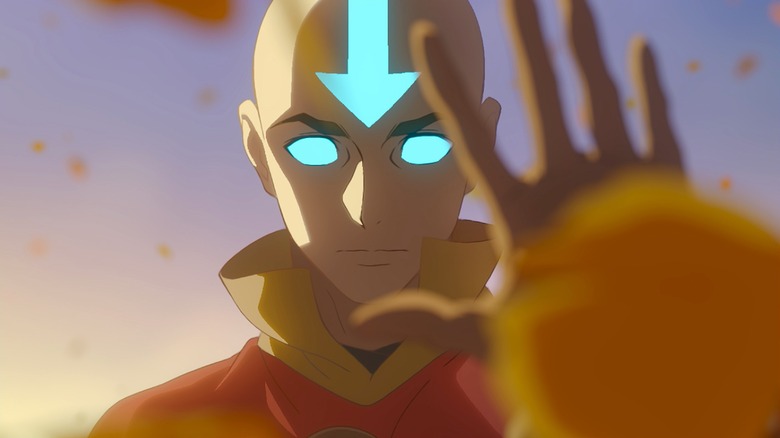
- The best-looking American 2D animation in ages
- Fun to reunite with Team Avatar one more time
- Moral heart of the series stays intact
- Script is a little rough with expository monologues
- The Denied storyline is way too rushed and underdeveloped
Nickelodeon has never quite known what to do with the Avatar franchise. "Avatar: The Last Airbender" was one of the best cartoons of all time, but a serialized drama with serious themes was always a weird fit between "SpongeBob SquarePants" reruns. This might explain why its scheduling was so inconsistent, and why the sequel series "The Legend of Korra" was moved to streaming-only halfway through its third season.
Given this history, it's not too surprising that the release of the animated movie "Avatar Aang: The Last Airbender" has been messy ... but did anyone expect it to be this messy? A long-delayed feature meant for theaters was suddenly changed to streaming exclusive, an odd move when Paramount keeps trying to stress its commitment to theatrical moviegoing. Then the whole thing leaked on pirate sites. It didn't have a trailer or release date confirmed until just three weeks before its release on Paramount+ — and a week before release, they just announced it will play at two theaters in New York and Los Angeles to qualify for movie awards. So the suits at Paramount think the film is good enough for the Oscars but not good enough for a wide release?
I have my own theories about why Paramount is dumping this film (I'll get into those later when talking more spoiler-y details), but if you are an Avatar fan who can get to one of the limited theatrical showings, you should go for it. This is a gorgeous work of animation that deserves to be seen on the big screen. To be clear, that's not the same as saying it's a great movie. While the art is the best the series has ever seen, the script has major flaws; the story helps develop the universe's broader world-building, but it's not a particularly important piece. It's the Avatar equivalent of a typical Shonen Jump movie or a B-tier Marvel movie. The calculation of this release is completely backwards: this movie won't win awards (outside of technical/artistic ones at the Annies) but it would have been a delightful theatrical experience for the fans.
The film has Avatar's best animation — but not its best writing
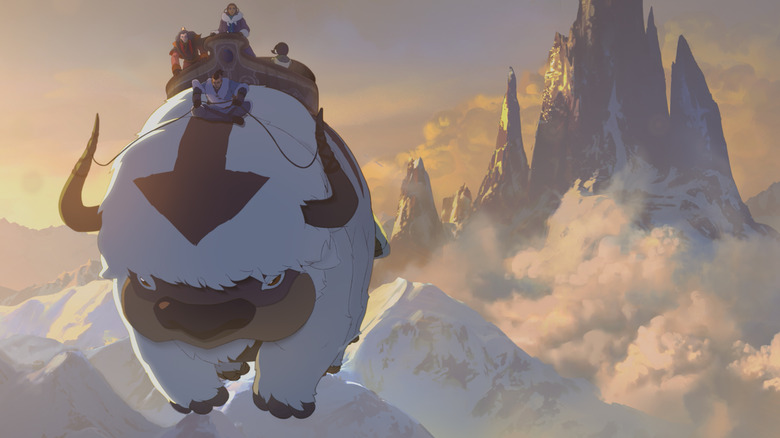
The biggest selling point for "Avatar Aang: The Last Airbender" is that it's BEAUTIFUL. Hand-drawn animation of this scale has been dead in Hollywood for so long, and I guess it still technically is because the actual animation here was done in Australia (at Flying Bark) and South Korea (at Studio Mir), but this is proof we need to bring it back. Imagine if the 2D-3D hybrid style of the late '90s-early '00s ("The Prince of Egypt," "Tarzan," etc.) was allowed to keep cooking for two more decades and collided with the coolest anime action — that's what this movie feels like. The franchise has never looked better, and Jeremy Zuckerman's musical themes have never sounded better.
Set 13 years after the original "Avatar: The Last Airbender" series, the movie's other more specific selling point is a nostalgic reunion with Team Avatar. The characters we loved as kids are now attractively-drawn 20-somethings, but their personalities are still recognizably themselves. They're played by different voice actors, but that's mostly easy to get used to; Román Zaragoza is a pitch-perfect Sokka, and knowing a blind actress, Dionne Quan, plays Toph makes her brags even more satisfying. The one recasting I question is Zuko; most of the changes were for the sake of cultural authenticity, but Zuko already had an Asian actor (Dante Basco), and replacing his distinctive rasp with a very different-sounding Steven Yeun feels like it was just about getting a bigger name celebrity in the cast.
The lighter character interactions, where these heroes with the weight the world on their shoulders feel free to joke around with childhood friends, land stronger here than the more serious dialogue, which gets inelegantly blunt in stating exposition and themes. Tim Hedrick wrote great episodes of "Airbender" and "The Legend of Korra," but hasn't written a movie before; the other screenwriter, Christopher Yost, has an inconsistent track record (both the best and worst "Thor" movies – guessing he snagged Taika Waititi's voice cameo as a wild spirit). Major story elements feel rushed to fit a 99-minute runtime, especially the story involving a group of violent nonbenders called "The Denied," seemingly precursors to the Equalists from "Korra" before turning out to have a different motive that raises questions the movie doesn't answer.
So this is a lesser Avatar story, but it is still an Avatar story ... and by the end of it, I'm left wondering if the things that are good about it are the very reasons David Ellison botched its release. To discuss this, we'll have to get into slightly spoiler-y territory, so consider this your warning before that discussion.
Did the film's moral hit too close to home?
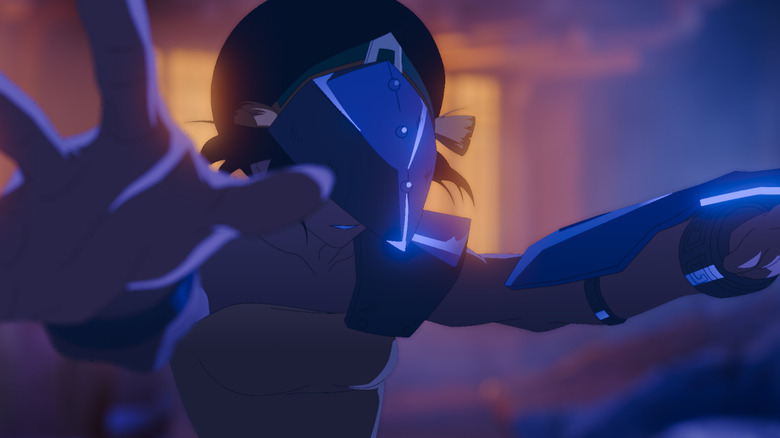
The movie's big inciting incident is that Aang (Eric Nam) finds another airbender, Tagah (Dave Bautista), frozen from an earlier time. Given that the only airbenders around in the timeline at the start of "The Legend of Korra" are Aang's family, we know from the start that Tagah's story is going to end tragically. With the mean way Tagah talks about Aang's friends (and also the fact he's a big scary-looking guy voiced by Bautista), it should be no surprise that he also ends up being the main antagonist.
Essentially, the conflict is between two members of a culture that has been oppressed and subjected to genocide many times over millennia — one takes this history as reason to believe his culture needs its own militaristic empire, the other who takes it as reason to reject violence in favor of coexistence. Does this conflict sound familiar? Now consider what Greg Baldwin (the actor who played Uncle Iroh after Mako died) has said about the new Paramount management having "nothing but contempt" for the series' values, and that support for Israel is the number one political issue for Paramount head David Ellison.
This movie shouldn't be radical. Avatar creators Bryan Konietzko and Michael Dante DiMartino are far from radicals; the various political conflicts in "Korra" were all variations on meet-in-the-middle, why-can't-we-all-just-get-along, establishment-liberal-centrist idealism. This shouldn't be an "important" movie; it's largely an excuse for fan service and homages to "Laputa" and "Dragon Ball." But in the times we live in, even basic kiddy anime morality is a statement, and it's one I'm as happy to see as Ellison must have been unhappy to.
"Avatar Aang: The Last Airbender" premieres on Paramount+ and in limited theatrical release (NY/LA) on July 25.