

The No. 1 Movie On July 18, 1963 Was A Historical Epic With Elizabeth Taylor
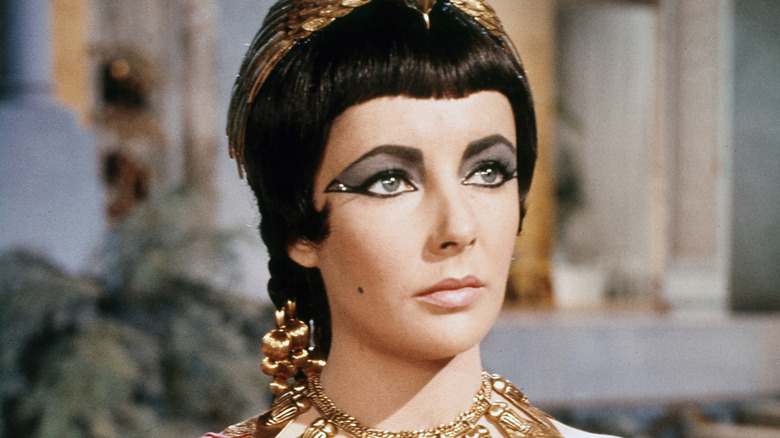
1963's "Cleopatra" may be one of the best movies that runs over four hours in length and may have had a more impressive box office streak than people remember, but it also remains a fascinating Hollywood boondoggle that nearly bankrupted its studio.
At first glance, it might seem as though "Cleopatra" was a box office juggernaut on the scale of "Avatar." It makes sense given the star power on display, as Elizabeth Taylor plays the eponymous queen of Egypt, resisting the influence of Rome while sparking a romance with Caesar's (Rex Harrison) right-hand man, Mark Antony (Richard Burton).
Despite premiering on June 12, 1963, it took "Cleopatra" three weeks to reach the top of the box office charts on the weekend of July 3, making $725,000 in that frame. Yet the movie remained in the top spot through the end of September. It would return there in fits and spurts in October and November, ending its run the weekend of November 20. The following week, no box office data was published due to John F. Kennedy's assassination.
Throughout its run, "Cleopatra" made $57 million domestically at the box office and an extra $14 million from international markets. It became the highest-grossing film of 1963 and was nominated for nine Academy Awards, winning four of them. Yet, when all was said and done, "Cleopatra" was still seen as a financial disappointment due to an overinflated budget.
Cleopatra nearly ended 20th Century Fox
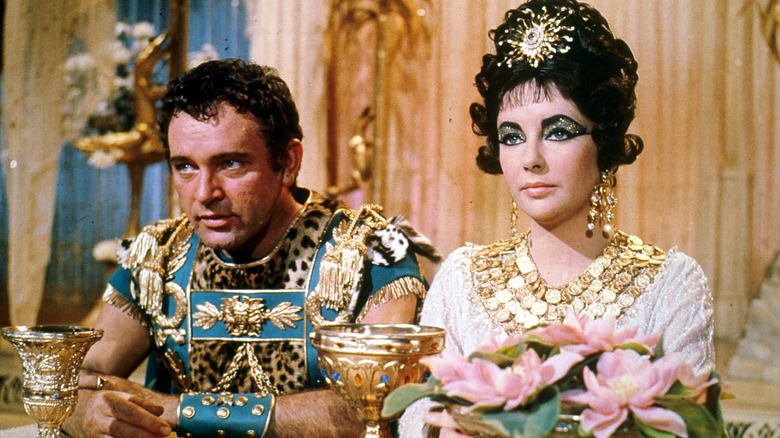
$71 million at the box office would have been a bonanza for any other movie coming out in 1963. And "Cleopatra" initially went into production with a modest budget of $5 million. Yet the film ran into one issue after the next, including the distinction of having one of the most expensive film sets ever created.
For starters, filming began in London with the exorbitant sets being built from the ground up. But poor weather degraded many of the sets and palm trees. It also didn't help that Elizabeth Taylor, who required a $1 million salary all on her own, came down with double pneumonia while in London, causing further delays.
In addition to expensive sets and actors, there were changes behind the scenes, as the original director, Reuben Mamoulian, was fired and replaced with Joseph L. Mankiewicz, who rewrote the script at night and would shoot the new scenes during the day. This caused its own overages. Since no one knew what was happening on a day-to-day basis, thousands of extras stood around waiting for orders, all while getting paid. When all was said and done, "Cleopatra" racked up a budget of $44 million, which would be the equivalent of $480 million in 2026.
Despite a formidable box office run, it wasn't enough to recoup the losses. 20th Century Fox was forced to sell 260 acres of its Los Angeles-based backlot, which would eventually become the office and shopping complex known as Century City. For moviegoers, "Cleopatra" signaled a cultural shift: The days of big-budget historical epics were over, in favor of smaller, auteur-driven cinema, like "The Graduate." But despite the chaos of the film's production that became its legacy, "Cleopatra" is very much a box office bomb still worth watching.