

Star Wars' Ultimate Jedi Isn't Who You Think It Is
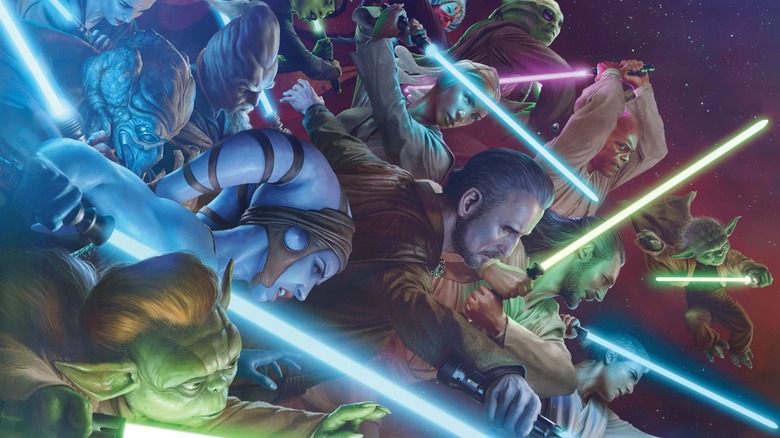
In 1977, George Lucas introduced us to the Jedi with "Star Wars: Episode IV — A New Hope." An all but extinct order with access to the then-ill-defined Force, they were space wizards with laser swords, and their presence in this hero's journey was reduced to a singular eccentric. In the years that followed, the Force and all its accoutrements — the Jedi, the evil Sith, the Force – became aspects of pop culture. Over time, the Jedi evolved a history as an organized (and still mostly extinct) order of monkish warriors capable of tremendous power. More than a few Jedi from canon stand out, and every fan has a favorite or two.
Luke Skywalker is one of the franchise's most powerful Jedi, naturally. He's the hero who helped defeat the Empire, and turned his equally gifted father, Anakin Skywalker, back to the light. By the time of the sequels, he'd re-established the Order as best as he could. But he didn't have access to the generations of training his predecessors enjoyed. The new Jedi are removed from the flaws and fame that created their downfall.
Many Jedi who came before Luke were taught discipline, lightsaber mastery, and control of the Force. And only one used all of that to not just survive extinction, but prepare the transition to a fresh generation of Jedi. That person was the lonely eccentric from the original film: Obi-Wan Kenobi.
When we first meet Obi-Wan, he's an old man; one who sacrifices himself before the end of the film. As the franchise expanded, countless Jedi earned names, and the legacies of masters like Yoda made them powers to be reckoned with. Yet it's not the Force and its strength that makes Kenobi the greatest of all Jedi. There's much more to his story.
Why Obi-Wan is his generation's most powerful Jedi
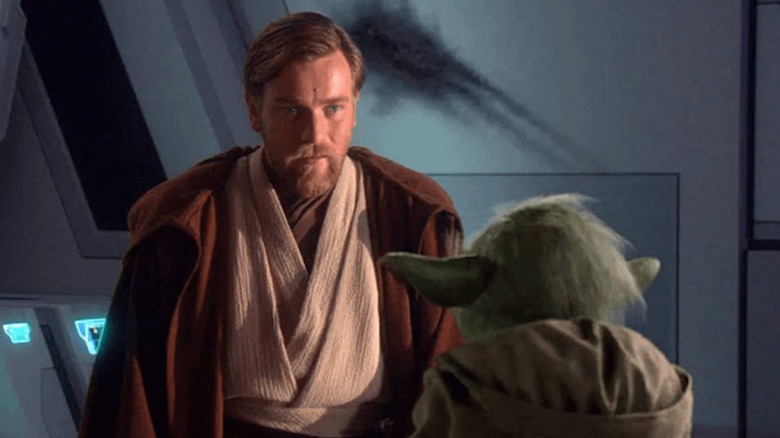
Many franchise fans might balk at the idea that Obi-Wan Kenobi is the ultimate Jedi, as that may seem to undermine Yoda. While the diminutive master boasts more raw power, his story pushes him aside in favor of Obi-Wan. Yoda's later years were regrettably marked with failure. He was unable to detect Darth Sidious' rise to power, nor could he stop the destruction of the Jedi Order. Yoda was even unable to defeat Sidious in combat.
While he trains Luke after the loss of Obi-Wan, Yoda can't stop him from leaving Dagobah, almost losing the future of the Jedi in the process. Failure keeps Yoda behind Obi-Wan, who, as we learned in pieces over the decades, managed to push through every obstacle to see his mission through to the end. While he, too, didn't want Luke to leave his training, Obi-Wan continued to support his young pupil from beyond the grave. That helped ensure the Empire fell with Emperor Palpatine.
Mace Windu, more martially-minded, believed that Obi-Wan was the best Jedi, noting his perfection of the Soresu lightsaber form. In a crucial episode of "Star Wars Rebels," an older Obi-Wan kills a returned and still vengeful Darth Maul with a single defensive strike. Age never dulled his abilities; instead they were distilled into economic grace.
Later, Kenobi allows himself to be killed while facing Vader. As he says, he becomes more powerful than Vader could imagine. Not only would he continue to train Luke, but he is now our first encounter with what would later become the better-understood but still mysterious Force spirits. Hard to beat that in the annals of history.
Obi-Wan Kenobi Defeated the Chosen One multiple times
Obi-Wan Kenobi was the first Jedi in a millennium to defeat a Sith in "Star Wars: Episode I — The Phantom Menace." He then takes on Anakin Skywalker as his trainee, believing him — as his master Qui-Gonn did — to be the Order's prophesied "Chosen One." The results are bitter: Anakin falls to the dark side, meaning the prophecy was really about the end of an outdated way of life. Nonetheless, Obi-Wan Kenobi defeats Anakin in the last hours of his humanity. The Order is put to flames, but Kenobi stands defiant, mourning Anakin as his life fades, only to waken, fully, as Vader.
That gives Obi-Wan context above every Jedi who would later fall to Vader. If you've only seen the movies, you're missing out on a lot of Obi-Wan's story, some of which is fleshed out in "Star Wars: The Clone Wars." The animation is set between "Star Wars: Episode II — Attack of the Clones" and "Star Wars: Episode III — Revenge of the Sith," and it offers a wealth of details about Kenobi and the flaws that, ironically, make him a better Jedi than his peers. Like Anakin, Kenobi loves and loses, too — but it never consumed him. Through it all, Obi-Wan takes on powerful opponents, including General Grievous, and survives.
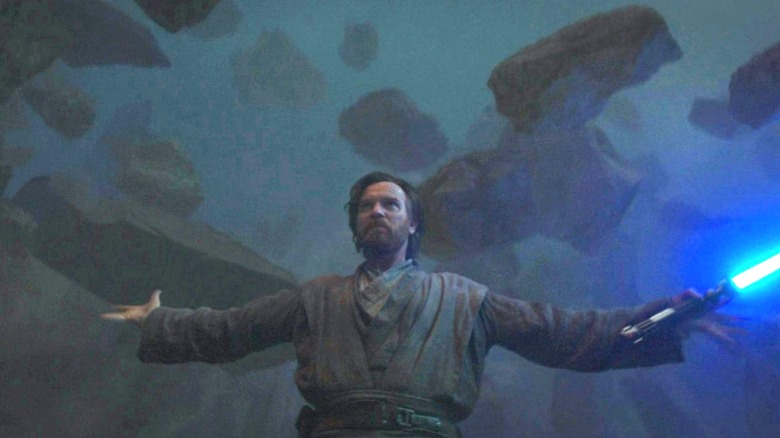
More recently, "Obi-Wan Kenobi" filled in more plot holes. It's another showcase for the historic necessity of Kenobi's life. In his disastrous first meeting with Vader, Obi-Wan is struggling with trauma, and he's — though it goes unnamed — kept to the Barash Vow, which means he's chosen to neglect the Force. In his second encounter with Vader, Obi-Wan accepts the "death" of his former pupil and rises to battle. While not a traditional victory, he nonetheless hands Darth Vader another defeat.
No other Jedi matches Obi-Wan's strength and drive
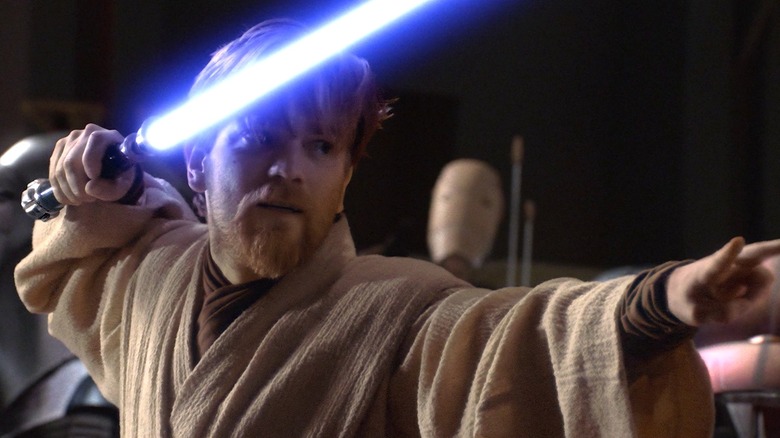
Obi-Wan could have theoretically killed Vader in their final fight in "Obi-Wan Kenobi," and that clearly doesn't happen. The films don't make it clear why Obi-Wan sacrifices his life when he meets Vader for the final time in "Star Wars: Episode IV — A New Hope," but it's possible to infer the reasoning. As he watches Luke and Leia, it's likely that he understands that a "new hope" lies with this young generation. If only all our cranky Boomers could grasp that.
Obi-Wan then warns Vader, "If you strike me down, I shall become more powerful than you can possibly imagine," and submits peacefully to Vader's rage. Doing so enables the others to escape. Not yet understood but potently implied, Obi-Wan's power waxes as he transcends death. His physical form disappears, but his voice tells Luke to run. The yet-invisible spirit returns during the Battle of Yavin to offer serene advice which gives Luke the spiritual freedom he needs to destroy the Death Star.
That wouldn't have been possible had Obi-Wan slain Vader at any point, and it's likely that doing so would have drawn closer scrutiny from Palpatine. That attention might even speed-run turning Luke to the dark side, as it would be harder for Luke to study quietly at Dagobah.
Obi-Wan made the sacrifice necessary to see the last of the old era fade to make way for a new order. He's the nexus of the Jedi storyline; his is the story of the division between generations, and a reminder that history is built on the sacrifices of the brave. Few were as brave as Obi-Wan Kenobi. His devotion to the Force, and his ability to weather every storm thrown his way, made Kenobi into the ultimate Jedi.