

5 Best Animated Movies Nobody Talks About Anymore
Animated cinema is "so hot right now", as a certain "Zoolander" baddie might put it. After all, "Inside Out 2" and "Zootopia 2" each topped the yearly domestic box office for 2024 and 2025, respectively, while "KPop Demon Hunters" has become one of the biggest cultural sensations of the decade so far. Meanwhile, programs like the animated productions making up the 25 best Adult Swim series of all time have normalized the idea that animated storytelling isn't just for children. This medium can entertain anyone and hold any sort of story. Given the current immense popularity of animation, the versatility of this medium is getting reinforced every day.
The 98 best animated movies of all time speak to the immense artistry that's existed in this domain for decades. However, what about the animated movie gems that don't get as much attention as "Zootopia 2" or "Demon Slayer: Kimetsu No Yaiba The Movie: Infinity Castle"? So many animated projects get made every year that it's easy for some bangers to get lost in the cracks. The five best animated movies nobody talks about anymore may not be on the tip of everyone's tongue, but that doesn't dilute their individual artistic merits. On the contrary, that reality just makes it extra imperative that these five animated movies get their time in the sun.
After all, these five features reflect the endless storytelling and visual possibilities afforded by the medium of animated filmmaking. That feat alone should catapult these films into way more conversations.
K-On! The Movie
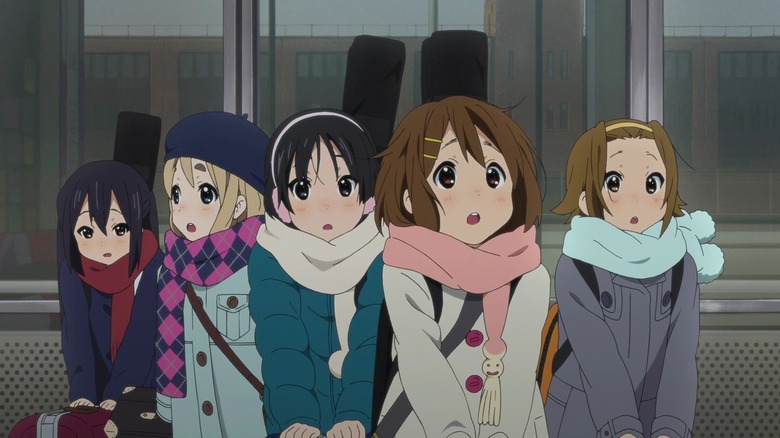
Sometimes, it just takes one great song to immediately solidify a movie as a classic. Just like "Drive It Like You Stole It" from the film "Sing Street," "Deewangi Deewangi" from "Om Shanti Om", and a new rendition of "Rock DJ" cemented "Better Man" as all-time great gems, so too does the lively earworm "Samidare 20 Love" ensure "K-On! The Movie" won't soon be forgotten. This third-act musical expression of rebelliousness isn't just a catchy tune on its own merits. It also provides such an energetic display of the connection between the film's central characters (a group of plucky high school girls trying to run their own band).
Director Naoko Yamada lends an assured hand to this film adaptation of the "K-On!" manga and TV show. Her creative vision lends empathy and nuance to the perspective of teenage girls, a demographic that feature length movies often relegate to being caricatured and minimized. Here, though, each of the lead characters are realized thoughtfully. Their dreams and (sometimes clumsy) plans are to be rooted for, not mocked. That lends a terrific emotional core to their various adventures (like journeying to London or figuring out a gift for one member of the group) while giving the whole proceedings an irresistible endearing air.
"K-On! The Movie" even excels for those going into it with no pre-existing knowledge of its source material. The charms and artistic feats here work for anyone looking for heartfelt cinema or tunes as catchy as "Samidare 20 Love."
Ernest & Celestine
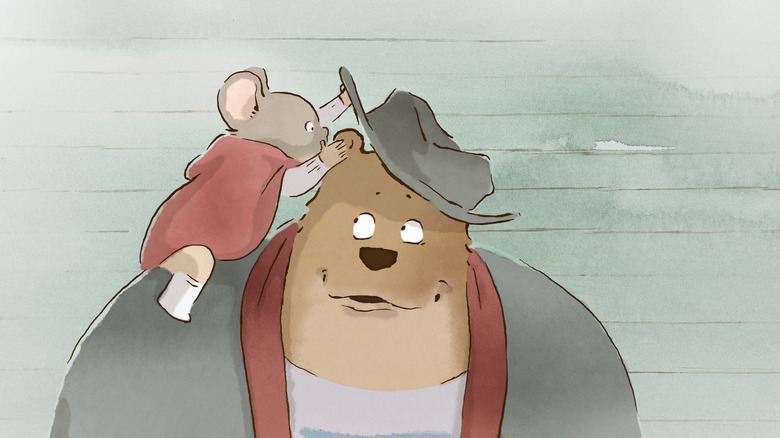
The most beautiful hand-drawn animated films ever reflect the unique visual triumphs exclusive only to titles made with more old-school animation techniques. If you're seeking out a grand example of the wondrous imagery only hand-drawn features can accomplish, just watch the utterly delightful title "Ernest & Celestine." This directorial effort from French animation legends Stéphane Aubier, Vincent Patar, and Benjamin Renner (adapted from a book of the same name by Gabrielle Vincent) is realized with delightful hand-drawn animation evoking the squiggly lines and soft colors (the latter element channeling watercolor paintings) one often finds in children's literature.
There's a beautiful and cozy ambiance to the completely idiosyncratic "Ernest & Celestine" animation style. These visuals prove a fantastic vessel for bits of physical comedy and make characters like hulking bear Ernest extra endearing. Happily, the film's creative team embrace "Ernest & Celestine" functioning as a classical tale of an unexpected friendship (between a mouse named Celestine and that bear named Ernest). Rather than complicating the proceedings with convoluted narrative detours, this feature confidently revels in its old-timey and streamlined storytelling sensibilities. Sincere poignancy is far more potent than self-conscious quips.
Thus, "Ernest & Celestine" is a title that dazzles the eyes while being profoundly moving for the heart. No wonder its 80-minute runtime zips by in a flash. For those tired of cookie-cutter CG animated features full of too much snark, the glorious joys of "Ernest & Celestine" are just what the doctor ordered.
The Plague Dogs
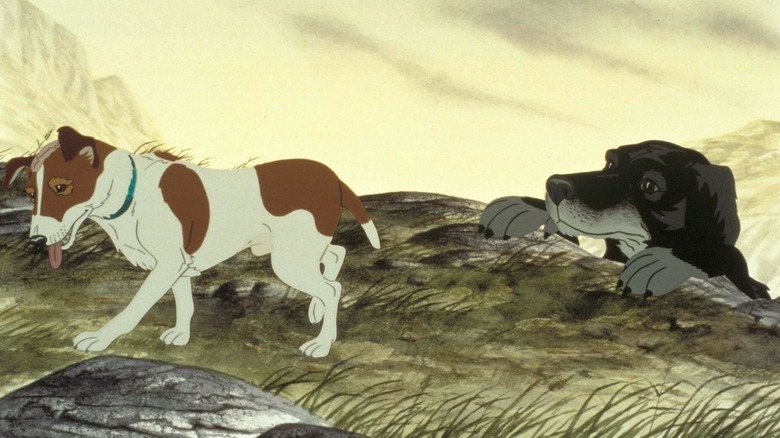
Do not, I repeat, do not watch "The Plague Dogs" if you're a canine devotee in an emotionally fragile mood. Writer/director Martin Rosen's adaptation of the Richard Adams novel of the same name is a grueling exercise that puts two pooches, Snitter (John Hurt) and Rowf (Christopher Benjamin), through the absolute wringer as they escape their laboratory home and struggle to survive in the real world. The film's animation style, which doesn't stylize either the canine leads or their surrounding world, accentuates the painfulness of this story. These aren't wackier dogs whose misery exists in a realm different from ours. "Plague Dogs" instead constantly evokes our world and the anguish existing in it.
Easily one of the saddest movies of all time, "The Plague Dogs" wrings tragedy out of the two leads' having no language or knowledge about the misery constantly being dished at them. They constantly feel pain, but are tragically scrambling for answers over why humans hate them or certain man-made environments are so dangerous. It's all so achingly and effectively realized on-screen, especially thanks to the deeply lived-in vocal performances of Hurt and Benjamin. These two radiate jagged and experienced humanity in their respective vocals that makes Snitter and Rowf extra absorbing.
Many movies with dogs as main characters are bittersweet exercises. Few are quite as shattering as "The Plague Dogs," though. It's not an easy watch, but the immense craftsmanship (including in the excellent hand-drawn animation) makes it a must-see.
The Boy and the World
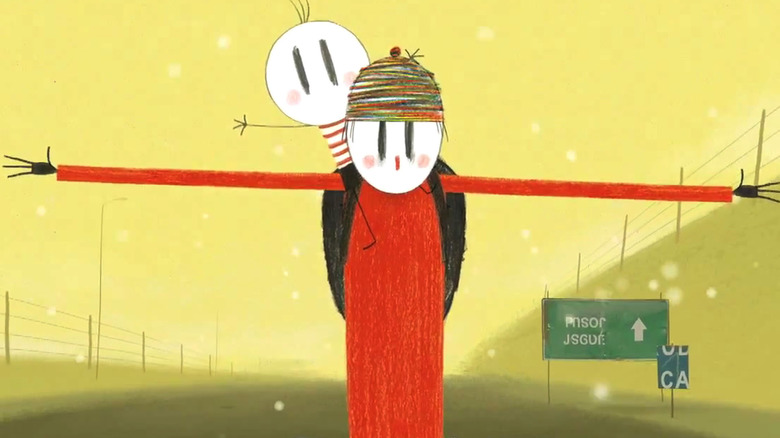
Thankfully, America is no longer thought of in the mainstream as the only country producing feature length animated movies. Many of the best anime movies of all time, for instance, have drawn attention to the Japanese animation industry. Aardman, meanwhile, is the face of British animation, while acclaimed works like "A Town Called Panic" and "The Triplets of Belleville" have rendered France's animation scene iconic. Even so, the tremendous contributions of many international countries to the feature-length animation scene still go under-noticed. Classics from various South American countries, for instance, are often not talked about nearly as much as they should.
That includes the crown jewel of Brazil's feature-length animation exploits, "The Boy and the World." Writer/director Alê Abreu imbues this production with a fascinatingly abstract and colorful visual aesthetic. To boot, many of the characters and colors are realized like they've been drawn with crayons by kids as young as the film's titular child. In this largely dialogue free motion picture, Abreu submerges viewers in a movie delightfully emphasizing creative imagery above all else. In a perfect distillation of how ambitious and multi-layered "The Boy and the World" is, though, this movie still has plenty of things to say about the concrete real world, including critiques of capitalism.
"The Boy and the World" looks and feels unlike any other animated movie you'll ever see. It's a singular vision that deserves far more love in a cultural landscape often defaulting to only recognizing American animated features.
Penguin's Memory: A Tale of Happiness
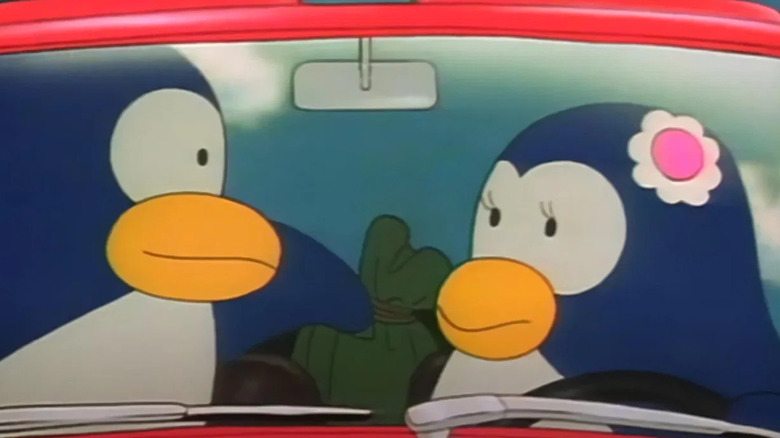
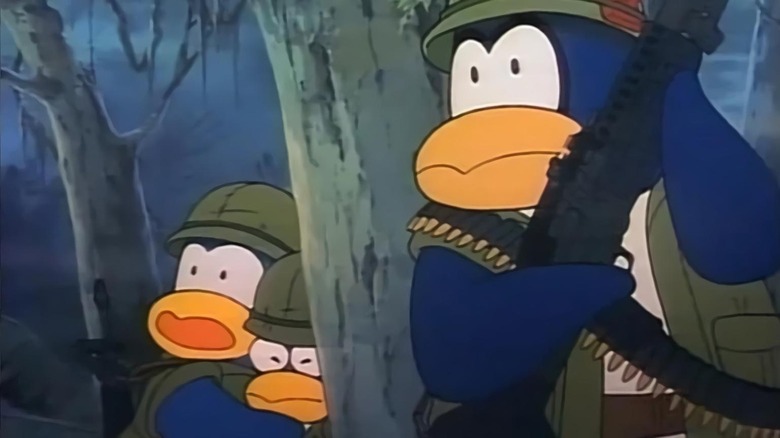
"Penguin's Memory: A Tale of Happiness" begins with penguin Mike (Kôichi Satô) and his fellow soldiers battered and separated from their unit. Even though it depicts animated penguins holding guns, this is not a sequence played for laughs. Instead, director Shunji Kimura is establishing the unflinching and brutal material "Penguin's Memory: A Tale of Happiness" deals with for its entire runtime. This weighty project then deals with Mike returning home from the front lines with a tormented psyche. Everyone says he's a "hero." Inside, though, he's haunted by the foreign civilians he saw slaughtered and the friends he lost.
The exploration of this material is often realized in an evocatively understated fashion, such as in a montage of Mike aimlessly wandering the streets. Though rooted in characters who originated as beer mascots, "Penguin's Memory: A Tale of Happiness" dives head-first into treating its penguin players as three-dimensional characters. This informs the immense poignancy underpinning tender interactions between Mike and his newfound Lake City pals, including potential love interest Jill (Hiromi Tsuru).
Meanwhile, "Penguin's Memory" covers material ranging from infidelity to PTSD without a trace of snark. This isn't a "Sausage Party" situation where it's supposed to be "funny" when adult material exists in animated storytelling. The "Penguin's Memory" artists take these plot points seriously and expect the audience to follow suit. This ensures "Penguin's Memory: A Tale of Happiness" is a unique masterpiece right from its bravura wartime opening sequence.