

Superman: The Movie's Awful Time Travel Ending Is Way Better With This DC Comics-Inspired Fan Theory
Welcome to "Fanon Fixing Canon," a weekly column where we investigate infamous plot holes or terrible storyline decisions. Through a combo of detective work and meticulous fan theorizing, we fix these problems so they no longer exist — and canon is immaculate once again.
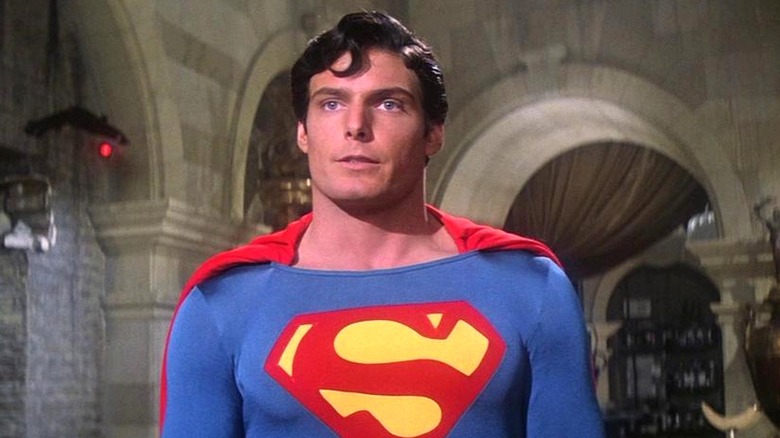
Film aficionados can debate what the best fictional depiction of time travel is until the proverbial cows come home. Still, regardless of whether you prefer Bill and Ted's phone booth or the DeLorean, chances are that we can all agree on what the worst depiction of time travel in a major motion picture is: Superman's (Christopher Reeve) absurd "spin the globe backwards by flying around it real quick" maneuver in Richard Donner's otherwise superb "Superman: The Movie."
You know the one. When Lex Luthor (Gene Hackman) attempts to become a mega-rich real estate mogul by sinking half the U.S. in a bid to raise the value of his personal, landlocked estate holdings, one of his missiles causes widespread destruction, causing the death of Lois Lane (Margot Kidder). To counter all this, Superman flies rapidly around Earth, seemingly causing the planet's spin to change direction and move back in time to undo the damage.
This, of course, isn't a thing. As everyone and their crystal memory hologram father should know, you can't turn back time by physically reversing the globe's spin direction. But what if Superman actually knew what he was doing, and instead of time travel, he used a key DC Comics concept called Hypertime? Fanon Fixing Canon investigates.
If Superman could time travel this way, none of his adventures would matter
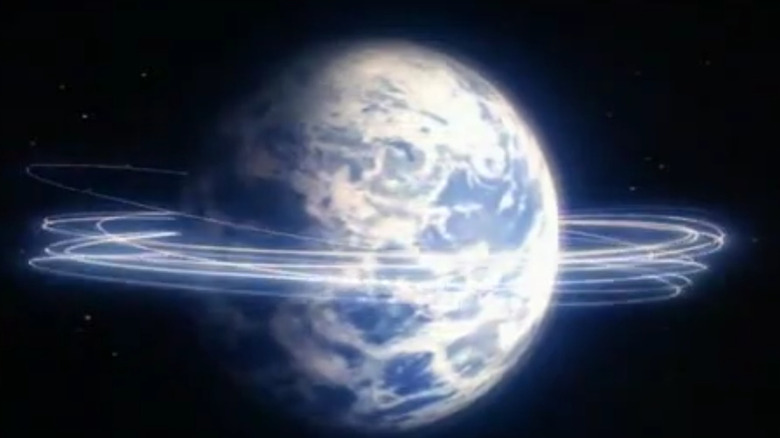
Before we proceed, let's put aside the inherent ridiculousness of the "Superman: The Movie" version of time travel and focus on the narrative problem it would posit. If Superman can rewind time with as little effort as he does here, none of his adventures would truly matter. Kryptonite notwithstanding, Superman is invulnerable and un-killable. As long as he stays alive, he can simply rewind time whenever he messes up and fix whatever went wrong. The villain won? A whirl around the planet will give Supes another shot. Lois died again? Rewind and retry. Superman feels like taking the week off? Just do it and ignore all the crime and disasters, then travel back in time to pick up the slack.
In other words, giving Superman the ability to manipulate time means that he can simply Groundhog Day his battles until the outcome pleases him. This would remove all the stakes from his adventures. Meanwhile, as we're about to find out, Hypertime is a concept that Superman would use far more sparingly, because it requires a bigger sacrifice.
Hypertime is far more than a multiverse
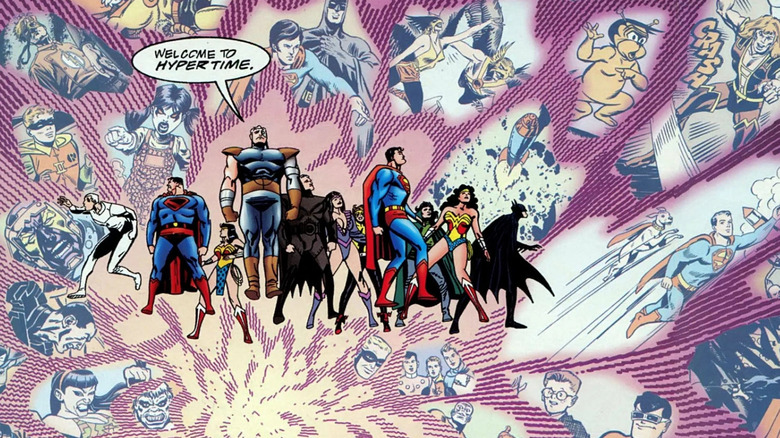
As dedicated DC Comics fans know, Hypertime is all about branching timelines. However, it works a little differently than, say, the Marvel Cinematic Universe's multiverse. Instead of every event creating its own little alternate universe that's separate from others, Hypertime consists of an endless flow of time where the different realities are all connected together, like countless small streams that come from the same source, occasionally joining back together and interacting without actually creating separate universes. Interestingly, all of this exists outside the main DC Comics universe, which allows for countless variations of characters and events to exist in a way that doesn't interfere with the central narrative.
Hypertime is a major temporal concept in the DC game, and Christopher Reeve's Superman would very likely be aware of it. After all, he has access to all the information in the Fortress of Solitude, and his scientist father Jor-El's (Marlon Brando) hologram trains him offscreen for a good dozen years. Since "Superman: The Movie" exists outside the main comics universe, it's part of Hypertime by default — and with the education he has from Krypton's leading rogue science guy, it wouldn't be out of the question that Superman would know a thing or two about how the time streams can be manipulated.
If Superman uses Hypertime in the movie, this would mean that he is effectively not quite time-traveling. Instead, he's swimming a little bit back on his own time stream, so he can step into a slightly different stream of time — a branching line where he gets things right and manages to prevent Lois' death. The downside of this approach is that he effectively bails out of his own Hypertimeline and just moves on to one better suited for him. In the original stream, Lois is still dead.
Superman has a history with Hypertime in the comics
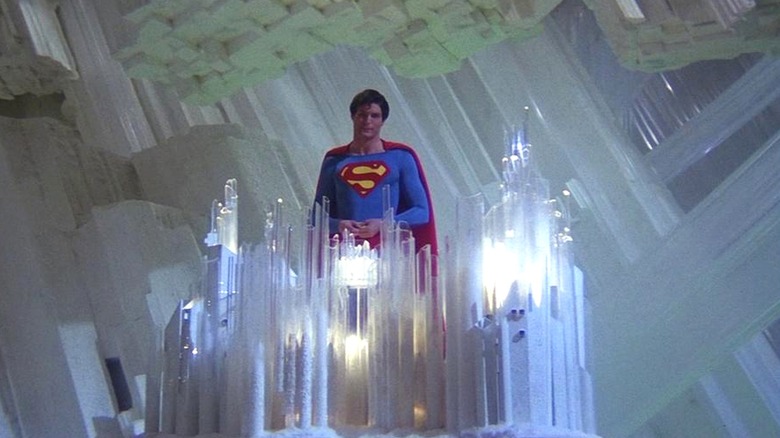
Looking at the source material, we can be even more certain that the Christopher Reeve Superman is aware of Hypertime and its possibilities. After all, the comic book Superman has plenty of experience with Hypertime, thanks to many of his allies and enemies who have traversed it over the years — not to mention his own interactions with it.
In the comics, Hypertime first appears in 1987's "Swamp Thing Vol. 2" issue 62. Superman first encounters it during the events of Mark Waid's 1998-1999 event "The Kingdom," the follow-up to Waid and Alex Ross' 1996 miniseries "Kingdom Come." By the events of 2018's "Action Comics" issue 1000, he's familiar enough with it that he can escape Vandal Savage's Hypertime trap with relative ease.
Yes, all of this does technically take place after the 1978 movie, and the comics Superman and the Christopher Reeve one are obviously two separate entities. Still, isn't that what retconning is all about? A concept comes up that fits the situation way better than the original, and we agree that this is the thing that was happening all along.
The Hyperspace theory might also explain the infamous Superman 2 memory kiss

Note that "The Kingdom" already establishes that traversing Hypertime doesn't actually require flying around the globe really fast. The very first time it shows the concept to the reader involves a number of characters simply standing around, taking it all in. This makes sense because otherwise, there's no way all those non-Superman characters could do it in the comics. It's more likely that during the "Superman: The Movie" time scene, Superman is simply — and, let's face it, understandably — agitated due to the widespread destruction and Lois' death, so he's indulging in a bit of overkill as he scrambles to fix things.
Superman's potential ability to influence the time streams of Hypertime more subtly might explain another strange moment during Christopher Reeve's tenure. In 1980's "Superman II," we see Superman perform another unique trick that could indicate that he's moving timelines. This time, however, he's much more subtle with it. At the end of the movie, he gives Lois an infamous memory-wipe kiss that erases everything she remembers about his secret identity and their love affair over the last few days, leaving her weak and confused until she resumes her usual, non-lovestruck behavior.
Such an ability, of course, isn't usually a part of Superman's power set. However, by this time, Superman is already a far more experienced superhero, and he's obviously less emotionally imbalanced during the "super kiss" moment than he is during the first film's "time travel" ending. As such, he could have learned more subtle manipulations of the Hypertime, and the kiss is merely him moving into another time stream — or shunting Lois into a timeline where she doesn't remember the events of the last few days.
Using Hypertime raises the stakes for Superman and makes the movies much sadder

If Superman uses Hypertime in both the "Superman: The Movie" scene where he seemingly time travels and the "Superman II" scene where he uses the infamous "memory kiss," both moments start to make far more sense. So does the fact that he doesn't keep whipping out these powers whenever things don't work out for him.
Since Hypertime manipulation doesn't really fix Superman's own time stream but simply moves the plot into another one where things go his way, it's ultimately a sad and even selfish move that allows him to live in the version of reality where he achieves the results he needs to. As such, it would make sense that he only does this sparingly and during times of extreme distress — it's no accident that both times involve Lois Lane, and happen out of desire to make sure that she's as safe and happy as circumstances allow.
"Superman: The Movie" and "Superman II" are two of the best Superman movies ever made. Hypertime would, of course, make both movies' endings considerably sadder than you would have expected. Still, Christopher Reeve's Superman using Hypertime in these occasions makes far more narrative sense than time travel and memory wipe abilities would — and hey, who said every superhero movie needs a happy ending?