

5 Best Submarine Movies Nobody Talks About Anymore
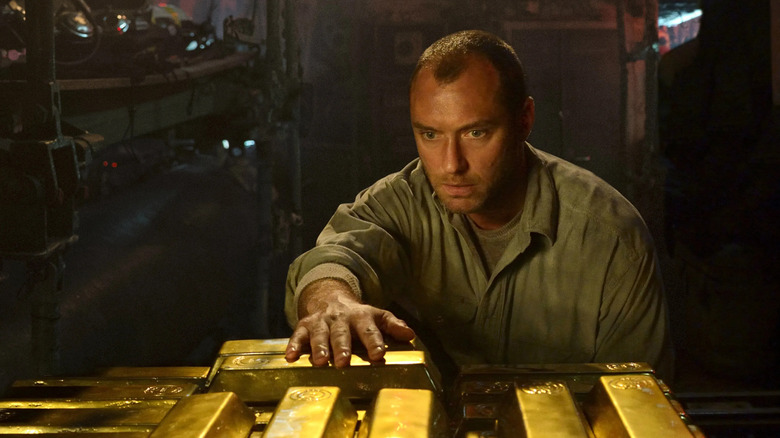
Action, adventure and a healthy dose of paranoia are waiting for you in the depths of the ocean, and a great submarine movie knows exactly how to utilize all three aspects to keep you on the edge of your seat. It's a perfect setting for a thriller, sticking characters in a tight, claustrophobic space with nowhere to escape, making the looming threat of a large-scale disaster around them even more intense; it's a recipe that works just as well for an action epic like "The Hunt for Red October" as it does a suffocating character drama like "Das Boot" (even if they didn't film in actual submarines). An underwater setting is such an effective shortcut to pushing characters beyond their limits, getting them to stare death in the face from hundreds of feet below the surface, that it's surprising more filmmakers haven't taken advantage of it.
The movies listed above are the two obvious masterpieces of the genre, essential viewing for anybody with even a passing interest in maritime warfare. But there are far more stories set in the ocean's depths deserving of the same acclaim that have either been overlooked or generally forgotten over time despite warm receptions -– and if you're looking for more movies like these, then you've come to the right place for recommendations.
The five movies we've chosen for this list range from classic war adventures to modern action epics, all skillfully executed to capture the intensity and paranoia that comes from being stuck deep beneath the waves. If you still want some more soaking-wet thrills after this, then also check out our list of the best movies set aboard boats, featuring classics like "Titanic" and "Jaws."
49th Parallel

It's a bit of a cheat to call this one a submarine movie, as the plot gets rolling after the Canadian Air Force sinks a German U-Boat that's sailed to North American shores, with the six German soldiers on board embarking on a cross-country trip to the-then neutral United States. Originally commissioned as a propaganda film by the British Ministry of Information in the hope of inspiring Americans to join the allies, "49th Parallel" didn't get released in US theaters until after they'd joined the good fight, although that did nothing to diminish its impact. It became the first major international breakthrough for the filmmaking team of Michael Powell and Emeric Pressburger, who'd make further masterpieces later that decade with the likes of "The Red Shoes" and "A Matter Of Life and Death," with the film becoming one of the year's biggest box office hits and a Best Picture nominee (under the US title "The Invaders" – it adopted the British name years later).
Told largely from the point of view of the invaders as they traverse Canada, the movie instantly won acclaim for its complex, rich characterizations on both sides of the divide, with the ruthlessness of the antagonists matched only by the naivety of their plans. As a crowd pleaser, it was groundbreaking at the time for remaining in the company of characters the audience was primed to root against, taking delight in the unforced errors on every step of their journey, from a calamitous helicopter escape, to a meeting with German expats they can't comprehend left their country to get away from fascism. They might have left the submarine, but the group's tight-knit dynamic established on board is challenged in contact with the real world and is the biggest source of driving tension throughout. We named it one of the best WWII movies ever made for a reason.
Action in the North Atlantic
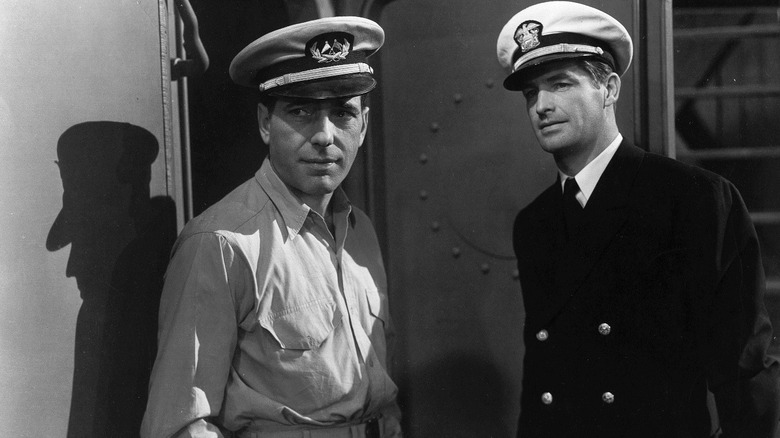
As the Second World War progressed, Hollywood saw it as a priority to make more stirring, patriotic war epics. "Action in the North Atlantic" was considered at the time of release in 1943 to be one of the most inspirational of them all. This might be because the movie started life as a documentary detailing the lives of the USA's merchant marines, but unusually, the project was redevised as a fiction feature after producer Jerry Wald became aware of the high death toll of mariners as the war unfolded, wanting to produce something morale boosting in response to this devastation. This meant the movie was fast-tracked into production; within five weeks, two ship sets had been built on sound stages even before a first draft of the script had even been submitted to the studio.
Despite the frantic nature of the production, "Action in the North Atlantic" doesn't bear any signs of being a studio rush job, with cutting-edge practical effects of death and destruction devised on Warner's sound stages effectively conveying the impossible stakes that mariners were facing as war continued to break loose. They were among the most passionate fans at the movie premiere, but within the space of a few years, this flag-waving drama retreated to obscurity, despite an A-list lead in the form of Humphrey Bogart. This was because it was produced at a time when the US and the Soviets were allies, making the finale -– where cheering Russians greet our heroes on their shores -– quickly outdated after WWII ended and Cold War tensions began. It all but vanished from screens during those years, with an awkwardly edited version replacing it when it was circulating, and still hasn't been rediscovered to the extent it deserves.
Black Sea
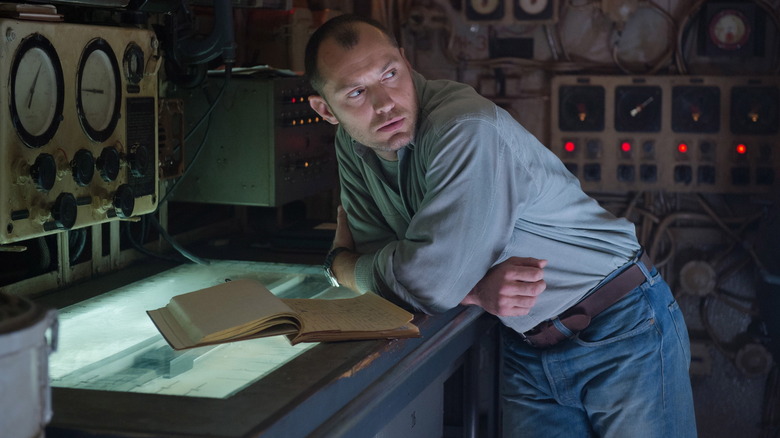
Fired from his job after more than a decade spent working with submarines, Robinson (Jude Law) doesn't have much time to wallow in anger before another newly laid-off co-worker reveals that their former company is hiding a secret: the whereabouts of a gold cargo underneath the Black Sea. It's trapped in the middle of a wreck dating back to WWII just off the coast of the country of Georgia, but conflict with Russia has made it disputed territory – while the Russians just have no idea it's currently lying there waiting to be taken, Robinson do. As he assembles a team consisting of Brits, Russians, and a psychopath Aussie played by Ben Mendelsohn with the aim of splitting the profits equally, it shouldn't come as a surprise that culture clashing tensions increase once underwater, and the pursuit of gold sees the team turn sharply against each other.
"Black Sea" is reminiscent of the likes of "The Treasure of Sierra Madre" and William Friedkin's "Sorcerer," as it's a tense, paranoid thriller where the pursuit of an impossible treasure makes everybody on board blind to how corrupted that bounty is making them. There are few surprises as to how and why things go off the rails for the submarine crew, but director Kevin MacDonald still manages to generate tension as relationships with the team members unravel and cultural differences turn things violent. More importantly, by using the financial crisis and territorial tensions with Putin's Russia as a backdrop (this was released in the same year of the annexation of Crimea), the film becomes a timely commentary on renewed Cold War-era tensions without losing any of its narrative propulsion. You couldn't mistake it for a dry political commentary.
The Enemy Below
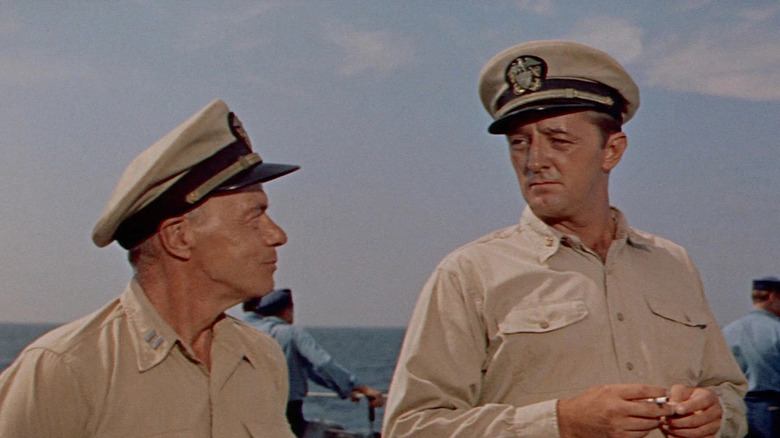
When you think of a submarine movie, you tend to expect something claustrophobic, with tight-knit teams stuck in close quarters deep under water. So, you might be caught off guard during the opening credits of this 1957 WWII adventure that boasts that it was filmed in glorious CinemaScope, the short-lived technology designed for ultra-widescreen epics. Actor-turned-director Dick Powell's film doesn't spend too much time in the German submarine circling the American destroyer commanded by Captain Murrell (Robert Mitchum), instead focusing on the tension at the surface as the crew learn how to navigate the threat from below that's narrowly evading their radar.
For those who want their war movies to be as much about naval strategy as explosive thrills, "The Enemy Below" is the movie for you, with wet and wild high seas set pieces sitting next to quieter moments of both sides workshopping the next stages in their standoff. You could say it's a better "Battleship" movie than the one we ended up getting in 2012, as it understands that the pleasure of this genre lies as much in the discussion of tactics as the bombastic conflict itself. The movie was a box office disappointment upon release and is rarely talked about now, although its influence looms large. Not only is it directly referenced in one of the most beloved submarine action extravaganzas, "Crimson Tide," but it influenced both an episode from the original "Star Trek" series ("Balance of Terror") and arguably the most beloved "Trek" movie of them all, "The Wrath of Khan." If anything, it's surprising that a movie with such a stripped-down, easy-to-imitate narrative template hasn't been paid homage to more.
The Wolf's Call
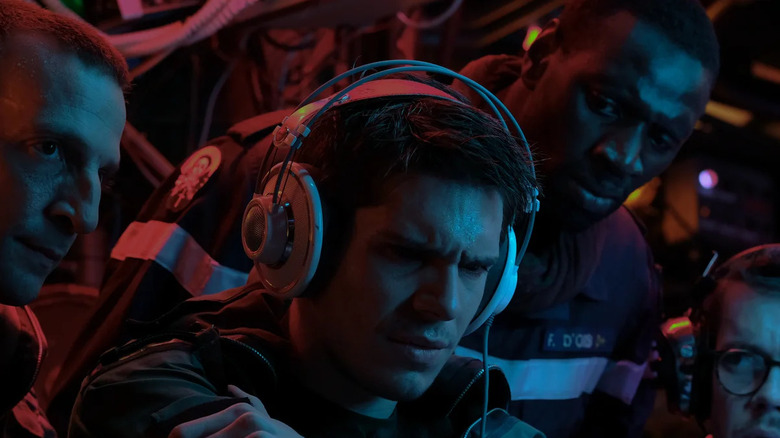
The most recent movie on the list is France's answer to "The Hunt for Red October," putting viewers squarely in the face of an incoming nuclear threat as a tight-knit submarine crew experience it. Writer/director Antonin Baudry's film draws from his experiences as a diplomat for a former French foreign minister, with the filmmaker spending an additional month aboard a sub to ensure his film was as realistic as possible -– he stated that he didn't want to simply copy the clichés of an American submarine movie. And yet, this muscular action epic would fits nicely alongside Hollywood's attempts at the genre, not least because the threat of nuclear warfare with Russia is a recurring threat in many an American fact-based thriller.
Here, we follow the submarine's sonar expert Chanteraide (François Civil) as he and the team navigate a new threat from the East after Putin's forces invade Finnish soil, with the Russian military not taking kindly to French forces being dispatched there. The action is largely relegated to the control room, making it catnip for anybody who prefers their war dramas to be driven by tactical discussions than explosive set pieces –- just like "The Enemy Below," it's a more invigorating "Battleship" movie than the one that was made. Unlike that movie, hell fully breaks loose; diverting tactics by the crew on board only further the threats to their lives. The stakes are impossibly high, and the fact the movie was written after time spent observing real submarine crews in action only increases the intensity further.