

All 7 Steven Spielberg Horror Movies, Ranked
Steven Spielberg has built the foundation of his filmmaking career by creating over five decades worth of movie magic across multiple genres. Action adventures ("Raiders of the Lost Ark"), historical dramas ("Schindler's List"), crime capers ("Catch Me If You Can"), science fiction tales ("A.I. Artificial Intelligence"), musicals ("West Side Story") — you name it, Spielberg's done it. In spite of this tonal diversity, his work within the horror sphere is either diminished or not acknowledged at all, even from the man himself. "I haven't directed a horror film yet, and I've always wanted to, and someday I may," claims Spielberg in the March 2026 issue of Empire Magazine.
The notion that Spielberg has never directed a horror movie is strange and categorically false. Even those that aren't explicitly labeled as such are at least horror-adjacent in a way that honors the genre's tropes and genetic makeup. "Jaws" may have a body count, an aquatic slasher villain, and a final boy who narrowly escapes his impending death, yet you'll encounter folks who claim it's just an adventure-thriller. For some, horror can still be considered a dirty word, and associating it with one of the most prolific filmmakers of all time will make his work seem lesser than, despite that being far from the truth.
As of 2026, Spielberg has at least seven films that can be considered either outright horror flicks or feature enough elements of the genre to classify them under the same umbrella. With that in mind, let's rank them and talk about how many of these conjured images of terror still persist to this very day.
7. Something Evil
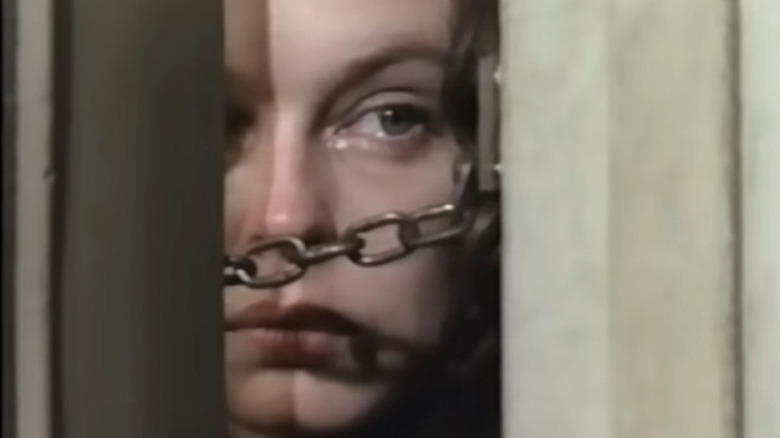
After finding great success with the grounded terror of "Duel," Steven Spielberg turned his sights on the supernatural the following year with "Something Evil." The 1972 made-for-television movie follows Academy Award winner Sandy Dennis as Marjorie Worden, an artist who convinces her husband Paul (Darren McGavin) to move their family from New York to rural Pennsylvania after falling in love with an old farmhouse. In the wake of purchasing the property, Marjorie notices a strange symbol adorning the barn, which compels her to recreate it through her various art projects. It's revealed to be a hex to ward off evil spirits that may or may not be causing a series of strange noises and "accidental" deaths with the intent of possessing someone in the family.
"Something Evil" is often forgotten when it comes to Spielberg's filmography, which comes down to both its lack of availability and that the fact that it's a significant step down from "Duel." It hardly feels like this story truly has room to breathe at just 73 minutes long, and can only push the envelope so far for a made-for-TV movie. But even with its limitations, Spielberg still manages to craft some creepy images out of Robert Clouse's screenplay, such as Marjorie being caught in the throes of wind and vines screaming for her son Stevie (Johnnie Whitaker). It very much feels like the genesis of what would become "Poltegeist" (which Spielberg produced and co-wrote, but did not direct).
While the physical personification of evil is manifested through a jar of pulsating red goo emitting a childlike scream, "Something Evil" derives its horror from Marjorie's paranoia and how it affects the rest of the family.
6. The Lost World: Jurassic Park
If the 1933 "King Kong" can be classified as a horror film, then so can "The Lost World: Jurassic Park" (which is currently streaming on Peacock). Both films concern exploratory parties coming across a hidden landscape full of dinosaurs, fleeing for their lives, bringing a dangerous creature to the United States for capitalistic ventures, and ultimately reaping what they sow. While it's nowhere near the groundbreaking achievement that was "Jurassic Park," Steven Spielberg's 1997 follow-up is a good sequel that explores these prehistoric beasts through a much meaner lens. Here, they're explicitly free-range animals with no barriers to contain them. And as in its predecessor, it's only a matter of time before things go wrong.
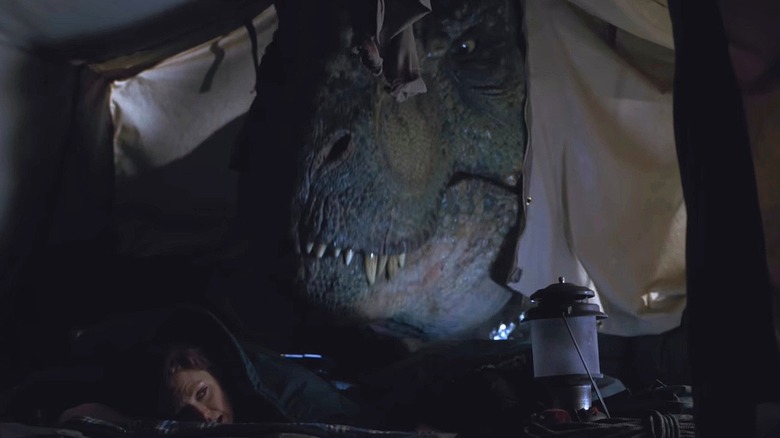
"The Lost World" is built upon a series of set pieces that further demonstrate humanity's insignificance against these towering behemoths with their rows of sharp teeth, jagged tails, and incredible agility. The overhead perspective of the Velociraptors quietly descending upon the InGen goons in the tall grass is one of the creepiest shots in any Spielberg film. The T-Rex sniffing around in the tent is the terror appetizer to its rampage through the streets of San Francisco, which itself is more effective than all four "Jurassic World" movies combined.
Where "The Lost World" shines as a horror film is in the recognition that humanity tampering with nature for a second time wields further violent results. Survival is dependent on respecting the balance, and that's not even enough sometimes. Characters with a good heart like Eddie Carr (Richard Schiff) may not have directly participated in the Baby T-Rex's capture, but that won't prevent mom and pop from tearing him apart with their massive jaws.
5. Indiana Jones and the Temple of Doom
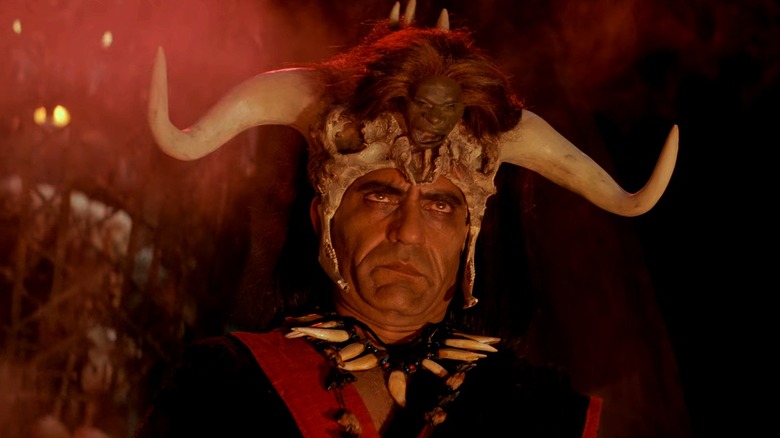
Between the face-melting scene in "Raiders of the Lost Ark" and the rapid bodily deterioration in "Last Crusade," the "Indiana Jones" movies have dabbled in horrifying consequences for people who seek to position themselves above a cosmic power. Making smart decisions and being pure of heart is what saves the groups of explorers from incurring the painful wrath of God. This bleeds over into 1984's "Indiana Jones and the Temple of Doom" (currently streaming on Disney+), which opens as yet another adventure flick before our heroes stumble upon a horror movie in progress. The thrill of Indy (Harrison Ford), Short Round (Ke Huy Quan), and nightclub singer Willie Scott (Kate Capshaw) going on a globe-trotting adventure is snuffed out by having to survive a deadly cult performing sacrifices, black magic, and child slavery in the name of their demon god Kali.
Steven Spielberg and George Lucas both going through breakups around the same time imbues the film with a palpable mean-spirited energy that shows up long before the Indy crew gets to India. But once in the throes of the Thuggee cult, "Temple of Doom" becomes an infinitely darker film, as high priest Mola Ram (Amrish Puri) rips a man's still beating heart out of his chest before slowly lowering him into a fiery vortex of molten lava.
With this being a prequel (and one of the best of its kind), we know that Indy will make it out alive, but it does a great job of challenging that through a blood-like potion that compels him to sacrifice his friends. If your movie was so intense that it directly contributed to the creation of a whole new MPAA rating, then you're definitely playing around in the horror pool.
4. Duel
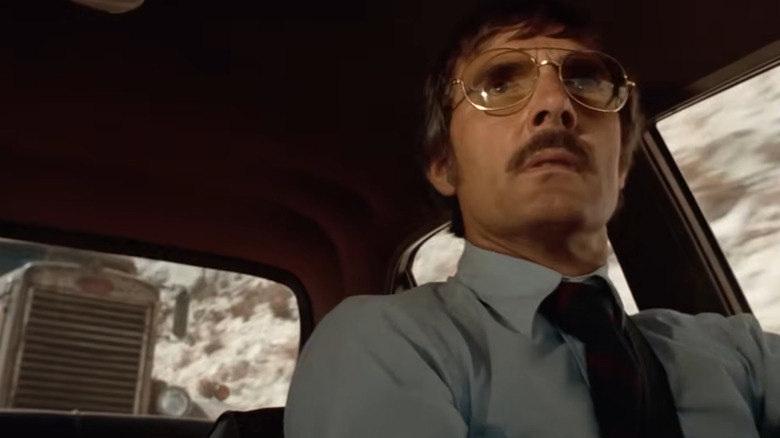
Years before Steven Spielberg became one of the biggest names in film history, he was a hungry up-and-comer who did a lot of contract work for Universal in their television department. His breakthrough came in 1971 with the opportunity to direct the suspense thriller "Duel," which has since been recognized as one of the greatest made-for-television movies. Based on the Richard Matheson short story of the same name, the film is a prolonged cat and mouse game between anxious electronics salesman David Mann (Dennis Weaver) in his red Plymouth Valiant and a rusty Peterbilt tanker truck with an unseen driver at the helm. Together, these two are in a ballet of sustained tension as the truck consistently allows David to have a breather before continuing his terror campaign of running him off the road.
While "Duel" can land more on the thriller side, it's the antagonist's presence that pushes it into horror. One of the most affecting scenes is where David believes he's in a cafe with the driver and it sends him spiraling into a state of paranoia. But it doesn't matter who the driver actually is, because the truck's aesthetic transcends the idea of a person being behind that muddy windshield. The Peterbilt is the devil on wheels and covered in license plates of its prior victims. Other people can see it go by, yet it has no interest in pursuing them when David is ripe for the picking on the sun-scoarched roads to oblivion. When it goes over the edge, the emission of dinosaur roars makes it feel even more like a monster on wheels. Spielberg demonstrates a proficiency for maintaining intensity across the television and theatrical cuts, which he would later expand with "Jaws."
3. Jurassic Park
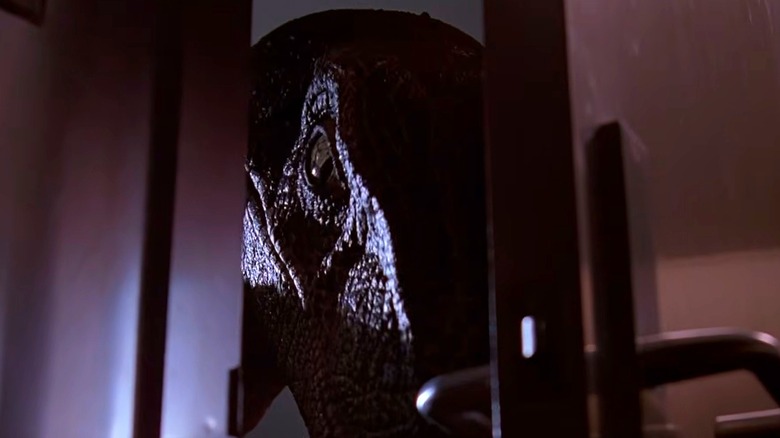
Michael Crichton's best-selling novel about a theme park of genetically engineered dinosaurs breaking free from containment is more violent and cynical than the blockbuster it inspired, but Steven Spielberg's adaptation is no less of a horror film. It's kind of a magic trick how 1993's "Jurassic Park" (currently streaming on Peacock) slowly reveals its terror. After getting a taste of what a velociraptor is capable of from within the shadows, David Koepp's screenplay pumps the brakes and focuses on creating a sense of anticipation. John Hammond (Richard Attenborough) comes to Dr. Alan Grant (Sam Neill) and Dr. Ellie Sattler (Laura Dern) with the promise of showing them something beyond the scope of imagination. Upon their arrival to this island attraction, they're greeted by the awe-inspiring image of a Brachiosaurus in the flesh.
The rightful skepticism of Dr. Ian Malcolm (Jeff Goldblum), however, creates a downward spiral that forever breaks the illusion of safety from these prehistoric animals. The horrors of trying to control nature are met with the grisly reality of what dinosaurs are capable of, especially the carnivores. Spielberg essentially rings the dinner bell for the towering T-Rex with young Tim (Joseph Mazzello) and Lex (Ariana Richards) in the Jeep Wrangler, giving way to one of the most terrifying set pieces of the '90s. It's matched by the intensity of the game of kitchen hide and seek with the Velociraptors showing off their cunning ruthlessness when they lock onto their prey.
"Jurassic Park" endures as one of the premier creature features, where the dinosaurs' existence takes on a nuanced perspective where wonderment and bloodshed go hand in hand.
2. War of the Worlds (2005)
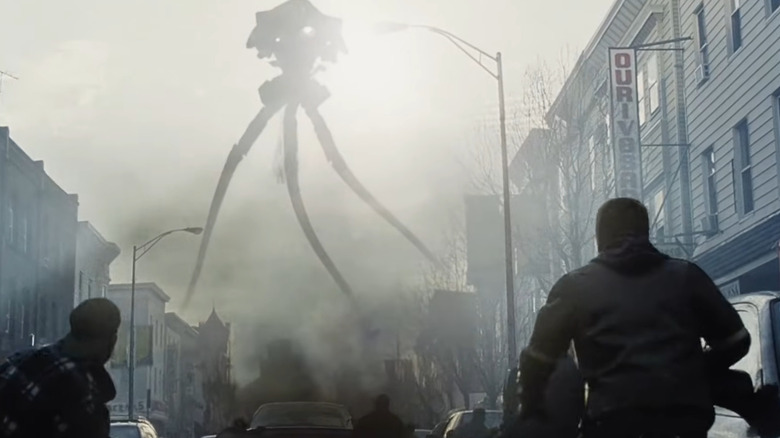
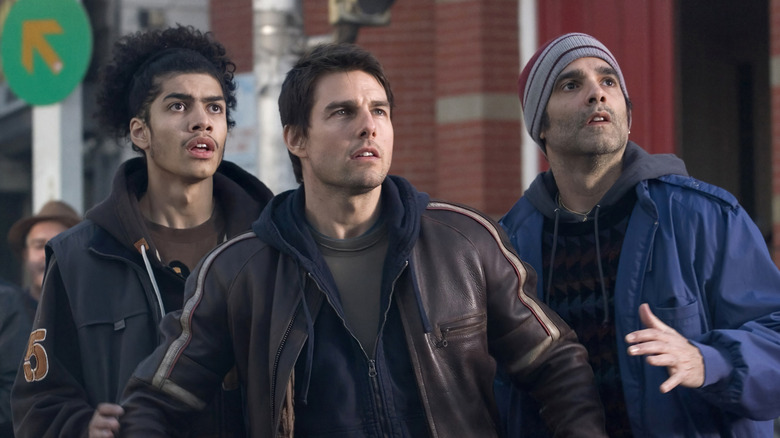
Steven Spielberg's adaptation of "War of the Worlds" (currently streaming on Paramount+) makes one of the biggest changes to H.G. Wells' novel within the first few moments of the invasion. Excessive bouts of lightning aren't the extraterrestrial's biomechanical ships descending to Earth, but an activation signal that awakens what was buried. The planet was predestined for annihilation by an unknowable force long ago, and their first wave of attack is the apocalyptic judgment day we were never prepared for. This is all captured from the street level perspective of divorced dockworker Ray Ferrier (Tom Cruise) who narrowly escapes the obliteration of his entire community with his children in tow (Dakota Fanning and Justin Chatwin). The film wisely eschews the typical military defense perspective in favor of following the end of the world through a broken family fighting for survival.
"War of the Worlds" evokes the paranoid frenzy brought on by the September 11th attacks, and how its unexpectedness transformed the United States' temperature overnight. The science fiction angle of aliens, who are massive in scope and the scale of their destruction, compliments the horror of people's responses to it. It's impossible to have this movie without the horde forcing Ray and his kids out of their van by breaking windows and holding them at gunpoint. It's even structured like a zombie movie with the initial wave of death in a populated area, followed by the gathering of supplies, facing human threats, more death, and holing up in a boarded-up basement with a crazy guy (Tim Robbins) who threatens to ruin their sanctuary.
Over two decades later, "War of the Worlds" may be the scariest film in Spielberg's filmography — but there's one more horror movie that takes the cake.
1. Jaws
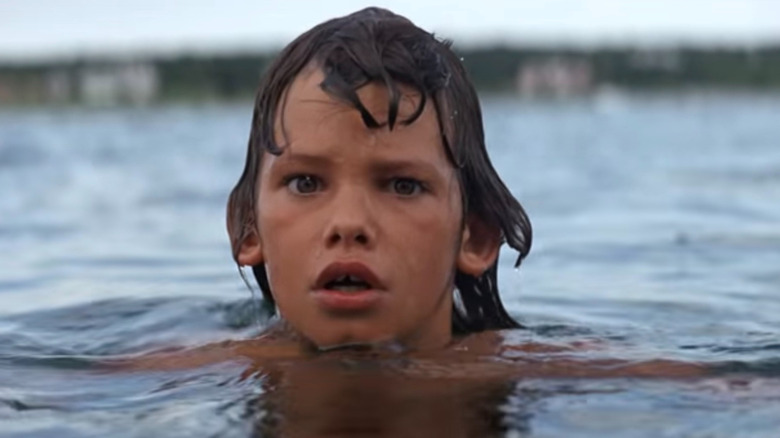
How could the top spot not go to "Jaws," a movie that traumatized generations of people from going swimming in the ocean without thinking they'll be gobbled up by a man-eating great white shark? Steven Spielberg inadvertently built his first masterpiece on the power of suggestion because the mechanical underwater menace wasn't working as planned. It forced the '70s wunderkind to get creative by making you feel the shark's presence even when you couldn't see it, as shown in the horrifying sequences of Chrissie (Susan Backlinie) getting tossed around in the water, and young Alex Kintner (Jeffrey Voorhees) being dragged to his demise.
Without "Jaws," you wouldn't have one of the all-time jump scares with Matt Hooper (Richard Dreyfuss) discovering Ben Gardner's severed head in the hull of the boat. The quiet fear in the eyes of a beachgoer who thinks she sees the shark just a few feet away from her really sells the terror this fish has sowed throughout Amity Beach. Our first full profile of the shark strikes like lightning at the 81-minute mark with Chief Brody (Roy Scheider) tossing the chum overboard, and the film takes on a whole new life. Over the course of two hours, the shark unlocks the horrors of capitalism, world history, masculinity, and being pulled into a bloody, watery oblivion. As daytime horror movies go, "Jaws" is easily one of the best.
Spielberg's horror magnum opus has collectively terrified the collective consciousness of pop culture to the extent that those opening notes of John Williams' iconic score are universally synonymous with danger. In closing, yes Steven, you have directed a horror movie, and one that will always linger with us whenever we step foot in the water.