

5 TV Shows Every Kid Should Watch At Least Once
Many kids remember hearing their parents reminisce about the media they grew up watching. If they're really involved, they might even try to show their children their own beloved media of yesteryear, hoping they'll find it funny or endearing (or, at the very least, not cringeworthy). Then, those kids become adults and perhaps have children of their own, realizing that their parents wanted to share their childhood media with them to reconnect with their own inner child. Now that I'm a parent myself, I understand that sharing that part of yourself with your kids is vulnerable in a special way.
I was a child when the Boomerang channel was showing Hanna-Barbera classics like "The Flintstones," "The Jetsons," and "Scooby-Doo." My mom would tell me about watching these cartoons as a kid and how much she enjoyed them, and I even recall her buying me a VHS tape of "Schoolhouse Rock!" and forcing me to watch it. Though I initially resisted, I came around to liking many of the songs. I still remember my multiplication tables thanks to the catchy tunes on that VHS.
I recall the shows of my childhood with the same fondness my mother did hers, and I'm eager to share them with my toddler. Having surveyed the landscape of kids' TV today, along with my own rosy memories, here are five shows I believe every kid should watch at least once.
SpongeBob SquarePants
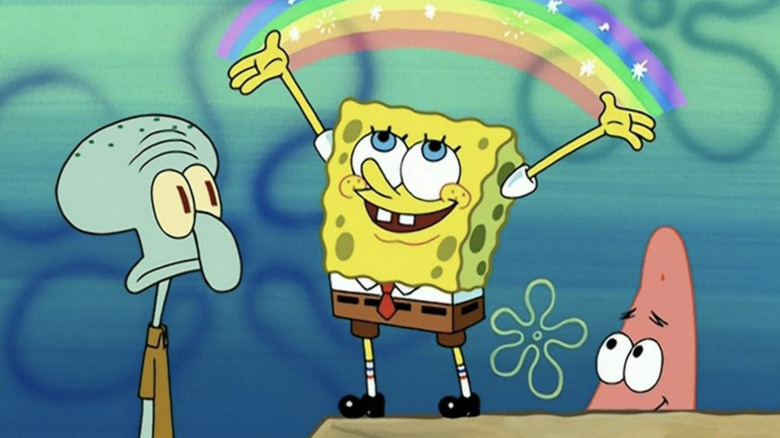
It's hard to tell exactly how well "SpongeBob SquarePants" has aged for a few reasons. First, there's the fact that it is still on the air after 27 strong years; and second is that it's collectively agreed upon that the best "SpongeBob" episodes can only be found in its first three or so seasons. Lastly, despite the previously mentioned consensus, "SpongeBob" as a cultural reference has never really left the zeitgeist. The series never aged out of the mainstream, even if the quality has become questionable.
When I finally show my kid the yellow sponge under the sea, I'll definitely be showing him the earlier episodes, as most of the show's iconic memes are from that time period (along with some hilarious jokes that only adults notice). What I loved about "SpongeBob" then was how whip-smart the writing was. Despite widespread panic at the time that it was making kids "dumber," I felt that "SpongeBob" was wacky in a way that didn't insult kids' intelligence; I'm not kidding when I say there are some words I learned strictly from watching this silly little sponge. It was funny with instantly quotable one-liners, but also taught kids low-stakes lessons about relationships, honesty, and being yourself. If nothing else, I think my child would learn that being different, or even a little weird, is nothing to feel ashamed of. I know I did.
Sesame Street
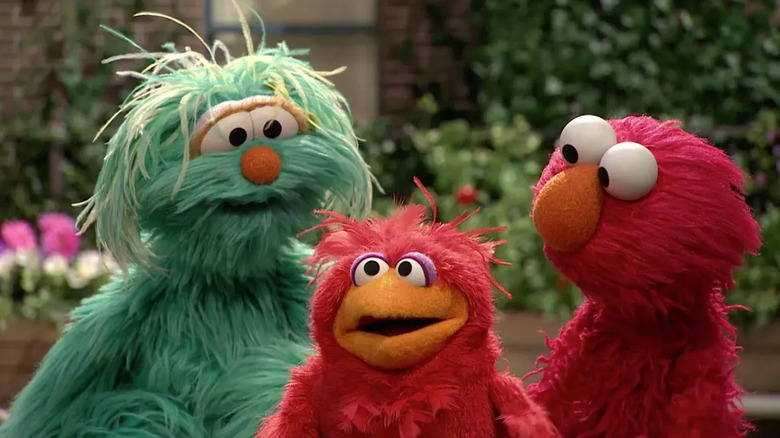
Touching even more generations than "SpongeBob SquarePants" is "Sesame Street," which debuted in 1969. The series was created as a public service and was intended to fill educational gaps for children in low-income households who could not access quality education. That kind, selfless nature at the heart of "Sesame Street" is what has given it staying power for over half a century. While it's unlikely that a child in this day and age hasn't seen at least one episode of "Sesame Street," I just can't leave it off this list.
Big Bird, Elmo, Bert and Ernie, Cookie Monster, and the rest of the "Sesame Street" residents are the epitome of what children's television can and should be. Even if kids' TV has since evolved to mindless places, the care put into "Sesame Street" created a template for children's television. That is, the show utilized child psychology and research to create narratives that could entertain and educate kids. The goal of the series is to expand kids' horizons, and this is reflected in how new characters have been introduced to the universe in recent years. For example, Spanish-speaking Rosita and Julia, who is on the autism spectrum. If there are any children in your life, they must watch at least one episode. It might be the purest kids' TV show we still have left.
Bill Nye the Science Guy
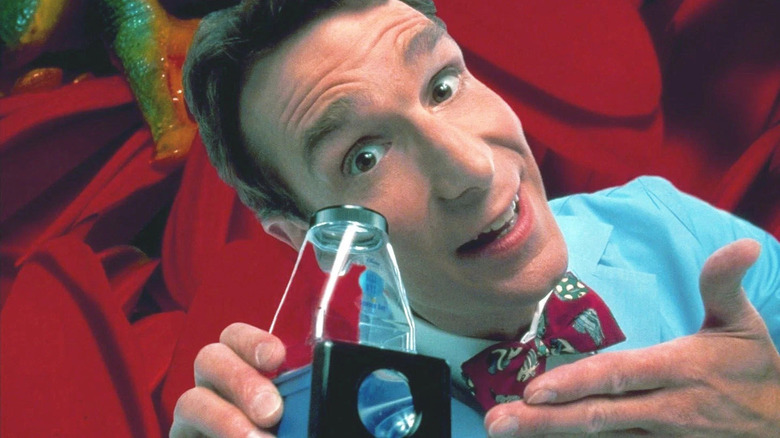
Before "MythBusters," there was one kooky scientist reminding kids everywhere that "science rules." I'm sure I'm not the only one who remembers when the TV cart was rolled into the school classroom so the substitute teacher could queue up an episode of "Bill Nye the Science Guy." I don't have a TV cart handy to stroll in for my son, but I will be tapping the buttons on my Roku remote to show him an episode or two of "Bill Nye" once he's old enough to understand the Science Guy's lessons.
To me, the selling point of the series is that they simply don't make shows like this anymore — at least, not for mainstream consumption. "Bill Nye" was syndicated on PBS during arguably the network's most popular era. With media moving away from education for education's sake, Bill Nye's way of explaining difficult scientific concepts in layman's terms remains special. The show also included real kids in its segments, showing audiences everyday applications of the topics discussed using household items. I know the second my kid starts complaining about science class one day, I'll be looking up a "Bill Nye" episode that covers the topic he's struggling with!
Bluey
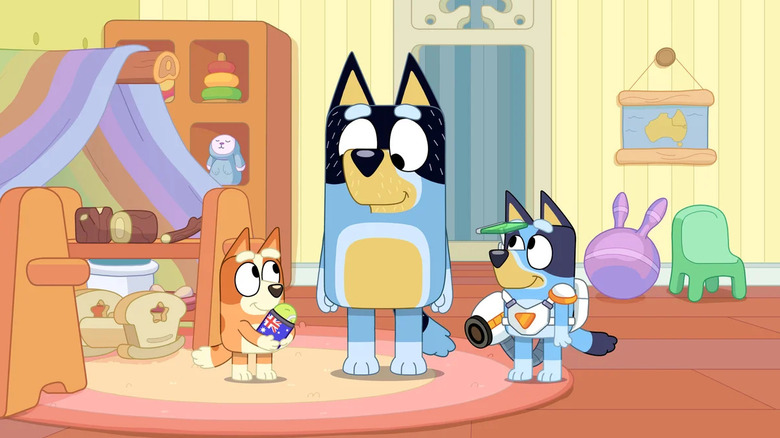
In the age of cord-cutting and streaming, there aren't as many kids' TV shows that capture the mainstream imagination since everyone is watching something different. However, there are a handful that have "made it" in terms of universal popularity, and "Bluey" is at the top of that short list.
Kids and adults alike love "Bluey" for different reasons. Speaking for my own family, my son loves the show because of how playful and imaginative Bluey and her sister, Bingo, are. The episodes are short and sweet while still being memorable. Anytime there's a balloon in the house, we have to play "keepy uppy" until the balloon reaches its unfortunate demise (at the hands of who, I'll never tell). For me, I recognize "Bluey" as great children's TV because it approaches the immature emotions that toddlers feel and the complex emotions that parents feel with equal compassion. In regard to the latter, it has been well-documented that parents have found the lessons shown on "Bluey" to be just as comforting to them as to their children.
From this era of kids' television, this series will undoubtedly stand above the rest. "Bluey" will be the series post-COVID babies hold a soft spot for when they remember their childhoods.
Steven Universe
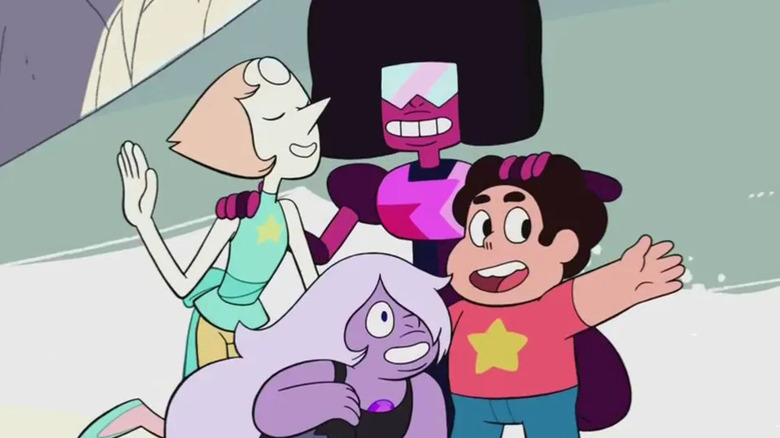
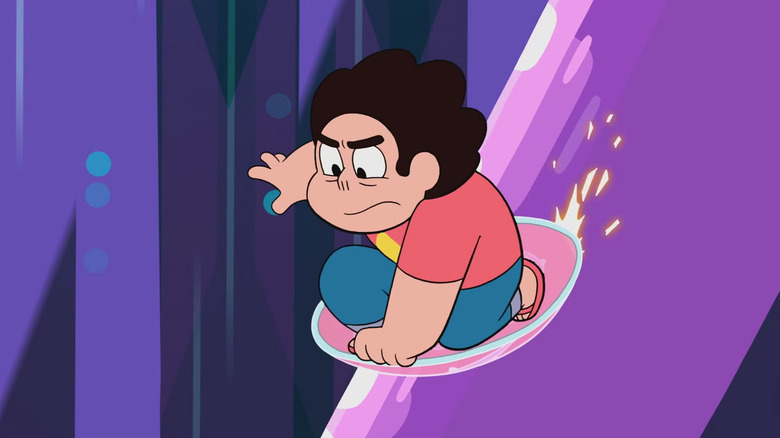
While other shows curate storylines with lessons unambiguously for kids, "Steven Universe" was a series that both kids and young adults gravitated to. From personal experience, I can say that "Steven Universe" was hugely popular among a certain cohort of college students in the 2010s; I went to many parties where Steven, Garnet, Amethyst, and more were bubbling topics of conversation. Indeed, it was only after the show's conclusion that I discovered it was technically "for kids." The fantastic part about animation is that the medium can often address mature topics in a playful, lighthearted, or abstract way that live-action cannot. And yes, there are things that only adults notice in "Steven Universe," but kids can also lose themselves in the fantastical world that Steven and his chosen family inhabit and learn moral lessons about relationships, bravery, and individuality.
As a mother, I would also love to introduce my son to this show as an entry point to the concept of queerness. I want to show my child that heteronormativity isn't all there is, so that if he ends up discovering queerness within himself, he does not feel shame. During its run, the series was praised for its inclusion of same-gender couples and has been embraced by LGBTQ+ folks. To this day, there is an active community around the show's universe, a testament to its quality and enduring legacy as positive queer representation. Overall, I would welcome my son watching "Steven Universe" because it simply has so much heart. You feel warm inside watching it, and I believe kids should watch things that make them believe in the magic within themselves.