

5 Best War Movies Nobody Talks About Anymore
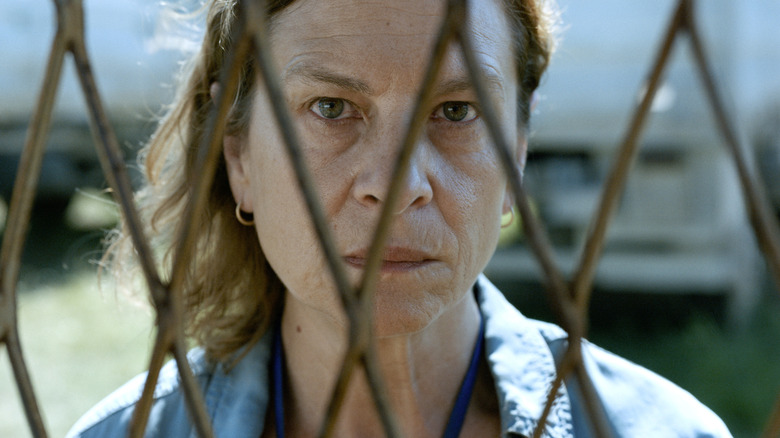
When you look at the genre of war films, there are a massive number of classics. Aside from dads single-handedly keeping it in business, they're filled with narrative components essentially guaranteed to elicit emotion. But perhaps because there are so many classic war movies, many have flown under the radar — with "Saving Private Ryan" and "The Great Escape" sucking up a lot of oxygen, there's less room for smaller productions.
Foreign films, independent ventures, and movies that were simply overshadowed by more bombastic efforts are often forgotten, even though they're often just as impactful as their better-known counterparts. The following films explore some of the most complex issues of war without the renown of other productions in the same genre. If you're looking for a new take on World War II — or even an entirely different conflict (there are war films that don't take place in the 1940s, we promise) — these movies are a great place to start.
Kanał
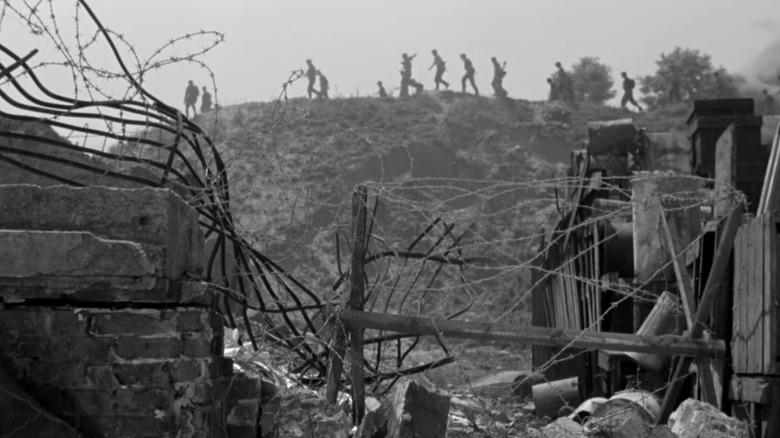
Oftentimes, combat films tend to focus on the battles where our heroic figures are victorious — especially during World War II, when they were meant at least partially to bolster morale at home. But there's still a lot of room in the conversation for war films that revolve around spirited but tragically doomed efforts, like the Warsaw Uprising, which lasted for two months in 1944 before being brutally suppressed by German forces. "Kanał," a Polish film from 1957 directed by Andrzej Wajda, takes place during the last days of the uprising.
In it, much of Warsaw has been reduced to rubble, and Polish resistance fighters prepare for a last stand, traveling underground via the sewers to reach a new position. Although their defeat is all but assured, their leader stubbornly soldiers on, with little instinct but to keep going. It may not be as bombastic as some of its contemporaries, but "Kanał" offers a nonetheless more authentic vision of wartime heroism, tempered with an appropriately melancholy fatalism. In the years since its release, it's grown into a World War II classic.
Anthropoid

In most World War II films, the country of Czechoslovakia (and its ensuing takeover by the Germans) is treated as merely part of the precipitating event. The other countries of Europe decided to let Germany have its way to keep the peace, and the result was that Czechoslovakia was handed over to the Third Reich machine. But "Anthropoid" focuses its attention on one of the proudest moments of the country's World War II history, where several of its sons (supported by the British government) were airlifted into occupied Prague to carry out a seemingly impossible mission.
Played by Cillian Murphy and Jamie Dornan, respectively, Jozef Gabčík and Jan Kubiš were tasked with the assassination of Reinhard Heydrich, one of the highest-ranking German officials in Czechoslovakia. Casual audiences may not be familiar with Operation Anthropoid, but its innate sense of drama and devastating conclusion will leave them awestruck.
Land of Mine
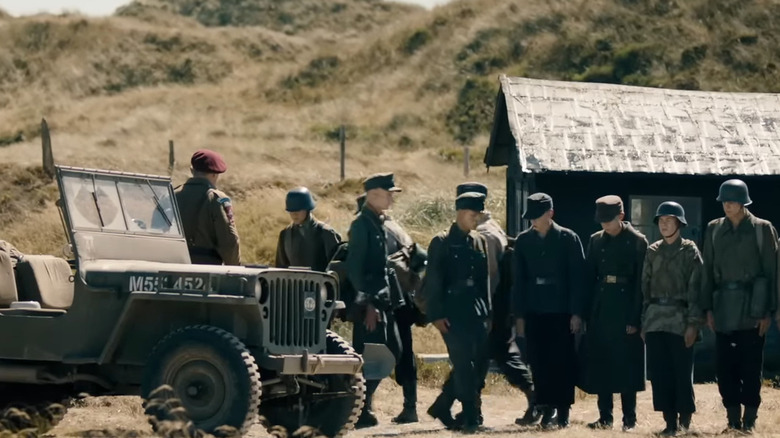
Once a country has made the monumental decision to go to war, the actual act of mobilizing, launching bombs, and planting land mines is not so tough in comparison. But after a war is over, the countries involved aren't just returned to the state they were in before it started. Aside from the mental and emotional toll conflict takes on citizens — the effects of which are well documented in cinema — the physical devastation of war can be just as overpowering. In "Land of Mine," both of these elements are addressed.
The Danish film revolves around a group of young German prisoners-of-war, most just teenagers, who have been assigned the gruesome task of disarming thousands of landmines littered across the Danish coast by German forces. A fitting punishment, it would seem — but it doesn't take long before the Danish officer in charge of this operation begins to feel a twinge of emotional attachment to his impossibly young prisoners, who were hardly responsible for Germany's wartime decisions. Heart-pounding and gripping throughout, "Land of Mine" has audiences on the edge of their seat while offering a different perspective on the toll of war.
Chimes at Midnight
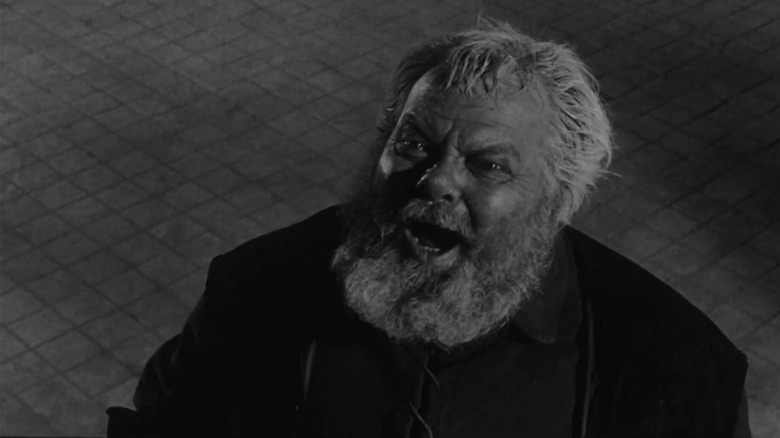
Shakespeare by way of Orson Welles? Yes please. "Chimes at Midnight" is an interpretation of several of Shakespeare's historical plays, revolving around Prince Hal (eventually King Henry V) and his journey from shiftless layabout to proper king. It pays particular attention to the character of Falstaff, played by the larger-than-life Welles himself, whose booming voice and obvious command of the material turn him from a drunken sidekick into one of the most memorable figures in cinematic history.
So what about "Chimes at Midnight" makes it a war movie? Well, the film is set amid the power struggles surrounding Henry IV's reign, and it gives audiences an especially vivid glimpse of the Battle of Shrewsbury, which Welles stages with his trademark panache behind the camera. If you need any more convincing, Welles himself claimed that "Chimes at Midnight" was his favorite of the films he directed — and we trust his opinion.
Quo Vadis, Aida?
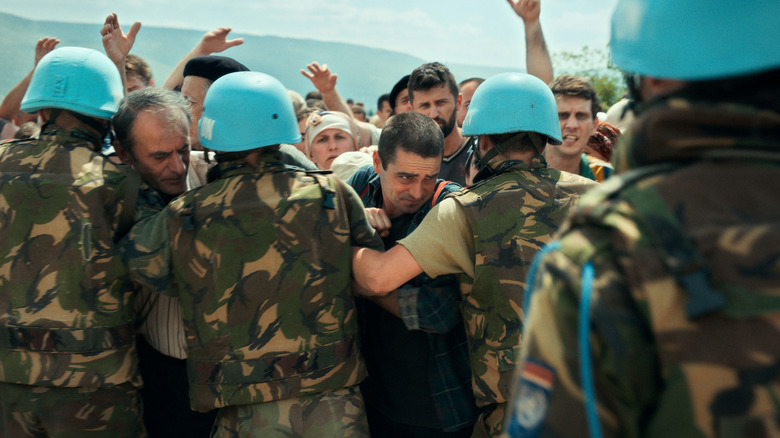
Set in the midst of the Bosnian War, "Quo Vadis, Aida?" meets UN translator Aida Selmanagić (Jasna Đuričić) on the worst day of her life. She's attempting to help with the delicate negotiations between Dutch UN forces and Ratko Mladić, the leader of the Bosnian Serb Army that has just taken control of Srebrenica. The more she attempts to find a peaceful way forward, acceding to the demands of the general in a desperate hope that she will be able to save her husband and two sons, the more it becomes clear that her efforts are only serving to ease the path of destruction.
It's a devastating exploration of how one can, by small steps with good intentions, become complicit in something truly horrific — as we see with Aida herself as well as the Dutch peacekeeping forces who end up essentially aiding in genocide. Although its release was somewhat muted due to coming out in the midst of COVID-19-related theater closures, it was recognized at the Academy Awards with a nomination for best international feature and is one of the best films of the 2020s.