

All 5 Seasons Of Star Trek: Discovery, Ranked
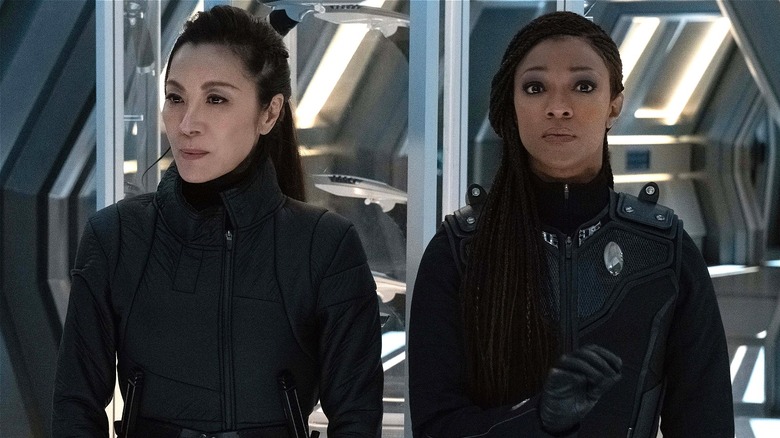
Over the course of its five seasons, "Star Trek: Discovery" gave us so much fat to chew that the fandom will likely debate the merits and detriments of the show until kingdom come. In the eyes of the fans who dislike it, the most glaring offenses of "Star Trek: Discovery" are numerous. Still, as critics have noted, Bryan Fuller and Alex Kurtzman's show has plenty to love.
Sure, there's a reason "Discovery" is divisive. It constantly takes big swings, explores major conflicts, and deals with unfathomably dangerous large-scale scenarios. Two seasons into its run, it introduces a 900-year timeskip that serves as a de facto soft reboot.
All of this allows it to consistently mix things up and explore narratives that can't be found in any other Star Trek show. It also makes for a slightly uneven viewing experience, given that the storylines between the five seasons vary wildly. But how do the seasons and the quality of their story arcs line up? Let's take a look at all the "Star Trek: Discovery" seasons, and how they rank according to Rotten Tomatoes.
5. Season 5

As far as critics are concerned, no "Star Trek: Discovery" season is truly bad — in fact, they've all received pretty good reviews. However, some of them do have slightly less mojo than the others, and with a 81% Tomatometer rating, Season 5 comes dead last. This is understandable, too, seeing as the way "Discovery" ends is simply underwhelming compared to the things that came before.
Yes, Season 5 features plenty of stunning visuals and action, and the Progenitor storyline is an interesting one. Even so, the season doesn't really deliver an exciting enough payoff to everything that preceded it. While it's nice to see the show explore the origin of life and Michael Burnham (Sonequa Martin-Green) ultimately comes face to face with a Progenitor (Somkele Iyamah-Idhalama), a feeling of being rushed overshadows the way things play out.
The last episode of "Discovery" Season 5, "Life Itself," is one of the weaker Star Trek finale episodes, and effectively undoes some of the stakes the rest of the season spent building. The Red Directive mission that sets the season's pace comes to a close with fewer groundbreaking results than expected, and even the lengthy time skip into Burnham's later years and the final mission of USS Discovery comes across as a brisk victory lap instead of a meaningful way to tie a neat bow around the show.
4. Season 2
"Star Trek: Discovery" Season 2 is a case of something old, something new, and something borrowed. The sophomore season was tasked with introducing several familiar elements, like new versions of classic characters, including Anson Mount's Captain Christopher Pike and Ethan Peck's Spock. Yet the season also brought us to truly unexplored territory as it came to a close.
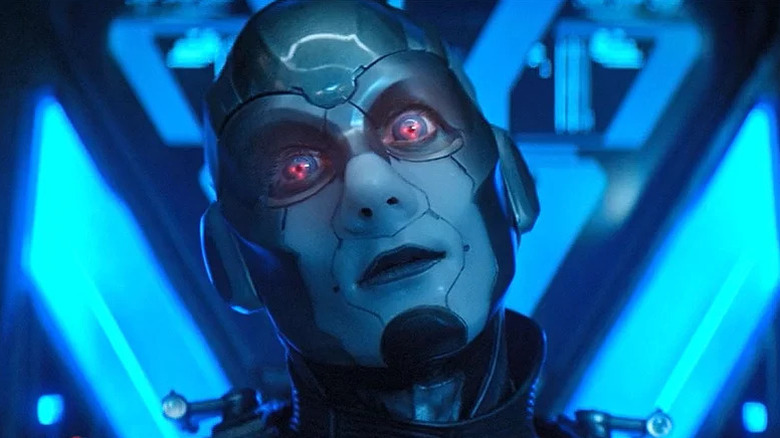
After all, the season ends with what just might be the finest Star Trek cliffhanger of all time, as the USS Discovery travels nine centuries into the future in order to ensure that the dangerous Section 31 AI system, Control (primarily portrayed by Alan van Sprang), is defeated.
Even so, a lot of the season comes across as transitional. It's almost like "Discovery" is trying to overcorrect its course to appease the fandom, rushing in fan-favorite figures while giving the status quo a spirited shake. If you're looking for a specific example, look for the way the season pushes the charming but wary Saru (Doug Jones) toward a more traditionally assertive First Officer persona by subjecting him to a vahar'ai metamorphosis that removes his natural sense of dread and makes him considerably bolder.
3. Season 1
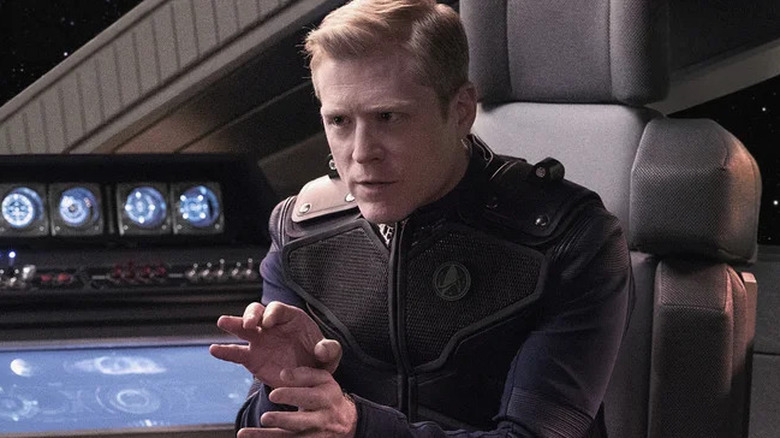
For better or for worse, "Star Trek: Discovery" Season 1 starts with a bang and keeps going in a way that befits that opening salvo. Its vibe is decidedly unlike other Star Trek shows, with action and brutality that sometimes seems closer to the Kelvin timeline movies than traditional small-screen Trek fare. Michael Burnham is a loose cannon who's arrested and sentenced to prison early on. A deadly war is looming.
Here, traditionally heroic Starfleet captains are either shady (Jason Isaacs' Gabriel Lorca) or die early on (Michelle Yeoh's Philippa Georgiou). A giant tardigrade is on the loose. The dashing First Officer role is occupied by the apprehensive Saru, who's routinely and unfairly reduced into a spineless stereotype by his Starfleet peers. Much of the season focuses on a jaunt into the Mirror Universe, which turns many things on their head.
"Discovery" Season 1 softens the heaviest blows with tactical cameos from the likes of Spock's dad and Michael Burnham's adoptive father Sarek (James Frain) and galactic con man Harry Mudd (Rainn Wilson). Despite its enthusiastic approach, the season is nevertheless enjoyable science fiction, even when it tries to remix the franchise's core aspects a touch too enthusiastically. Oh, and as a bonus, the episode "Context Is for Kings" is one of the rare Star Trek stories that are actually horrifying.
2. Season 4
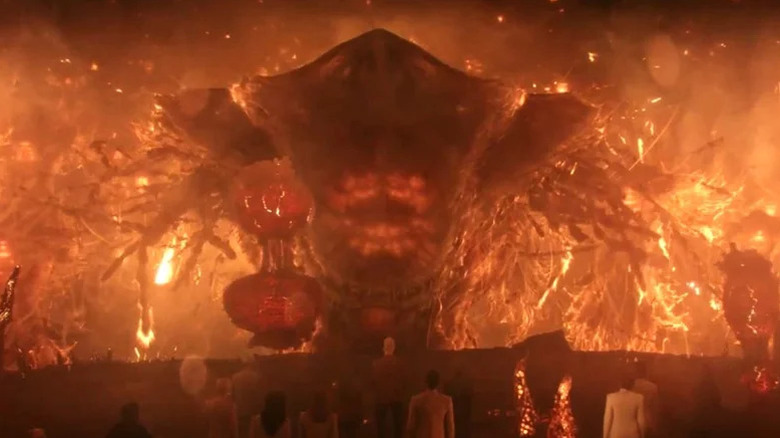
With the central mysteries of Season 3 solved and the ins and outs of the 32nd century established, "Star Trek: Discovery" Season 4 is free to go buckwild with its story. With the USS Discovery's command switched from Saru to Michael Burnham, the show proceeds to do just that by introducing the Dark Matter Anomaly, or "DMA" for short. The DMA is a mysterious gravitational wave that seems to move entirely erratically and crushes everything in its way — starting with the entire home planet of Michael Burnham's partner Cleveland Booker (David Ajala), no less.
In all honesty, the threat of the DMA and the eventual revelation of its creators might be more effective if "Discovery" hadn't already rolled out multiple galaxy-scale threats before. Even so, the way the show juggles its central enigma with the internal politics of the strengthening Federation keeps things interesting. The search for the mysterous Species 10-C provides some of the most impressive visuals "Discovery" (or any other Star Trek show, for that matter) has given us, and the fun linguistic mystery that comes with the discovery of the species is memorable.
1. Season 3
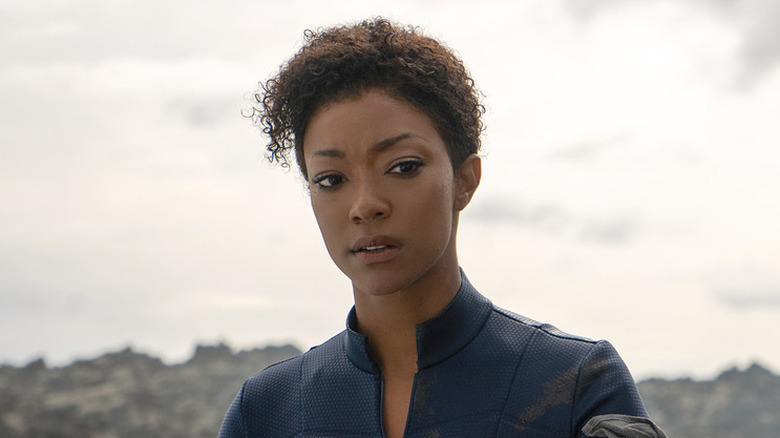
With a 900-year time jump and a Rotten Tomatoes rating of 91%, "Star Trek: Discovery" Season 3 represents a new beginning for the show. As a bonus, the Season 2 endgame effectively erased the Discovery from people's memory, so the ship carries no historical weight whatsoever. Instead, its crew must both learn the ropes of their new time period and establish themselves as a force to be reckoned with.
Plenty of challenges await them, too. After an event known as the Burn has destroyed much of the galaxy's dilithium deposits, most space ships with warp drives are gone and Starfleet is on life support. The secrets of the Burn and the intricacies of this new era fuel the season. While your mileage may vary on just how the show chooses to solve the former mystery, there's a very Star Trek-like beauty in the idea of one person being able to influence the galaxy so strongly — as well as the idea that, no matter how catastrophic the damage, it can be fixed as long as people work together.
In many ways, "Star Trek: Discovery" Season 3 is unlike any other season of any other Star Trek show. The fact that it can pull off its ambitious premise and storylines as well as it does is more than enough reason to elevate the season to the number one spot.