

5 Must-Watch Psychological Thriller Movies With Endings You Won't Forget
The psychological thriller is a film often defined by its final moment, but those unforgettable twists and haunting conclusions live or die based on everything leading up to them. Whether it's a Rube Goldberg of carefully constructed lies or a unique narrative format that keeps the truth just out of sight, these movies are at their best when every piece fits perfectly into place.
Some of the most famous examples are now so ubiquitous in pop culture circles that the twists practically precede the films themselves — think "Shutter Island" or "The Sixth Sense." But there are plenty more that have yet to be widely spoiled on internet forums and nerdcore T-shirts, even if you're familiar with the names. Let's take a look at five of the best psychological thrillers with endings you won't forget any time soon.
5. The Machinist
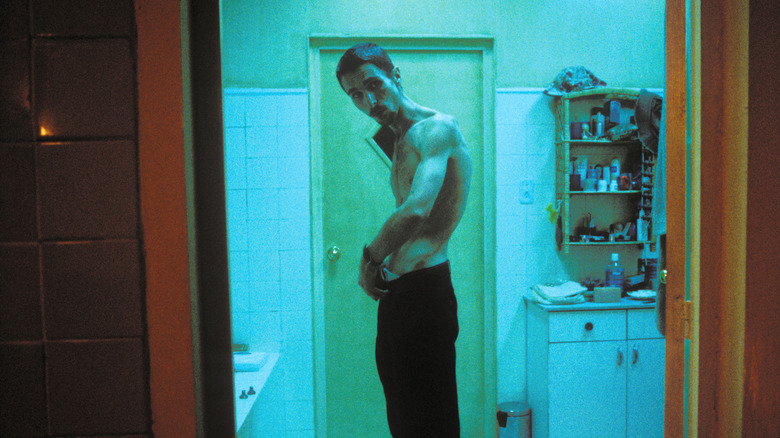
Christian Bale was already a rising star in 2004 following his iconic turn in "American Psycho" a few years prior, but he was still a year off from the explosion in stardom that would come following "Batman Begins." That year, Bale starred in the Brad Anderson and Scott Kosar psychological thriller "The Machinist" — a film that gained little attention at the time and grossed just $8.6 million on a $5 million budget, despite strong reviews. The story follows Bale as the eponymous machinist, Trevor Reznik, who struggles with mounting bouts of insomnia and paranoia.
"The Machinist" is probably most famous today for Bale's downright unsettling body transformation, which saw him drop 63 pounds to a film weight of 122. Bale lived on water, coffee, and an apple a day to achieve the weight. The tale only became more famous when the star quickly bulked up for his debut as Bruce Wayne.
While the metanarrative has dominated the discourse around the movie for years, the film itself is far more interesting — a claustrophobic, melancholic, isolating story about a man who sees clues and patterns everywhere, all pointing to some grand mystery he can't quite remember. It reads like an elongated "Twilight Zone" episode — in the best way — and the ending of "The Machinist" is one of the best "pieces all falling into place" moments you'll find outside of "The Usual Suspects."
4. Zodiac
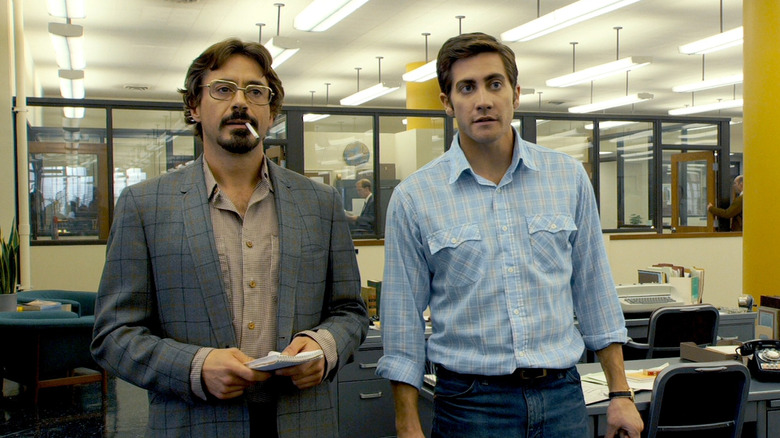
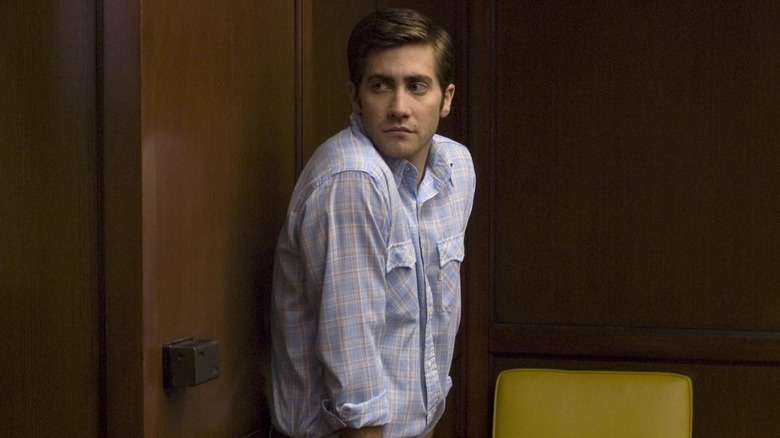
David Fincher has many amazing movies we could have put on this list, with "Gone Girl" and "Seven" both earning serious consideration. But today was a "Zodiac" day — a film from the celebrated director that doesn't get nearly as much praise as it deserves outside of cinephile circles.
Based on the real-life investigation into the Zodiac Killer in the late '60s and early '70s, the film stars a loaded ensemble including Jake Gyllenhaal, Mark Ruffalo, Robert Downey Jr., and Brian Cox. The collected team of journalists and detectives struggle and scuff against each other in their efforts to track down the boastful serial killer, all under the unimpeachable thriller stylings of Fincher and cinematographer Harris Savides.
Of course, if you know the story of the Zodiac Killer at all, you know that he was never formally caught, and the case has never been closed. That would seemingly preempt the film from delivering the behind-the-curtain climax typical of the psychological thriller genre; but in Fincher's hands, that unresolved tension becomes its own sort of unforgettable ending. "Zodiac" is a film fascinated by the inherent horror in not knowing, and its final scenes are no less impactful because they leave room for doubt. The way the film handles the unsolved nature of the case is what makes the ending so powerful.
3. Primal Fear
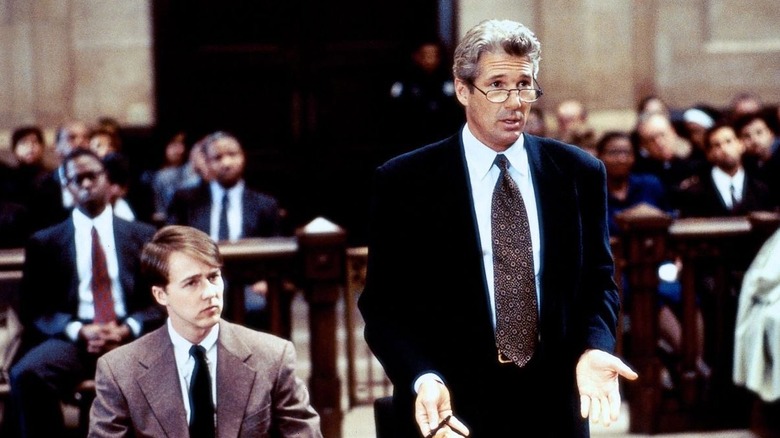
At face value, "Primal Fear" isn't your typical psychological thriller. It comes off at first like a dark, twisty courtroom drama; but as the title implies, this is much more a story about inner demons and horrifying secrets than it is a proper lawyer movie.
Richard Gere stars as Martin Vail, a hotshot defense attorney who takes the case of a former altar boy accused of murdering an archbishop. Edward Norton makes his debut as the accused, Aaron Stampler, alongside a star-studded supporting cast that features Laura Linney, Alfre Woodard, and Frances McDormand. When Aaron begins to show signs of deep psychological trauma, the case takes a turn through an increasingly grim series of revelations, leading to a final moment that's among the genre's most memorable.
Norton himself is something of a legend in the psychological thriller genre, later playing major roles in films like "Fight Club," "Red Dragon," and "Stone." He's outstanding here in his screen debut, channeling much of the same polarity that would quickly make him famous in Hollywood.
2. Identity
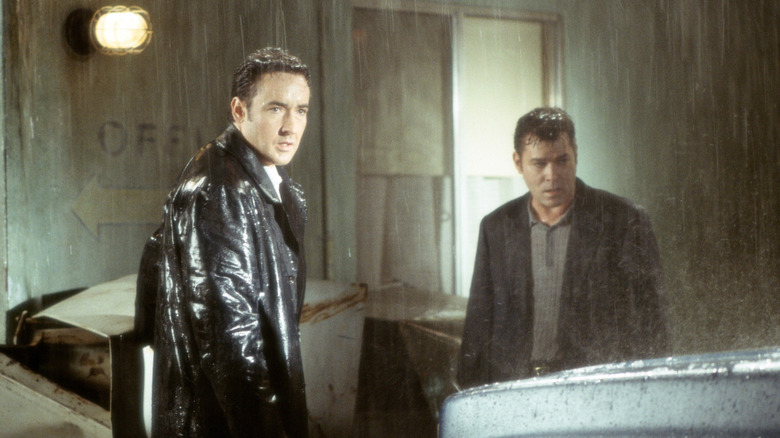
Director James Mangold has so many acclaimed films to his name that the 2003 psychological thriller "Identity" often gets forgotten. Perhaps that particular brand of thriller is a product of a very specific era — a time when films like "The Game" ruled the genre. And while watchers may take issue with some of the more mechanical aspects of the movie's twisty narrative, its directorial pedigree, strong aesthetic, and talented ensemble all make it worth revisiting.
The plot is simple: On a dark and rainy night, a group of strangers shack up in a run-down motel, where they start being killed one by one — a primary arc set against the backdrop of a mass murderer nearing execution. The cast is led by John Cusack and Ray Liotta, with supporting names like Alfred Molina, Amanda Peet, Clea DuVall, and John Hawkes. It's a tense, claustrophobic thriller that pulls heavily from old Hitchcock films and other classics of that era.
"These remain some of the most cinematic films ever made," Mangold told Dark Horizons in 2003 when asked about his genre inspirations. "Whether you're talking about 'Rear Window,' 'The Others,' Polanski's 'Knife in the Water,' 'Dead Calm,' Carpenter's 'The Thing,' 'Alien,' huge piles of great films that buck conventional wisdom that a movie should be cinematically broad like a 'Lawrence of Arabia.'" Following the lead of those older films, "Identity" crafts a compelling and aesthetically tight thriller, with an ending that you certainly won't forget.
1. Memento
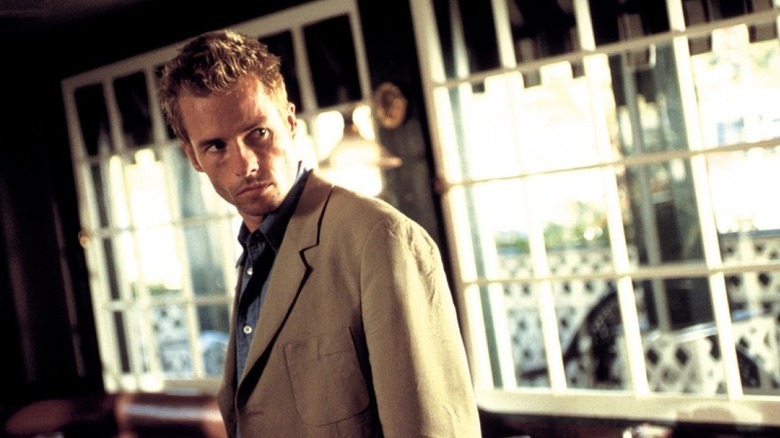
Christopher Nolan is one of the modern masters of the thriller, and while most of his examples are more traditional and less psychological, he started in that specific space with 1998's "Following," 2000's "Memento," and 2002's "Insomnia." Of the three, "Memento" is the clear standout, and it remains one of the greatest psychological thrillers of all time.
Many of these movies center on a character who struggles to determine the truth of their own story, but very few are able to so successfully put the viewer in the exact same headspace as the protagonist. In "Memento," Leonard Shelby (Guy Pearce) suffers from a unique medical condition where he can't form new memories. The format of the film mirrors this, with a series of scenes moving backward through the chronological story. In this way, Nolan forces the viewer to experience the same sensation of confusion as Leonard with each new scene.
Black and white sequences, noir-style narration, and a complex system of clues all work together to create the narrative machine that is "Memento." Leonard's quest to find his wife's killer leads him to increasingly unexpected places, and as the story moves backward through time, innocuous moments take on entirely new meanings. The great downfall of many psychological thrillers is that once you know the twist, the film itself loses its thrill. But "Memento" is the triumphant opposite — a movie that only gets better with each rewatch, as the structure itself reveals more and more hidden details. And yes, the ending of "Memento" is fantastic every time.