

10 Classic Horror Movies Everyone Needs To Watch At Least Once
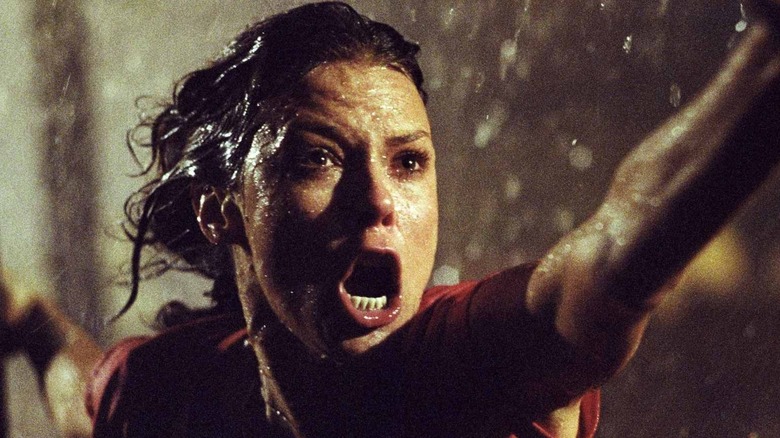
Horror films have been around since the earliest days of cinema. As the art form developed, the horror movie grew in popularity, enjoying several cycles of cultural dominance, backlash, retreat, and rebirth. After all, humans have enjoyed scaring each other for as long as there have been humans. Included in everything from folklore to religious texts, spooky elements can serve an important social function: They teach us what we should fear, keeping us safe by telling stories of people who messed with things they didn't understand and found themselves at the wrong end of something pointy. We learn from horror to not take chances with strangers, and to respect the dead, and how to confront the unknown.
If you're looking to get into horror but are overwhelmed by just how much exists, then fear not — we've got a list of suggestions below. We've outlined 10 classic horror movies everyone needs to watch at least once, each of which will open up more avenues to explore if something strikes a chord. These movies will give you an overview of horror history, from the black and white movies of the early sound era to more recent entries, stretching the limits of what the genre is capable of. Actually, forget we said "fear not." You're going to fear a lot. That's what makes horror so fun.
Frankenstein (1931)
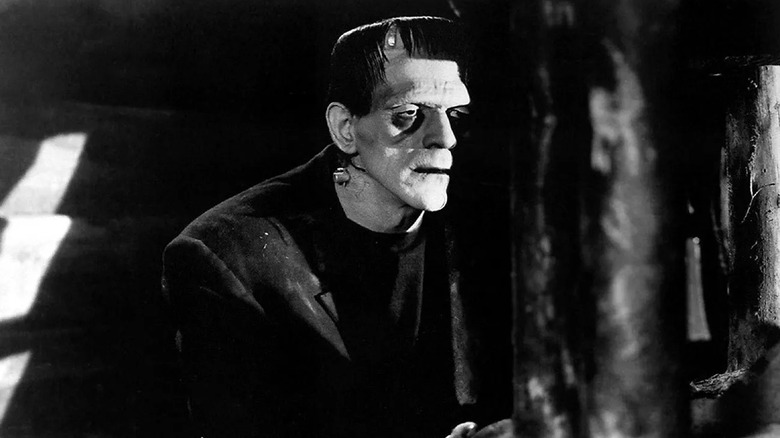
Many people consider Mary Shelley's "Frankenstein" the first true horror novel, so it's fitting that its 1931 film adaptation kicks off our exploration of classic horror movies everyone should watch at least once. Even if you've never read the book and haven't seen the film, you're likely familiar with the story, because it's one of the most impactful tales in all of pop culture. It's about a mad scientist named Dr. Frankenstein (Colin Clive), who develops a method that he claims can revitalize dead tissue. After a bout of grave-robbing, Frankenstein stitches together a body from the best bits of various corpses, and a lightning storm brings the Creature (Boris Karloff) to life. To Frankenstein's horror, his creation seems to have feelings, but society isn't ready it, considering it an abomination.
The 1931 version of "Frankenstein" is a smart, moody film, and at only 71 minutes, it's an easy watch. It has lingered for nearly a century thanks to Karloff's nuanced performance. Even though he's covered in makeup and is able to communicate only by grunting, he gives the creature a stunning interiority, inviting not just pity but deep empathy as the story unfurls.
Alongside that same year's "Dracula," James Whale's adaptation of "Frankenstein" launched Universal's monster series, a cycle of films that also included iconic horror icons like "The Wolf Man," "The Invisible Man," "The Creature From The Black Lagoon," and, of course, "The Bride of Frankenstein." If you like "Frankenstein," check out any of those.
Psycho (1960)
Horror films suffered under the Motion Picture Production Code, also known as the Hays Code, which determined what could be shown on screen in American films. The code limited violence, gore, sexuality, and anything else that might be deemed unsavory, and it's hard to tell truly shocking stories if you can only hint at the seedier side of life.
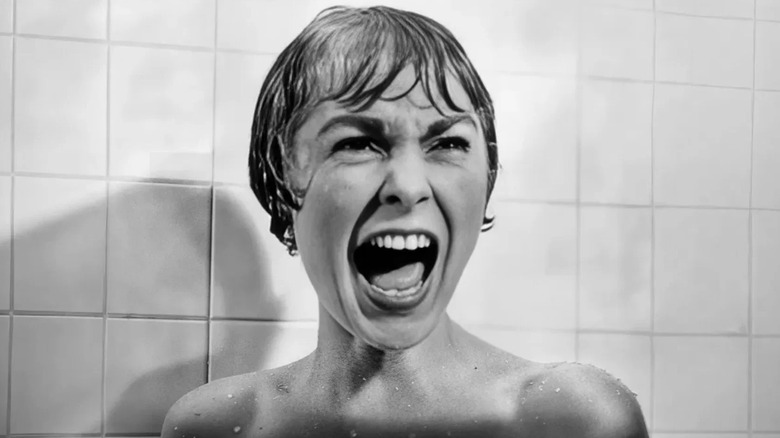
The horror films made under the Hays Code are fascinating, however, and if you're going to watch any from those decades, it should be Alfred Hitchcock's 1960 chiller "Psycho." The movie revolutionized what was possible to show on screen, from its shocking visuals of a flushing toilet — gasp! — to its iconic shower stabbing sequence. As a shadowy figure rips back the curtain on Marion Crane (Janet Leigh), Hitchcock suggests the attack by hiding the actual stabs through cuts in the film. We think we've seen a woman be brutally savaged, but Hitchcock has instead invited us to imagine the violence between the shots we're shown in quick succession.
The shower sequence was shocking enough for audiences who didn't see it coming, but "Psycho" works so well because the movie still has a ton of other tricks up its sleeve. Its secret weapon is Anthony Perkins' performance as Norman Bates, a sweet, all-American guy who loves his mother ... and taxidermy. When he muses, "We all go a little mad sometimes," you can almost feel cinema itself itching to ditch its mask of sanity.
Night of the Living Dead (1968)
In 1968, the year the Hays Code fell, George A. Romero gave audiences a glimpse at the future of horror, one that was independent, grimy, wildly creative, and socially relevant. He produced "Night of the Living Dead" in Pittsburgh, Pennsylvania, both literally and metaphorically far away from the studio system that had a chokehold on Hollywood.
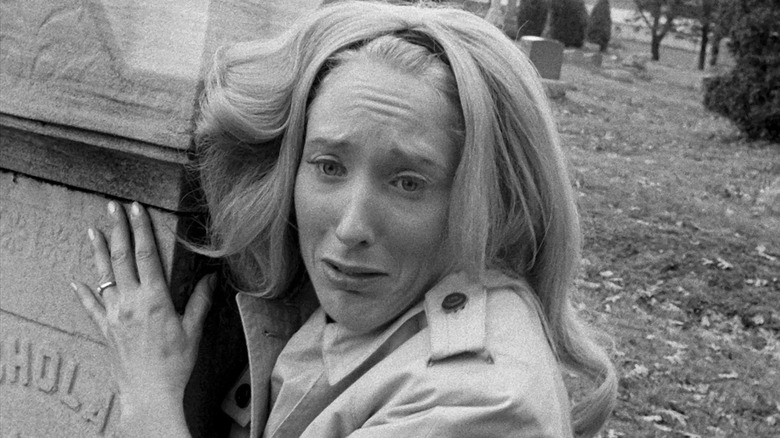
Made for very little money with an unknown cast, "Night of the Living Dead" centers on Johnny and Barbra, a brother and sister (Russell Streiner and Judith O'Dea) on a trip to a cemetery. When bodies rise from their graves and kill Johnny, Barbra flees to a nearby farmhouse, where she shelters with Ben (Duane Jones) and several other people. The film is a sort of home-invasion thriller, with the living humans inside fighting off the living dead desperate to get inside and eat their brains. Romero would claim that his casting of Jones was race-blind, that he didn't intend the movie's shocking climax to resonate with an audience that had been through a serious civil rights upheaval in the last few years ... but it very much does.
Romero didn't just prove independent horror films could be financially successful; "Night of the Living Dead" forever reshaped horror tropes, redefining the very concept of the zombie. No longer victims of mind control, as they had been in Haitian folklore, "zombies" were now undead creatures with a hunger for human flesh. Pop culture would never be the same.
The Texas Chain Saw Massacre (1974)
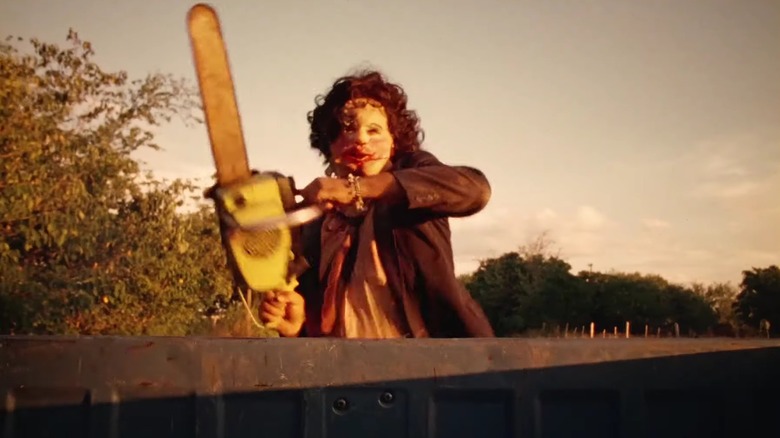
By the time Tobe Hooper directed "The Texas Chain Saw Massacre" in 1974, the Hays Code was dead and buried. In the six years after "Night of the Living Dead," cinema had gotten more violent, sexier, and more upsetting. Hooper's shocking film features a cast of young people on a road trip through the South, trying to visit a cemetery where they fear a relative's grave has been defiled. Instead, they find themselves at the mercy of the Sawyer family, a clan of cannibals whose son Leatherface (Gunnar Hansen) loves his chainsaw.
"The Texas Chain Saw Massacre" opened the same year as "Black Christmas," birthing the subgenre that would come to define horror for a long while: the slasher film. While "Black Christmas" is great and remains a cult favorite — it's mandatory viewing for every slasher fan — everyone, no matter how much they think they like slasher movies, should watch "The Texas Chain Saw Massacre" at least once. You're likely to find that the movie is less gory than its reputation would suggest, and at the same time, more oddly beautiful.
"The Texas Chain Saw Massacre" is also essential viewing to get a handle on horror's ability to comment on the present. While Hooper made his movie about American youth being butchered in the South, young Americans were being sent to the proverbial meat grinder in Vietnam. This isn't just a movie about a hungry guy with a chainsaw — it's a movie about America itself.
Halloween (1978)
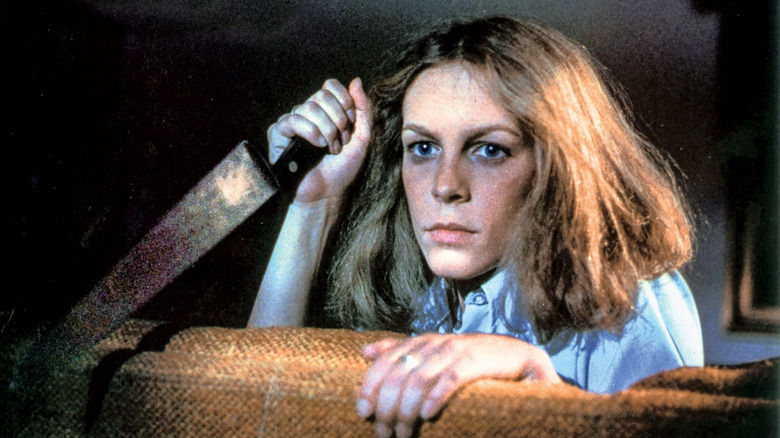
Two years after "Black Christmas" and "The Texas Chain Saw Massacre" hinted at the future of popular horror cinema, John Carpenter picked up the baton and ran with it. "Halloween" set the slasher not in the frighteningly open expanse of rural Texas but in the comforting embrace of suburbia, imagining a babysitter named Laurie (Jamie Lee Curtis) stalked through Haddonfield, Illinois, by a madman in a mask named Michael Myers.
Sure, its tropes have been ripped off endlessly, but there's a reason why it towers above just about every other slasher movie ever made. Between Carpenter's pulsating electronic score, several of the creepiest shadow-based scares ever put on screen, and a significant chunk of the film that sets the stage in broad daylight, "Halloween" has held up beautifully in the decades since it first shocked audiences.
In other words, if you want to understand how horror got to where it is now, "Halloween" is a must-watch. If you want to understand why Carpenter is one of the most-respected names in all of horror, you've got to watch "Halloween." If you're looking for a better grasp of why slasher movies quickly trended towards pop-culture-dominating, ultra-franchiseable killers with distinct looks and personalities, then you have to see what this movie's ending does with Michael Myers.
Poltergeist (1982)
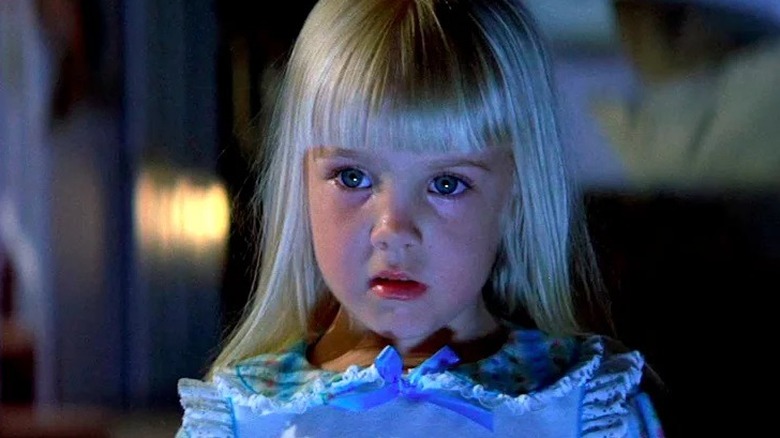
Tobe Hooper is the only horror director to log two entries on this list, and they couldn't be more different. Less than a decade after "The Texas Chain Saw Massacre," Hooper helmed "Poltergeist," a much more family-friendly horror film. There were many '80s horror movies that traumatized younger viewers, but "Poltergeist" is one of the most enduring of the bunch for good reason.
Heather O'Rourke plays little Carol Ann Freeling, a young girl who loves to sit up at night and watch the static on television. She talks to the people in the TV, and one night the people in the TV come out to play. With a smile, O'Rourke delivers one of the most chilling lines in horror history, one you have to experience for yourself at least once: "They're here!"
While "Poltergeist" is made with all ages in mind, the movie is far more intense than you might expect. There are some genuinely grotesque sequences, heady considerations of metaphysical concepts like the afterlife, and even a behind-the-scenes rumor that some of the corpses in the film were actually real bodies. In fact, if "Poltergeist" is up your alley, it's a great window into the trivia-obsessed horror fandom — don't even get us started on the rumors that it was actually directed by Steven Spielberg.
Candyman (1992)
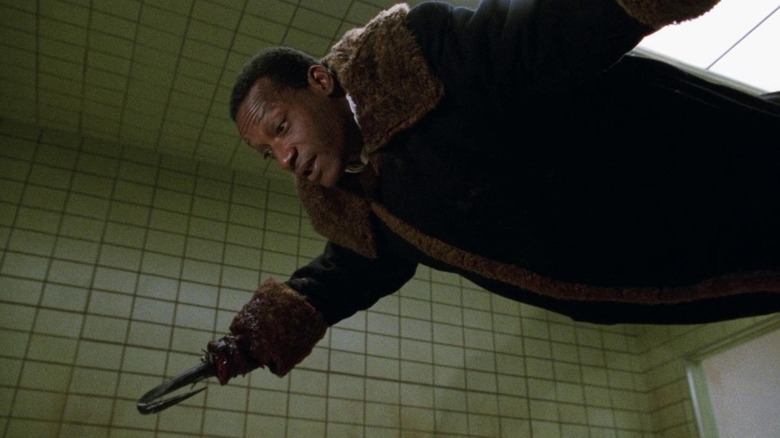
If you've already seen it before, you should be aware that there are many small details you might have missed in 1992's "Candyman," so this one's worth watching twice. Tony Todd plays the titular specter, a man who haunts the Cabrini Green housing project in Chicago. He's something of an urban legend made to scare kids — say his name five times in the mirror, and he appears — but as Helen (Virginia Madsen) discovers, the Candyman isn't just a tall tale.
"Candyman" is a slasher, but it's a grimy '90s slasher, made in that sweet spot after endless "Friday the 13th" sequels but before "Scream" skewered the entire subgenre several years later. We were still surprised and charmed by slashers that were genuinely great films, so "Candyman" stands above most of its contemporaries because of its nuanced depiction of a subculture that didn't often get horror movies told about it.
This is also a great introduction to Todd, a genre mainstay who attained legendary status throughout the rest of his career. There's no way to watch "Candyman" and not be impressed by his willingness to shoot the film while covered in real bees, and you'll start to understand why people were so affected by his death in 2024.
The Blair Witch Project (1999)
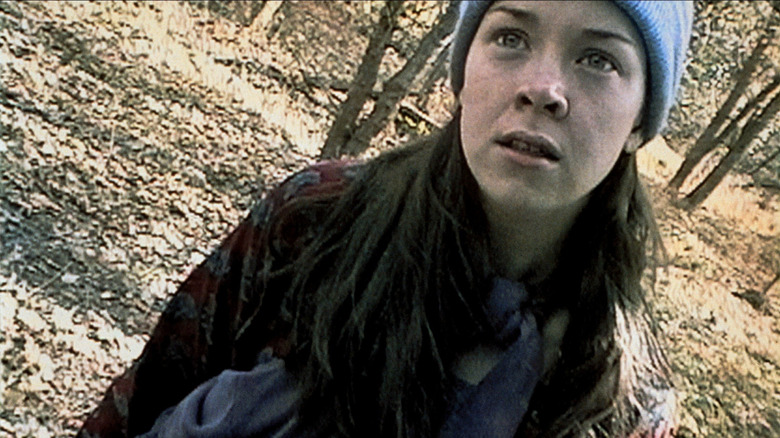
When the internet hit the mainstream, horror movies had to adapt, finding new stories to tell about the technology taking over our lives. "The Blair Witch Project" is a landmark horror movie because of its marketing campaign, which exploited an audience that hadn't yet learned to distrust everything they read online. Instead, "The Blair Witch Project" was positioned as real footage, supposedly edited together from rediscovered VHS tapes found in the woods outside Burkittsville, MD, the only evidence left behind by a documentary crew that vanished in the forest.
Of course, the whole thing is fiction, but watching "The Blair Witch Project" – even decades after its release — it's easy to see why audiences fell for it in 1999. The film is an unsettling experience, one that takes a familiar form and slowly pulls the rug out from under you; audiences were suddenly forced to question the trustworthiness of a physical format like video tape, just as it was dying and a digital world was being born.
Sure, the first time you watch it, you might need the ending of "The Blair Witch Project" explained, but that's normal. It'll just make you want to watch it again.
The Ring (2002)
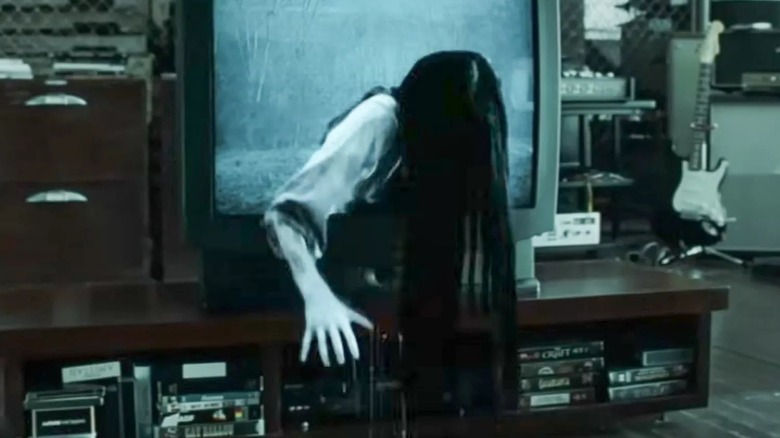
Just three years after "The Blair Witch Project," Gore Verbinski's American remake of the Japanese film "The Ring" put the final nail in the VHS tape's proverbial coffin. "The Ring" is about a creepy tape that displays a dizzying collage of frightening footage, evocative shots that suggest something sinister ... and then, when you finish watching it, your phone rings. The voice on the other end warns, "Seven days."
"The Ring" is about a journalist named Rachel (Naomi Watts) who is terrified of what she's just seen on the tape, considering that everyone who watches it turns up dead a week later. She's even more desperate to ditch the curse when she realizes her son Aidan (David Dorfman) has watched the tape, too, sending her on a suspenseful journey to track down its evil origins. Watts is fantastic in the role, delivering on Rachel's dawning horror and eventual sense of righteous vengeance.
This is also an incredibly stylish movie. There's a sickly-green sheen over much of the film — it would come to define the look of 2000s horror — but much of the coloring was achieved practically, using filters on the camera and through intentional production design choices. Its melancholy atmosphere is a big part of why the resulting movie is one of the scariest films of all time.
Get Out (2017)
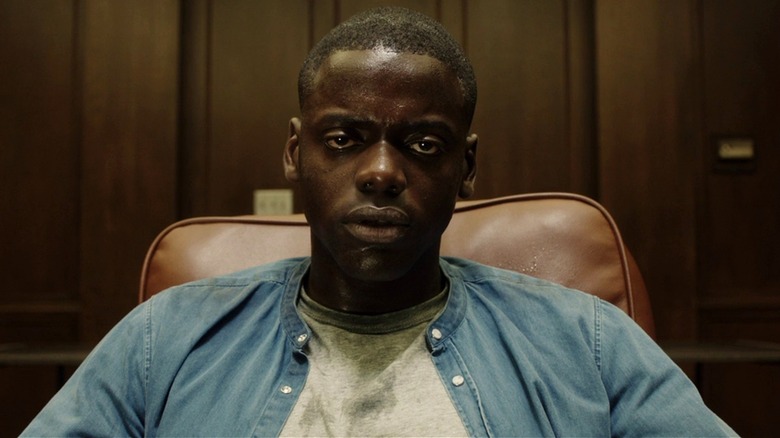
Jordan Peele made his name as a comedian, one half of the sketch comedy duo behind "Key & Peele." In 2017, however, he wrote and directed his first horror movie, and the result — "Get Out" – is one of the best horror movies of all time. It's about a young Black man named Chris, in a star-making turn by Daniel Kaluuya, who until this point was mostly known for British television hits like "Skins" and "Black Mirror." Chris accompanies his white girlfriend Rose (Allison Williams, in another pitch-perfect performance) on a visit to her parents' home, and he soon realizes that not all is as it seems. In fact, Chris gets a warning from a Black man named Andre (LaKeith Stanfield) who he meets at the home: "Get ... out ...!"
The film introduced a number of concepts that have staked their claim on the pop culture landscape, including Peele's conception of "The Sunken Place," which you're likely to see people reference in all sorts of conversations about racism. It also jump-started a wave of socially conscious horror films, which proudly lean in to the genre's ability to comment on modern society. Horror had always been political, but after "Get Out," it was impossible to ignore. If "Get Out" resonates with your tastes, there are other similar scary movies you need to watch, but you have to start by watching "Get Out" at least once. Everyone should.