

5 Defining '90s Cartoons That Shaped A Generation
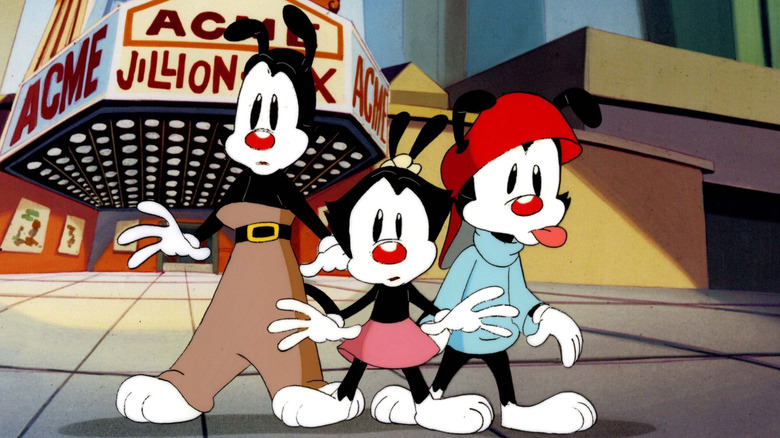
The 1990s was a time of great creativity in the realm of cartoons. Many of them were frenetic and gritty compared to those of years gone by, but, while narratives were becoming more complex and grey in nature, moral lessons were still all the rage. Kids, tweens, and teens who came up during this era had many great shows to choose from, but there's a handful of '90s cartoons that shaped this generation.
These shows stand out from the pack thanks to their ability to make kids think, grow, and develop into questioning, thoughtful beings. But a few of these examples just plain formed '90s kids into savvy people who didn't mind laughing at a good fart joke. They turned a generation of kids into dreamers, thinkers, and wisecrackers. Here are the five most generation-defining cartoons of the 1990s.
Batman: The Animated Series
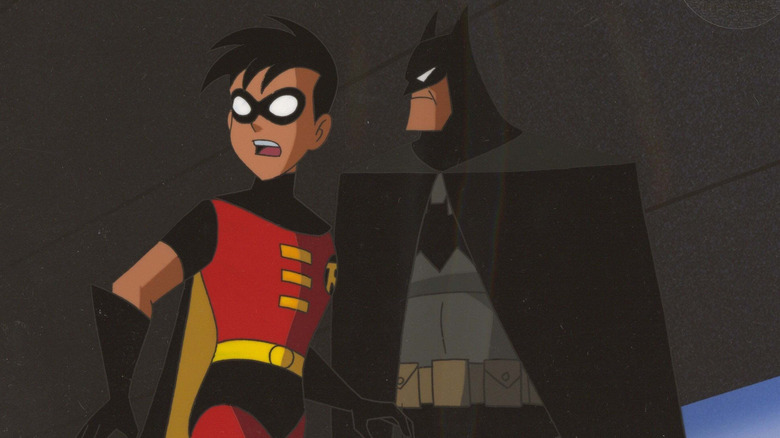
This version of Batman's (Kevin Conroy) story introduced many kids to complex storytelling mechanics. The show's bad guys weren't always pure villains, and the good guys weren't always innocent white hats. Episodes could be somewhat violent, and some characters met with unsavory ends. "Batman: The Animated Series" definitely wasn't afraid of making kids question authority, even as it posited Batman as the ultimate arbitrator of what's upstanding and what's not. Sometimes he has to meet the so-called-reprobates on their own levels and see what's going on in their heads and hearts.
The episodic series follows the Caped Crusader inside and outside of Gotham as he tracks down bad guys and tries to make them pay. His biggest enemy is The Joker (voiced by Mark Hamill in a performance that Looper ranked as the best-ever on-screen Joker) and his sidekick Harley Quinn (Arleen Sorkin), who was created for the series. There are many iconic villains in "Batman: The Animated Series," from Clayface to Bane, but The Joker and Harley Quinn made for a memorable pairing that every kid who grew up watching the series can remember.
The Magic School Bus
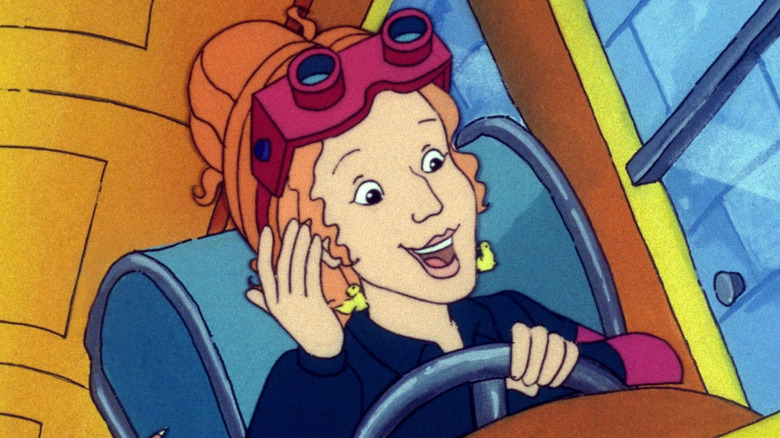
Valerie Frizzle (Lily Tomlin) had the hearts of '90s kids everywhere thumping whenever she put the pedal to the metal in "The Magic Schoolbus." She'd do just about anything to keep the kids under her care hopping. The kids watching along hopped with them and also learned important lessons about anatomy, astronomy, and geology. It was also a fun watch for grown-ups: Like many '90s cartoons, "The Magic School Bus" contained a lot of things that only adults would notice, including a variety of references to classic films.
Ms. Frizzle teaches fourth grade at Walkerville Elementary, and no two days are the same in her class. Whether they're traveling through the anatomy of one of her unsuspecting students, getting stuck in a pinball machine, or turning into bees, her students have plenty of reasons to delight in — and, in the case of poor Arnold (Amos Crawley and Danny Tamberelli), sometimes regret — being a part of her shenanigans. There's actually a dark Frizzle theory that '90s kids will love that purports the educator is actually a malevolent entity that delights in terrifying the kids.
Hey Arnold!
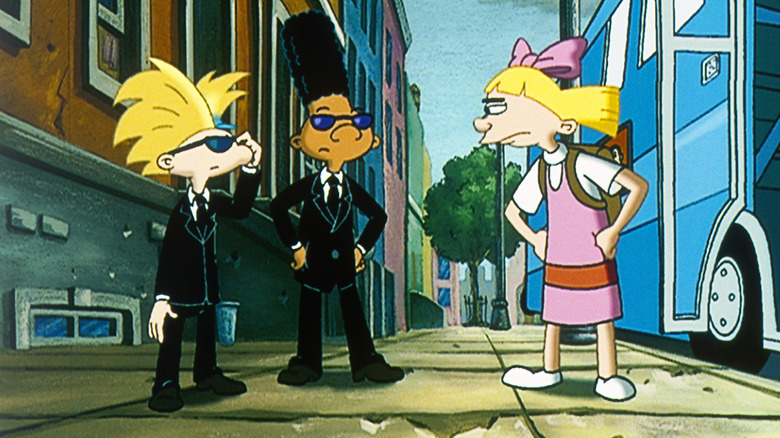
The classic Nickelodeon show "Hey Arnold!" balanced serious issues and workaday problems with humor, outrageous adventures, and important moments of character growth. The story centers on a boarding house in the fictional Hillwood, Washington. The titular character, Arnold Shortman (Lane Toran, Phillip Van Dyke, Spencer Klein, and Alex D. Linz) lives with his loving grandparents and copes with borderline bullying from Helga Pataki (Francesca Marie Smith), who secretly harbors a crush on him. Arnold hangs out with his best friend Gerald Johanssen (Jamil Walker Smith), helping folks he knows in the neighborhood and trying to make it through school without too much muss and fuss.
Apart from his football-shaped head, Arnold is a normal guy, and that was part of his appeal. He's kind and optimistic and always tries to see the best in people, which made him a great role model for kids. Part of what helped make "Hey Arnold!" so iconic was its soundtrack, which incorporated a lot of jazz. Speaking to The Ringer, the show's composer, Jim Lang, said that jazz suited the show, even though the perception is that it's too complicated for kids. "I think people tend to assume that children can't deal with complexity," he said. "I think it's a curse of making entertainment for kids, animated entertainment especially."
South Park
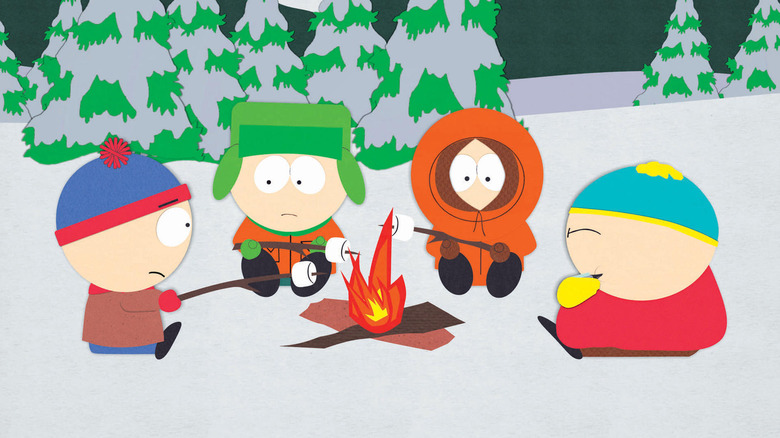
The 1990s saw several boundary-pushing cartoons aimed at teens. "Beavis and Butt-head" had a big impact in the early '90s, though the one that ended up shaping the generation more than any other is "South Park," which continues to lampoon current events to this day. Part of the reason for this is that "South Park" actually captures what kids are like better than you might think, with its main four characters being more realistic than adults in the '90s cared to admit.
"South Park" is the titular little Colorado town where these four foul-mouthed fourth-grade boys live. Stan Marsh (Trey Parker) is a romantic and an idealist, Kyle Broflovski (Matt Stone) is questioning and thoughtful, Eric Cartman (Parker again) is a spoiled and racist child who constantly mocks Kyle for his religious affiliation; and Kenny McCormick (Stone again) is a poor boy who mumbles his way through life. Together, they have adventures both outlandish and small. In the many years since its debut, "South Park" has become a cultural Rorschach test.
Animaniacs
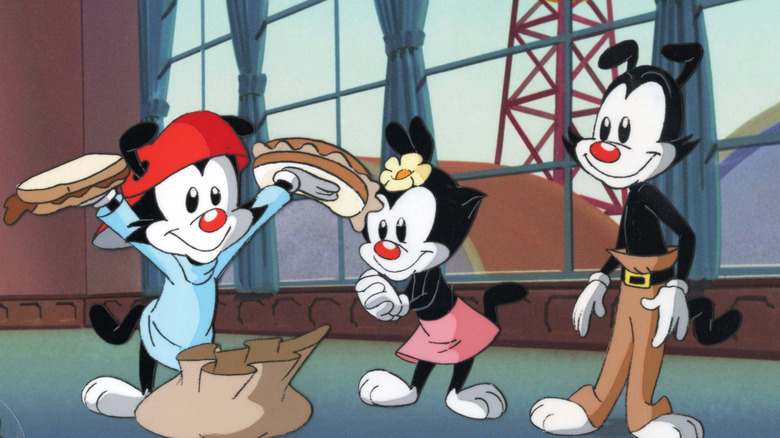
They're zany to the max, but silly stories weren't the only thing the Warner Brothers (and their sister, Dot) brought to the plate back in the '90s. "Animaniacs" provided episodic stories featuring several groups of characters, from the sardonic Slappy Squirrel (Sherri Stoner) to the operatic Rita (Bernadette Peters) and her dog buddy Runt (Frank Welker). But they also taught kids to question authority, to have a keen eye for pop culture references, and to learn all they can about history, geography, and mathematics. There were also plenty of things that only adults notice in "Animaniacs," making it a must-watch for every generation.
At the show's core stands Yakko (Rob Paulsen), Wakko (Jess Harnell), and Dot Warner (Tress MacNeille), who were imprisoned in the water tower at the Warner Bros. Studios due to their pranks and wackiness back in the '30s. They're released full-bore onto the '90s under the guidance of psychiatrist Dr. Otto Scratchansniff (Paulsen). Along for the ride is the studio's attractive nurse, who is simply known as Hello Nurse (MacNeille), and the studio's dunderheaded guard, Ralph (Welker). Adventures of all sorts promptly occur, with the only sure thing being fun.