

Dumb Things In Mortal Kombat 2 That Everyone Just Ignored
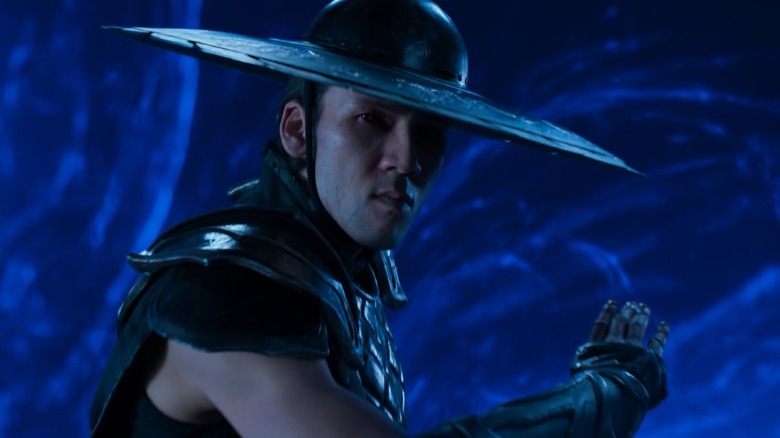
"Mortal Kombat" as a franchise is very silly. How could it not be? This whole saga originated as a video game series that emphasized graphic, outlandish slayings above all else. Similarly, live-action movie adaptations have delivered all-time lines like "too bad you ...will die!" The worst scenes in 2021's "Mortal Kombat" were the wrong kind of ridiculous, leaving viewers rolling their eyes in disbelief and die-hard fans blabbering about all the things "Mortal Kombat II" needed to avoid.
Now, that sequel to the 2021 feature has finally arrived. Director Simon McQuoid and nearly the entire cast of the last film are back, while Karl Urban has joined the fight as fan-favorite character Johnny Cage. Inevitably, because of how ridiculous this universe is, there are tons of "Mortal Kombat II" elements that register as dumb. That comes with the territory of this franchise to some extent, but there are some especially head-scratching moments here that will surprise even die-hard "Mortal Kombat" fans.
For many moviegoers, these dumb "Mortal Kombat II" moments will fly over their heads. However, it's vital to point them out, if for no other reason than to appreciate how the entire "Mortal Kombat" saga has as many dumb elements as it does Fatalities.
The whole amulet MacGuffin
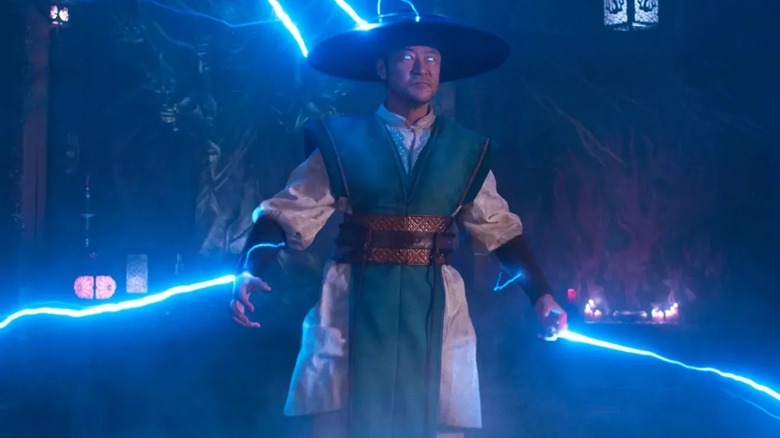
One would imagine that the prospect of surviving a series of super-powered fights would be enough to drive tension in "Mortal Kombat II." Instead, Jeremy Slater's screenplay is largely dedicated to another object to generate suspense: an immortality-granting amulet. Early in "Mortal Kombat II," Shao Kahn (Martyn Ford) is given this amulet and becomes immortal. Thus, the second half of the story hinges on Johnny Cage (Karl Urban) and Sonya Blade (Jessica McNamee) destroying the amulet, especially since doing so will save the life of Lord Raiden (Tadanobu Asano).
This whole amulet MacGuffin is dumb on a number of levels, especially as to why Shao Kahn is adhering to the fighting tournament structure in the first place. It makes sense he'd want to gain this realm by winning a fighting tournament instead of potentially dying while taking Earth by force. If he's immortal, though, why even stick to those rules? Why not go and dominate the planet? Shao Kahn wasting his time fighting within the rigid Mortal Kombat guidelines feels bizarre if he's already procured a magical entity that makes him unstoppable.
This weird plot element is a microcosm of how messy Slater's script is at juggling the traditional "Mortal Kombat" structure and Shao Kahn's plotline. Sometimes, simplicity really is key.
Why is Kano not dead but surely alive again?
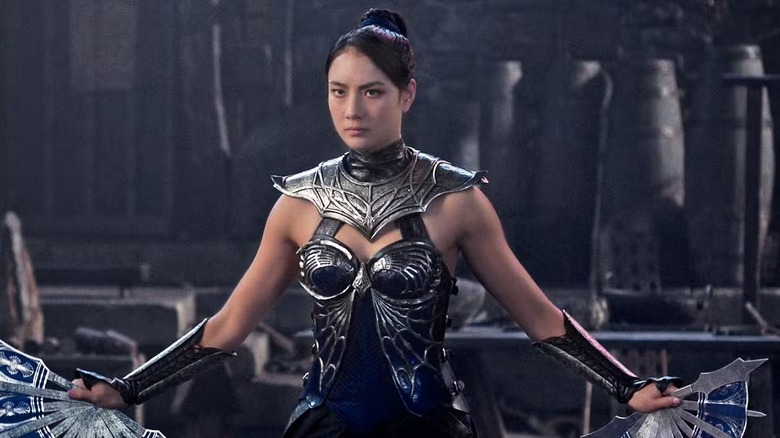
Necromancer Quan Chi (Damon Herriman) is a busy guy throughout "Mortal Kombat II." The loyal Shao Kahn follower resurrects several iconic "Mortal Kombat" characters for Chi's evil plans. That includes Kano (Josh Lawson), who previously perished via garden gnome to the eye in the first "Mortal Kombat." Right away in "Mortal Kombat II," though, this mouthy Australian springs back to life via Quan Chi's magic. Why is this (temporarily) one-eyed fighter resurrected? Because of an amulet in his pocket that Quan Chi quickly retrieves.
That's his only purpose for the evildoers, hence why he just skulks around Shao Kahn's castle until abruptly turning to the good side. The reasoning for bringing him back is so flimsy that Slater's script even gives Jade (Tati Gabrielle) a line about how pointless the resurrection was. Lampshading this problem, though, doesn't automatically erase it. On the contrary, it only makes the sloppy screenwriting more obvious. Was there not a more creative reason to bring back Kano? Perhaps they should've had him suddenly live again?
Granted, it's a good thing "Mortal Kombat II" brought Kano back to life, given he's the most entertaining thing in the entire movie. However, his initial resurrection is lazy on multiple levels.
The really dumb editing
The many dumb things we ignore in our favorite fantasy movies can materialize as weird plot contrivances or miscalculated character beats. Sometimes, though, they manifest as visual elements that whiz by less-observant viewers. For other watchers, though, these details are distracting shortcomings. Indeed, the editing throughout "Mortal Kombat II" really lives up to the "dumb" moniker.
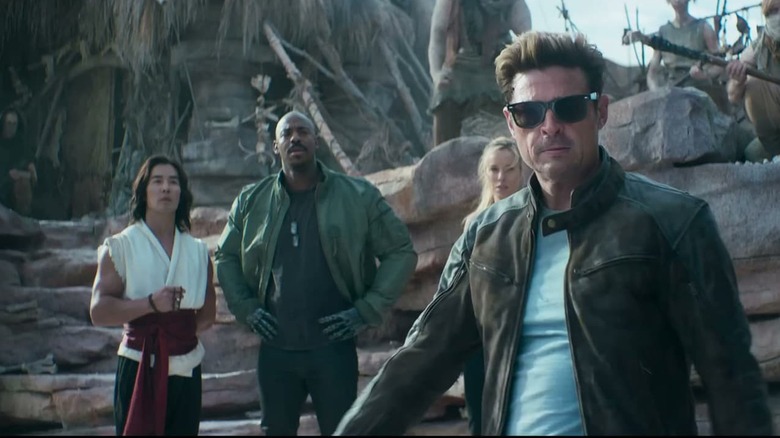
Early on, Johnny Cage (who's new to the whole mystical entities thing) lands in a village to fight an opponent. He looks up and we see flaming objects representing fighters lingering in the sky. Suddenly, we cut to Kitana (Adeline Rudolph) just standing there, apparently also existing in the same environment as Cage. Where did she come from? Why does it feel like she's been standing inches away from Cage, who was previously shown in wide shots to be alone? The editing here is jarring, putting more focus on the messy rhythm between shots rather than the fun action.
This is one of the most egregious examples of subpar "Mortal Kombat II" editing, which underwhelms throughout the production. The fight scenes especially suffer from some weird cuts as the film jostles between stunt performers and actors. If such editing doesn't count as frustratingly dumb, nothing in "Mortal Kombat II" could qualify.
Splitting up isn't a good idea
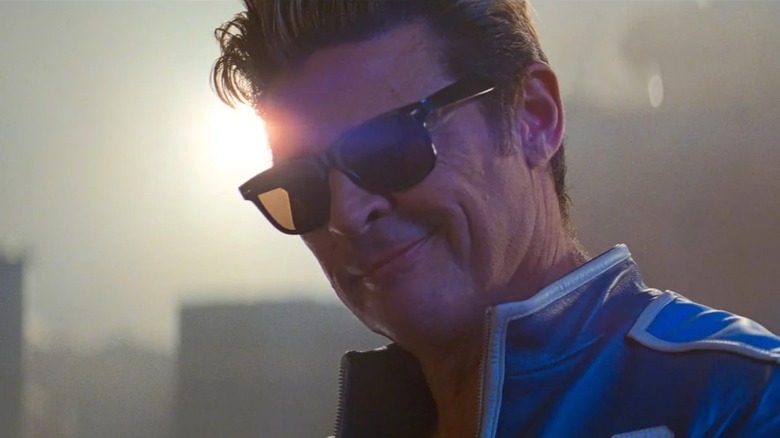
Throughout "Mortal Kombat II," characters reference properties owned by New Line Cinema and Warner Bros. Pictures. Johnny Cage refers to Lord Raiden as Dumbledore at one point, Kano insults Quan Chi by calling him as Pennywise, and a key climactic gag revolves around Cage mockingly reading the One Ring inscription on the back of the amulet. Presumably paying homage to another Warner Bros. property, "Scooby-Doo" is the impetus behind one of the dumber "Mortal Kombat II" plot beats.
As soon as the film's four main heroes enter Shao Kahn's castle, they split up almost immediately. The justification for this is to cover more ground in their hunt for the amulet. In execution, though, it's a silly beat since they are reunited minutes later when Liu Kang (Ludi Lin) gets into a fight with Shao Kahn. Why split everybody up if they're just going to come back together almost immediately? Kang discovering the amulet in mere moments after cutting from the group dividing makes this decision extra bizarre.
Doing the whole "let's split up and look for clues" routine unfortunately reinforces how "Mortal Kombat II" can't escape the shadow of superior pop culture properties it's clearly derivative of. "Mortal Kombat II" wishes it was as good as "Scooby-Doo and the Cyber Chase."
Coming back from the dead being so easily
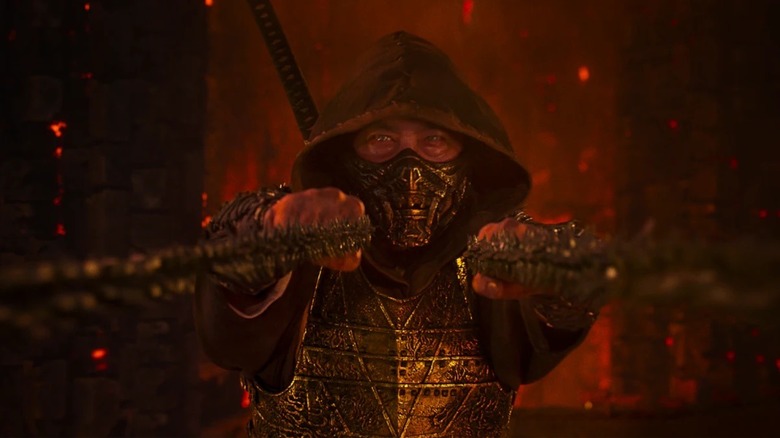
Movie characters are brought back to life for sequels all the time, but as with everything, there are right and wrong ways to approach this. "Mortal Kombat II," unfortunately, falls into the latter camp. One of its dumber elements comes from how willy-nilly it plays with death. Characters don't just come back from the dead once in a blue moon. Apparently bringing people back to life is as easy as breathing in this universe.
It's understandable "Mortal Kombat II" would ensure that legends like Scorpion and Sub-Zero appear in this sequel. However, instead of bequeathing the costumes and names to new characters, the versions seen in 2021's "Mortal Kombat" are brought back in a belabored fashion. Kitana's mom, Queen Sindel (Ana Thu Nguyen), meanwhile, is shown to have survived getting her throat punctured with gigantic spikes so Shao Kahn can threaten her life and motivate Kitana to do his bidding. Why would Kitana be distraught over her mother's peril, though? She died once, surely dying twice won't hurt.
Adding insult to injury, "Mortal Kombat II" ends on a sequel tease involving the main characters going off to resurrect their deceased friends, erasing death and dramatic stakes in the process.
Jade's abrupt transition into a hero
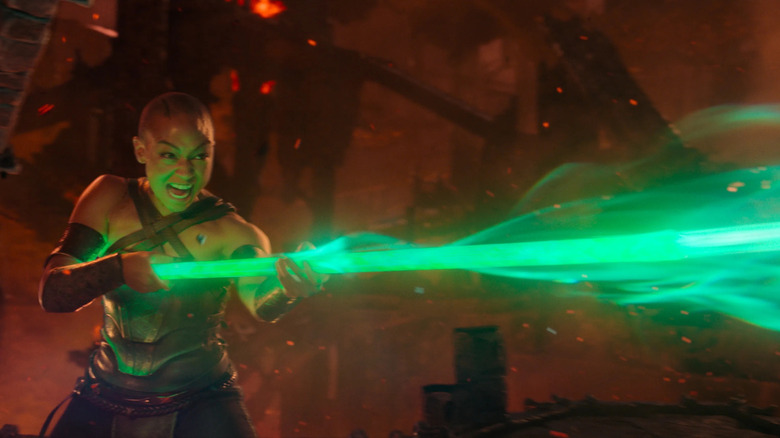
By the end of "Mortal Kombat II," Slater's script has grown unwieldy, and director Simon McQuoid is struggling to keep the production on steady ground. Cutting between three locations and a slew of characters, there's just too much going on. Simultaneously, everyone is thinly-sketched, so it's hard to get invested in the barrage of events and "shocking" twists. One example of the latter element is that Jade, previously loyal to Shao Khan, ends up joining the good guys to fight against evil in the Netherrealm.
This isn't surprising, necessarily, given her sisterly bond with Kitana. It is, however, clumsily realized on screen. Once more, the editing hampers the proceedings as her grand entrance in the climax is awkwardly filtered through a series of odd cuts. Beyond that, though, her presence is more abrupt than thrilling, especially since she had betrayed Kitana mere moments earlier. Jade doesn't even get to display any on-screen physicality once she defects to the heroes.
Instead, her moral shift feels like an obligatory recreation of her arc from the games. Fidelity to the source material is cool on paper, but "Mortal Kombat II" barrels through this moral shift to its own detriment, losing Jade's "redemption" in its chaotic climax.
The bizarre return of Cole Young
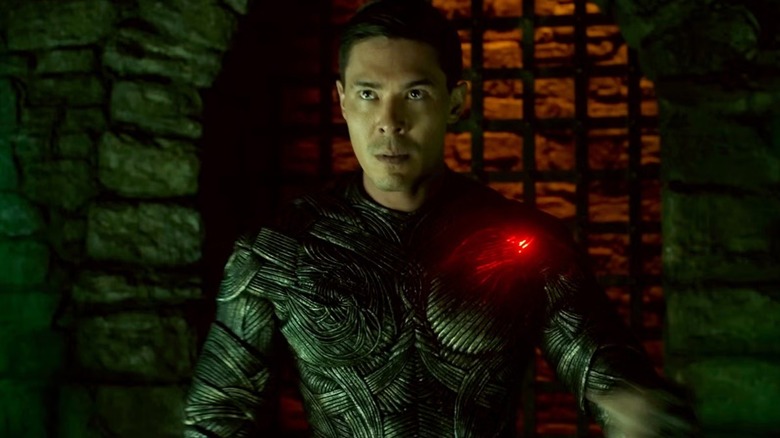
One of the biggest gripes with 2021's "Mortal Kombat" was its focus on Cole Young (Lewis Tan) as a protagonist. This newly created character inspired widespread hatred, especially from fans wishing the film had just focused on pre-existing figures from the games. If you're part of this league, then don't worry, "Mortal Kombat II" fixes the first movie's biggest mistake in style. After gaining immortality from the amulet, Shao Kahn proceeds to flex his newfound abilities by using his gigantic hammer to smash Young's head into a bloody pulp.
Not since the proposed (but ultimately deleted) grisly death scene for The Twins in "Transformers: Dark of the Moon" has audience contempt for a blockbuster movie character inspired such a brutal slaying. Unfortunately, this makes the very return of Cole Young dumb from the get-go. He's just lurking around in the background in every scene he's in, clearly killing time before his slaying. The "Mortal Kombat II" creative team clearly wanted to viciously off Cole Young, yet failed to make any of the buildup feel organic.
Why even bring Cole Young back at all? Raleigh Becket's (Charlie Hunnam) absence from "Pacific Rim: Uprising" makes it clear that movie protagonists can just sit out sequels. Even a widely derided character like Cole shouldn't feel like a corpse in waiting whenever he's on-screen.
How did Baraka know that one swear word?
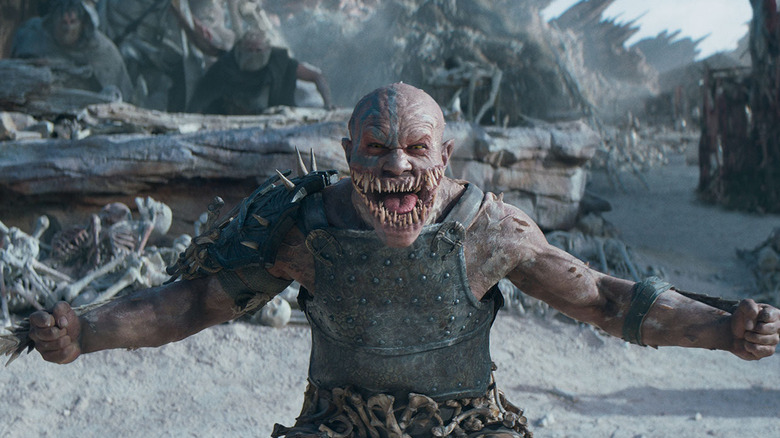
When Johnny Cage, Sonya Blade, Liu Kang, and Jax (Mehcad Brooks) confront Baraka (CJ Bloomfield) to score some aid in their fight against Shao Kahn, it doesn't go well. Baraka immediately refuses Liu Kang's offer for a fight, which would secure Baraka's help if Kang won. Suddenly, Cage starts insulting Baraka and his people. Specifically, he calls this hulking brute and his entire species a piece of profanity that rhymes with "wussy".
The moment that word hits Baraka's eardrums, he turns, enraged enough to rev up for combat. This whole back-and-forth is clearly a set-up for Johnny Cage's first proper fight in "Mortal Kombat II." Rather than focusing on the skirmish, though, viewers will undoubtedly wonder how that conversation made any sense. Specifically, how does that swear word have the same meaning to denizens of the bowels of Outworld as it does to a college frat boy? How does that word register to somebody not from our world, or the wider misogynistic culture that gave the term its negative connotation in the first place?
This broad piece of comedy falls flat in eliciting yuks. More gravely, though, it's also a really dumb piece of writing that zaps Baraka's species of individuality.
Benjamin Wallfisch's phoned-in score
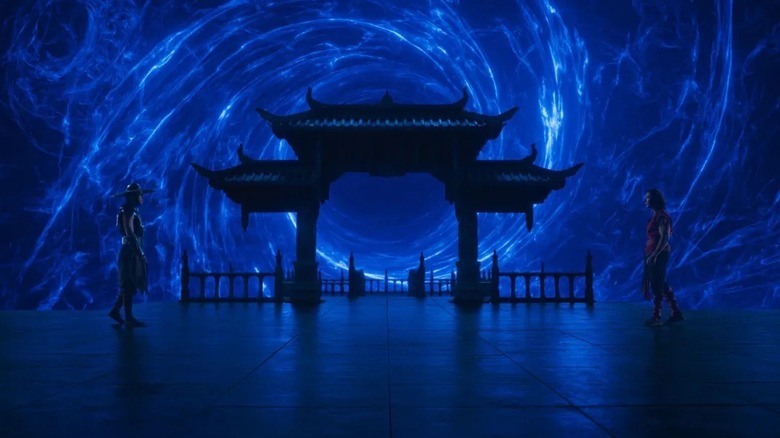
One of the dumbest and most frustrating "Mortal Kombat II" elements is its score, courtesy of Benjamin Wallfisch. The former Hans Zimmer collaborator is presumably on tap to score any New Line Cinema movies, as seen by his compositions for "Lights Out," "Shazam!," the "It" movies, and 2021's "Mortal Kombat." Across his discography, aggravating forgettability permeates. The imaginative instrumentation and distinctive personality of modern composers like Daniel Pemberton, Tamar-kali, and Ludwig Göransson are typically absent from Wallfisch's work.
"Mortal Kombat II" continues this trajectory with its disposable orchestral tunes. There is no specificity to Wallfisch's tracks. The music accompanying Netherrealm is indistinguishable from sequences set in Lord Raiden's Earthrealm temple. Leitmotifs for the various characters are nonexistent. Worst of all, whenever action plays out, Wallfisch's score doesn't enhance the excitement or even feel all that precise to what's happening on-screen. It all sounds like reheated leftovers from his already derivative compositions for "Kraven the Hunter" and "The Flash."
For many, Benjamin Wallfisch's score won't even register. Yet that reality is enough to solidify it as one of the dumbest elements of "Mortal Kombat II." "No one ever paid to see under the top," Joel Schumacher once said, and the "Mortal Kombat II" score disappointingly fits that term.
Those clumsy sequel teases
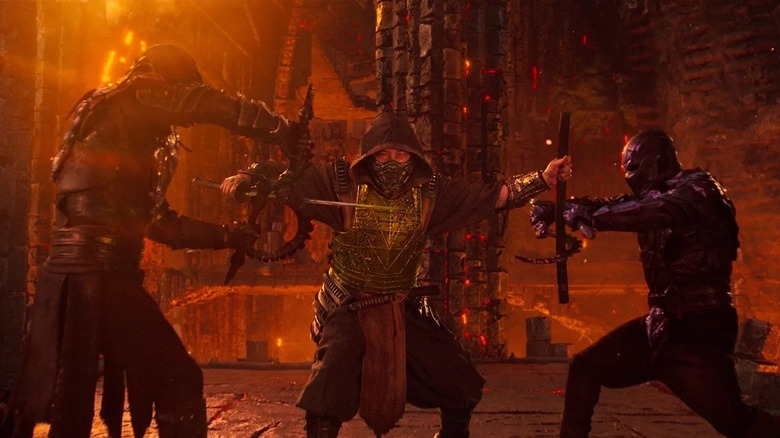
In fighting Shao Kahn, Liu Kang comes to a revelation. His destiny is not to topple and kill this cruel overlord. Instead, he's meant to save his brother, Kung Lau (Max Huang), from wickedness. A visually-oriented movie would convey this through a montage showing the bond between Liu Kang and Kung Lau, simulating the memories flowing through Liu Kang's mind as he realizes his fate. Instead, Liu Kang pauses with Shao Kahn's hammer handle inches away from puncturing his chest, to flatly proclaim that his destiny involves saving Kung Lau's soul. This, inevitably, will become a core storyline in a potential "Mortal Kombat III."
This clumsy piece of dialogue is one of many dumb "Mortal Kombat II" moments teeing up a sequel. This verbiage overtakes the film's final scene, where all the surviving heroes announce their determination to resurrect all their lost friends. You wonder why they don't just turn to the camera and begin explaining the plot of "Mortal Kombat III." All of this sequel teasing is incredibly tin-eared, retroactively making "Mortal Kombat II" even more unsatisfying.
Rather than functioning as a fun slice of standalone cinema, these irritating pieces of dialogue render "Mortal Kombat II" a trailer for another sequel. Focus on making one halfway decent movie. Save the ham-fisted teaser dialogue for the credit sequences.