

5 Mystery Movies That Are Impossible To Predict
One of the best film genres is the mystery movie. They're filled with intrigue and offer a puzzle to solve, making them the perfect watch for a weekend afternoon as you try to figure out the solution before the story reveals it. Some films are better at the puzzle game than others, but the sense of accomplishment you get from successfully deducing the conclusion is unmatched.
However, there are some mystery movies that, no matter how closely you pay attention, you can't see the ending coming. They've set you up for failure in the best possible way, leading you in the wrong direction or presenting too many options to determine which is the most likely path forward. Can it be a bit frustrating? Sure, but it makes for a great viewing experience because it goes against the patterns of other films.
Based on Rotten Tomatoes ratings and audience and critic discussions, these are the five mystery movies that are impossible to predict. They have premises that cinema fans know and love, like the classic murder mystery, but nothing about them is predictable.
Rear Window
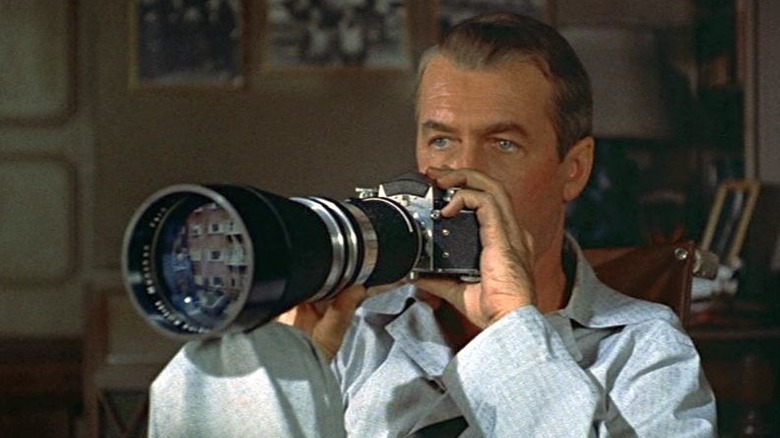
Alfred Hitchcock's "Rear Window" doesn't feature birds chasing people or someone pulling back a shower curtain in a roadside hotel — it's rooted in watching your neighbors through the windows. Jeff (James Stewart) is a photojournalist stuck at home in a full leg cast, and the only entertainment he has is seeing what his neighbors are doing. However, his amusement turns to horror when it seems like one of them kills their wife.
Upon its release, "Rear Window" went against the grain. The film is primed for Jeff to help solve the case, suggesting a nice ending that would lead us to think that justice was served. But the movie goes in a much more different direction than anyone could anticipate in the third act, which causes the story's theme to skew into a cautionary tale about minding your business.
"Rear Window" boasts a 99% from critics and a 95% from audiences on Rotten Tomatoes, making it one of Hitchcock's best films. Reviews both during its release and in the decades after discuss how well the movie ages and how the narrative maintains its tension. "The story is told with tricks and intricate technique, but the mystery magician, Mr. Hitchcock, never forgets that what people want most is a spine-chilling climax," Marjory Adams wrote for The Boston Globe. "He gives it to them."
Seven
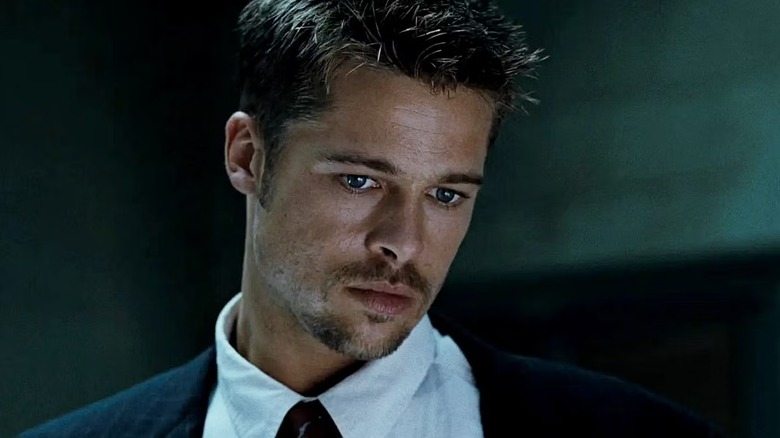
"Seven" stars Brad Pitt as David Mills, a homicide detective investigating a serial killer who is seemingly theming his crimes around the seven deadly sins. Mills is new to the city, so it makes for an eventful start to his new job. He works alongside Morgan Freeman's William Somerset, a cynical and deeply world-weary detective on the brink of retirement.
This David Fincher film may seem, at first, like it will be like any run-of-the-mill crime thriller, with Mills and Somerset solving the case and putting the serial killer behind bars. However, things take a sharp turn with a third act twist that's far from conventional. Reddit user flower_mouth calls it a peripeteia twist, or an ironic twist. This kind of twist is often associated with tragedies, which does align with Mills' bleak ending in "Seven." At the time, audiences expected that Mills and Somerset would land on top, because that was the typical end for something procedural in nature. The movie turns that expectation back on the viewer, making for a then-unpredictable ending.
"Seven" boasts a 95% from audiences and an 84% from critics on Rotten Tomatoes, with reviews praising the progression of the story. "'Seven' is well-made in its details, and uncompromising in the way it presents the disturbing details of the crimes," Roger Ebert wrote in his review.
Memento
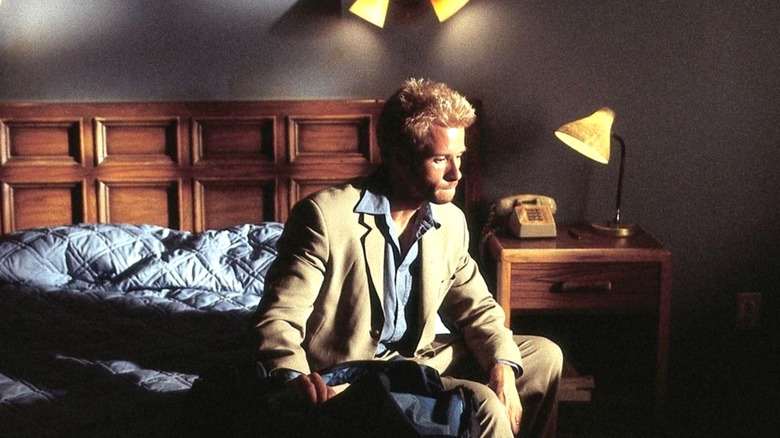
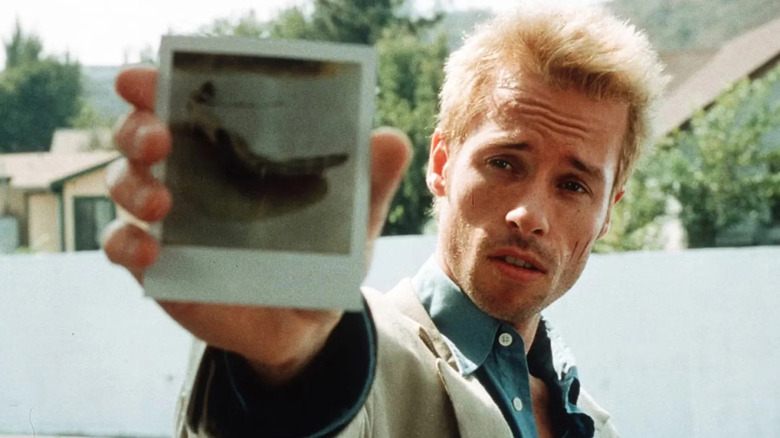
Guy Pearce is Leonard Shelby, a man with a form of amnesia that means he doesn't have any short-term memory, in "Memento." He has amnesia due to an attack that killed his wife (he believes), and he spends his time leaving notes, photos, and even tattoos for himself to remember who the killer is. Two different timelines, featuring a color reverse chronological order and a black and white chronological order, eventually meet in the middle to show what really happened to Leonard.
This seems like the premise for what will be an amazing story about hope, perseverance, and determination, with Leonard tracking down the killer and maybe even regaining all his memories by the end with the help of his cop friend Teddy (Joe Pantoliano). However, nothing is actually what it seems, and once all the information is out there, it's an ending you can't see coming. You simply don't have all the clues until the very end, much like Leonard. But unlike him, you'll remember the finale months later.
Critics gave the Christopher Nolan project a 93% from critics and a 94% from audiences on Rotten Tomatoes, complimenting how well the director executes the story. "The astonishing payoff takes the film to another level entirely, unleashing a battery of existential questions that shed new light on everything that precedes it," Scott Tobias wrote for The AV Club.
Mulholland Drive
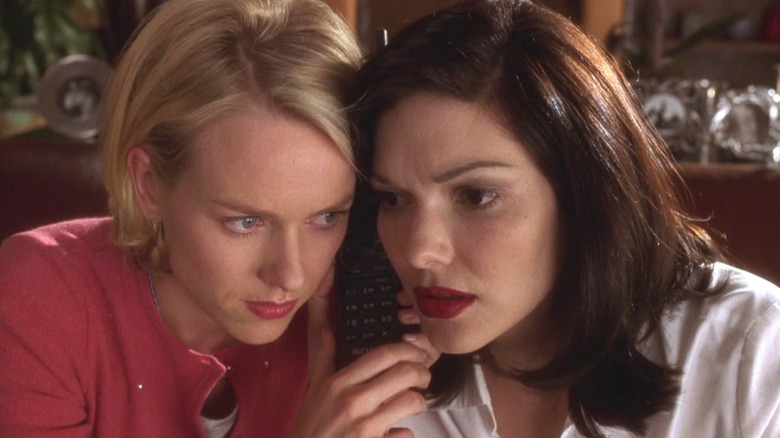
"Mulholland Drive" is another story featuring amnesia, but it's in a very different setting. A young actor new to the city (Naomi Watts) and a woman with amnesia as result of a car accident (Laura Harring) become friends, while an aspiring director (Justin Theroux) is being bullied by the mob over who to cast in his film. Each person runs into highs and lows, especially as the actor auditions for roles and the director caves to the mob's demands.
While many might be quick to write the ending of "Mulholland Drive" off as the "it was all a dream" trope, that would imply there are hints that everything playing out on screen is a dream, which isn't the case. There's nothing that leads the audience to predict what is actually happening, and it makes the theming regarding beauty in Hollywood hit much harder. You think you know where it's headed, maybe somewhere in the vein of "washed up actor reflecting on life," but it's so much more than that with how director David Lynch executes the third act twist.
"Mulholland Drive" has an 83% from critics and an 87% from audiences on Rotten Tomatoes, and the unpredictability is what sells the film. "The result leaves us with dueling reactions: one, frustration with the intriguing plot lines introduced only to be abandoned; and two, a somewhat twisted satisfaction in a mystery that remains a mystery," Terry Lawson wrote for the Detroit Free Press.
Mystic River
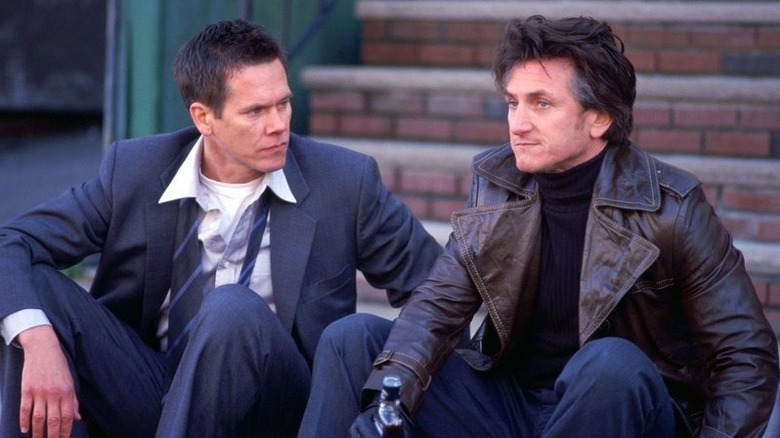
The lives of three young boys are changed forever after one of them is abducted in "Mystic River." While he escapes, the experience continues to impact his life, even as an adult. They all go one to have different lives, and the story hinges on Dave (Tim Robbins), the one who was taken, showing up covered in blood after Jimmy's (Sean Penn) daughter is murdered. The third boy, Sean (Kevin Bacon), is a detective trying to solve the murder.
At first glance, "Mystic River" seems like a straightforward murder mystery. The set-up is there, but the execution by director Clint Eastwood takes audiences on a journey filled with misdirection and confusion. It isn't even that there is a clear red herring present — there are so many moving parts that you don't know who to trust and what information is the most reliable. It makes for a mystery that's impossible to figure out, even after you've watched the ending.
Critics and audiences awarded "Mystic River" an 89% on Rotten Tomatoes. Reviews highlight the great cast, particularly Sean Penn's performance, and how well the film works as a character study. "Although the story eventually arrives at a solution, it is not about the solution. It is about the journey, and it provides each of his actors with scenes that test their limits," critic Roger Ebert wrote in his review. "To see strong acting like this is exhilarating."