

The Worst Batman Movie Deserves Credit For Its Goofy Sci-Fi Greatness
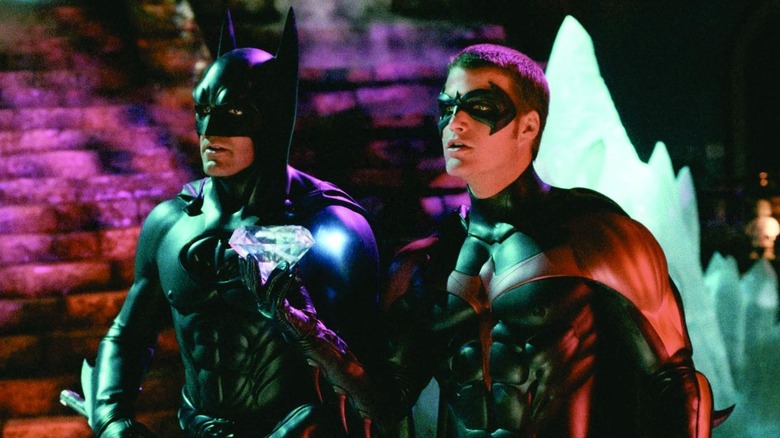
I doubt there's ever been a superhero movie that's generated quite as much conversation as "Batman & Robin." Dropping into theaters in June 1997, just as the internet and online film discussion scene were being born, "Batman & Robin" has inspired intense debate and criticism from the moment its first screenings ended. Everything about this title, from its nipple-heavy costumes to its pun-oriented dialogue to its screenwriting, has come under fire. When you look at lists like a ranking of every Batman movie by its Rotten Tomatoes score, "Batman & Robin" is inevitably lurking toward the bottom.
All that toxicity makes it difficult to break down "Batman & Robin" as just a movie or analyze one of its most interesting qualities: its sci-fi aesthetic. Harkening back to the goofier Silver Age exploits of Batman and Robin, this motion picture utilizes that influence to cram in way more sci-fi material than usual for a Batman feature. With so many pervasively dour Batman movies immersed in gritty realism released since 1997, "Batman & Robin's" vibrantly colorful charms rooted in sci-fi elements are much easier to appreciate.
The goofy sci-fi greatness of "Batman & Robin" materializes all throughout the project, including how it reflects the era in which it was made. Perhaps recognizing and appreciating those qualities won't be enough to turn "Batman & Robin" haters into devotees. However, after decades of bitter discourse around this film, it's time a more unique and positive approach was applied to this chill enterprise.
What sci-fi elements are in Batman & Robin?
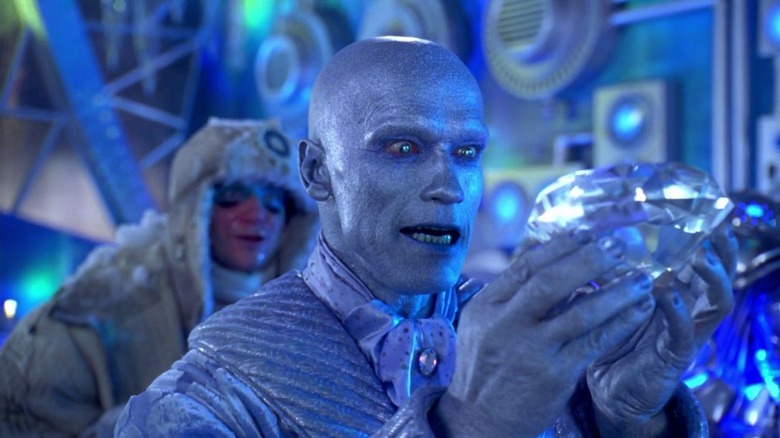
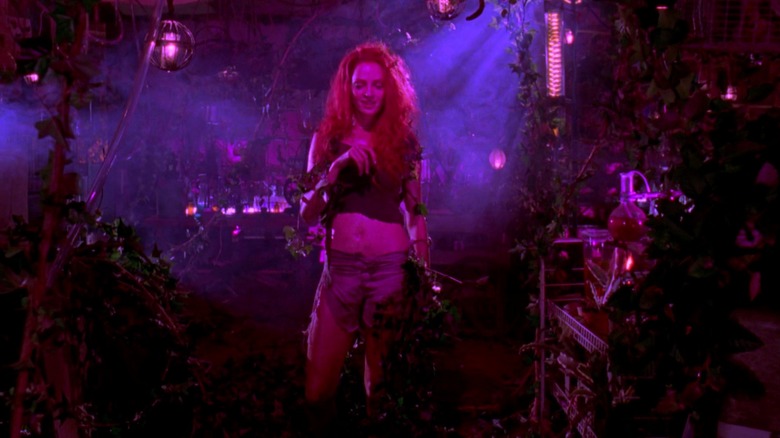
Like with "Batman Returns," Batman (George Clooney) contends with a trio of villains in "Batman & Robin." This time, though, this superhero faces off against Mr. Freeze (Arnold Schwarzenegger), Bane (Robert "Jeep" Swenson), and Poison Ivy (Uma Thurman). For their big screen incarnations in "Batman & Robin," all three characters are heavily rooted in sci-fi aesthetics. That's no surprise for Mr. Freeze, a character who's always walked around in a chilly mech-suit and used a freeze ray to pull off bank heists. Incorporating a remotely comics-accurate version of this fellow would always require more sci-fi trappings.
However, this incarnation of Poison Ivy gets her superpowers from toxins and a super serum rather than the more fantasy-rooted origins of her anti-hero identity in the comics. Meanwhile, Bane's heightened backstory from the comics is profoundly amplified here, with the character now functioning like Frankenstein's monster in both his behavior and origins. Squaring off against these sci-fi baddies requires Batman and Robin to utilize over-the-top gizmos also entrenched in this genre. Relying just on grappling hooks and Batarangs is for Christian Bale and Robert Pattinson.
This version of Batman and Robin, meanwhile, charges into battle with sci-fi wizardry that offers them a fighting chance against the likes of Mr. Freeze and Poison Ivy. Across both its villains and heroes, "Batman & Robin" happily embraces sci-fi nonsense. This approach was one of many aspects of this feature that originally alienated people, though with some distance, it's easier to see virtues in this aesthetic.
The sci-fi elements differentiated Batman & Robin from other Batman titles
Every movie version of Batman hews closely to certain staples of the character, like his tragic backstory or his residency in Gotham City. 1989's Batman may have changed superhero movies forever (without you barely even noticing), but it established that certain cores of this crime fighter should remain static no matter what. Even with these fixtures in place, the various Batman movies have each embraced different aesthetics and tonal influences. The campy sci-fi trappings of "Batman & Robin" are easier to appreciate now that there's been so many subsequent versions of Batman on the big screen, each going in different creative directions.
If nothing else, "Batman & Robin's" commitment to sci-fi tomfoolery helped solidify it as a radically unique creature compared to every other Batman movie. Tim Burton's two "Batman" films, for instance, were rooted in noir and vintage gangster films. "The Dark Knight" took many cues from "Heat," while "The Batman" was made in the mold of famous 70s crime films. Those grimier, decidedly grounded influences stand in sharp contrast to "Batman & Robin's" sci-fi world, where people are turned into human icicles and a toxin can transform a woman's kiss into something dangerous.
"Batman & Robin" is in its own specifically detailed world, especially when compared to other Batman films throughout the ages. Like it or hate it, this 1997 feature embraces an idiosyncratic influence you couldn't mistake for any other motion picture starring this superhero.
The sci-fi tomfoolery reflects when Batman & Robin was made
In 1996's "Get on the Bus," several characters occasionally reference "the impending new millennium" and how it will change the world. This Spike Lee directorial effort was one of many '90s films fascinated with the end of the 20th century. Movies like "Blues Brothers 2000" changed their names to remind people of the imminent 21st century, while feature films also grew fascinated with all the new technology this modern era was bringing. Cell phones were beginning to exist, computers were becoming staples of people's homes, who knew what further technological innovations the 2000s could bring?
In hindsight, "Batman & Robin's" sci-fi aesthetic is a time capsule of this perspective. As the 20th century began winding down, even Batman and friends became fixated on technology and sci-fi concepts. This didn't just materialize through Mister Freeze or Batman and Robin's most outlandish gadgets. Even Alfred Pennyworth (Michael Gough) got in on the action by uploading his consciousness into an AI avatar that helps get Barbara Wilson (Alicia Silverstone) all suited up to become Batgirl. In this modern wonderland, even the elderly were now exploiting technological wonders.
Granted, embracing these decidedly 1997 tendencies isn't enough to make "Batman & Robin" one of Metacritic's 16 near-perfect sci-fi films. It does, however, lend charming specificity to its sci-fi aesthetic. Like so many other late '90s properties, "Batman & Robin" fully believed a "Jetsons"-style future was around the corner — and its characters needed to act accordingly.
Not even imaginative sci-fi could save Batman & Robin
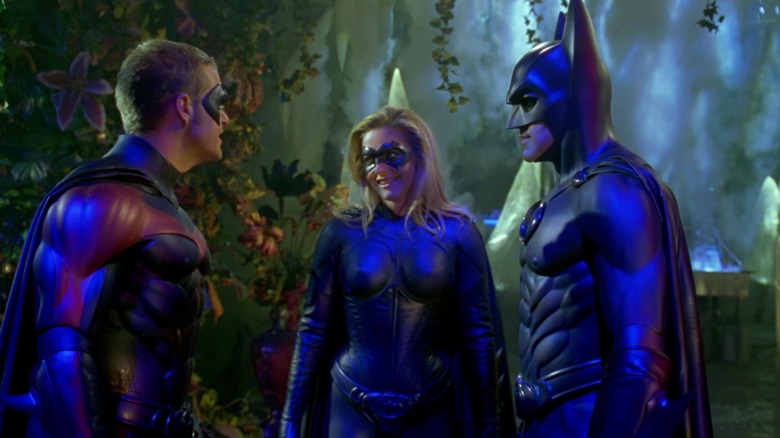
Even with these endearing and creatively admirable qualities about "Batman & Robin's" sci-fi atmosphere, it's still a messy, heavily flawed movie. While nowhere near bad enough to mean that Joel Schumacher should've had to apologize for "Batman & Robin," this project's still hampered by its obligation to function as a PG-13 crowdpleaser. The campy, sci-fi impulses of this project suggest Schumacher really wanted to take things into unhinged directions. Unfortunately, Schumacher was still working a massive budget from Warner Bros. and mandated to make something that could sell lots of toys.
Thus, "Batman & Robin's" story never quite shakes off its more conventional qualities. It's still too content to placate audience expectations, while the greatest camp movies exhibit bravura in embracing deranged, unpredictable storytelling avenues. Too much of the film (like the stunt casting of Arnold Schwarzenegger or its incredibly toyetic props) is frustratingly standard despite the colorful and exceedingly goofy exterior. Even the sci-fi elements don't quite pay off like they should. Rather than constantly escalating in absurdity, they remain at the same level of silly for the entire runtime.
As a super low-budget film or something where Schumacher had no creative shackles tying him down, "Batman & Robin" could've been a maximalist masterpiece. Its final form has admirable qualities (including its deployment of sci-fi traits), but "Batman & Robin" is too often torn between its mainstream and subversive impulses.
Hey, it's better than other sci-fi Batman movies
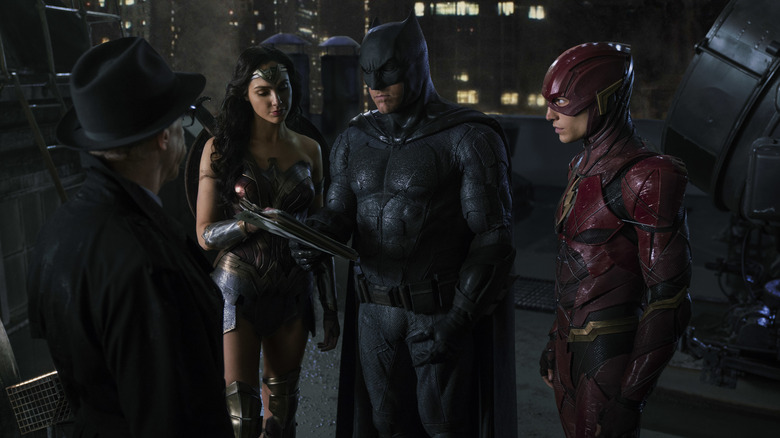
I distinctly remember a time when "Batman & Robin" was not only considered the nadir of Batman cinema, but also that the idea of sci-fi elements intruding on a Batman movie was absurd. Surely this 1997 feature was a one-off in that regard. Decades later, "Batman & Robin's" profile has undoubtedly increased not only because of growing nostalgia, but because it's no longer the worst Batman movie reveling in sci-fi trappings. Ben Affleck's Batman headlined two features, "Batman v Superman: Dawn of Justice" and "Justice League," that hinged entirely on the character interacting with sci-fi elements, including the very notion of him meeting Superman (Henry Cavill).
Some of the most cringeworthy DC Extended Universe moments involved awkward collisions between Batman and sci-fi material. These include Bruce Wayne being visited by a version of The Flash (Ezra Miller) from the future, or Batman's initial encounter with a Parademon in the opening scene of "Justice League's" theatrical cut. There's totally a way to merge sci-fi elements with a Batman movie, but these two DCEU films were far from that platonic ideal. After the tedious flaws of these titles, "Batman & Robin's" much more lighthearted and enjoyable (albeit still messy) sci-fi camp suddenly looks a lot more admirable.
The existence of projects like "Justice League" can't erase the glaring shortcomings of "Batman & Robin." However, the existence of even more subpar sci-fi Batman outings makes it easier than ever to hand "Batman & Robin" the roses it deserves.