

Billion-Dollar Movies Nobody Talks About Anymore
Box office hits are often elusive. Just ask any studio executive, plagued by thoughts of various box office misfires that seemed so much like surefire moneymakers on paper. The North Star for box office success has to be every movie that made over $1 billion at the worldwide box office. Back in the late '90s, "Titanic" was the sole movie in history to exceed that 10-digit mark globally. Now, 60 motion pictures have exceeded $1 billion worldwide, with many years delivering multiple features that cleared this mark. Studio executives and filmmakers alike yearn to deliver movies that have this massive cultural reach and financial impact.
Still, making a ton of moolah in theaters isn't a guarantee of long-term pop culture notoriety. For instance, "Richie Rich" and "The Shadow" both made more than "The Shawshank Redemption" at the domestic box office in 1994 before the latter title ended up sticking around far longer in people's minds. A similar phenomenon is at play with many movies that gross over $1 billion worldwide. Their box office sums are undeniably impressive, but that doesn't mean people will talk about them for years to come. In fact, there are 10 $1+ billion box office grosses that nobody brings up anymore.
There's a slew of factors responsible for the obscurity that these projects have become ensnared in despite their initial financial accomplishments. All these films, though, reflect that even $1+ box office success isn't enough to solidify a movie as an eternal classic.
Pirates of the Caribbean: On Stranger Tides
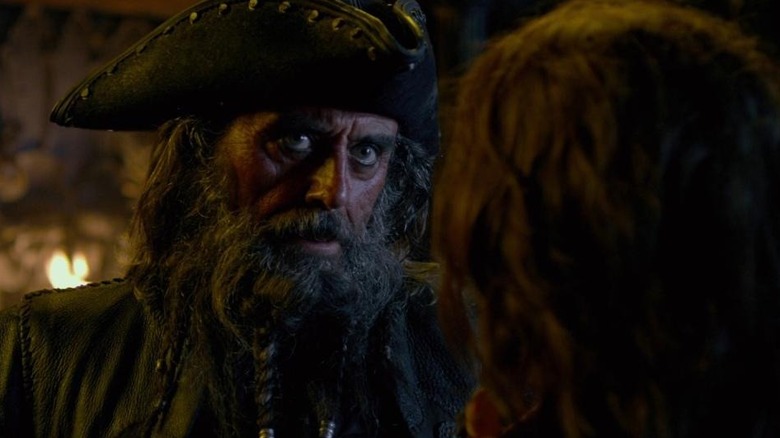
"Pirates of the Caribbean: The Curse of the Black Pearl" director Gore Verbinski helmed the first three "Pirates" movies, but has been very open that he's never seen any installments in the franchise beyond 2007's "At World's End." If he wasn't behind the camera, Verbinski had no interest in watching a movie chronicling the exploits of Jack Sparrow. Judging by the box office haul of 2011's "Pirates of the Caribbean: On Stranger Tides," most of the general public was, in contrast, fine with checking out an entry in this franchise with a new director.
With $1.045 billion worldwide, "On Stranger Tides" amassed a mighty global sum. That cume was enough to make it, at the time, just the eighth movie ever to exceed the 10-figure mark at the global box office. Clearly, the allure of swashbuckling connected to the "Curse of the Black Pearl" world was enough for some short-term financial success. However, in the years since "On Stranger Tides" debuted, it's largely vanished from the cultural consciousness. That's no surprise, given that (among other problems) the motion picture has always been criticized for its off-putting dark lighting.
Who wants to endlessly rewatch or make GIFs out of a movie so drab? The lack of a really iconic villain (despite Ian McShane as Blackbeard) and Verbinski's bravura creativity also ensured that "On Stranger Tides" didn't have much (sea) legs culturally. Verbinski was right to skip seeing this entry.
The Fate of the Furious
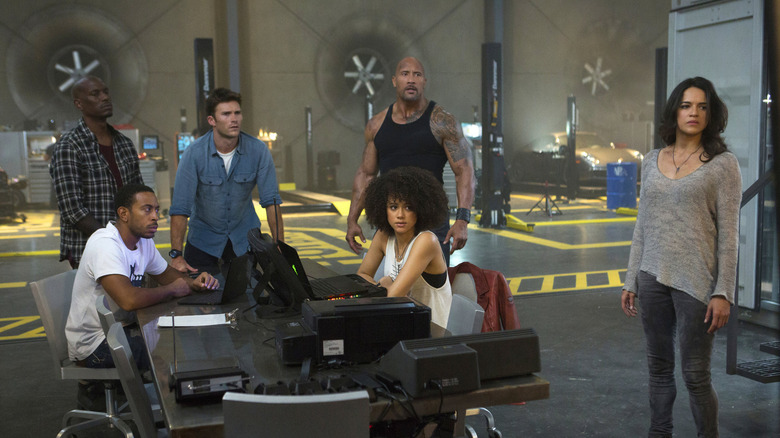
In hindsight, they really should've ended the "Fast & Furious" franchise with 2015's "Furious 7." Director James Wan's grandiose entry in this saga was full of lively camerawork, creatively ridiculous action set pieces, and a genuinely touching finale that tied a bow around the central friendship of the "Fast & Furious" movies. Ever since "Furious 7," these titles have been plagued by constant problems, including an excessively large cast and a lack of enthralling fun. These issues were apparent in the first "Fast & Furious" adventure after "Furious 7," "The Fate of the Furious."
Today, "Fate of the Furious" only comes up when people are debating what's the nadir of the entire "Fast & Furious" saga. However, it still grossed $1.23 billion worldwide, $1.01 billion of which came from international markets. Residual goodwill from "Furious 7" helped "Fate of the Furious" land a mighty punch financially, but that wasn't enough to keep the film's artistic reputation afloat. Among the shortcomings here was a serious dearth of memorable set pieces.
At least 2021's "Fast X" sent the lead characters to space. Meanwhile, "Fate of the Furious" set its finale in a gray, Arctic locale, which wasn't nearly as fun. A barrage of grim plot points (including the murder of Dominic Toretto's former lover) amplifies how unpleasant this particular installment is. "The Fate of the Furious" solidified that the "Fast & Furious" franchise was out of gas after "Furious 7."
Aladdin (2019)
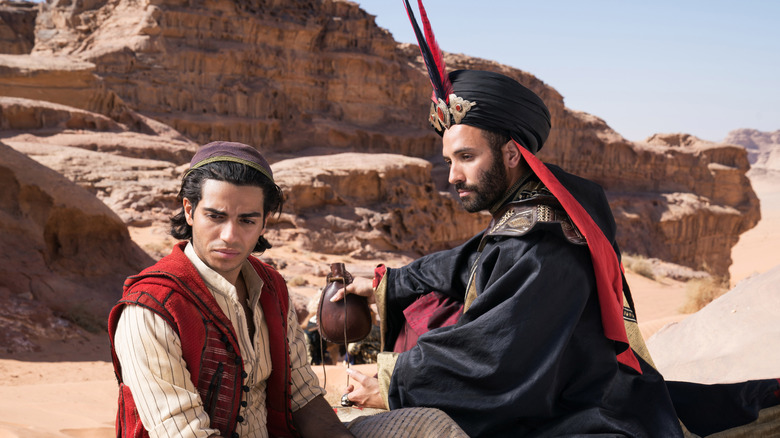
In his review of 2001's "Planet of the Apes," film critic Roger Ebert commended the title's visual splendor, but made an astute remark summarizing the fate of many remakes: "Ten years from now, it will be the 1968 version that people are still renting." Exploiting a preexisting brand name is good for a robust opening weekend at the box office, but long-term, your remake's going to exist in the shadow of an infinitely more influential, beloved movie. That fate has plagued many of the live-action remakes of classic Disney animated features, including Guy Ritchie's 2019 motion picture "Aladdin."
In its theatrical release, "Aladdin" was a shockingly leggy movie that did nearly four times its opening weekend in North America and grossed $1.05 billion worldwide. Since then, though, this remake hasn't endured as a beloved project. Part of that can be traced back to "Aladdin" star Mena Massoud's disappointing update on the film's sequel. A lack of further voyages into this vision of Agrabah has allowed it to fade from people's memories. Meanwhile, Will Smith (who played the film's Genie) has had a more complicated reputation in the 2020s that doesn't quite fit Disney's family-friendly image.
Furthermore, Disney projects like "Once Upon a Studio" or even new tests for fresh Disney theme park projects rooted in the original, fully animated "Aladdin" have reaffirmed that 1992 title as the default "Aladdin" movie for both the Mouse House and the general public. 2019's "Aladdin" ended up reaffirming the truth of that Roger Ebert observation.
Jurassic World: Fallen Kingdom
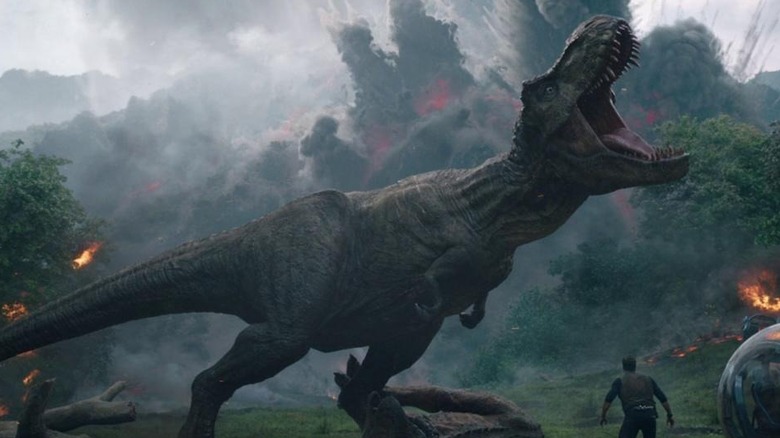
2015's "Jurassic World" was not only one of the biggest movies of all time (it even scored the biggest domestic opening weekend ever at the time of its release), but it also inspired a meme among zookeepers imitating a gesture from Chris Pratt's character Owen Grady. "Jurassic World Dominion," meanwhile, has widely garnered infamy as possibly the worst entry across all seven "Jurassic Park" movies, as well as some historical notoriety because it is one of the first blockbusters to resume filming after the COVID-19 pandemic shut down the world.
J.A. Bayona's middle chapter in this trilogy, "Jurassic World: Fallen Kingdom," hasn't been so lucky. Back in June 2018, the feature sure looked destined to become a pop culture staple with a $1.3 billion worldwide haul (that $890 million international haul was impressively only 11% down from "Jurassic World's" overseas gross). However, "Jurassic World: Fallen Kingdom" failed to spawn any real lasting memes or new characters people loved. Additionally, its darker, haunted house-inspired aesthetic might have made "Fallen Kingdom" so different from other "Jurassic Park" movies that people don't really consider it part of the franchise.
Even its name helped solidify its long-term place in pop culture. Google "Fallen Kingdom" today, and you'll find lots of discussions about the Minecraft parody song of the same name rather than chatter about which dinosaurs from this movie are people's favorite. The lasting reputations of its predecessor and successor reinforce how "Fallen Kingdom" has, for many people, gone extinct culturally.
Frozen II
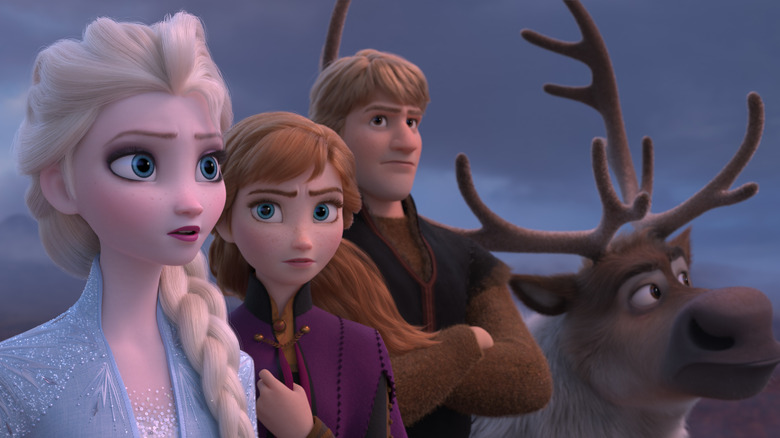
It was always going to be a tall order for "Frozen II" to establish a distinctive personality and legacy beyond its predecessor. Like the various 2010s live-action Disney remakes, "Frozen II" utilized a brand name that scored lots of initial attention but also cast a large shadow that was hard to evade. Still, "Frozen II" was certainly buzzy when it hit theaters. In its initial theatrical run, "Frozen II" blew everyone away at the box office after it grossed $1.45 billion globally, making it the biggest non-"Lion King" animated movie ever worldwide at the time of its release.
Even at the time of its release, though, pop culture observers remarked that the film's soundtrack, though successful, hadn't spawned a lasting, impactful tune like "Let It Go." This feature's ditties, like "Lost in the Woods" and "Show Yourself," certainly didn't prove as meaningful to audiences as "Do You Want to Build a Snowman?" Meanwhile, when Disney's global theme parks have been making new attractions set in the "Frozen" universe, they've been utilizing characters, story beats, and costumes from the original 2013 title, not "Frozen II."
It doesn't help that other Disney Animation franchises like "Moana" and "Zootopia" have taken the crown as Disney's biggest homegrown animated sagas. The imminent 2027 title "Frozen 3" will inevitably re-spawn some attention for "Frozen II" in the future. For now, though, this feature has had trouble becoming as beloved as either the first "Frozen" or other recent Disney Animation franchise fare.
Despicable Me 3
The "Toy Story" movies are ingenious in how easy it is to tell them apart. Each one tends to deal with a different element of either growing up or the relationship between a parent and a child. "Toy Story 3" is about leaving for college, for instance, while "Toy Story 5" concerns how children interact with technology. In contrast, there's little to signify which "Despicable Me" installment is which. Because these characters remain static in age and never interact with weightier concepts, their adventures eventually blur together into one loud mush.
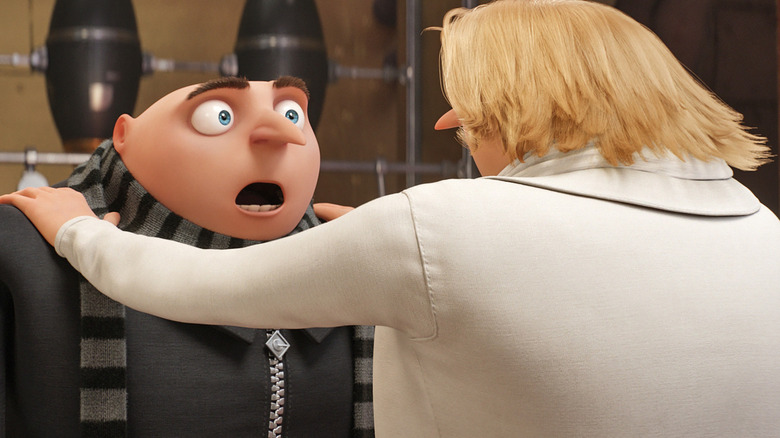
Especially failing to stand out is "Despicable Me 3," for which the film's directors took a deep dive into '80s pop culture for the villain Balthazar Bratt. Back in June 2017, it grossed $1.03 billion worldwide, $770.17 million of which came from overseas markets. This mighty gross (on just an $80 million budget) did not lead to "Despicable Me 3" securing much of an idiosyncratic reputation. It didn't introduce new, lasting characters into the saga (like Gru's wife or son, like the second and fourth films, respectively, did), nor did it really upend how these films operate.
It's also the only title across all the "Despicable Me" and "Minions" movies to get a grade lower than an A CinemaScore, a sign audiences weren't quite as enthralled with this chapter. No wonder it hasn't spawned as many memes and widely used quotes online as the other entries in Gru's larger saga.
Spider-Man: Far from Home
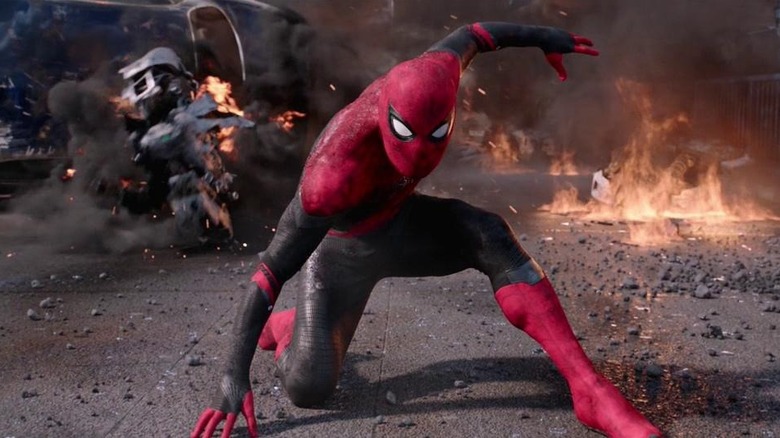
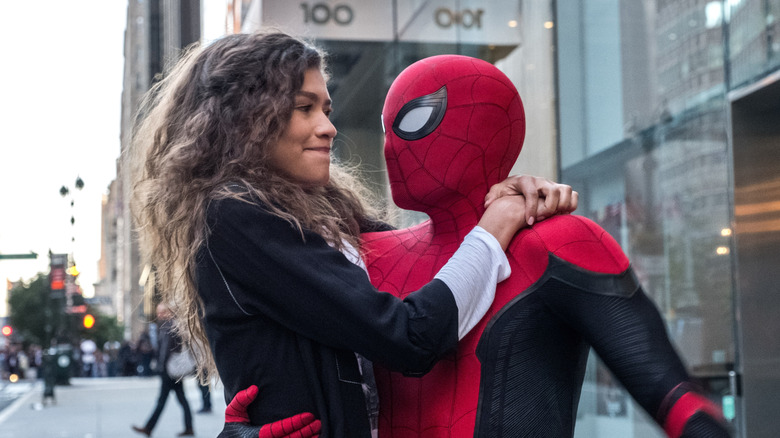
The five best and five worst things about "Spider-Man: Far From Home" make it clear that, while far from perfect, this web-crawler adventure had plenty of fun qualities. Juxtaposing Tom Holland's Spidey with various European landmarks and Jake Gyllenhaal's go-for-broke villain turn were especially delightful. Still, in the years since its release, "Far From Home" has fallen by the wayside in terms of pop culture notoriety. When people talk about Tom Holland's Spider-Man, they're often wistfully talking about "Spider-Man: Homecoming's" cutest scenes or "Spider-Man: No Way Home's" grand collision of various eras of Spidey mythology.
To boot, "Far From Home's" placement in the history of MCU media didn't help. The film opened just two months after "Avengers: Endgame" and also two years before "No Way Home." Sandwiched in between those massive features, it's inevitable that it would get lost in the shuffle a bit. That outcome is a bit surprising given that this title was a major hit in its original theatrical run. Grossing $1.13 billion worldwide, it was the first solo "Spider-Man" movie to reach the $1+ billion mark worldwide.
Temporarily the biggest Sony movie ever globally, "Far from Home's" various records would be shattered and then some by the might of 2021's "Spider-Man: No Way Home." Getting financially dethroned, not to mention criticism over this installment's depiction of Spidey utilizing Tony Stark-approved technology, might explain why "Spider-Man: Far From Home" is no longer the dominant topic in "Spider-Man" cinema discussions.
Finding Dory
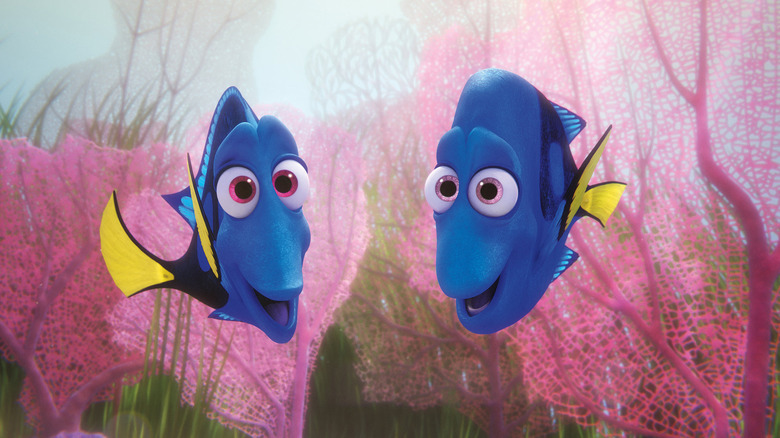
Ironically, "Finding Dory," a movie about a blue fish with memory issues, hasn't exactly been well remembered in the decade since its release. Any recent discussion about the movie has largely centered around people comparing it unfavorably to its predecessor, "Finding Nemo." More pressingly, when in data of the most streamed animated family movies of the 2020s so far, "Finding Dory" didn't crack the top 10. Fellow Pixar title "Cars," released 10 years before "Finding Dory," and fellow 2016 animated feature "Zootopia" both made that top 10, but "Finding Dory" was MIA.
This alone suggests that modern kids aren't as enamored with the fishy world of "Finding Dory." Meanwhile, its new characters (like cantankerous octopus Hank) haven't proved nearly as enduring in popularity as "Finding Nemo's" aquatic figures, like Crush the Turtle, who is still drawing crowds with his Disneyland attraction. This outcome is more than a tad ironic given that "Finding Dory" was a box office beast in its theatrical run. Its $1.028 billion global cume was a massive achievement and, thanks to a $486.29 million domestic haul, was temporarily the biggest animated movie ever in North America.
Those impressive accomplishments, though, couldn't procure a meaningful, long-term fan base for this project. The eventual decline in popularity for "Finding Dory" lead Ellen DeGeneres also didn't do this feature any favors. While people are still quoting "Finding Nemo" lines like "just keep swimming," "Finding Dory" has sunk to a more obscure place in pop culture history.
The Lion King (2019)
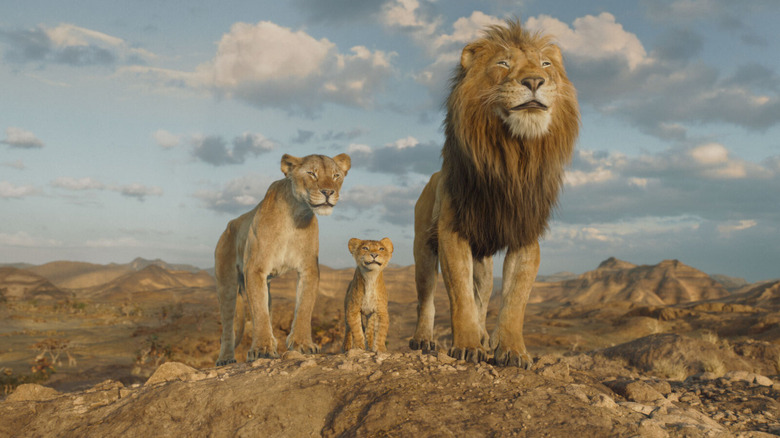
To be fair to Jon Favreau's 2019 "Lion King" update, the hit 2024 prequel "Mufasa: The Lion King" becoming a surprise moneymaker suggests this version of Simba and friends isn't totally radioactive with the broader moviegoing public. Perhaps that's inevitable when a movie is as lucrative as this 2019 feature, which shattered box office records with its towering $1.65 billion worldwide gross (including $543.63 million domestically). Just like Simba and Mufasa are feline royalty, "The Lion King" was also a box office king.
However, the buttoned-up, "realistic" approach that this film embraced also diluted its rewatchability (were kids really going to want to watch something this drably colored?) and soundtrack, the latter of which was so underwhelming that even Elton John publicly lambasted it. Meanwhile, even the groundbreaking visual effects work hasn't profoundly influenced post-2019 movies. Instead, animated features have hewed closer to emulating the zany, 2D-inspired sensibilities of "Spider-Man: Into the Spider-Verse." "Teenage Mutant Ninja Turtles: Mutant Mayhem" and "KPop Demon Hunters," to name just two movies, couldn't be further from Favreau's "grounded" vision of Pride Rock.
Without a barrage of further pastiches to remind people of its existence, the 2019 "Lion King" has faded into the background. Meanwhile, estimations of the original 1994 movie have only grown in recent years, while "The Lion King" on Broadway continues to dazzle theatergoers. That's left little room for the 2019 "Lion King" to cultivate its own fan base, even after it made a staggering amount of cash in multiplexes.
The Hobbit: An Unexpected Journey
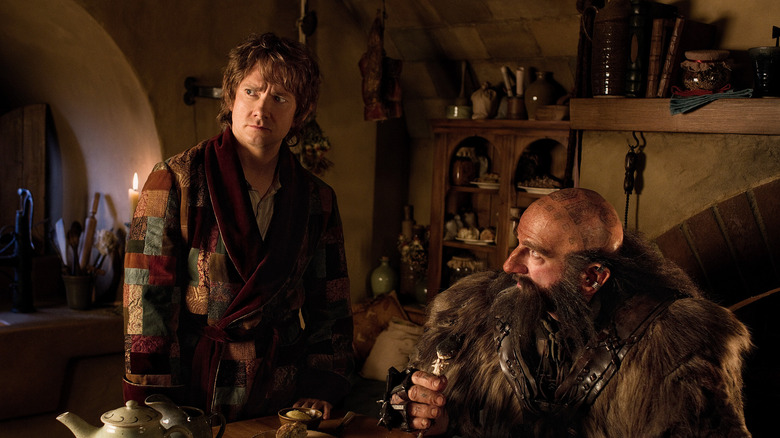
2012's "The Hobbit: An Unexpected Journey," the first Middle-Earth movie in nine years and the long-awaited live-action take on J.R.R. Tolkien's "Hobbit" book, was immediately a box office behemoth. Debuting to the then-biggest domestic opening weekend ever in December, it eventually amassed $1.017 billion worldwide, making it just the 15th movie to ever reach the $1+ billion threshold at the time of its release. A $1.017 billion worldwide haul was a tremendous accomplishment that preceded two more lucrative "Hobbit" adventures.
Even at the time of its debut, though, "The Hobbit: An Unexpected Journey" received more mixed marks from critics compared to the universal jubilation that greeted the original "Lord of the Rings" trilogy. While a handful of internet souls have suggested that the "Hobbit" movies are better than you remember, "An Unexpected Journey" and its two sequels have largely gathered dust since their respective theatrical runs. After all, if people want to venture into Middle Earth cinema, there are three infinitely superior Peter Jackson directorial efforts to indulge in.
While the original "Lord of the Rings" movies were still delivering tremendous box office numbers in their theatrical rereleases as recently as 2026, "The Hobbit: An Unexpected Journey" has never had either the fan base or remotely the level of demand necessary to warrant a theatrical re-release. The only time they come up now is when people wax poetic on their lost creative potential. At least "An Unexpected Journey" broke some box office records before its ultimate fate.